series_item_video

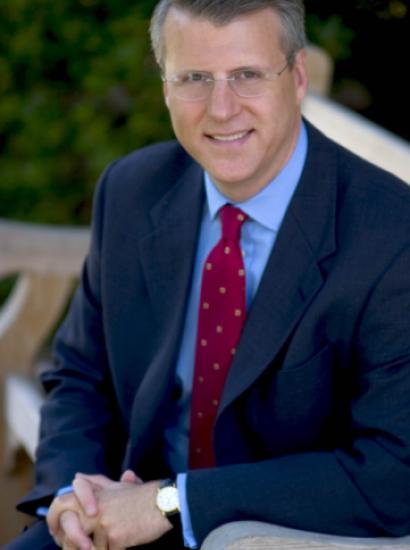
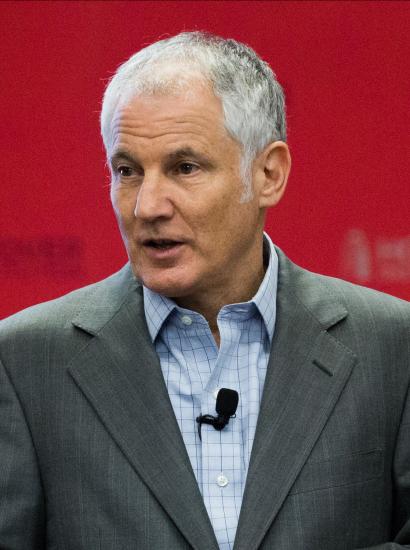
Stephen Kotkin returns to Uncommon Knowledge for another round of five questions, this time on Iran, China, Ukraine, and the future of the American republic. Kotkin argues that America still possesses unmatched strengths — economic, technological, military, and cultural — but warns that self-inflicted political dysfunction could squander them. Kotkin dissects Trump’s Iran strategy, explains why China wants Taiwan “for free,” argues that Ukraine has already won the sovereignty war against Russia, and delivers a powerful defense of America’s founding ideals at a moment when both authoritarian regimes abroad and political extremism at home are testing them. Sharp, provocative, and deeply informed, this is classic Kotkin: history as a guide to the geopolitical storms of the present.
Recorded on May 26, 2026.
- Historian, author, and one of the most requested guests on this program. Stephen Kotkin on Uncommon Knowledge. Now welcome to Uncommon Knowledge. I'm Peter Robinson, the historian and author, Stephen Kotkin is now completing the third and final volume of his definitive biography of Joseph Stalin, a professor emeritus at Princeton. Dr. Kotkin is now a fellow here at the Hoover Institution. We've done a number of programs entitled Five Questions with Stephen Kotkin, and they have proven Among our most popular programs today. Five more questions with Stephen Kotkin. Stephen number one, Iran. I'll just give you two quotations and see what you do with them. By the way, as we sit here, I should note that as we record this show, president Trump, the Trump administration is negotiating with Iran. The outcome of the negotiation as we sit here is completely unclear. Two quotations. Here's the editorial board of the New York Times writing recently. While President Trump seems eager for negotiated truce, Iran's leaders do not. Somehow the weaker nation is in the stronger negotiating position. Here's the second quotation. This is Secretary of State Marco Rubio. Earlier this very month of May, as President Trump has said, and as the facts clearly bear out the United States holds all the cards close quote, who's really winning and how does this end?
- Peter, it's great to be back.
- Thank you.
- It's been nine months, so both of us could have had a child since the last time I was on. You've had some amazing guests in the meantime, I've learned quite a bit. Really big shows you've had, this is a tough one. It's where we are now. It might not be the place I myself would've chosen to put us. There's this old joke that's not very funny. Someone is in Ireland and gets lost trying to get to Dublin, knocks on neighbor's door. The neighbor opens the door, and person explains, we're lost. We're trying to get to Dublin. And the Irishman says, oh, if I were going to Dublin, I'd never start from here. Alright, so neither would I, but this is where we are and we're trying to get to Dublin. The problem for us is we need things that the Iranian regime either refuses to deliver, cannot deliver, or cannot sustain over a period of time. And so we're sort of negotiating with ourselves at this point. If you think about Iran and the Iranian problem in the Middle East, the main problem was for Israel that Iran was an existential threat. It wasn't only the nuclear program, which we, along with the Israelis inflicted very major damage on back in June. It was also the ballistic missiles. Yes, it was also the proxies everywhere, not just Hamas and Gaza, but of course Hezbollah in Lebanon, Syria, and one could go on. So this was an existential threat to the Israelis. And after October 7th, they were not gonna let this persist. Iran had encroached more and more surrounding Israel with the proxies and with the strike capabilities to make the threat to Israel intolerable. And October 7th proved to the Israelis that they needed to change the strategic situation for the Israelis degrading Iran's military abilities is number one, what might be a long-term solution, how we might get to a better place. That's not necessarily the goal,
- But they had to eliminate the immediate threat. So
- They have ballistic missiles. We have to reduce their ballistic missile threat, right? They have proxies. We have to reduce the proxy threat. And that's been done, that's been done on an immense scale in what can only be described as remarkable tactical operations. Just stunning the performance of our military and the Israeli military that we can't lose that fact in our discussion. But that's enough for the Israelis. They call this mowing the lawn. Mowing the lawn is a terrible euphemism. What it means, again, is degrading the enemy's capabilities
- For now.
- And then if the enemy builds back the capabilities you have to go back and degrade again. So you're buying time, how much time you're buying, you maybe can't be choosy. You're buying as much as possible. So for the Israelis, this is a major strategic game that Iran has been this degraded for the United States, the grand strategy has to be much broader. Mowing the lawn is insufficient. It's not just degrading for now, Iran's ballistic missile capabilities or degrading for now their nuclear capabilities. We need the Iranian regime to stop being what it is in that region. And we need that for ourselves because for 47 years they've been at war with us. We need it for our friends and partners in the region, not just Israel of course, but the Gulf Arabs. We need it for our partners in the Indo-Pacific who are reliant on Gulf energy. And we need it for our gasoline prices at home for affordability and standard of living for our Americans. And I could go on. And so what you've got here is a slight divergence between an Israeli strategy of mowing the lawn, which is more or less successful on their terms. They would like to mow it more. They would like to degrade even further. But if this is the extent of the degradation they've won from they live point of view, they can with that, for us, we need something else. And that's been elusive so far. And again, maybe we didn't understand this going in. So for example, if you think that the nuclear question is first and foremost, you would wanna plan a commando raid that's ready to go to extract the nuclear materials when Iran is distracted by the attacks on its leadership compound. So you would say, okay, let's take it while they're distracted, while they're being pummeled by us, and then we hold the cards. Instead, the assumption seems to have been that well will decapitate the regime and their replacements will negotiate with us and just hand us the stuff because we will have so struck them with such force that they will see our power and might and therefore will bend the knee to us. So there was no commando raid to take the nuclear, the enriched uranium at whatever grades the high 60%. That's really dangerous, but also the 20%. Now, that wouldn't have been an easy operation, but that's the kind of thing you would've planned to do, which is now immensely more difficult to do because they're not distracted.
- So,
- So, so go ahead. What we're trying to get to Dublin, and we wouldn't start from here. So what do you do? What's the solution? What's the outcome? A lot of debates about this, and I'm not an expert on Iran, although I know something about authoritarian regimes for us, the Iranian regime has failed. It's failed its own people. The supreme leader position in the regime is now destroyed, likely forever. People say that the sadden has replaced the father who was assassinated in the strikes. No one has seen or heard from the son since then. But even if he's still alive, and even if he hasn't lost his face, literally in the, the position that he occupies will not be the same, a supreme arbiter of all the factions in Iran. So what you're left with is the scorpions in the bottle problem where they don't trust each other. They are all jockeying. And moreover, they can't feed their people. They don't have any water, they don't have any petrol, you know, gasoline. They don't have any money. So lacking legitimacy and lacking all the fundamentals of basic survival. So if that regime had to deal with its own situation, they would potentially be in serious trouble. And so figuring out a way to force the regime to confront its failures and its illegitimacy in front of its people should be the way forward for us. So degrading a little bit more here, degrading a little bit more there, buying a little bit more time here, buying a little bit more time there at costs that we don't know what they might be versus saying, okay, you own this mess now this is your mess. Let's see what you can do with it. And so that turning the regime in on itself, the regime strategy has been a little bit judo, where the strength of your opponent becomes your ability to destabilize your opponent, turning the tables on your opponent. We need to do the same thing with the Iranian regime. And so I'm not exactly sure where we're going because our own government is not sure where it's going. So
- Stephen, could I ask, this is the mistake here. I won't even call it a mistake. We have Donald Trump, a business guy from Queens, and it feels to me, I'm putting this though in the form of a question, correct me. It feels to me as though at some basic level he's saying, why won't these guys come to the table? We've got an obvious deal to do here. If they were nice to me, they let the oil flow through Horus again, they turn over the RA uranium, we can find ways to help them rebuild. We can do a deal. But Donald Trump hasn't spent his life the way you've spent your life looking at archives, dealing with authoritarians like of the likes of Joseph Stalin. The notion of the these, the kinds of people who populate the Iranian regime are the kinds of people who are willing to machine gun 30,000 of their own people as they did in protests a few months ago, before the war began. Even as Stalin is willing to wipe out the higher reaches of his own party in purge after purge, and to submit people, that kind of person, the determined ideologue, who really is in some basic way willing to choose death first. He'll choose death for millions of his own people if he has to. But this is just not the kind of person who will sit down and do a deal. Is that correct? And if that's correct, it makes everything harder.
- Sadly, I think you're spot on. What would a deal entail for them? They live for the destruction of US power and the destruction of Israel. This is the Islamic revolutionary guards. This is not Iranian. Even this is something beyond Iran.
- They, they're not trying to recapture the great power of Persia.
- They would have different policies if they were pro Iran. And so yes, they don't want a deal the way that we understand a deal, which is to say we concede something. They concede something. And so our ability to negotiate with them has always been limited by our inability to understand who they are and what they are. That's not to say that this was the right approach. I'm not a regime change type, but nor am I a capitulation type where you can't do anything. So I've been arguing for years that you turn these regimes against themselves, right? You try to make them see that the factions inside the regime who are disappointed, either from thwarted ambition, they're not the ones at feeding at the trough their rivals are, or because they're generally see seeing that the strategy is failing. You try to appeal to them to turn against their own regime. So the success in Venezuela, which has yet to be accompanied by elections, we have not imposed elections on them, which I think was a mistake. But the fact that we were able to turn that regime on itself and change its strategy oriented from anti-US to dealing with the US on US terms. And then the, the final stage would be confronting their own people, their own illegitimacy and unpopularity through an electoral process that may come still, that success misled us into thinking that the Iranian regime was similar and had similar motivations. Also, we don't really understand what a regime is. We think a regime as just a bunch of at the top right, but a regime is a society. So sure Iran's 90 plus million people predominantly against this regime. They hate this regime and for good reason. So let's say that that's 70 million or 80 million, it's hard to say, but it's some very large number of Iranians, Iranian society that detest the regime. But the problem is there's still 20 million, or at least 10 million who are pro regime willing to die for the regime. That's the society that constitutes the regime. I once wrote a book called Uncivil Society about this very problem. And so it's not just decapitating this leader or that leader, it's uprooting or co-opting the society that represents the regime. Remember these, for these people in the bo for example, the paramilitaries that did a lot of that killing that you referred to earlier, for them, this is upward mobility, this is social mobility. They don't have a lot of life choices. Joining the regime and becoming part of the regimes repressive apparatus is a ticket to a better way of life for many people in dead end situations. And then there are many people in the regime that are ideologically committed, as you said, to the death of the United States, the death of Israel. This is what they live for, and this is their soul, all legitimacy. Without that, what can they fall back on? They didn't raise the standard of living, they depressed it. They didn't make Iran a great power. Iran's a weak power. And so for a large part of Iranian society, the regime and the society are one. And so if you are trying to uproot this anti-US phenomenon that is ruling Iran, it's deeper than you think. It has roots that you don't understand. And 10 million loyalists with guns is a lot to overcome, especially when the civilians don't have guns.
- And when we don't want to commit troops,
- Well, they know that we don't wanna pay costs like that. And remember, this is not our first time there. We did it on one side of Iran and then we did it on the other side of Iran. And we all know, and the Iranians too, how those worked out, whether you're talking about Iraq or Afghanistan, right? And so that regime is in really big trouble. They've been, they were not in good shape before and they've been hurt very badly. And so how could we use the trouble that they're in against them? That's gotta be the strategy going forward. It should have been the strategy at the beginning. Again, we are where we are. We still need to get the Dublin from here. And so we need to turn that regime against itself. When they first went to Pakistan for the negotiations, this is an incredible story. Iran got the bomb from Pakistan. That's where they got the bomb from the Pakistanis. And now they're going to Pakistan to negotiate their nuclear program with us. They're going to the place that they got the bomb from, and we're hoping they're now gonna give up the bomb that they got from Pakistan while back in Pakistan. So that seemed to me highly improbable, especially because many people have drawn the lesson that having a nuclear bomb is the only way the regime can guarantee it won't be attacked like we see in the North Korean case, as you know. Well. And so here they are, they've gone to Pakistan where they got the bomb to supposedly negotiate the bomb wherever they took 70 people who brings a delegation of 70 people to negotiate something. It's clear that they don't trust each other. They're watching each other. And in fact, when the leader of their delegation, the Speaker of Parliament, Libba, got back to Iran, the hardliners reprimanded him for allowing the Iranian nuclear program to be part of the discussions he made. No concessions, but just the fact that he allowed it to be part of the discussions. And so there was quite a internal struggle over that very question. And he himself is a hardliner being attacked by the other hard line. So that's our moment of opportunity that we have to realize with the Iranian regime that they are in big trouble. And we shouldn't lift them out of trouble. We shouldn't give them a hand so that they can fight another day. We should make them confront their own failures with their own society and their own mal governance. That's gotta be our strategy.
- China, in the New York Times earlier this month, Ross Dovid cites a number of China's gathering problems, sinking fertility, raked slowing economy, so forth, slowing economic growth and slowing, relative slowing even more relative to the growth of our own economy. And then Ross doubt it writes, quote, it seems reasonable to bet that Beijing's power is peaking. Now, I would expect the Chinese to have a plan for confrontation very, very soon. The Chinese moment, the moment maximum danger for Taiwan and for us is right now, Steven, you buy that.
- By the way, I have to say that I don't know what questions you're gonna ask me.
- You don't even ask to,
- I, you don't wanna discuss it. I have no idea.
- This is the mark of a real pro, Steven.
- And so you come in, sit
- Down, and off we go.
- You ask really difficult questions with these fabulous quotes and, and I'm now on the spot to try to come up with something intelligent. I, that's one of the great reasons I love this show because of the preparation that you do, but also that you, I'm sort of thrown, I more
- Or less refuse to permit you to prepare.
- I'm sort of thrown to the lions here. One person is making the decisions in China, and we don't know how that person thinks. We have a lot of suppositions about how the person might be thinking. We take this indicator and that indicator and, and then we think, how would we react in those situations with those facts? It might well be that he doesn't think like us, that his calculus is very, very different. That his indicators are very, very different. That his information is very, very different. So what we can do is not speculate about the one person's decision possibilities, but about capabilities and where things stand in terms of their capabilities. Our capabilities, our friends and allies and those trendlines. China clearly is obsessed with Taiwan. That's true of the society, let alone the leadership. And the top leader himself has exhibited this behavior publicly that we can see of fixation on Taiwan. He wants Taiwan, they want Taiwan. So if he were to pass away tomorrow, they would still want Taiwan. Mao wanted Taiwan. Deng Xing wanted Taiwan. Chiang Kai-shek the nationalist leader before the Chinese won the Civil War. He wanted Taiwan. So this is a fundamental challenge for us, regardless of who the leader is, but it, especially with this leader, given his public statements. But they don't wanna pay any price for it, they just want it for free. They wanna win the war without fighting. And so they want us and or the Taiwanese to hand it to them. They wanna use coercive economic pressure, coercive diplomacy and trades where they trade us. Nothing. You know, president Trump will buy those soybeans, right? For the third time, the same soybeans in exchange potentially for some public statement on Taiwan or for slowing down or even canceling the agreed weapon sales to Taiwan, which of course the Congress would not abide the termination of those weapon sales. But all I'm saying is they want this for free. Either they want a Taiwanese leader who is freely elected from the opposition party to quote, negotiate Taiwan's entrance into communist China. Or they want us to push a Taiwanese leader in that direction. They will fight to take it. If Taiwan declares its independence and they are clearly communists are clearly gonna lose Taiwan, then they will have no choice but to pay any price to physically take it. But in the meantime, they want it for free. They certainly will take it if the threat is that Taiwan will be not def facto independence, but Dejure independence that we would recognize their independence. In the meantime, they have the capabilities to take it potentially. Now, they haven't tried it yet. They haven't fought a war in a long time, but Taiwan Strai is a very big theater. It's the size of the Mediterranean Theater for those who know their geography. And so maybe they can, and maybe they can't, but they're building the capabilities to do this. And this is the main thing that they've been doing this massive military modernization. So what are we doing in response or what should we do in response to that? Well, we need stocks of certain types of weapons, for example, to make sure that they perceive very high costs for moving against Taiwan. Well, we expended those stocks in Iran. So the, the global inventory of patriot missile interceptors, one of the best missile interceptors ever built. The global inventory prior to the Iran war that we controlled, not our friends and allies controlled that we controlled was maybe 1800, somewhere between 1800, 1900, probably we expended more than 1200 in a month.
- Two third two gone.
- Not only did we expend about 1200 of the, we only bill 600 or six 50 a year. So replenishing those stocks takes time. Plus a patriot missile interceptor costs about $3.6 million each. And a suicide drone or a Shah head Iranian drone, Shah head martyr drone, It costs in the neighborhood of 30,000. So you take a $3.6 million missile that knocks something out of the sky and that thing costs 30,000. And you do that once. You do that twice, you do that a thousand plus times, it's not really a good calculus for you, is it? Even before you get to the issue of replenishing them, Japan agreed to purchase 400 tomahawk missiles from the United States in two batches, 200 and 200 by around 2028 delivery. That's not enough. But it's really important. Japan has agreed to acquire long strike capabilities to be able to hit China from the Japanese mainland. And that's what the tomahawks do. They can reach the Japanese coast. That's a fabulous deterrent. And Japan had prohibitions against this, and they've broken through the prohibitions in a remarkable story. Well, we just told the Japanese that those 400 tomahawks that we've agreed to sell them will not be delivered on time. They'll be delivered with significant delay. We're not sure exactly how long, but certainly way beyond the original 2028. And I could go on. Yeah, so, so if you're looking at all the stuff that we should be doing, not knowing China's intentions, but seeing their capabilities. If you're looking at the stuff we should be doing, expending munitions in the Middle East versus building up stockpiles for the Indo-Pacific, if you weighed those, I'm sure like me, you'd come out on the side of not expending. And by the way, Ukraine has very cost effective and battlefield effective anti drone technology that our Gulf Arabs are now buying at scale to ramp up Ukrainian production that are really good at knocking these Iranian drones outta the sky, but at really reasonable cost, unlike a $3.6 million patriot interceptor, of which we produce too few. So why aren't we going to Ukraine, the Walmart of defense tech and buying up everything we can, investing in their production processes, licensing their technology to build it not just in Ukraine, expand their production capabilities, which are mostly underground, but build them elsewhere with Ukrainian technology through licensing. We are agreeing to raise our military budget to $1.5 trillion a year. What should we be buying with that? Shouldn't we be buying precision mass, low cost, cost effective, battlefield effective, massive volume effective weapons for the 21st century? And so Ukraine is a massive asset in the story of the Indo-Pacific, where we think they're mutually exclusive, right? And, and so I have to say things are a little bit backwards the way we're approaching them right now.
- Let's go to Ukraine. Early in the war, you argued, I'm quoting you here for an armistice, and we did a couple of shows on this and you and I had conversations over lunch about it. You were arguing, you argued that the long armes that is now taking place in Korea had resulted in a vibrant democratic South Korea, which was a huge victory for the West. And again, let me quote you, here you are in an interview with the New Yorker. We need an arm, I'm quoting you. We need an armes. We need the Ukrainians to get some type of security guarantee, which is about not just deterring Russia, but enabling a successful society in Ukraine. That quotation and that interview in the New Yorker was in 2023. So about two years ago. Here's Walter Russell Mead writing in the Wall Street Journal about his visit to Ukraine earlier this month. I'm quoting Walter quote, the so-called realists need to recalibrate Ukraine is matching and often surpassing Russia's best efforts in military technology. This is the point you just made.
- Yes,
- Russian power and the authority and integrity of the Putin estate is being ground down. Ukraine, by contrast, appears to be gaining close. Quote. This is, we used to talk, not, not you and me, but we used to talk in the United States about the Ukrainian forces being ground down. And here's Walter Russell Mead flipping this and saying this. Now the Russians who are being ground down, do we still need an pharmacist? Is Ukraine somehow in a position, have things changed so much that Ukraine could win? What, what, what, what has happened there? It sounds like very good news, but what does it mean for us?
- Yeah. So I've been talking about this since 2022, and people have come around or came around to the South Korean, the Armistice, south Korean analogy, and that became a big BA bandwagon that everybody jumped on. And now again, we're back to 2023. Ukraine's gonna win, which didn't work in 2023. Correct? So the problem is defining the war in terms of territory. That's been the problem from the beginning. So I was telling people that Russia won the war, and they won it already in 2014 by taking Crimea and part of Eastern Ukraine, so-called Donbass without Ukrainian resistance, and with European and American capitulation in those facts, those that Russian land grabbed. And then Russia at 2022 grabbed more land so that they now had a land bridge between the two pieces that they grabbed in 2014. So now they have this full Eastern corridor
- From the donbas around down to the Crimea.
- Yeah, they took the littoral. And that's what happened in 2022. So that's been, that's happened. That's why the idea of negotiation is not Munich. You see what happened at Munich in 1938 is Chamberlain and Dier of France. They gave Hitler the sate and lot right here. Nobody's given anybody anything Putin. He took it, he has it. And if you can't get it back on the battlefield, what are you gonna do about it? Expand lives and treasure and not rebuild your country in the meantime, trying to get back this territory. And so I said, Russia's won the war in territorial terms, but this is not a territorial battle. This is a battle for sovereignty. And Ukraine won the battle for sovereignty when they stopped Russia from seizing the capital Kiev, that was it. They lost the territorial battle in the east. They won the bigger battle of sovereignty. So now let's take that victory and consolidate it by stopping the fighting, because we cannot get back to territory at acceptable cost. That's what each year has proven. We may get it back eventually. Russia may collapse from its own failures, therefore, do not concede the territory. Do not allow Russia's annexation of the territory to be legalized. Just stop the fighting at the line of contact, which is the current battlefield location. That's what an armistice does. You don't say, okay, the territory is yours now you see, I can't get it back in the meantime, but we're gonna stop the fighting. And the advantage of stopping the fighting is I get to rebuild my country. Yes, the parts that I control and launch myself on the pathway to South Korea, which would be the best possible outcome for Ukraine. This territory in the east that I cannot regain militarily on the battlefield is a moonscape. It's not valuable territory. It was rust belt industry before the war. What I have that's really valuable is I have this country called Ukraine and I defended its sovereignty. And I have really entrepreneurial, ingenious, brave people who are showing in the defense industrial complex that they've built largely underground, just how amazing they are and how they're iterating on the battlefield in, in a week, sometimes in a day. Mm, with software updates. We are still thinking about a software update for some of our stuff that's as old as we are.
- So Stephen, you are saying there's been a huge growth in human capital in Ukraine during the war. In some basic way, Ukraine is richer today than it was richer, more modern, more integratable with the West than it was when Putin invaded in 2022. Is that correct?
- Yes. That's what Putin has lost. But I wanna consolidate that.
- You wanna take it to the bank?
- Yes. And I don't want it to be only defense tech. I want it to be civilian industry. I want it to be housing. I want it to be new schools. I want it to be a Ukraine that looks more like Poland rather than a battlefield. Poland is the greatest success of modern Europe in our lifetimes. Sweden is competing with Poland at a smaller scale because Sweden rolled back its welfare state
- And joined nato.
- Yes. And so Sweden is a remarkable success story too, at a smaller scale than Poland and the Nordics in general, the Baltics as well. There's a northeastern transformed Europe that is breathtaking. The Europe that we have in our mind that's stagnant, that strangles with regulation,
- Italy, France, now the uk, this stagnant political situation in the uk.
- There's a different Europe that's emerged that Ukraine could be a part of that's inspiring. But I need to stop the battlefield armistice at the front line. So Putin went to Trump. Trump offered Putin a lot, and Putin didn't take it, which just goes to show you that he's gonna do this until his last breath. Potentially. What Trump did was he said, okay, this is a land deal again, like a real estate magnet, you know, like dealing with the Iranian mulls and A-I-R-G-C, A mentality that doesn't correspond to who's on the other side of the table. And he said, well, we'll give you the rest of the donbas. Is that enough? And then you'll stop the fighting. And so the Ukrainians objected to this because the Ukrainians are killing 15 to 20,000 Russians a month. About 30 to 35,000 Russian casualties with a much higher proportion of, of dead than is normally the case in casualties to move inches on the battlefield, maybe even being pushed backwards. So Ukraine says the space that Putin is asking Trump to hand over to him is space that the Russians, if they take it, it would be years from now and it would be 800,000 or another million Russian casualties to get that space. So that's U Ukrainian strategy right now,
- Make them pay
- Exact, the highest possible price for every inch of territory rather than hand over that territory. So my argument has never been to hand over anything. It has always been to stop the fighting at the current line. Maybe in the future they'll get it back, but in the meantime, it's advantageous for Ukraine to get its country back and to build that, use that ingenuity and that human capital above ground rather than just below ground in the defense industrial. So Ukraine has come to this realization that territory might not be the most important consideration and that their sovereignty in their country and their future is the most important consideration. What they achieve that I got wrong, and I got it wrong in a big way, is they've massively reduced their own casualties on the battlefield. I was looking at the casualty numbers for a small country that had peaked at about 50 million population and is now about 27 million with six or seven in exile, including school children in their fifth year of school or fourth year of school in a foreign language,
- Learning other languages,
- And therefore maybe not maybe lost to Ukraine's future.
- Yes.
- Because they're, they've been in school for four years in Polish or in German, or in English or or in, you name it. And so I was at that calculation saying a war of attrition where Ukraine was losing less than Russia, but not that much less than Russia, you know, fewer casualties, but still high casualties that this was an emergency and therefore they desperately needed this armistice to preserve that human capital for their future, including their 20 year olds. And so what they've done, which I did not anticipate and got wrong, was they have not had to use as many people to degrade Russia more recently because of their drone mastery, not just in the air, but also on the ground. So they now have these little sort of buggies that are completely autonomous on the battlefield that can blow themselves up like a kamikaze, like a suicide drone, right? But blow them up on land or retrieve bodies so that they don't have to send risk lives to bring back their dead or their wounded, which every great army does. Yes. It doesn't leave their people on the battlefield wounded or even dead. And so they've been able to do this autonomously now. And so Ukraine has drastically reduced the amount of casualties it is suffering in the battle with Russia. So that's another accomplishment. Give them credit. And again, I say, I admit that I got that part wrong, but the part that I insist I got right was not territory, but sovereignty and rebuilding Ukraine with the armistice. Again, if Russia collapses, great, and if Russia loses that territory, retreats flees from that territory, fabulous. But starting yesterday, let's rebuild Ukraine, get it on that trajectory, South Korea, the pinnacle, or Poland, the neighboring example, and integrate Ukraine into those structures as an asset rather than a liability. If you were looking at the US assets across the world and doing an inventory, Ukraine and Taiwan would be up there really, really high as major US assets, phenomenal assets that we could benefit even more from Taiwan. It's pretty clear because of the semiconductor industry, right? Ukraine, it's the defense tech industry. We keep talking about the defense innovation unit, which is right outside this door. We talk about all of the great tech driven software driven new companies in the space like and drill
- Down in El Segundo,
- Andal, Palantir. And one could go on and that they've been the leading edge and others are following in their footsteps. That's what Ukraine is already. And Andel and Palantir are in Ukraine collaborating with them. Exactly. And we need global scale there and it certainly will get the attention of our friends, right, not just in Moscow, but also in Beijing.
- You just mentioned American assets around the world. So let me take you from Iran and China and Ukraine to the United States of America and our standing in the world to quotations once again.
- Hmm.
- Christopher Caldwell and the Claremont review of books this spring quote, it is tempting to ask where in the process of imperial decline the United States now finds itself. It certainly has elements in common with Britain a century ago, de industrializing, overcommitted, complacent. Victor Davis Hansen, our friend and colleague writing just last week quote. Supposedly we are like an exhausted British empire in 1945 and China is the new superpower. Yet according to nearly every historical measure of power, the US leads China by sizable margins in wealth, economic output, fuel, food, military strength. Close quote, Britain seeded its role in the world to the United States just so the United States is now seeding its role to China or not. Steven.
- Yeah, I think you're not gonna be surprised that I'm gonna side with Victor here. Alright? But this is a complicated story that we can't really do in soundbites. Like those great quotes that you just read, Britain didn't seed anything. We took it, we took it from them. Everyone knows Sue, as in 56 when the British and the French decided they were gonna do something and Eisenhower said no. So they didn't seed, they went reluctantly. And we seized that position, we seized it because we are 25% of global GDP 150 years. That unheard of in global history that a power has sustained for that length of time, such a position economically. We're only 5% of global population and 25% of global GDP since 1880 and pulling
- Away,
- We were a bigger economy when Britain ran the world. So nobody seeded anything. Alright, that's one thing. But here's your challenge. You see there's an anomalous period from 1946 to 1960. We were not 25% of global GDP, we were 40% of global GDP in the 46 to 60 period and 50% of global manufacturing. There's never been anything like that. And there may never be again. So it's an anomalous period even by US standards, which are phenomenal, 40% of global GDP and 50% of global manufacturing because of World War II and the destruction of Europe and the destruction of East Asia. It was that anomalous period where we decided to take on responsibility for the whole world. And when you're 40% of global GDP and half of manufacturing, and for a time you have a nuclear monopoly, and I could go on, you can make a speech like Kennedy did in his inaugural of bearing any burden
- Opposing any foal.
- What a great speech that is. It's one of the great speeches that you didn't write, but okay, so that wasn't gonna last. That anomalous period wasn't gonna last. And in fact we reverted to the 25% again, which is already phenomenal. But we didn't readjust our global commitments. Not only did we revert back to the 25% astonishing number from the 40%, but that was the plan. That was our intention. That was the post-war order led by America. That was its reason for being. We were gonna lift everybody back up because that was gonna guarantee our peace and prosperity. And so Marshall Plan and reintegrating Japan as a friend. So Hitler and Hirohito Japan became our two most important allies. And we had just fought an existential war to the death against both of them. When has that ever happened? So the plan was to revive our foes, our wartime enemies and the rest of the world, and therefore self-consciously to reduce our proportion. So not only was it gonna happen organically over time, but it was gonna happen with the positive outcome that our friends would rise. So we did that and it succeeded beyond our wildest dreams, but we didn't adjust our commitments. We only kept gaining more and more commitments. You saw the trouble in the seventies when Nixon and Kissinger came up with Deante, right? Deante is not a strategy of strength,
- Right? Right.
- Deante is when you feel like maybe you can't handle everything anymore.
- Detant is buying for time,
- Playing for
- Time.
- Maybe you have to adjust your commitments a little bit. There were some specific circumstances of weakness having to do with the fiasco in Vietnam. And we, a war we lost having to do with the first oil shock of 73, which we didn't inflict on ourselves, but were afflicted by the Gulf Arabs in response to the war against Israel in 73. That hurt us really badly. The the oil shock and the rust belt and Nixon's mischief or criminality, however you wanna define it, which led to his resignation before he was impeached. The great role that Barry Goldwater played in that of course. But then we got this second wind out of nowhere, a governor from California, a former movie actor, decided it was mourning in America and applied exactly what was needed to reinvigorate us. And the Soviet Union decided to collapse doing us this massive favor, collapsing more or less peacefully, yes, allowing German unification on Western terms. Just a shocking, amazing outcome. So who needed to readjust commitments? It looked like we could have the whole world like in 1940s and fifties. And so we went from enlargement to containment as the Clinton National Security Strategy was titled from the mid nineties. We were the whole world enlargement from containment to enlargement. By the way, there were 20 something drafts of that national security document, which is forgotten now, but again at 25% of global GDP. Is that possible? Let's remember that our doctrine in the Cold War was fight two major wars in two major theaters simultaneously. That we had a big enough military, a dominant enough military that we could fight to the death against two gigantic foes in two the like we had in World War II in World War
- Ii, Pacific and Europe at the same time.
- Yes, our commitments have been in more than two theaters this whole time, but we were ready for those two simultaneous major wars while having commitments in more than two theaters. Along comes John Deutsch, our colleague, genius Emeritus, MIT professor and Hoover fellow who was a CIA director and big honcho in the defense department as well. And he inserts this adverb nearly simultaneously. Two major wars in two major theaters, nearly simultaneously. So that's the beginning. And then along comes President Obama and it's 1.5. And along comes Trump won and it's won. So the United States is officially committed to fighting one major war in one major theater simultaneously. You wanna go fight in the Middle East? Go right ahead. But that's it then.
- That's it.
- That's all you can do by your own doctrine, right? So either we rebalance American power in the world or we run into self-sabotage. And so Victor is right. We are an economic superpower, a science and tech superpower, an energy superpower, an immigration superpower, a soft power superpower no matter how much damage we do to ourselves. We are a superpower in every domain. And there's never been any power like that. And we're not in decline, but we're absolutely, there's no way to escape. We are in a situation, we must rebalance American power in the world. Now it's finally happening under Trump too. This isn't the way Peter Robinson would do it. This isn't the way the guests on your show would recommend that we do it symbolically, nastily, you know, with the bullying. This is the way our system is figured out how to do after all of the pivoting and the, the rebalancing and statements by former presidents and then papers at the Brookings Institution. Finally it's underway.
- So Steven, we have our NATO allies take Poland for example. Poland's being very polite about it. The Germans less so, the French, much less so. But essentially the Europeans and the Japanese are saying, whoa, whoa, whoa, whoa, whoa. We can't depend on the United States anymore. We better do this and this and this. You just gave a specific instance where the Japanese have agreed to, I don't ignore parts of their own constitution to take on,
- They're passing laws to change more.
- All right? Yeah. So, but that's good. Not bad. That's exactly the kind of rebalancing where we remain allies, but they take more of the burden of defending themselves and, and, and police. I don't
- The the remain allies part, the remain allies part is not a hundred percent clear.
- It's not. That's
- You see, because the way we're going about the rebalancing, we are putting at risk the alliance superpower, which is the fundamental superpower along with immigration superpower that nobody has ever had in world history. There have been economic superpowers, there have been innovation superpowers, there have been military superpower. China is all of those things. But there hasn't been a immigration superpower like us or an alliance superpower. There's this anecdote when Xi Jinping went to pay his respects and he's rising, he's about to be, or he was just named the top leader in China. And he goes to Qua Yu in Singapore, the elder statesman of East Asia of Asia, and pay his respects. And so the anecdote goes that Xi Jingping bragged that they were gonna, China was gonna win the competition because they had 1.3 billion people to choose to, to select talent from. They had the biggest talent surprise,
- Plausible.
- And the elder statesman qua, you said, you're wrong. You have 1.3 billion to draw from, but the United States has 8 billion to draw from, and so they have the upper hand and don't forget that. And so how many immigrants should we have? How should our borders be controlled? Should immigration only be legal rather than illegal? At what level, what skill level? Those are legitimate debates for any country to have. But if you look around at the big companies that we have and the striver culture that gets introduced by immigrants, it's just phenomenal what that contribution is. Again, it's a legitimate debate what size that should be and how it should be done. I have no trouble with that debate, but the idea that we should give up the immigration superpower is hard to believe. But the alliance superpower story is all at risk. The Greenland stuff, Canada, 51st state, all of that gratuitous trolling that wasn't real. When Trump is tweeting in the middle of the night about Greenland, he was moving assets to Venezuela. So why he's doing the Greenland thing when he's not moving assets vis-a-vis Greenland, but he was moving them vis-a-vis Venezuelan in real time. Anyway, you'll have to ask him that when he is on your show. My point being is that the rebalancing that's underway is very good, like you say. But the way it's being done, we potentially are paying costs that we shouldn't be paying. So take Europe, Europe was 33% of global GDP bigger than us in the sixties, I'm sorry, in, in the eighties when Reagan forced the missiles into the equation, which was a big message, the missiles into Europe, which was a big message to the Soviets, and everybody got that message. It was amazing what Reagan was able to do in that regard. Europe was still serious place that as late as 1992, Europe was 30% at global GDP. It's now 17. Wow. Europe and UK together is 17%. They missed the software revolution.
- They have no tech sector
- And the AI revolution, they have a tech sector that's it's in
- Ukraine.
- Yeah, that's just not on the level that it should be at. They're on trajectory for 10% of global GDP under current trends. Currently it's 17, so they've gone from 30 to 17 when we've held at 25. So that's a problem for them in the first instance. It's also a problem for us to carry that Japan went from 18% of global GDP in the early nineties to 4% today. So somebody's in decline. It's just not us. So Victor is correct there, but Europe and our allies in East Asia have declined proportionately because of the rise of China. China has taken from Europe and Japan, among others, the rise of China, which by the way, of course, the US led order facilitated. Yes, China was part of that story of lifting the other boats, becoming part of our peace and prosperity because we diverged after the Cold War, Soviet capitulation, it used to be under the gat, the global agreement of tariffs and trade, that you had to be part of US security architecture to be inside the US economic order with the WTO. We severed that connection. So you, you were not part of US security architecture. In fact, you could be against the United States, but we allowed you into the economic kingdom whether you complied or not with the rules. So that divergence was a mistake in my view. We could argue about who did it and why, or maybe it wasn't a mistake. Maybe it was a, a bet that was a good calculation that didn't pan out. But where we are today is a return to something more like the get where the security and the economics need to be coming together. Again, that's what's underway in the world. The challenge is the way it's underway, the remain allies part of your quote, right, is not a guarantee A in Europe, they're fed up and they,
- They're fed up with us.
- They, they wanted an alternative. In East Asia, they're fed up, but they're still betting on the United States. It's a very different attitude. We impose tariffs on the Japanese, we delay the orders of military equipment. We're supposed to send them. We go promise things to China behind the Japanese back, and I could go on, and yet the Japanese are still with us. They still are a hundred percent committed to the US alliance that goes for the Philippines, which has no energy right now because of the Gulf. And they're, they're closed during weekdays now they just shut down the country during one day a week because they lack sufficient energy because the supplies from the Gulf have been interdicted over our war with Iran. And so I'm worried about the we remain allies part. I'm not worried about us decline as a power. I'm more worried about the US domestic political scene as you know.
- Fifth, this brings us to the fifth and final question, and again, two quotations. Xi Jinping. This is a 2016 speech marking the 95th anniversary of the founding of the Chinese Communist Party quote from the day it was founded, the Communist party of China made realizing communism its highest, ideal and ultimate goal, and it has never wavered in this ideal. Here's a document I think you will recognize in Congress July 4th, 1776 quote. We hold these truths to be self-evident that all men are created equal, that they're endowed by their creator with certain unalienable rights. That among these are life, liberty, and the pursuit of happiness. Now, we've been talking about power, politics, about to use the old phrase, the correlation of forces throughout the show. How do you assess the conflict between their values and ours? Has China invented a new set of values that can lead to economic growth and power and human fulfillment? Have they created a new ideal or to 250 years after it was written? Does the Declaration of Independence sound merely sentimental or does it sound like a clear-eyed statement about the nature of human beings and reality?
- China's a remarkable civilization. They predate us by millennia. They invented paper, the Compass printing, and I could go on, it's just breathtaking. China is, words can't capture how amazing China is. We're talking about a political regime that's dedicated to Unfreedom, knows it's illegitimate, never has submitted to free and fair Elections in its own country, has murdered its own people on a scale of tens and tens of millions and is afraid of its own people and its own people wanna go elsewhere to be free. And what happened in Hong Kong is yet another illustration of this British Hong Kong, which became the most important international financial center based on the rule of law and allocation of market principles for the Chinese communists, yes, without Hong Kong, no Chinese economic miracle, and it was British Hong Kong, and when they got it back, what did they do? Strangle it. So that's who this regime is. That's what they represent. That's what their values are. And so when we go up against them, we have to use our values. We have to use our legitimacy. We have to use our soft power. We're based upon different values and ideals compared to that regime. Even though we're young in Chinese terms, ridiculously young, we are still the oldest constitution based republic on the planet. 250 years is a long time for a republic if you can keep it, and we have, so this competition is one that we can win the competition on the level of values and institutions. It's our biggest strength. Ultimately, once we factor in all of the hard powers you described at the correlation of forces, this is the stuff that makes us better and different. All of that is under siege right now in our country. It's been under siege before. It's never been an easy story in the United States. Even if you bracket the Civil War, which is hard to bracket 600,000 dead, even if you take out the Civil War, you can just throw in Andrew Jackson or one could go on. Any student of American history could pick their epoch of craziness, of instability. Now we live in the social media age and now it's much more visible. It was always there what Philip Roth called the indigenous American berserk. That's always been, but now it's much more visible. It's not the whole country. It's not even a majority in the country. In the Republican coalition, the MAGA element is probably around 50% of Republicans, registered Republicans, and then those who lean Republican but are independence. That's a 40% number. So MAGA is about 50% of Republicans registered Lean Republicans. Registered independents is about 40%, so MAGA is something like 20% of the country, something like that has always been there, but we didn't see it before because we lacked. They lacked the tools to make themselves visible. On the hard left side, we also have Democratic Party is no more than 40% of the country registered plus lean Democrats and the hard left. There is not a majority among the Democrats either. And so if you add up the hard left Democrats and the maga, I'm not making them equivalent. I'm just saying if you add them up, there's 60% of leftover, which is called America. That's 60% are people like the ones sitting at the table here where we recognize that there are legitimate grievances and legitimate aspirations among those who are farther to the right or farther to the left. That's what a democracy is for. It's to allow that and it's to adjudicate those differences peacefully. We have, however, with the social media age disrupted, our social solidarity and trust and our competent and compassionate leadership. It was happening before the communications revolution, but it has accelerated since then. And so we need to figure out how to assimilate as a free and open society. This phenomenon called social media and now the AI revolution, that's a real challenge. We did it with radio was very destabilizing. We did it with images plus sound known as television was very destabilizing. It's much more destabilizing now because you don't need to own a radio station. You have a radio station of your own in your pocket or a TV station, if you will. So it's harder, but a free society can't prohibit openness. It has to assimilate these technologies that we've invented and figure out how to make them work to enhance social solidarity and trust competence and compassionate leadership. Instead, we're going through convulsions over this. The convulsions are symptomatic of our difficulty assimilating this. We also have the epic corruption, epic, even by American standards. It breaks your heart to see the level of corruption that we have. People who were complaining about the grift of Hunter Biden, which was real, and their complaints were legitimate. I'd like to know what their complaints are now in comparison to scale. Having a $1.8 billion slush fund to reward people who assaulted cops is not my idea of July 4th, 1776. And so we need to regain that equilibrium where we have corrective mechanisms, renewal, mourning in America, integrity, competence, learning from mistakes. This is across the whole political spectrum. This is not a partisan comment. This is not a comment about being disappointed by voting for this person or that person or calling for this party or that party to get in the ascendancy. I want Congress, back when you and I were growing up, there was something called Congress, and we know how important it was including for the Reagan revolution. A democratic controlled Congress was for the Reagan revolution. I want Congress back. My judiciary is still functioning my public sphere. Media landscape is messy. The business model is outrage, extremism, conspiracy. I need a business model that rewards our better angels. Somehow maybe AI can help us in this regard. I'm cautiously optimistic that that might be the case. Despite the slop and all and and the fakery and all of the other things from ai, we see it pushing towards the middle in many ways in the incentive structure. So we need to regain the greatness that was set down 250 years ago. That has been a struggle for 250 years, right? The beauty of America was citizenship empowerment. It was about the people, we the people, it was a citizen's government. It was not a government given from the king or divine right of kings. It was our government. Not everyone was a citizen. Citizenship was universal in theory, but exclusionary in practice. So for example, if you were a male, but you didn't own property, you didn't have full citizenship rights if you were a female, whether you owned property or not, you didn't have citizenship rights if you were a slave or descendant of slaves, you didn't have citizen. But all of that was corrected over time through struggle. And the category citizenship over 250 years became universal in practice, not just universal in principle. That's been an amazing story too. We remember the civil rights movement and civil rights as we experienced, it was about getting America to live up to its ideals. It wasn't about race-based quotas, et cetera, identity
- Politics.
- It was about American ideals. And everybody here belonged and should be recognized and not discriminated against. And that was correct, and that was a struggle. And that's the 250 year story. If we were regain that type of renewal, we're unbeatable. But if we continue on the current trajectory, which is semi self-defeating up against the Chinese, they're a match for us, even though they're illegitimate and their ideals are false. And so this is not a simple process. It's not a one administration process. It's a multi-generational process. We've done it before. You were on the inside the last time we did it, so we can do it again. There were episodes prior to that as well. There have been deep crises, but there's been renewal. It's not gonna happen automatically. It's not just gonna happen self-generated. The possibility is there, but it has to be seized. As citizens, we have to seize the power that we were given and that we gave ourselves in 1776. So you can only be optimistic with that type of inheritance with this 250th anniversary, but you can't be complacent. Optimistic, yes, but complacent, no. And where's it gonna come from? The last time came from a strange place that nobody would've predicted. And that's where it might come from. Again, communities, municipalities, state level, and then of course the federal level. And if we do that, I'm confident that whatever might happen in the world, whatever decisions might or might not be taken in Beijing, however our friends might regain or not regain productivity and economic growth. And we'll be okay. We're America.
- Stephen Kotkin. Thank you for Uncommon Knowledge, the Hoover Institution and Fox Nation. I'm Peter Robinson.
Related
series_item_video
Can American-Russian Cooperation Be Renewed?
Essays
Indo-Pacific Maritime Security Cooperation
This essay explores Southeast Asian perspectives on Quad-driven maritime security cooperation in the Indo-Pacific. Through expert analyses from Indonesia, Singapore, and Vietnam, it evaluates regional perceptions of Quad initiatives based on three primary variables: initiative leadership, the character of the activity, and geographic location. It emphasizes the importance of balancing distinct national interests with Association of Southeast Asian Nations (ASEAN) alignment.
October 13, 2026