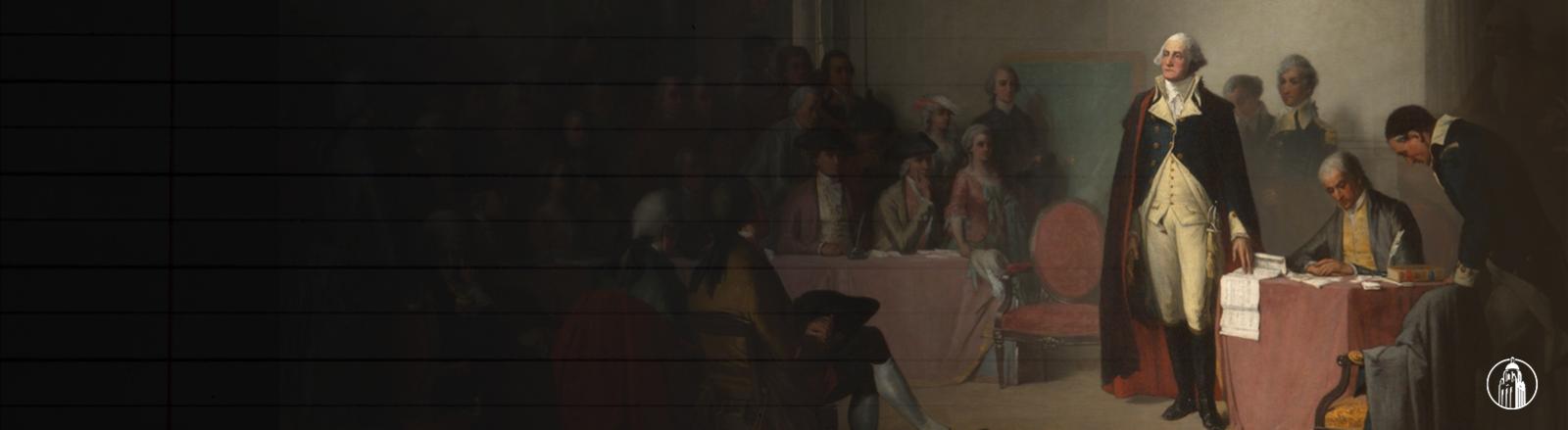
Today, we take for granted that 1776 gave America more than independence from Great Britain. The Declaration of Independence also provided later generations a statement of the principles that define the United States: liberty, equality, self-government, and respect for natural rights.
But what if the American Revolution had unfolded without this Declaration?
To honor the 250th anniversary of the Declaration of Independence, the Hoover Institution invites high school and college students to explore this question through historical essay writing.
The Challenge
Imagine that the American colonies revolted in 1776 without writing, or widely circulating, a document like the Declaration of Independence. Then, in an essay of 1,000 words or fewer, respond to the questions:
Could the Revolution have succeeded? Would the United States have emerged as the same kind of nation? How might later American history, or world history, have unfolded differently without the Declaration of Independence?
Successful responses will address the importance of the Declaration of Independence as a document to the formation of the United States, to the development of American identity, and to later movements seeking liberty and equality—whether in the United States or abroad.
Frequently Asked Questions
Q) Are group or collaborative submissions allowed?
A) No. While we appreciate that groups may wish to work together on an essay, we ask that all submissions reflect your individual effort. This will allow us to fairly compare submissions during the judging process.
Q) My essay is more than 1,000 words. What should I do?
A) Not to worry, you now have the opportunity to edit your essay! Please bear in mind that the word count limit is a strict cutoff; essays exceeding the limit will be disqualified.
Q) Where can I learn more about writing a history essay?
A) We encourage you to consult online resources, including the webpage of the Hoover History Lab. Additionally, artificial intelligence tools may be used—and could be a great resource—for learning about essay writing techniques.
Additional Questions:
If you have any questions about the rules of this competition that are not addressed on this page, you may email hoovermarketing@stanford.edu. Please note that we will not provide feedback on draft content or topic ideas and will limit replies to reasonable clarifications of the rules of this competition.