















- Science & Technology
- Innovation
- Security & Defense
- Confronting and Competing with China
- Determining America's Role in the World
- Understanding the Effects of Technology on Economics and Governance
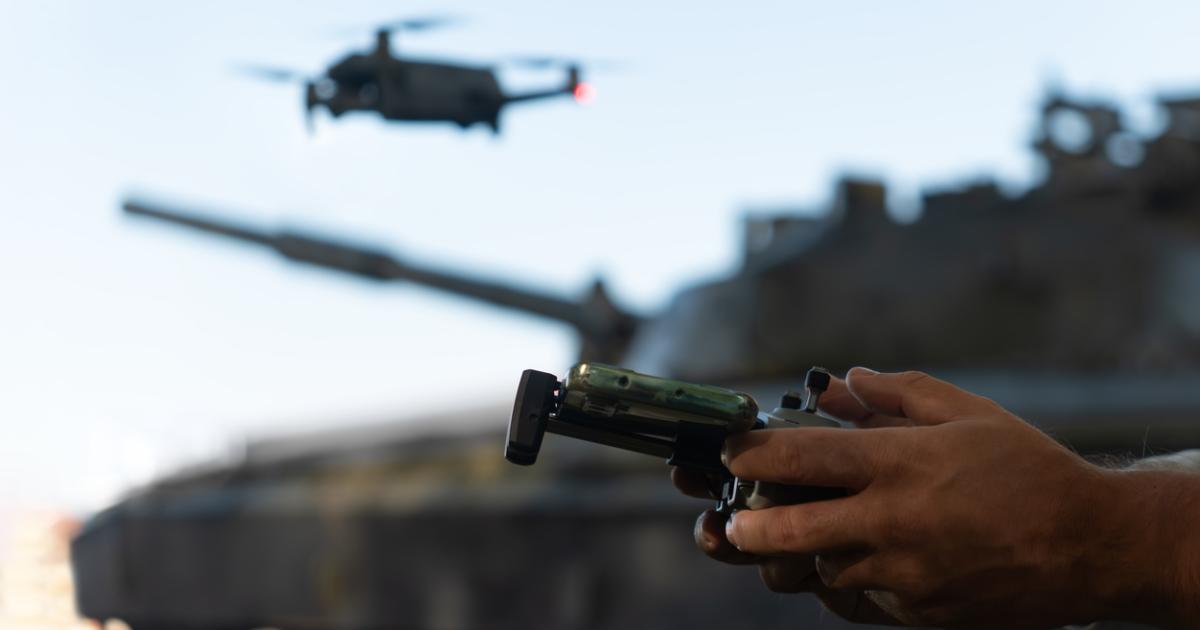
Drones are fast becoming the face of modern warfare. Ukraine, invaded by a much more powerful foe, carried out a wide‑scale implementation of drone technology that has significantly altered the balance of forces through a combination of:
- Short‑range devices employed against military equipment at the battlefront
- Medium‑range devices striking logistical support areas behind Russian lines
- Long‑range devices used against strategic targets in Russia’s interior.
Some of these missions involve communication between drones and ground controllers, but in many cases the aerial assets operate largely on their own.
In recent operations against Iran, the United States kept multiple high‑altitude drones aloft, persistently observing the entire battlespace. These platforms played a primary role in sensor fusion as well as persistent surveillance. Air Force Chief of Staff General Kenneth S. Wilsbach characterized the MQ‑9 as the “MVP” of the engagement, citing its success in myriad roles, including operating in high‑threat zones without risking pilots’ lives. Unlike many Ukrainian systems, these drones were in constant communication with other manned and unmanned assets. The combination of long loiter times, diverse sensor suites, and flexible communication architectures was central to their role in sensor fusion and, in some instances, in closing the kill chain.
In the not‑too‑distant future, further evolution of drone technology, combined with advances in artificial intelligence, makes it likely that some missions will be carried out exclusively by groups of drones that make decisions collectively, with minimal involvement of human controllers. There are important ethical and regulatory considerations to address before deploying such drone swarms, but the fact that several nations are actively conducting research and development in this area means that their impact must be examined conscientiously.
The operational intent is for the actions of a collection of drones to be further removed from direct human intervention. Mission success will therefore depend heavily on the ability of these drones to coordinate their actions effectively, which in turn demands extremely high confidence in the fidelity and resilience of communications between them.
Much of that communication today takes place via satellite links, which are the primary approach for most sophisticated drone operations. Adversaries can jam these low‑power signals, thus interfering with the human-controlled mission. The consequences of jammed or spoofed communications within a largely autonomous drone swarm are an even more serious security concern. This note addresses that concern.
Today, communications through air are almost always sent via radio frequency (RF) means, in which information is carried by modulating a carrier signal at the transmitter and demodulating it at the receiver. Drones typically receive signals of this type from a ground‑based controller, either by direct line‑of‑sight or, in more sophisticated airframes, via satellite links. The drone also determines its location, which is essential for all military missions, via RF signals from GPS (or other surrogate) satellites.
RF communications have significant downsides in contested environments. Electronic warfare sensor packages are adept at locating the origins of RF emissions, which is an effective way of pinpointing the location of drones and their control consoles. The long distances involved in satellite‑linked communications mean that signals are relatively weak and therefore easier to jam or spoof. Much of the Ukrainian conflict has taken place under conditions of GPS denial. Intercepting these communications is also possible, although doing so may require overcoming encryption algorithms. Such interception may become a major concern if large‑scale quantum computing matures, since it could threaten many of today’s widely used encryption schemes.
Communications ideally matched to future drone swarms thus need to address three problems:
- Provide alternatives or complements to radio frequency communications to minimize the chance of detection and interception
- Enable precise navigation without reliance on GPS or similar satellite‑based systems
- Employ encryption and key distribution methods that strongly resist spoofing.
Free‑space optical communications (FSOC) is emerging as a promising solution to the first problem. FSOC links are inherently narrower in spatial extent than RF signals and thus are harder to intercept. They are also much more difficult to jam, and they offer potentially much higher data rates, which is important for drone‑based sensor fusion. Optical communication pods have been fielded on some drones, primarily for air‑to‑ground links, but air‑to‑air optical communication between drones is still in the early stages of development.
The advent of quantum sensors—an emerging technology with profound implications for many disciplines—provides candidate solutions to the second problem. Magnetometers based on quantum‑level signatures have made it possible to construct maps of the Earth’s terrain with accuracies approaching that of GPS, based on tiny local variations in the magnetic field. Drones equipped with those maps and their own quantum magnetometers can execute military missions in GPS‑denied environments without significant compromise in navigation accuracy. A different suite of quantum‑based instruments may also enable operation in GPS‑denied scenarios using subtle variations in the Earth’s local gravitational field. Both magnetometers and gravimeters targeted to these objectives are under development and are being used to create the first maps that capture this information.
Quantum effects enter even more directly in the third problem, encryption. Using a technology called Quantum Key Distribution (QKD), it is possible to distribute to each node in a communication chain the same cryptographic key encoded in quantum states. This key is embedded in the encryption protocol in a way that any interference in that communication by a party which lacks the quantum key can be immediately detected, thus ensuring strongly protected communications. QKD has been implemented extensively over fiber‑optic networks, but its use in free‑space optical links has so far been demonstrated mainly under experimental conditions, notably by Chinese researchers. Development efforts under way today suggest that this technology will be demonstrated on operational aerial assets within the next several years.
Future drone swarms must not only communicate securely; they must also communicate in ways that are difficult to detect and disrupt. Two closely related capabilities are central here: low‑probability‑of‑detection (LPD) communications and advanced jammer detection.
Today, LPD is achieved primarily through classical techniques: spread‑spectrum RF waveforms (such as frequency‑hopping and direct‑sequence spread spectrum), low transmit power, directional antennas, and short, burst‑mode transmissions. These methods reduce the likelihood that an adversary can detect, classify, or geolocate the signal. However, they are ultimately limited by the sensitivity of classical receivers and by the need to maintain sufficient signal‑to‑noise ratio for reliable communication.
Quantum sensors offer a path to significantly enhance LPD performance. Rydberg atom‑based RF sensors, for example, can detect extremely weak RF fields across wide bandwidths. Integrating such quantum receivers into swarm platforms would allow drones to decode signals that are much closer to the noise floor than classical receivers can handle. This, in turn, enables operation at substantially lower transmit powers, making the swarm’s internal communications far harder to detect and target, while still maintaining reliable links among the drones.
The same quantum‑enhanced sensitivity can be applied to jammer detection. Classical electronic support measures (ESM) systems already monitor the spectrum and identify strong interference sources. Quantum RF sensors could extend this capability by detecting low‑power or distant jammers earlier, and by characterizing their waveforms with greater precision. A swarm equipped with such sensors could build a detailed, real‑time map of the RF environment, localize jammers more effectively, and adapt its communication frequencies, routes, and beam directions to minimize exposure. In combination with quantum‑enhanced optical links and QKD, this would give future drone swarms a robust, layered defense against both detection and electronic attack.
The scenarios discussed to this point involve active two‑way communication between drones. Another approach is to use one high‑value drone as a controller for a swarm of lower‑value drones, for example the kind of small, unmanned air systems employed in Ukraine. The latter need only have low data‑rate optical receivers, which can be added at very low cost. This approach is less capable than a fully communicating, highly autonomous drone swarm, but it can be implemented sooner and still offers significant operational advantages.
In a sense, drone swarm demonstrations have already taken place in the form of drone‑based fireworks displays, where large numbers of small drones execute complex, coordinated maneuvers. Militarizing this capability in sensor‑equipped drones with resilient, hard‑to‑detect, and potentially “unbreakable” communication links will present defense establishments with a new and powerful tool in their arsenals.
The use of such assets will entail difficult decisions about rules of engagement and the degree of autonomy granted to lethal systems. Nonetheless, multiple nations are actively pursuing research in this area, and it is important to recognize that quantum sensors and advanced swarm communications are likely to play a central role in the next generation of unmanned warfare.

