







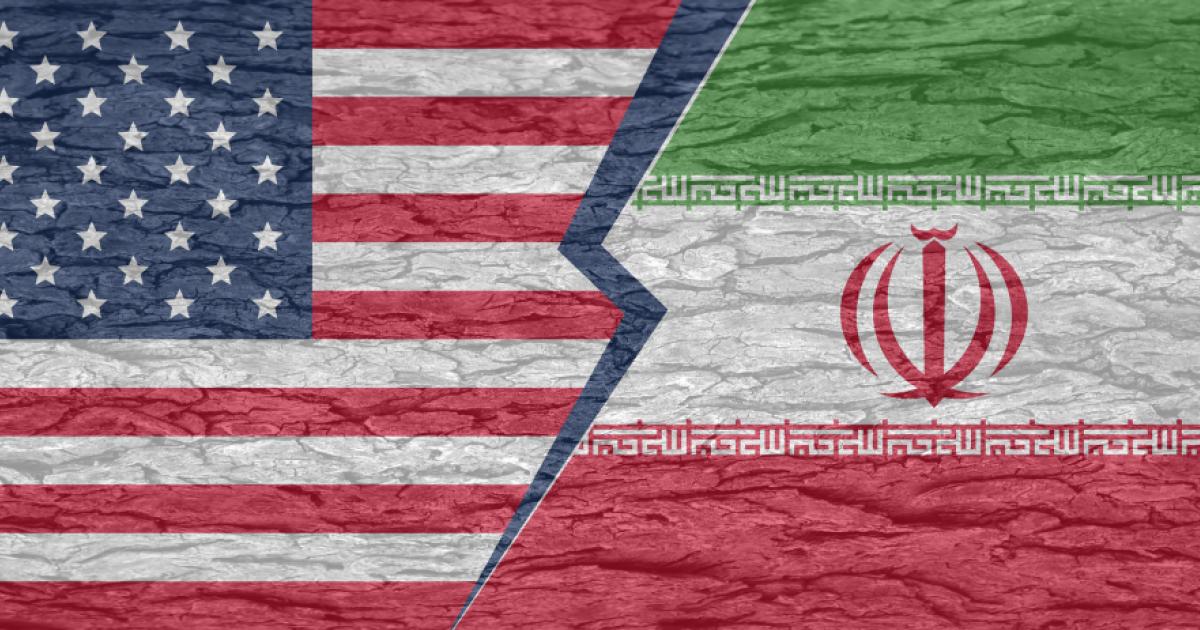
Operation Epic Fury began on February 28, 2026 at 1:15 AM Eastern Time. Initial targets included IRGC command and control centers, air defense systems, missile and drone sites, as well as naval installations. Iranian leadership was decapitated; Ayatollah Ali Khamenei was killed in his compound in Tehran. One day later, on March 1, President Trump announced that the campaign had been planned as an operation to last for four to five weeks, promising that it would not be difficult.
As of this writing, six months later, the conflict continues. What light does this shed on Epic Fury and what lessons can be drawn?
In terms of its stated goals, the joint American-Israeli operations during March were successful. Iran’s military capacity was profoundly degraded. Yet no matter how rational the planning and effective the delivery, Clausewitz teaches that entering war elicits degrees of unpredictability, the so-called “fog of war,” where unforeseen factors come into play. It is never just a matter of the well-laid plans and clear intentions; as the saying goes, “the enemy gets a vote.” In addition, the goal of war is not simply defeating the adversary’s military forces; it is about imposing one’s will on the enemy, in other words, translating battlefield success into political outcomes. The outcome of Epic Fury still remains elusive. Rapid military success has been followed by inconclusive negotiations.
In the frustrating months since the initial attacks, with both sides engaging in triumphalist rhetoric designed for domestic consumption and the focus shifting to the Straits of Hormuz, the Trump administration has respected two redlines, at least so far. First and foremost, there has been no deployment of ground troops. Press reports of plans to seize Kharg Island were in fact confirmed by a posting by the President on June 11, although it is not clear as to whether he was describing a contingency plan soon to be launched or only engaging in the on-going war of words with Tehran. Boots-on-the-ground is dangerous political territory insofar as it would open the administration to the accusation of initiating another “endless war.” Deciding against ground troops however poses the question as to whether air power alone can produce victory.
Secondly, the administration has apparently decided against pursuing an irredentist strategy of supporting a Kurdish uprising within Iran. Iran is a multi-ethnic state in which Persians make up at most 60% of the population. A Kurdish rebellion in the northwestern part of the country might contribute to a destabilization of the regime. There have been similar considerations with regard to Arab, Azeri and Baloch minorities. However, the counterargument has evidently prevailed that attempts to break up the country might have the unintended consequence of mobilizing Persian nationalist support for the regime. So, in the end, two strategies that might have accelerated the defeat of the Islamic Republic–inserting U.S. troops or inciting ethnic revolts–were both rejected.
Beyond those limitations on strategy, the American ability to wave an effective war against Iran has reportedly faced three significant headwinds. Open source analyses indicate that the U.S. faces shortages of both defensive interceptors and long-range offensive munitions. These deficits may be impacting war planning, although Secretary of War Hegseth has explicitly denied that interceptor stockpiles are low. In contrast, Deputy Defense Secretary Steve Feinberg revealingly directed defense industry leaders on August 5 that they should submit plans for “significantly faster, more aggressive delivery schedules and/or increased production for critical capabilities.” The war is putting a sharp focus on the need to grow the defense industrial base significantly, a project that will entail political and budgetary challenges beyond this administration and beyond the Iran conflict.
A second challenge faced in the execution of Epic Fury is the de facto dearth of allied support. Israel of course proved itself to be a capable military ally, as well as a source of technological innovation. The UAE also demonstrated important capabilities in striking Iran, especially in response to Iranian attacks on its facilities. Yet the Europeans have been notoriously disinterested in participating; to be sure one might attribute this in part to the administration’s refusal to build a pre-war political consensus, although that might have been a fool’s errand, given Europe's focus on Ukraine, its military underdevelopment and its general reluctance to support any Trump administration initiative. Saudi Arabia’s denial of overflight permission is a particular disappointment. It is worth noting however that a similar refusal from Italy caused a diplomatic ruffle between Rome and Washington. In contrast, because of Riyadh’s greater strategic importance in the immediate Gulf area, there were no similar consequences for the Saudis.
A further complication involved other international aspects. The United States has not been simply facing Iran alone. In reality it faces an Iran receiving significant support from the key adversaries in the current great power competition. Reports indicate that Russia has been providing Iran with intelligence concerning American targeting operations, and China remains an important source of resources, not only through its continued importing of Iranian oil. The Iran War is, therefore, on the one hand about the attempt to put an end to Iran’s destabilization campaigns in the region and its aspiration to become a nuclear power. On the other hand, however, it is also a terrain in which Russia and China are engaged in a de facto proxy war to humiliate and defeat the U.S. Without the Russian and Chinese support, it is likely that the Iranian regime would have already collapsed in the face of the strength of Epic Fury.
Two very specific lessons have emerged from the conflict. Previously, Iran claimed that it had a self-imposed limit of 2,000 kilometers on its ballistic missile range. This limit was allegedly approved by Khamenei himself, on the grounds that it was sufficient to enable Iran to target all the U.S. bases in the region. Yet on March 20, Iran launched two missiles targeting the joint US-UK base at Diego Garcia in the Indian Ocean, 4000 km from Iran. While one missile failed in flight and the other was intercepted, this launch indicates a much greater range than previously conceded by Tehran. A significant implication of this expanded range is not about the Indian Ocean but the fact that it puts most European capitals within Iranian missile range. While there is some dispute in the intelligence community about the precise nature of the missiles, there is no doubt that Iranian missile technology is capable of much more than Tehran previously admitted. Iran is preparing to project power far afield. Europe should finally take note.
The regime has also demonstrated its continued and growing willingness to use violence to maintain its domestic grip on power. The key event took place on January 8-9–just prior to Epic Fury–a massacre on an unprecedented scale. In fact, it is useful to trace the sad scope of Iranian government violence over past decades. In response to the 2009 Green Movement protests over fraud in the presidential election, thousands were arrested and dozens killed. A decade later, the country-wide protests over fuel prices in 2019 and 2020 led to 7,000 arrests and 304 killings, according to Amnesty International. In the 2022-23 protest wave sparked by the killing of Mahsa Amini, tens of thousands were arrested and hundreds killed. In this wave of repression, security forces intentionally shot metal pellets into the eyes of protestors in order to blind them. Yet the violence of January 2026 broke previous records, as policing strategies of crowd control were intentionally replaced with mass killings. The Guardian reports more than 30,000 deaths, although precise independent verification is impossible. The point is that the regime has shown no inhibitions concerning the use of mass violence against its own population. This brutalization has corroded what may have been left of domestic legitimacy–and that was before Epic Fury. In its wake, mass arrests took place and rates of execution for alleged political crimes accelerated.
This uninhibited direction of violence against the domestic population as well as the ambition to project power outward (missiles launched at Diego Garcia) indicate the indisputably dangerous nature of the regime. This is exactly the sort of malign actor which must be prevented from gaining the capability to produce nuclear weapons, the original rationale for the war. Nor should it be allowed to have a chokehold on the flow of global energy resources in the Straits of Hormuz. Yet the experiences since February 28 demonstrate the limits of kinetic action to bring the regime in Tehran to an acceptable resolution of the disputes.
With that we arrive at the current administration proposal to ramp up sanctions in order to put even more pressure on the Iranian economy. Sanctions are far from a new strategy, but what might be new this time would be an application of sanction terms to financial connections within the Gulf, notably Dubai, and to China. Each of these moves would have secondary complications, but they will be necessary to ensure effectiveness.
That the route of economic suppression might lead to success is evident in some recent statements from Tehran. While Iranian hardliners, especially in the IRGC, are prepared to hunker down and watch the economy decay further, as they continue to attempt to harm world trade by blocking Hormuz, civilian leaders in the government are beginning to signal the need for a resolution. Iranian President Masoud Pezeshkian has called for an end to the war soon. Even more telling however are the comments by the Speaker of the Parliament, Mohammad Bagher Ghalibaf whom the Wall Street Journal quotes as saying, “No matter how much military power we have, if our people are struggling and the country lacks financial circulation and economic growth, we will not achieve progress.” That concession indicates that Washington's shift from the direct military phase of Epic Fury to a stringent policy of economic constraint may ultimately lead to the outcome the U.S. wants.

