







- State & Local
- California
- Monetary Policy
- Campaigns & Elections
- California Decides
- Empowering State and Local Governance
If you were expecting anything resembling a “game changer” during this week’s televised debate between the two men aiming to be California’s next governor, then you’re not familiar with the nature of Golden State elections.
Yes, California debates do have their “moments.” In 2003 and during the lone debate during that year’s gubernatorial recall, Arnold Schwarzenegger suggested he had a “perfect part” for Arianna Huffington in his next Terminator film—the insinuation being that Arnold wanted to give his debate nemesis the same toilet swirly he gave a female robot in a previous Terminator installment.
Or, if you want to go further back in time—all the way to 1982—there was a US Senate debate featuring then–governor Jerry Brown and then–San Diego mayor Pete Wilson during which Brown tried to make Wilson look like a policy lightweight by springing a question about US policy toward Namibia, only to have it spectacularly backfire.
In the end, Arnold’s ribald humor didn’t cost him the election (or do that much for Huffington, who finished a distant fifth with 0.6 percent of the vote). Brown’s failure to win his Senate race—his only loss in seven such attempts—probably had more to do voter fatigue after eight years of his governorship (Brown’s disapproval running in the mid-50s) than the perception of being a debate bully.
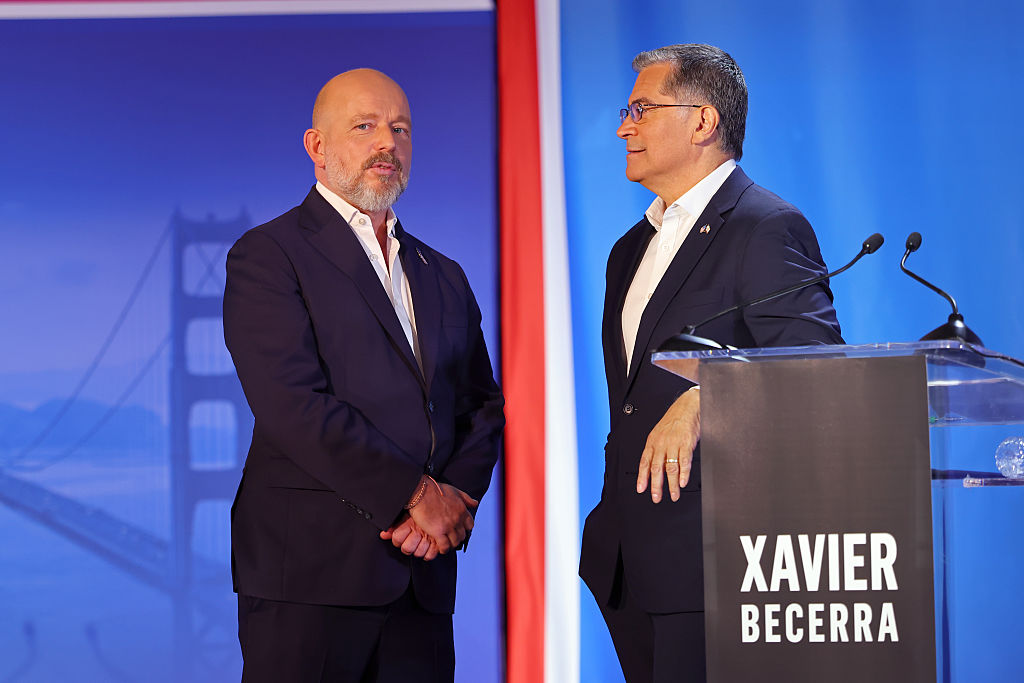
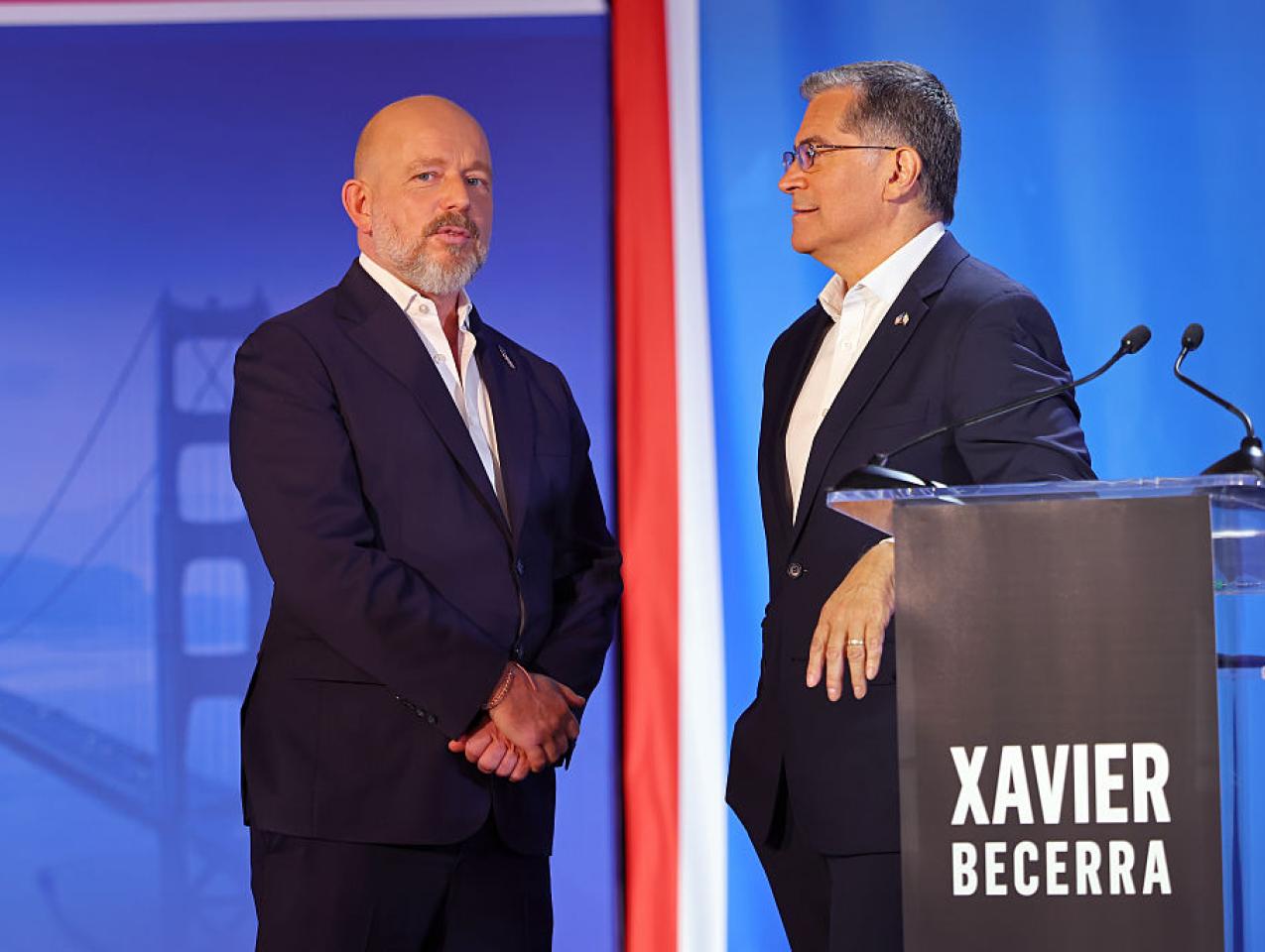
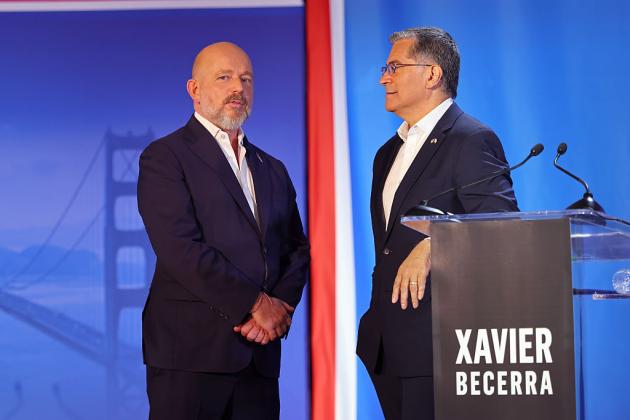
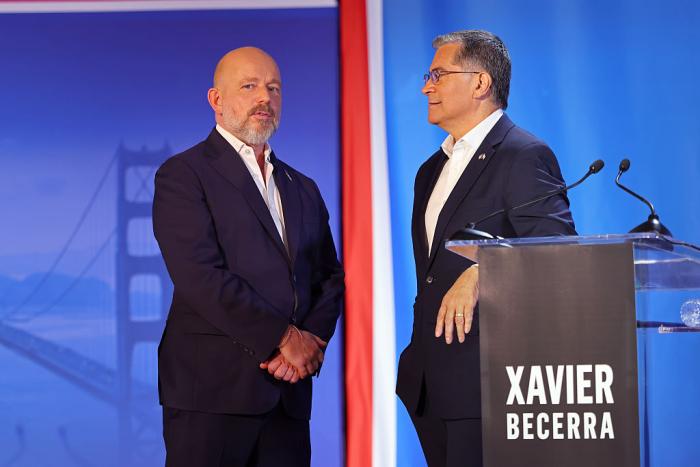
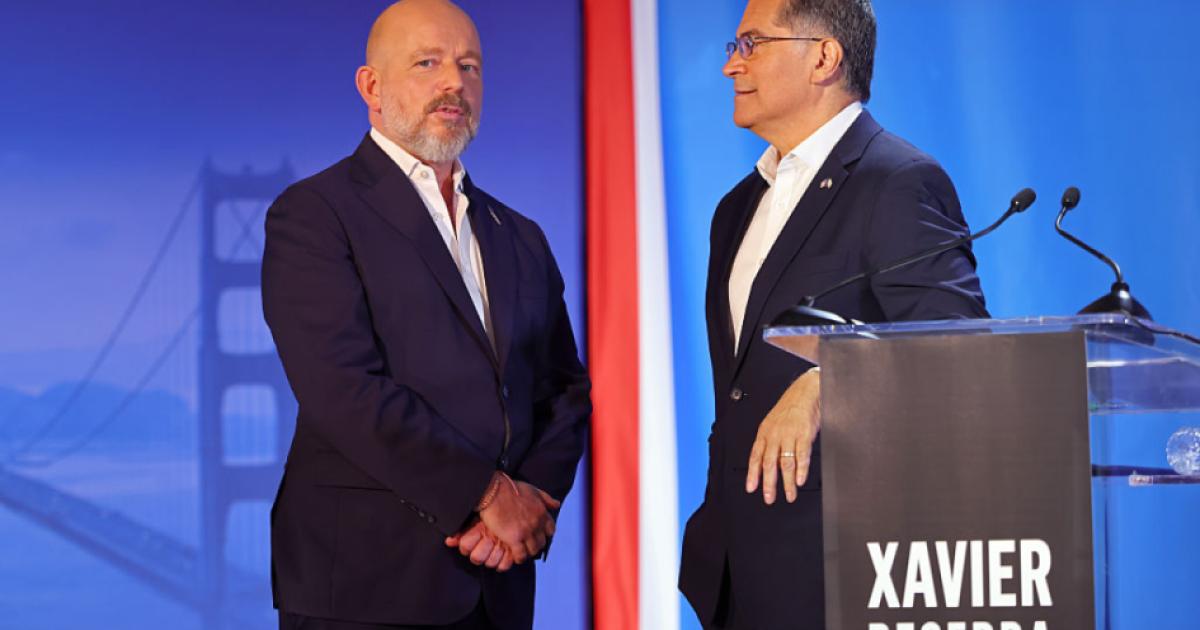
So, what did we learn after Wednesday’s hourlong face-off on CNN between Democrat Xavier Becerra and Republican Steve Hilton?
Here are four takeaways.
1. The front-runner. For Xavier Becerra, the former Democratic state attorney general and front-runner in this race, two rules seemed evident: stay calm and try to play error-free ball; and when in doubt, invoke Donald Trump—that latter tactic making sense as this recent poll showed only 27 percent of likely voters in the Golden State giving the president a thumbs-up.
Sure enough, it took little time for Becerra to link his Republican challenger to the Republican president and blame Trump for California’s myriad woes, even if at times it was exaggerated (one such example: calling out Trump for Hollywood’s implosion).
Otherwise, Becerra’s approach was one part cuddly (it took him less than thirty seconds to remind viewers he’s the son of Immigrants) and a second part prickly (accusing his opponent of “new math” and “alternative facts” and—maybe the low point of the debate—accusing the British-born Hilton of caring less for fellow immigrants who share Becerra’s skin color).
Otherwise, California viewers didn’t learn much about where Becerra stood on a handful of contentious matters that he’ll likely inherit come January (more on this in a minute).
In all, a good night for Becerra: no major gaffes; no need for his campaign to go into post-debate “damage control.”
2. The underdog. To his credit, Steve Hilton thinks big and outside the box—even if, at times, it sounds like pie in the sky (case in point: his call for ten new cities to help alleviate California’s housing crisis).
Moreover, Hilton effectively needled his opponent, reminding viewers that Biden White House officials privately called Becerra an “idiot” (curiously, Hilton didn’t mention the former AG’s ties to a Sacramento fraud scandal).
Otherwise, Hilton came across as a pugilist ahead on points on the scorecard but sorely in need of a knockdown: in this debate, a candidate with but a puncher’s chance in the election not helped by CNN’s moderators devoting five minutes to vaccines (a benefit as it forced the pro-vax Hilton to deviate from the MAGA portion of California’s electorate).
3. State of the race. The problem with a sixty-minute candidates’ debate: subtract the time lost to crosstalk and network breaks, and much of what should and could be discussed goes undebated.
That would include:
- Despite the debate being held in Burbank and a short drive (even by LA standards) to the scenes of horrific wildfires in early 2025, there was precious little talk about disaster preparation and response—ordeals almost every California governor endures, be it fires, floods, or earthquakes.
- Despite the candidates lamenting the current state of K–12 education, there was no follow-up question about the present tragedy of students at elite California public universities arriving on campus unable to do middle-school math.
- What either candidate, if elected, would do about transgender athletes—an issue the next governor will be forced to address after Gavin Newsom called such competition “deeply unfair” but hasn’t offered a policy remedy.
- Finally, in a state that takes pride in its creativity and non-conformist spirit, an hourlong debate failed to show how a Becerra administration would be different from the current regime (and sixteen years of California led by Democratic governors), nor how a Governor Hilton would break ranks with a Republican president and (depending on November’s outcome) a GOP Congress.
4. Building a better mousetrap. It wouldn’t be an election cycle without a debate over Golden State debates.
The good news: this year’s installment, coming as it did on a Wednesday night, didn’t conflict with college or pro football, nor for that matter the Los Angeles Dodgers’ postseason run (OK, there was a Yankees–Red Sox playoff game that ran on local NBC affiliates). Moreover, the fact the debate was televised was an improvement over 2018 and that previous open-seat governor’s race in California; voters in that election were afforded just one radio debate.
However, there’s plenty of room for improvement, beginning with what should be a simple fix: more debates.
In a better world, California gubernatorial contests would feature not one but at least four debates: one in Sacramento, addressing government drift, budget growth and policy choices; a second in the San Francisco Bay Area, addressing Northern California concerns (tech and forest management further north); a third in the Central Valley, addressing agriculture and a regional economic renaissance; and a fourth in Los Angeles, addressing Southern California matters (Hollywood’s management and disaster management).
Four debates would be a departure from recent gubernatorial elections, but not unprecedented (in 1998, Gray Davis and Dan Lungren agreed to five gubernatorial debates and met four times). And, yes, it would eat into the candidates’ September schedules, if the idea is to have as many debates as possible before voters receive their ballots a month ahead of Election Day.
However, it would also require state government to step up. How so? Perhaps by establishing a bipartisan debate committee as opposed to the current ad hoc approach of candidates, media partners, and venues scrambling to get an event staged—with a little state money tossed in, especially if the debates are held at public universities (California’s $20 million annual Civic Media Fund might be one source for what’s clearly a civic responsibility).
Is that asking too much from California’s civic leaders?
What a good question for another gubernatorial debate—if only there were one.

