Today, Victor Davis Hanson appears on Uncommon Knowledge to discuss his new book on Trump’s troubled years ahead of winning his second term as president. John Cochrane announces new papers he’s written on inflation control. Jean Cannon writes about an intrepid lawyer who helped free more than a thousand people imprisoned in Castro’s Cuba. And Brandice Canes-Wrone and coauthors explore the political leanings of big political donors in comparison with their non-donor peers.
The Presidency
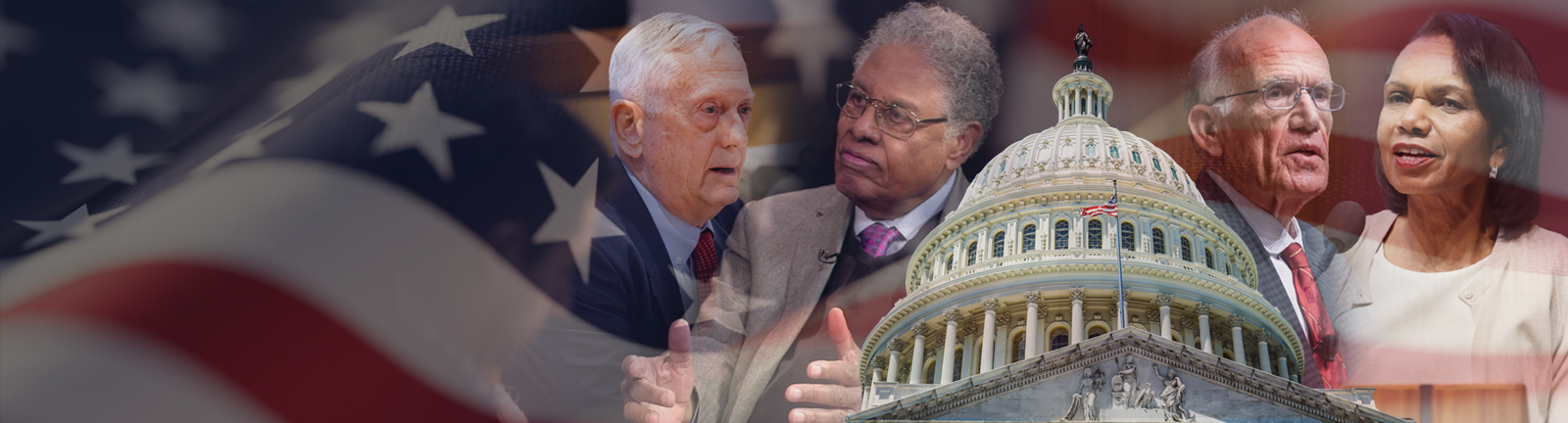
How did Donald Trump go from political defeat and the aftermath of January 6 to a second term in the White House? On a new episode of Uncommon Knowledge with Peter Robinson, Historian Victor Davis Hanson discusses his latest book, The Counter-Revolution: The Fall and Rise of Donald Trump and the MAGA Movement. Hanson argues that the prosecutions of Trump strengthened his candidacy, evidenced by his gains among Black and Hispanic male voters. Hanson also explains why prominent (and former Democratic) Silicon Valley figures rallied behind him. He delves into Trump’s second-term agenda, from immigration enforcement to his confrontation with universities, the media, and other institutions Hanson sees as centers of progressive power. Stay tuned for Part 2, in which Victor discusses Trump’s promise to remake Washington and restore American strength, the war in Iran, and his own health. Watch the episode here.
Economics
On the latest episode of Capitalism and Freedom in the Twenty-First Century, fellows Jon Hartley and Mickey Levy discuss Levy’s early career working with Alice Rivlin at the Congressional Budget Office and with Arthur Burns at the American Enterprise Institute, as well as being part of the Shadow Open Markets Committee from its early days in the 1970s. They also discuss how monetary policy has evolved from monetarism’s influence in the 1970s and 1980s to inflation targeting since the 1990s, the optimal size of the Fed balance sheet, and the recent pandemic-era 2020s inflation. Watch the episode here.
Over at his Substack, Senior Fellow John H. Cochrane announces the publication of two new papers in the Journal of Macroeconomics. They are Inflation Dynamics with a Generalized Lucas Philips Curve and New-Keynesian Inflation Control is Equilibrium Selection. Cochrane asks, “How do central banks lower inflation by raising interest rates? Or can they? In particular, how can a central bank lower inflation all alone—without coincident tighter fiscal policy? And how can today’s interest rate lower future inflation?” Read more here.
Freedom Frequency
When the CIA recruited James Britt Donovan for a delicate mission to Fidel Castro’s Cuba, the American lawyer had already shown a talent for taking on sensitive international tasks. Donovan had defended an infamous Soviet spy, arranged a prisoner swap that brought home American U-2 pilot Francis Gary Powers, and helped prosecute the Nuremberg war-crimes defendants. This time, writes Hoover fellow and archivist Jean M. Cannon, America sent Donovan on an ostensibly private mission to free political prisoners, particularly the 1,100 Cuban exiles captured during the failed Bay of Pigs invasion. Donovan’s success in liberating thousands of captives—eventually almost ten thousand of them—showed the value of patient, personal diplomacy, Cannon writes. And it helped that Donovan had the insight to offer the right incentives. Read more here.
Revitalizing American Institutions
In the latest edition of the Journal of Politics, Senior Fellow Brandice Canes-Wrone and coauthors examine the policy views of US political campaign donors in comparison with their affluent peers who do not donate to campaigns. Looking at donors from 2017–2018, they found donors to both parties hold “more ideologically extreme positions on domestic policy” than their wealthy peers and the public at large. “On international issues, Democratic donors are more pro-internationalist than their affluent and general-public counterparts, while Republican donors resemble affluent co-partisans,” they wrote. “These patterns cannot be explained by demographic differences or levels of political interest.” Read more here.








Related Commentary