



- History
- Revitalizing History
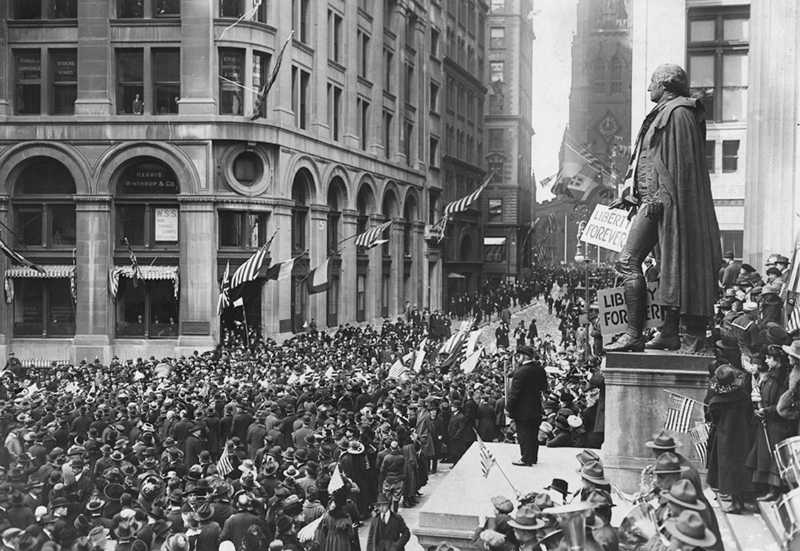
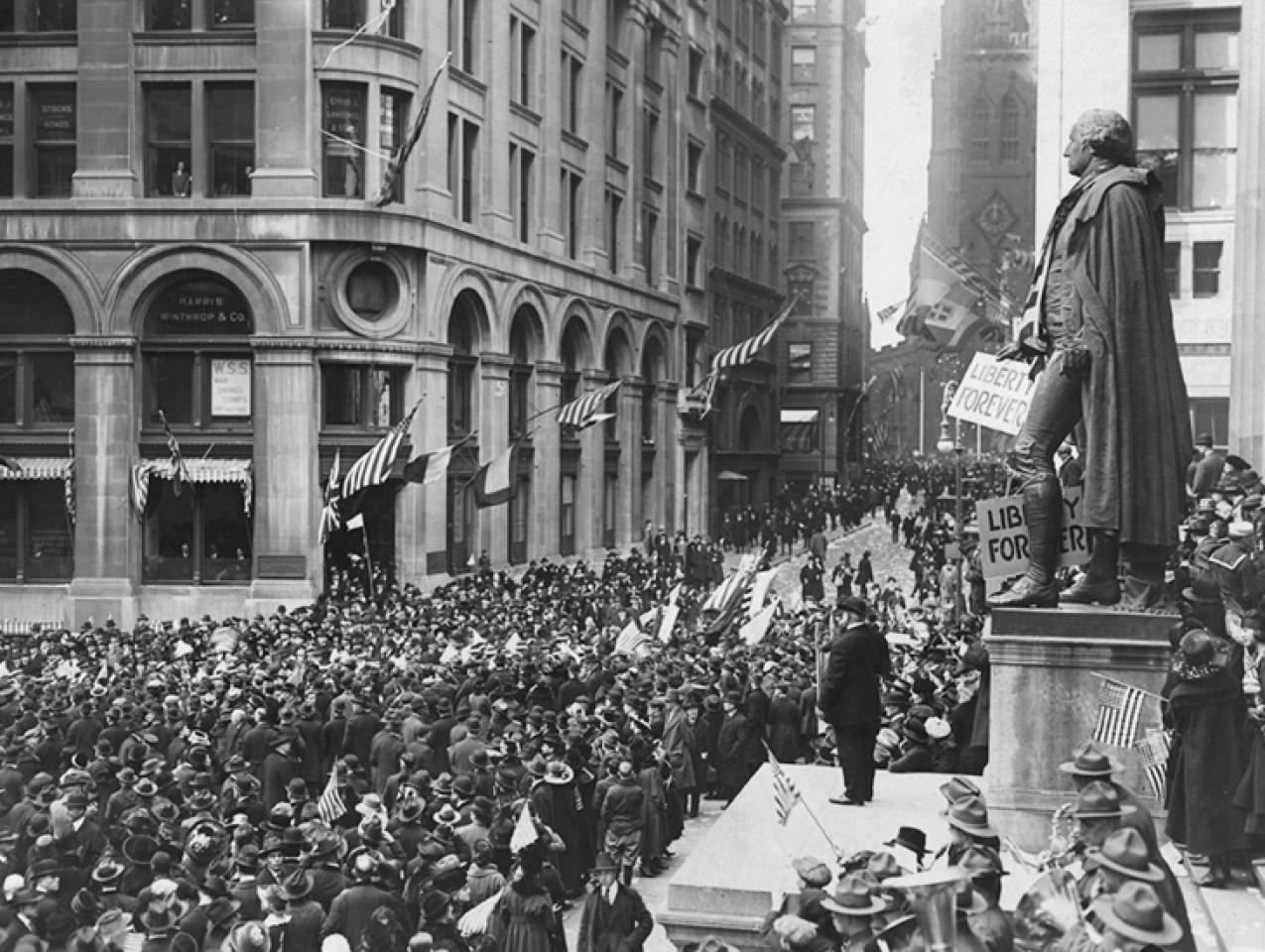
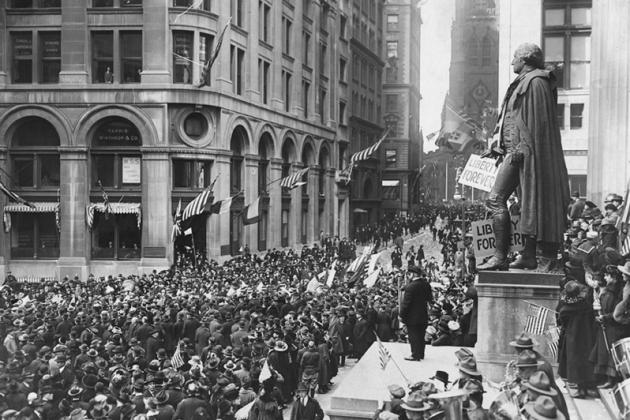
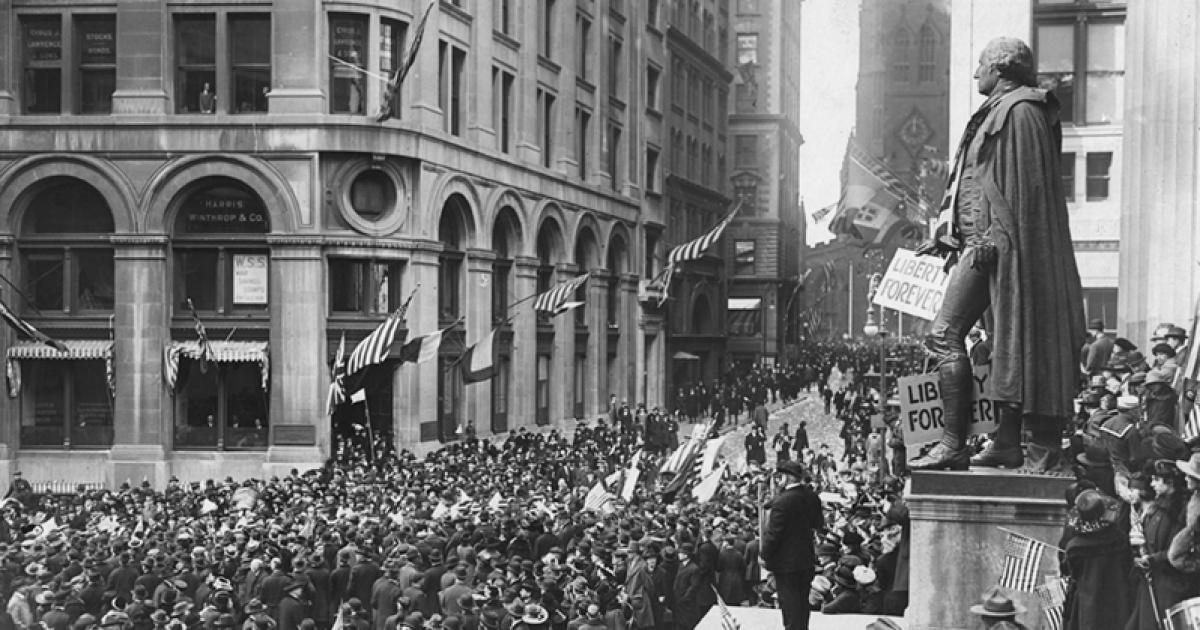
The world breathed a sigh of relief when, on the eleventh hour of the eleventh day of the eleventh month—November 11, 1918—the guns fell silent. The Great War, as World War One was then known, was over in Europe. Fighting continued for a few weeks or months in East Africa and the Middle East.
The world breathed a sigh of relief, and so do I. On Armistice Day—now also known variously as Remembrance Day or Veterans Day—my grandfather was fighting on the Western Front. He was a machine-gunner in the U.S. Army, deployed near the German border in northeastern France. His unit was still attacking enemy strong points, even on the morning of November 11, and still taking casualties. If the fighting had continued my grandfather might not have survived, and then I, gentle reader, would not be with you today.
And some indeed wanted the fighting to continue. General John Pershing, for instance, head of American forces in Europe (called the AEF or American Expeditionary Force) opposed the armistice. To understand why, consider the state of things at the time. In autumn 1918 the German high command recognized that they were about to collapse under the weight of the Allied offensive in the West, combined with the Allied naval blockade of Germany. So, they asked for an armistice. An armistice, literally means “a standstill of arms.” It is, in effect, a truce to allow combatants to discuss peace terms.
The agreement that Germany reached with the Allies allowed the German army to march home in good order from the territories they had conquered in France and Belgium. To German civilians, it did not look as if their men had been defeated at all. How great was their shock when, in 1919, the Allies imposed peace terms on Germany in the Treaty of Versailles. Most Germans considered the treaty a Diktat, a dictated peace, when the signatories to an armistice, they reasoned, should have negotiated together.
Among the reasons cited by Pershing for opposing the armistice was the belief that the Allies could give the Germans a thorough drubbing with not much more fighting. He also feared the political consequences of an armistice. In a letter to the Supreme War Council, Pershing wrote:
An armistice would revivify the low spirits of the German army and enable it to organize and resist later on and would deprive the Allies of the full measure of victory by failing to press their present advantage to its complete military end.
Pershing wanted to keep fighting until the Germans agreed to unconditional surrender.
He proved prescient. By not forcing the Germans to admit defeat, the armistice allowed the legend of the “stab in the back” to arise and fester in postwar Germany. The Allies never defeated the German army, some Germans insisted. Instead, German politicians, communists and, above all, Jews had betrayed it. Hitler used this legend to terrible effect.
But Pershing’s arguments fell on deaf ears. Americans had entered the war only in April 1917, but France, Belgium, and Britain had been fighting since August 1914. After years of heavy casualties, occupation, and the devastation of much of France and Belgium, they were exhausted. In addition, a pandemic was raging, an influenza epidemic, known inaccurately as the Spanish Flu. It would eventually kill tens of millions worldwide. The will to continue the war was simply absent.
Although the politics of the Armistice proved to be fraught, the rise of Hitler and Nazism cannot simply be blamed on it. Many other factors contributed to that catastrophe. But as we in America mark Veterans Day this November 11, and as we give our servicemembers a well-deserved sign of respect, let’s also take a moment to recall that history is full of ironic twists and turns. The way that one war ends sometimes sets the stage for beginning of another.
Barry Strauss is Corliss Page Dean Senior Fellow at the Hoover Institution and Bryce and Edith M. Bowmar Professor in Humanistic Studies Emeritus at Cornell. His most recent book is Jews vs. Rome.