









SUMMARY

We study the effects of large-scale humanitarian aid using novel data from the American Relief Administration's (ARA) intervention during the 1921-1922 famine in Soviet Russia. We find that the allocation of relief closely tracked underlying food scarcity and was uncorrelated with subnational politics. We show that ARA rations reduced food prices, raised caloric intake, lowered the prevalence of relapsing fever, and increased rural birth cohorts. The aid benefited poorest peasants most and proved most effective in provinces with higher levels of human capital. Back-of-the-envelope calculations suggest that, absent ARA relief, the 1926 population would have been 4.4 million lower.

To read the paper, click here.
To read the slides, click here.

WATCH THE SEMINAR

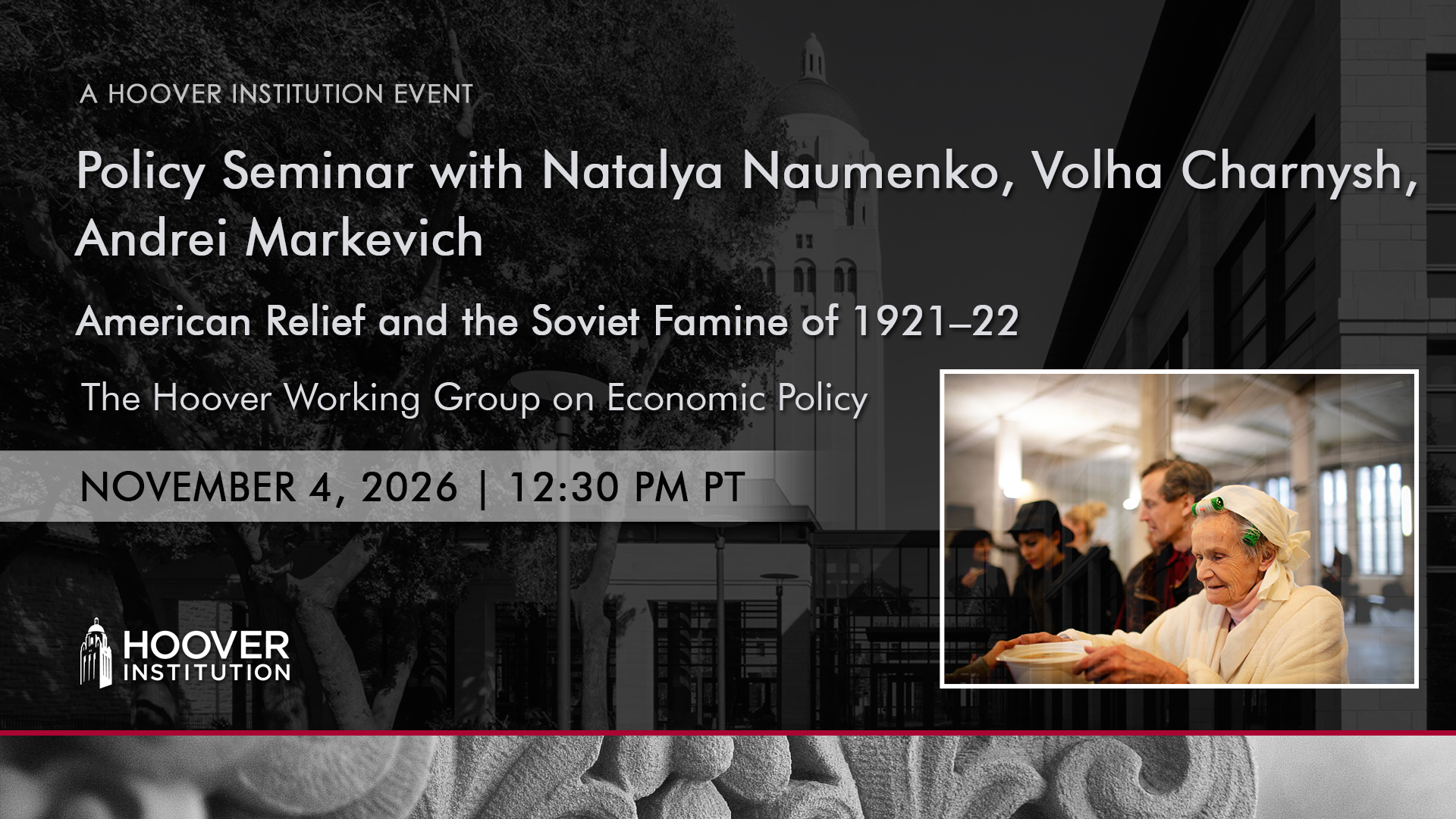
Topic: “American Relief and the Soviet Famine of 1921–22”
Start Time: November 4, 2026, 12:30 PM PT
Upcoming Events

Tuesday, December 1, 2026
Taiwan
Taiwan's 2026 Local Elections: Assessing The Results
The Hoover Institution cordially invites you to Taiwan's 2026 Local Elections: Assessing the Results on Tuesday, December 1, 2026 from 12:00-1:30 PM… Herbert Hoover Memorial Building, Hoover Institution
Wednesday, December 2, 2026
Student Loans
Higher Education, Research Investment, And The Public Interest
The Hoover Institution's Center for Revitalizing American Institutions invites you to attend Higher Education, Research Investment, and the Public…
Thursday, December 3, 2026 4:30 PM PT
Securing Freedom: Innovation, Industry, And The Future Of Deterrence
An advance screening of Deterrence: Winning the 2nd Cold War and a conversation with Shyam Sankar and H.R. McMaster Register To Attend Hoover Institution, Stanford University
overlay image