







- Europe
- Campaigns & Elections
- Politics, Institutions, and Public Opinion
- Answering Challenges to Advanced Economies
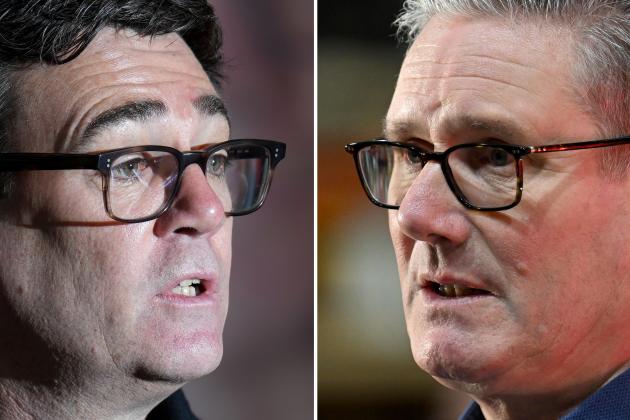
Andy Burnham is now the UK’s seventh prime minister in a decade, and Britain is near the top of the global and European political instability tables. While Italy used to be a byword for chaos, Giorgia Meloni has been in power there since 2022, when Liz Truss was (fleetingly) Britain’s prime minister.
An unfortunate air of comedy hangs over this reality. When a lettuce can outlast a prime minister, and Larry, the Downing Street cat, has seen off six PMs (so far), Britain becomes the object of global mockery.
Readers may well have questions about how such a state of affairs can exist and what it means for Britain. This essay therefore examines the constitutionality of leadership changes, the embarrassing moments of Burnham’s ascendancy, public opinion about the coup, and what the nation lost by experiencing a coronation instead of a debate.
How the Labour left, mainstream media, and pundit class ousted Keir Starmer is a fascinating tale of denial, delusion, and self-dealing, and ultimately one of national decline. For a discussion of the parliamentary chess match and electoral gimmicks that brought Burnham, a “master of reinvention,” to the leadership of Labour after two failed attempts (2010 and 2015), see here and here.
A constitutional coup
The deposing of Starmer as Labour leader and therefore prime minister is consistent with the understanding of UK parliamentary elections as giving mandates to political parties, not to party leaders.
In a parliamentary election, voters choose six hundred and fifty members through elections in individual constituencies; there is no separate vote for prime minister. The party that wins the most seats has the right to form a government, and its leader becomes the prime minister. If no party wins a majority, some type of coalition may be created, but the leader of the larger party will be the PM (e.g., David Cameron from 2010–15).
If the government loses a confidence motion, we typically see a new election called and a new party leader chosen. But even in the absence of such a motion or an election, it is no more constitutionally problematic for the House of Commons to change the prime minister than it is for the US House of Representatives to change the Speaker.
Walter Bagehot (The English Constitution, 1867) contrasted the Commons with the US Electoral College, arguing that the former is:
a real choosing body; it elects the people it likes. And it dismisses whom it likes too. No matter that a few months since it was chosen to support Lord Aberdeen or Lord Palmerston; upon a sudden occasion it ousts the statesman to whom it first adhered, and selects an opposite statesman whom it at first rejected. Doubtless in such cases there is tacit reference to probable public opinion; but certainly also there is much free will in the judgment of the Commons. The house only goes where it thinks in the end the nation will follow.
On the other hand, changing a prime minister without a parliamentary election contradicts an understanding of UK politics as increasingly “presidential.” This refers to a politics in which the PM is the key political leader rather than just the “first among equals” in a cabinet government. This also suggests that voters increasingly make decisions based on their views of party leaders rather than of the parties, which gives the PM more legitimacy to exercise power, and to remain in power.
While the traditional view justifies the coronation of Burnham, it nevertheless creates some limits on his room for policy maneuver. The authority of any government derives from the party’s manifesto in the last election. Winning the June 18 by-election in Makerfield, a single constituency that is not even a coherent whole, does not justify Burnham making large-scale policy changes. If the new prime minister wishes to move in new directions, many will argue that an election should take place.
Burnham’s recent policy opinion shifts (from Europe to gender to fiscal rules) may be intended to avoid the appearance of manifesto departures that would strengthen calls for an election. But if he largely sticks to the Starmer script, then Labour has little justification for the coup except anticipated electoral self-interest.
The royal role
Recent events followed the Crown-in-Parliament convention that a prime minister is in practice chosen by the Commons but officially by the monarch.
Starmer informed the king on June 22 of his decision to resign as Labour Party leader, as he knew that his parliamentary support had collapsed after Burnham won the by-election. This inevitably led to his removal from Downing Street because PMs wear two hats—party leader and government leader—and by convention (although not by law) they cannot be the latter without being the former. Depriving the PM of party leadership is the mechanism by which parties depose prime ministers.
The Labour Party then chose its new leader through an internal Commons process that began with Burnham securing the nomination of at least eighty-one Labour MPs to be party leader. Had any other MPs received such a nomination, the next step would have been a national vote of Labour Party members and affiliate members. Because Burnham was not challenged by another MP, such a vote was not necessary.
Starmer then met with the king and resigned as PM, and Charles III then invited Burnham to lead His Majesty’s Government. There is no American-style transition; the leadership change takes place immediately, just as it does after an election.
Cringeworthy moments
After his June 18 by-election victory in Makerfield, Burnham took a train journey from Manchester to London to be sworn into Parliament. The trip was covered live by helicopter, a surreal event that says much about the longing for a messiah in British politics. Perhaps that train can be placed next to the red Brexit bus in a museum of political illusion.
And the constant media references to “The King of the North,” “Northern Queens,” and “the prince across the water” added an embarrassing, low-budget Game of Thrones veneer to the least surprising power grab in recent parliamentary history.
Upon his arrival in Parliament, the World War I and II memorials of Westminster Hall were forced to serve as the backdrop for the inevitable selfie with starstruck (or appointment hungry) Labour MPs. There could be no better contrast between the legislators of yesteryear and the professional politicians of today.
The missed opportunity to debate Britain’s future
Starmer had every right to resist the coup and contest the Burnham challenge. Observers are unanimous that he would have lost, but his party and the nation would have benefited from a debate about what a new government might actually do. Burnham could also have clarified his position on the promises in the 2024 Labour manifesto and detailed and defended any anticipated departures from it.
The nation also missed an opportunity to debate the Starmer experience. For example, while many claim he “did not have a plan” and oversaw a “failed” government, Starmer did implement some key elements of the party’s election manifesto, ranging from employee rights to applying VAT to public (private) school tuition, and from increasing renters’ rights to removing the remaining hereditary peers from the House of Lords. Some of this legislation may have been economically, culturally, and institutionally harmful, but nobody can claim it came out of the blue.
Starmer could also have made the case that many of his government’s problems were not his fault but rather reflected divisions within Labour. Such dynamics were captured by Charlotte Ivers, who said the following about new Labour MPs rebelling against Starmer's efforts to reduce welfare spending:
I think it’s absolutely insane. . . . These people are not serious people. There are all of these MPs who have basically no experience in politics. . . . They’ve been trying to get rid of this guy from like week three of him being in power. All of the things he’d done wrong have been because they have decided that they won’t let him do anything. So, they made him U-turn every which way on, you know, everything from disability benefits to child policy cap to, oh, I don’t know, winter fuel. So, of course, he’s stuck and it’s all their fault. And I just think they’re all pathetic and they need to let him get on with the job. And yeah, sure, they could get someone else in, but then they all just whinge and moan about them, too.
How Labour Party members and affiliate members would have responded to such a debate is unclear, but at least they (and not just Labour backbenchers and Makerfield constituents) could have made the choice to change horses midstream.
Does the public support the coup?
For a change motivated by low poll numbers for Labour, few have asked whether the public approves. The New Statesman found that “while MPs are keen for selfies with Burnham, the voters who put them in their jobs are less sure.”
They report data finding that 62 percent of the public approves, which was “the lowest support of any recent midterm prime ministerial resignation.” Labour voters were even less positive, with only 35 percent wanting this change and 47 percent preferring that Starmer remain and contest any challengers. This within-party incumbent support was greater than in the three most recent partisan regicides (Liz Truss, Boris Johnson, and Theresa May).
Support for the change was also higher in the north, not unexpectedly, and lower in the south. This suggests intra-party divisiveness if Burnham seeks to redistribute resources to the north at the expense of the south despite his impossible promise to create “good growth in every postcode.”
A snap election to follow?
Even if public favorability toward Labour increases in the early weeks or months of a Burnham government, snap elections are risky.
Just ask Theresa May, whose decision to call an election in 2017 after some positive polling cost her a Tory majority.
Given the large number of Labour MPs (currently 403 out of 650), any snap election is bound to decrease the party’s majority. In this way, even a clear victory would be spun as a defeat. Burnham will likely avoid this, but he will need to sell his new policies as consistent with (or at least not contrary to) the party’s 2024 manifesto promises. And this will impede his ability to implement all the “radical” change we keep hearing about, whatever it might be.

