







- State & Local
- California
- Politics, Institutions, and Public Opinion
- Law & Policy
- Answering Challenges to Advanced Economies
- California Decides
- Empowering State and Local Governance
When Karen Bass was elected mayor of Los Angeles in 2022, Los Angeles’s homeless count was about 42,000. While campaigning for re-election about two months ago, she stated, “I inherited a hot mess. . . . Homelessness was out of control.”
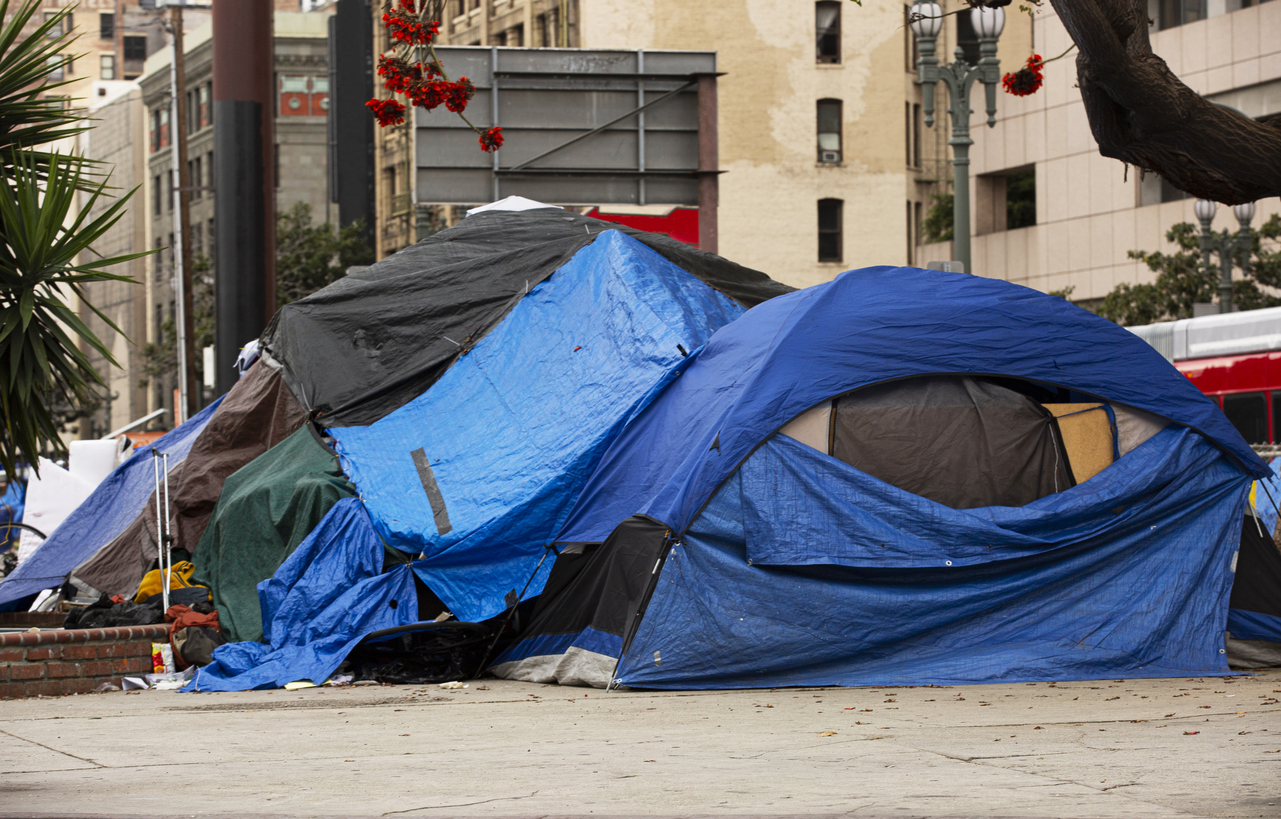
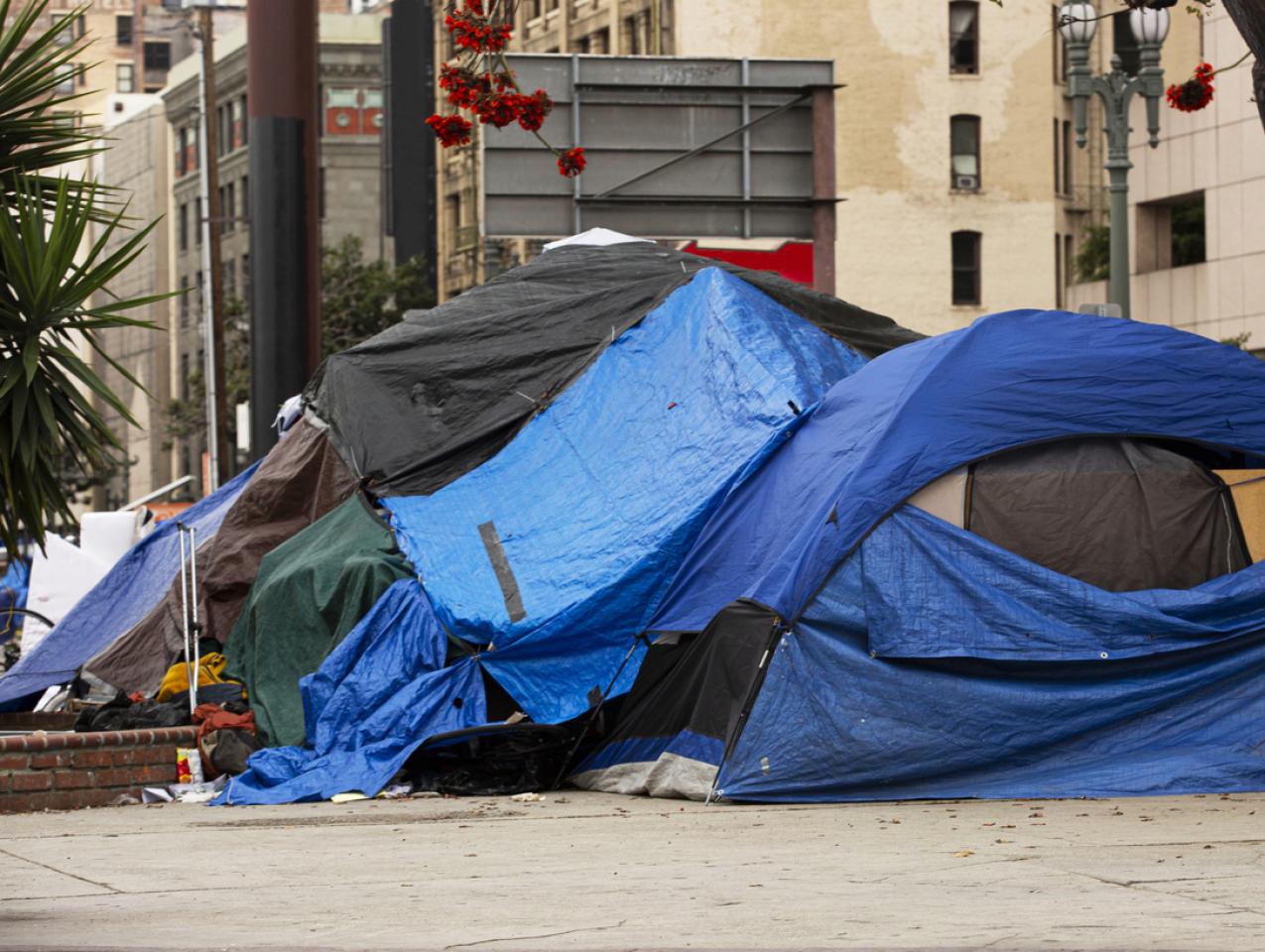
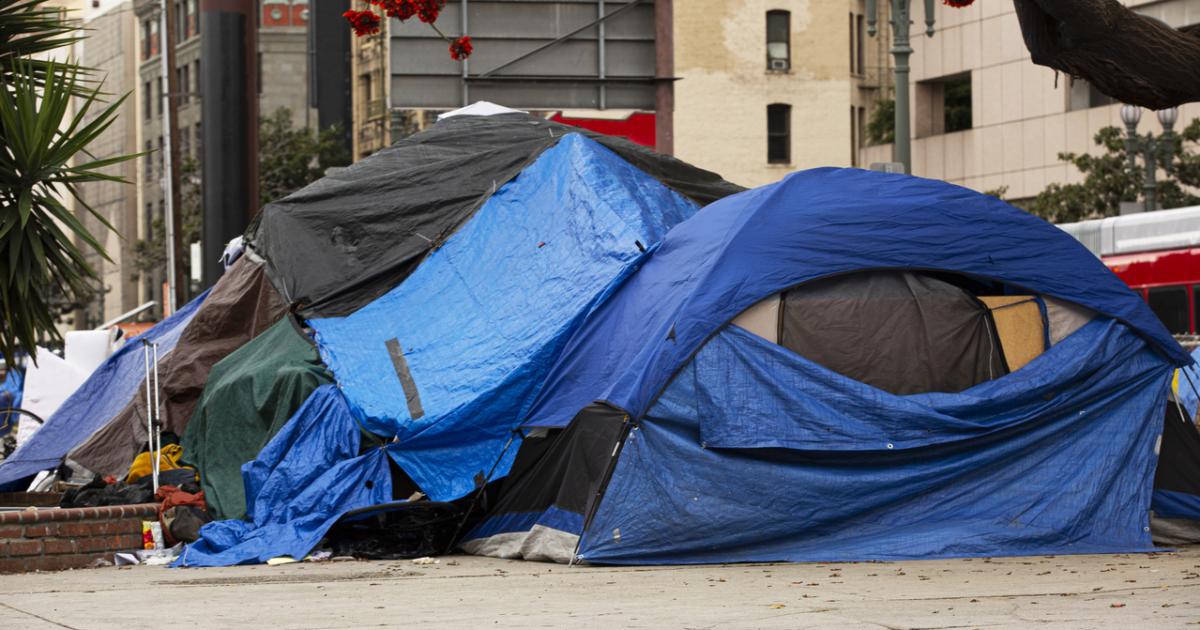
Homelessness is still a hot mess and out of control. The Los Angeles Homeless Services Authority (LAHSA) announced last week there were more than 45,000 homeless people within the city, is a 7.6 percent increase since Bass’s 2022 election. Moreover, Los Angeles County’s homeless count, which includes the city of LA, is now more than 73,000. If the homeless within Los Angeles were their own city, it would be larger than nearly 60 percent of California cities. Broadening this hypothetical to the homeless within LA county would create a city that would be larger than nearly 75 percent of California cities.
Los Angeles didn’t lose the war on homelessness because of funding. Nearly $4.4 billion was budgeted within the city to address homelessness between the 2022–23 and 2025–26 budgets, which works out to about $100,000 per homeless individual at the time Bass took office.
So, what went wrong?
An important reason why LA failed to reduce homelessness are the unrealistic assumptions about the mental and physical health of the homeless, which in turn led to policies that were not only expensive, but for some, deadly.
In 2019, LAHSA stated that only 29 percent of Los Angeles County’s homeless population had either a serious mental illness or a substance-use disorder, and therefore that 71 percent did not report either condition. LAHSA argued that “the majority of people experiencing homelessness do not report serious mental illness or substance abuse.”
However, the majority of the homeless do have drug and alcohol abuse and mental health disorders. A Journal of the American Medical Association study reports that 37 percent regularly use meth, nonprescription opioids, and/or cocaine, and that nearly 20 percent of the homeless had overdosed. Moreover, about 42 percent of homeless self-report they drank heavily before becoming homeless, and about 49 percent self-report they regularly used drugs before homelessness. These statistics may significantly understate their true incidence, because self-reporting of drug and alcohol use is well known to be underreported.
Another JAMA article surveyed eighty-five studies and found that about 44 percent of the homeless have drug and/or alcohol abuse, 67 percent have one or more mental health disorders, and among those disorders, 26 percent have an antisocial personality disorder, 19 percent have major depression, and 8 percent have bipolar disorder. These rates of mental health disorders are roughly 10 to 28 times as high as among the general population.
The failure of “housing first”
California, including Los Angeles, historically downplayed substance abuse and mental health disorders as causing homelessness or as being barriers to successfully exiting homelessness. In 2016, California adopted the principle of “housing first,” which prioritizes placing the homelessness in permanent supportive housing, with no requirement for sobriety or treatment for substance abuse or mental health disorders.
Building permanent housing for the homeless is expensive, and in some cases is out-of-the-ballpark expensive. Among the most expensive include a Venice development estimated to cost $1.24 million per apartment unit, including the value of the land and parking, and a Santa Monica project that will cost $1 million or more per unit, not including the value of the land. Several developments in Northern California hit $1 million per unit over four years ago.
The cost of this housing to the homeless individual is typically 30 percent of their monthly income or welfare support intended for housing, whichever is greater. In contrast, my calculations show that only about 7 percent of US households could afford this housing if they were priced at the market rate.
Why is building housing so expensive for the homeless? No one really knows. In 2022, I recommended to the US Senate that all low-income housing projects using federal housing tax credits follow the same budgeting and accounting procedures. To my knowledge, this reform has not been adopted.
Corruption and waste
There is also the issue of what happens to the funding as it moves through different organizations, including LAHSA. LAHSA’s record shows administrative incompetence and financial controls so weak that waste and fraud can escape detection.
A 2024 Los Angeles County audit found that LAHSA had advanced $50.8 million to service providers without formal repayment agreements and had recovered only $2.5 million by July 2024. A court-ordered assessment found unreliable contract and bed records and concluded that LAHSA’s procedures did not adequately verify whether billed services had been delivered.
A May 2026 county review found that LAHSA could not produce complete financial statements, had not properly recorded $145.1 million in county advances, and maintained duplicate entries that overstated cash by $47.2 million. LAHSA also reportedly had not completed an internal audit in several years, according to statements at a public audit committee meeting.
There are also criminal allegations within the LAHSA sphere. Federal prosecutors have charged Alexander Soofer, head of the nonprofit Abundant Blessings, with operating an alleged $23 million homelessness-funding scheme, including allegedly obtaining more than $5 million directly from LAHSA.
LAHSA’s former chief executive also faced a conflict-of-interest controversy after her apparent signature appeared on a $2.1 million contract involving her husband’s employer. A LAHSA-commissioned investigation cleared her and concluded that staff had unintentionally applied her signature, although an outside auditor later found that LAHSA failed to disclose the payments as related-party transactions. In June 2026, HUD suspended LAHSA from future federal transactions, citing suspected false certifications, inadequate financial controls and deficient conflict safeguards.
LAHSA disputes those allegations, and the matter remains under litigation. The evidence therefore does not prove that LAHSA officials operated a criminal conspiracy, but it does establish an agency repeatedly unable to demonstrate what it spent, what it received, or whether contractors delivered what taxpayers purchased.
Placing those struggling with mental illness and substance abuse into permanent housing has been deadly on far too many occasions. While Los Angeles does not appear to have systematically collected data, the LA Medical Examiner’s office reported nine overdose deaths at one permanent supportive apartment building on Skid Row in Los Angeles in 2022. San Francisco has systematically collected these data. Between 25 percent and 30 percent of overdose deaths in San Francisco are in permanent housing.
Moreover, a 2020 analysis of the outcomes of all of those exiting federally funded permanent supportive housing showed that 25 percent died while enrolled; 21 percent returned to homelessness, temporary housing, or an institutional setting; 27 percent had no known destination; and 27 percent moved to other permanent housing.
Harm reduction is another pillar of Los Angeles homeless policy. This holds that those using drugs and alcohol should be accepted by others in society, rather than being stigmatized, and that policy should aim for the safety of all, including those using drugs. This includes needle exchange programs, distribution of naloxone, which can reverse the effects of an overdose, and strips for testing fentanyl. But harm reduction has negative, unintended effects that were either discounted or unrecognized by its proponents.
One peer-reviewed academic study found that clean needle exchange is associated with lower HIV infection, but more overdoses and overdose deaths. Similarly, a peer-reviewed study shows that making naloxone widely available is associated with more overdoses, more emergency room visits, and more theft.
A sprawling lawless zone
Beyond being expensive and sometimes deadly, Los Angeles’s policies of housing first and harm reduction have had several other major negative effects. Skid Row has grown into an area in downtown LA of about fifty-four blocks where fentanyl, methamphetamine, cocaine, and other drugs are widely available and where both nonviolent and violent crime rates are high, including a murder rate 17 times as high as in the rest of Los Angeles.
Animal abuse, particularly of dogs, also is reported in Skid Row, where animals are bred within encampments, are traded for drugs, and die because of neglect and malnutrition. There are also allegations of dogs being used as guinea pigs to test if drugs are toxic.
The homeless also take up a significant amount of police and firefighter resources in Los Angeles. About one-third of fires in Los Angeles are homeless-related. These include arson, encampment fires that get out of control, and the theft of electricity from streetlights, utility boxes, and neighboring properties that cause or create the conditions for fires and explosions. About 15 percent of police calls are homeless-related.
Rejecting the status quo
Los Angeles’s failure to reduce homelessness is particularly costly because surveys show Angelenos view homelessness as among the most pressing problems facing Los Angeles, that many have public safety concerns, and that the city’s approach in dealing with homelessness is ineffective.
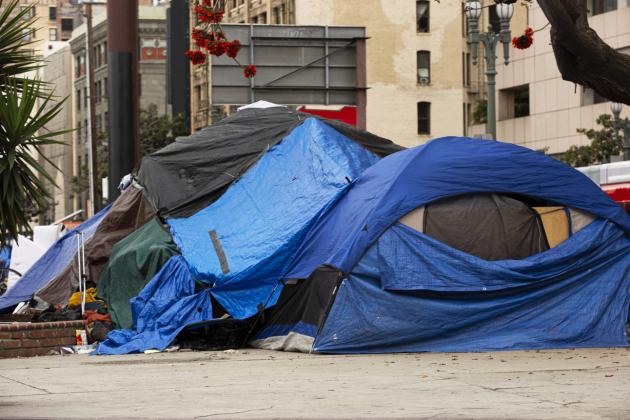
Los Angeles has increased its efforts to remove homeless encampments, which is a major positive development, but many of those encampments return, or the individuals who made up those encampments create a new encampment.
Policies that would have a better chance of addressing homelessness require improving incentives and increasing accountability for city staff and nonprofit operators managing homelessness spending and implementation, building treatment centers in affordable locations to help the homeless deal with mental health and substance abuse, and following San Francisco’s new policy in creating sober-living environments. It is noteworthy, however, that some of these recommendations will not be universally popular because some influential groups will stand to lose if they are implemented. In particularly, San Francisco’s sober-living policy was fought by several homelessness-sector nonprofits.
Perhaps the most important change in addressing homelessness is decoupling policy from housing first and harm reduction. These approaches were well intended but they incentivize drug use, make Los Angeles and other California cities a desirable location for those abusing drugs and alcohol, and do not give people adequate incentives to become responsible for themselves.
However, I see very little interest in changing these policies within California’s Democratic leadership. This suggests homelessness is here to stay.

