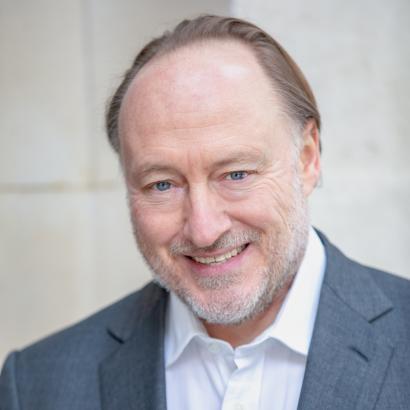
- David Yelland, former editor of the Sun Newspaper, is the co-host of BBC Radio Four's very popular series about public relations when it hits the fan. David, you edited the Sun newspaper between 1998 and 2003, and then you went into corporate communications at Brunswick Group for, for many years. And now you are the founder of Kitchen Table Partners. But for the purposes really of this interview, you are also the co-host of the very popular BBC Radio four podcast when it hits the fan, which essentially looks at, at great events through the prism of public relations. Is that fair? Yes. I think I came to realize, having spent 20 years in the media and 20 years out of it, that that sort of what I call the Mar pan layer, that layer between the powerful and the, and the rest of us and the media, which is often just called pr, whatever is, is actually the story in many ways. It is those people who choose the, the words, the manner of the community. They, they, if you switch on the news in the US or the uk, what you are seeing is the work of those people. And that's what the program is about. And un until now, that has not really been recognized, has it? We, we, up until now, and it was probably true throughout history one way or another, that the Yeah, That The, the, that the advice, the form of words used the, I don't wanna say manipulation 'cause it's, it's not so much manipulation as presenting in the best possible light of information has always been with us. But now it's, you've essentially identified that it's a, it's much more than just a, an industry, much more than just a trade in itself In London and New York. Certainly in London, it's a bigger industry than the newspaper business itself. It Employs more people. Wow, I didn't know that. Wow. Yeah. And makes more money. It's much more profitable. I remember growing up, coming across people in the media, like the names of people like Pierce Salinger, who I think was JFK, was John Kennedy's, what we would now call pr. Man. I'm wondering who these people were. It's always fascinated me that there are people just in the wings. So. Yeah. And I think the other thing that's relevant to, to your, to your listen is, is before this is the Sun Murdoch. I was in New York for 10 years and mostly the New York Post, which was then his only American newspaper. So I'm very much, I always look at the world from a perspective of a New Yorker. 'cause I spent 10 years there, so it once a new, so once a New Yorker was New Yorkers. I, I do, I love the us. It's quite difficult to be a friend of America at the moment. Well, I mean by, but let me explain. If you're at a dinner party and you say anything positive about the us it's like, it used to be saying positive things about Netanyahu at the dinner party, it's called, Well, you come some of my dinner parties. Well, I do. We're very positive about both now still, but nonetheless that's probably says more about my dinner parties. What was it like working for Rupert Murdoch? It was the best of times in the worst of times is, is, and he would probably say the same thing. Rupert Murdoch changed my life, changed lots of people's lives, but he completely transformed my life. I was the deputy editor of the New York Post, very young. I was sort of 32, 33. And he decided to make me the editor of, of the Sun back in London, which is, you know, the biggest tab. Biggest, biggest was then and probably still is the biggest daily tabloid in the world and in this country and in the uk. That makes you extremely well known. 'cause it's a very high profile role. I did that job for five years and it was, it was the time of Tony Blair. It is the only time in the history of the sun when the paper has been a labor paper and very liberal. And to be honest, I sometimes pinch myself and think, did that actually happen? Not only that I had the role, but that the, that we, we lived through a time, up until relatively recently where even Rupert Murdoch was a liberal. And, and, and, and, and, and I was there. And I remember that. And it's, it's important to remember that because people just don't think it ever happened. But it did happen. It did happen. Yeah. And you actually, you were the editor who ended the son's practice of outing close to gay men and you took other fairly sort of advanced progressive stands on things like that, didn't you? Yeah, I mean, I'd been in New York for 10 years, as I just said. I was deputy editor of the Post, which was, which was also a liberal paper. Then remember we had Giuliani as mayor who, who was a very different Giuliani, the one we have now. We had Clinton as president. And the paper endorsed both those people and, and Cuomo before that. And you know, you can't live in New York 10 years, come back to the UK and not do those liberal things because I don't think they're even liberal. I think they just spent tolerance really. It was a very difficult paper to edit because it it because of the 300 people that worked for it, hun. It was, and, and, and they would definitely say the same thing as me. I was, I was an outsider in my own newspaper, very, very much on purpose. They put me in there on purpose. They wanted a, a different type of, they wanted someone who was a blairite and there were no blairites No, I was about to say, I mean, it had the reputation for being, for being a very thatcherite paper. It obviously had that famous headline about sinking the belgrano during the, during the Argentinian war. So I mean, yeah, the, the, the, the tabloids British tabloids, the red tops as we call them, because of the, of the color of the print, of the, of the title, the Red Tops have the reputation, or at least British red tops have the reputation for being the most sort of ruthless in the Western world. Do you think that was deserved? It was at times, yes. And there were times when things got completely outta control as well. Those, those times have long gone. But pre-internet, pre-social media, if you had, like, for example, in that's time, if you, we read many of the biographies, the written of that time, she would sort out a problem by calling the editor of the Daily Mail, who was then David English, late David English, and the editor of the son who was then Calvin McKenzie. And if you call those two people, you had about 60% of the, of the, of the, of the population just in those two. And that's how powerful those papers were. And that's completely dead now, isn't it? It must be the most consequential change in your lifetime, in your industry must be this move from the old print media, the, the sort of loss of power of the old media barons and the rise of, of the tech bros. That's right. I mean the world is complicated, of course. And those news, many, many of those newspapers are still very influential. And there'll be many, many people listening to this who have, who have contact all the time with the Washington Post, New York Times, Bloomberg ft, the Times in London, and so and so forth. And those institutions remain powerful. And you cannot transact power either in business or in politics without understanding those institutions and being able to navigate your way through them. Be Comfortable. So they're not selling anything like they used to. I mean, newspapers per se are not, are they? No, No, no, no. Absolutely not. They're, they're not. And you're right, Were, what was the circulation when you were editor of the Sun? It was just under 4 million in a, in a, in a country with an adult population of 40 million. So It was that. How many, wow. Yeah. So one, one in 10 Britains is reading your paper. Yeah. Oh, buying it and what Oh it, yeah. Buying it. What what, yeah. Many more will be reading it. That's true. What is it today? They have stopped publishing the figures. It's that, Yeah, we think it's about half a million, maybe less. No, it's literally dropped from 4 million to less than It is. It is, I mean the Tablo, I the tabloids are completely powerless now. They have no influence for actually the, the what we used to call the heavy papers Times Telegraph and so on the, the ft in the uk, they, they do, they do carry influence. And as we sit here today, the, you know, the chairman of the BP has, has, has been, has been forced out. And it's a very big news story. What those papers say about that really matters. So they still do matter, but they, a they matter in, in the upmarket world, not in the downmarket world, funnily enough. And is that because so many people are taking their news from, from the internet that they just hadn't got hope? Yeah, I mean, you know, the internet offered the hope. You know, we, we all know that back in the, even the beginnings of, of of Facebook that the, the then Google and so on, that, that power was supposed to be given to, to the people. This was supposed to be a huge democratizing moment. It hasn't quite worked out that way, of course. And we now have around about six men, and they are all men who, who really control most of the information flows and the algorithms and then the data, you know, and they would include Musk, obviously, and you know, Zuckerberg and Google and, and so on. They're all bad people at all. But they do control pretty much everything in a way that the, the, the, the, the Murdochs didn't, 'cause they, they, you know, you could choose not to consume their newspapers. You cannot really do anything in commerce without using Amazon. Using, using their, their, their platforms. Even the BBC, which is a really important part of the, of, of, of, of, of life here in the uk. You know, iPlay, which is how we watch BBC, that that, you know, if Amazon decides to pull the tech iPlayer would collapse in a minute. So, you know, the, the power is now in terms of how we find out about stuff in the world, for most people in the world, those five or six guys control it. And that's, that's, and that's cross border. It's international. It's not just, not just in the us, not just in the uk. And it's, it's actually a real problem of mine. I dunno how, what the solution is, but it's, or it could become a massive problem depending how they behave. Let's look at a few moments of pr actually before we do, Andy Burnham is likely to be the next prime minister of this country if he wins the by election, which will probably have been decided by the time this show goes out. But nonetheless, on the assumption that he does win it, which is a big assumption, but nonetheless, let's say he does, he will become prime minister. What, what, what's his pr like, well, how good would you say he is instinctively a PR and the people around him? Are they, are they topnotch PR people? We are gonna get better comms than we did with, for example. Well, the thing about Andy Burnham is he's very good at PR himself, as was Tony Blair, as Stan is not. And, and the reality is that the principle, the leader of any organization, whether it be a country or company, they have to be good at it themselves. And Andy Burnham is very good at communicating. He's a very good communicator. That does not mean that he would be a good prime minister, but he is a very good, so yes, the comms will be much better whether he would be a better prime minister, you know, I dunno, a lot of extremely well paid people in London at the moment running around trying to point out that Andy Burnham is, is actually extremely left wing, far more left wing than people think. And what's interesting about, about Andy Burnham is that all of those people I know that work with him in government brief against him, who actually work with him, dunno why that is, but it, it, it's, I don't think He's seen. So the closer you get to Addie Berlin, the, the more you you yeah. The better you know him, the more you brief against him, that's not a good sign. Yeah. For any private history there are That, that, that, that does seem to be the case. The, the, the, the mayor of London, sad Khan, the, a many other problems in, in my opinion, some of them are caused by racists, but he is the same. If you talk to anyone that works the closer you work with government, the, you know, and that's about team being a team player and you know, saying one thing privately and doing nothing publicly, that sort of thing. Is there a a bigger problem here though than just the, just the principles and the people behind them in that with the 24 hour news cycle, politics has become so much more difficult and if number 10 has to make statements about absolutely everything for, you know, 24 hours a day where events can catch them out re relatively quickly that the actual job of being prime minister through the communication simply through the communications side has become impossible. Yeah. Is that fair? I think it's become very fashionable to say that quite a lot of high profile jobs are, are impossible in this country, Dr. General, the BBC would be another one. And there are many others. I don't think, I don't accept that, I don't think it's impossible to be prime minister. I think the world is changing so much at the moment, particularly the way algorithm the algorithms are, are, are manipulated around on platforms like x that the only people that have worked out how to function in that world is the current White House. Whatever you think about Trump, good, negative or positive, there's no doubt that he, he is the sort of Steve Bannon approach of basically flooding the zone with information and changing the narrative on an almost moment by moment basis confuses the media so much that allows you to control the narrative. The problem for ki who has succeeded in some things, there's no doubt actually has succeeded in some, is that nobody believes him. And he, he almost doesn't believe it himself. And I, and so if you, I, I dunno what the solution is, but I look around the world and I see in Europe, Maloney does quite well. I think, I think I think in France they do quite well. You need to, you need to, you need to lead sort of leading communicating. You need to just go for it and set out what the agenda is and not be put off by, by breaking news. 'cause you'll never do anything if you'll never, you'll never get any sleep apart from anything else. Is the king good at pr you, you've said it's good question that he, that you need to be good if you are the principal, you need to be good at pr yourself. His speech to Congress is generally considered to have been something of a triumph. He's stepped out from under, from behind his, his mother's shadow for the first time. But you've, you've pointed out that it was high risk pr Yeah, I I actually think that that, that the king is very, very good at pr. I think he's a, well he's a very good communicator. He, when you see, when you see that both those two huge setpiece speeches in, in Washington, both to Congress and to the say dinner in the evening, that is him. He is funny, he is self-deprecating and he's a smart speaker. And that those are huge victories and are regarded as such within the powers. But they, he wasn't pretending he wasn't faking it. That is, that is how he is. So I think, and he has a very tight team, very a a guy called Tobin Andre, who is his communications director and a number of other people, and also the people that run the powers. They are very good. And when you consider what the headwinds they have to put up with, with, you know, Andrew Ban Windsor and, and, and the possible criminal case coming if you were to be charged and many other things, quite apart from the fact, how do you sustain a monarchy in, in, in, in a world where all our institutions are threatened by social media and the speed that we're living in. So yeah, I think he's, I think he's extremely good. I think there are signs that Prince William is also very good. And actually if you look around the world, I can't think of people of many institutions that, that handle that pr better. It's not, it's not only about pr. PR sounds sort of a bit, sort of as, as peripheral. It's really, you know, the way they, the way they hold themselves public and communicate. And they are extremely good at that. Yeah. Print, Kate, I suspect you'd add to that and the sense of dignity that she shows and so on is ineff, isn't it? Yes. I mean, I sound like I'm as a, as a huge royalist and I, I I I am, I I do favor the, the institution. I don't, you know, I don't see what we would replace it with here in this country, but I'm not, I'm not a flag waving royalist, but I, I've nevertheless, for various reasons, I've had a lit, as we all have, you know, a little bit to do with the king over the, over the decades. And I've always found him, what I see on the, on the telly is what I see in real life. He's a, a very, very good communicator and a genuine person who I think we're lucky to have. Harry and Meghan, what about them? I try my best to be fair to them, partly because I co-host this BBC program, as you mentioned, and Andrew, and in my first marriage, my, a long, long time ago, 20, 25 years ago, my first wife had cancer and, and passed away 20 years ago actually. So I grew, I bought up my son who is now 28. So I know what it's like when you have death and in, in, in a family and you have young sons. So I've always looked at William and Harry from that perspective. I've always wanted to, to be on their side. When things like that happen. You either, you, you react in two ways. You either react and try and build bridges with the world around you, or you build a wall around you and, and assume everyone else, everyone is out to get you. And Harry has done that. He's built, he hasn't built bridges, he's built a wall around himself. And the fact is that many people have tried to help him and he has not allowed them to do so. And I think some of the things that he, he and Meghan have done and said are, have been deeply problematic. And the problem is that they, they don't, the powers doesn't feel to can trust them because certain things that have been said privately have ended up being public. And, you know, it's far worse behind the scenes than people realize. I mean, all families have splits occasionally then it's just a way of life. But at that level of international fame, which is what it is, you cannot have, you know, I would also say this, I don't think the, I think the monarchy, the biggest threat to the monarchy I is long term William and Harry not getting back together again. Because if you consider 20, 20 years time, William is king, we have, we're gonna have a court in California, we're gonna have grown up children, their children speaking to the American media. It will become unsustainable. So we, they, they do need to try and rebuild, rebuild British. I also think the last thing I would say is the British press, the way they have been so cruel to Meghan. I mean, unbelievably cruel that I, you know, I don't blame Harry for trying to defend her, but the reality is it could have been so different with better advice. Talk about the whole concept of the, of advice and how it's changed, and especially how it's different. How in the corporate communications world, how has that changed since you've been in it for the last 20 years or so? It's got bigger and bigger basically around business, big global business, there is a bubble of pr. Some of it is internal. So the, the communications director and the, and the staff there. So if you take a big company, say Diaggio, which is a, the British biggest drinks company in the world, based in London, but completely global, they would have 150 people in PR internally and probably another 150 or more externally. There's a lot of people. And if you, if you were to look at the CEO's diary, you would see the two, or amongst the five or six most important people that they're seeing in their day-to-day lives are those people that, because how you communicate what you are going to do. 'cause there are rumors that may split that company, for example, they may sell a big part of it off. You know, these are, you know, if you're running a company like that, there are probably four or five things a month. You've got to communicate and get that right. And, and, and, and if you get them wrong, you won't survive. And if you get them right, you'll prosper. And that really has changed in the last 20 years or so, has it because of social media. Yeah. The world's got, if you could come to that BP 25 years ago, there would be, there would be communications director and I can tell you exactly who that person is. 'cause a friend, friend of mine, and he would have the office next to the CEO and he would hold about 30 or 40 relationships with business editors around London and the rest of the world. And that was how it worked. And basically you have lunch with them. That's basically, I mean, now the world is so fast that you, you need to be able to keep the market informed to what the company is doing on an hour by hour basis. So, you know, there are many, you know, it's, it is a, put it this way, over the last 20 years, the, the, the, the, the, the, the financial media has got better and better and bigger and bigger. And therefore the pr that serves that financial PR has got bigger and bigger. People think the media is in decline and it is in many areas, but in financial media it is not. So if you think of Dad Jones or the Financial Times, or Reuters or Bloomberg, I mean, Mike Bloomberg has turned himself into the Ridges man in New York based on building a financial information company. What do you think about the social media ban for under 16 year olds? It's a big issue at the moment here in Britain, and obviously they've done this in Australia. Yeah. What's your thought about that? That's a very big issue there. And as the father of a, of a 13-year-old, another 13-year-old daughter, as you know, I, I think it's inev. I, I dunno whether a ban is inevitable, but reform is, I mean, we, we don't have a problem with our daughter, but we, I know many people that do. It is coming. One of the reasons it's coming is the west coast of the us IE you know, the valley, you know, the, the, the, the Googles the exception of Apple meta and obviously Elon, their PR has been dreadful. They have become the most powerful people in the world with the worst advice in the world. And you know, many times in various areas, times of my career, I've, I've pitched to, to those people in various parts of the world, always completely failed. And what comes to you on the other side of the desk is this, what do you know that I don't, that was a difficult question to answer. You know, I, what they're really saying is, look, I'm worth seven or $8 billion and I'm 15 years younger than you, or 30 years younger than you. I, you know, I know that 'cause I share the same birthday with Martin Zuckerbergs. I'm reminded of this every, every maid of 14th. And you know, with just little touch on the tiller, a little bit of reaching out to the world and no bless ob oblige. That's what, that's what they lack. They don't understand. They the new aristocracy and they don't behave like it. Ruper Murdoch does. People n he never gets any credit for that. But he was brought up to behave like that. Like that. And, and, and, and that's one of the reasons he's succeeding in, in, in the way that he has. How's AI going to change PR in the next sort of five, 10 years? Well, it's already having a very profound effect on all our lives in a, in, in, in a way that is changing every day. It, this is one of those areas of life that is changing almost many by minute because we're all beginning to use it in our lives. I've particularly started in the last two or three months to use it, to use it much more frankly. I don't think, I think there's a lot to worry about here. And PR is almost one of the thing, you know, the last thing to quickly. It's, it's, you know, it it's, it, it's, it goes back to what I was saying earlier really, which is that, which is, you know, these people would include obviously Altman and Musk and so on. And, and, and, you know, the, the world is not in a fit state at the moment to regulate anything across any border. And it needs to, Let's look at COVID if we can for a bit, and how the British government attempted to keep the public calm in that, in that crisis overall, how would you say the, the British and the American governments did with regard to, just simply with regard to the, to the communication side of this, of that unbelievable, terrible tragedy Just before COVID happened? I, I do, I I was asked to go and see the Chief medical Officer Chris, who obviously became very famous during COVID. And he had a, a coat, he had a hanger coat, a a a white coat on the hangar in the corner of his office with Chief Medical Officer written on it. And I said, why though, if you got that, when would you ever need to go, go out into the world and be, be seen to be Chief medical officer? Well, you know, we subsequently led, and I think he led, I think he's the essence of a public servant. His father was a diplomat, killed actually by terrorists in government service. And he has this, he has, he has that, that that public service thing in him, which was much to be a, a mind, I think, I think the Brits did okay. The biggest thing they had going for them is the British people. As a people we are, it, we, I'm a great believer that you can inherit you as a historian. You, you, you, you, you, well may well pick me up on this, but I I do believe that I, I was born in 63. I grew up Same now. So is that, yeah, I, I grew up as, I feel like I lived through the warp because everyone, everybody around me as I was growing, 'cause it was only 18 years Yeah. Was talking about their experience in the war being so on. And that is a very, even now is a very, you know, so when the chips are down, I will revert. So during COVID, you know, IIII believe go had Come and carried on. Yeah. I mean there, yeah. Yeah. And I think if you're playing with that as a, as you know, and I think the government did make a lots of mistakes. I think we have to remember we didn't, we hadn't experienced this before. You know, we, we, you know, and, and of course we are the, we are one of the countries where that, you know, you know, Oxford did create a vaccine and during COVID, I I did a tiny bit of work there. And I remember turning up at the Jenner Institute in Oxford, which is just near the Churchill Hospital and looking at the building and it, it, I just started laughing to myself. 'cause it's typically British. It's sort of 1960s knackered. You know, there was a whole line of students volunteering to, to, you know, for the tests which, which, which they did. So I think as a, as a whole, I'm quite proud as a Brit of how we, of how we coped actually, and what, what we did and our contribution to the world. I think the wealthy, I think we all show our own spots in the crisis, don't we? We, we show how we really are. And I had a lot of people, some of whom are clients actually, who, who disappeared, you know, who disappeared off to the Gulf or to the west coast of the US and then tried to get back in to get the jab. And there was the, there was quite a lot of that. But I, I, it, it depends what you're at. If you ask me about communications, I thought like, yeah, I thought, I thought as a country we just about held it together. I think, I think, you know, America is a very young country, obviously 250 years, you know, the federal government people, the US is built on not, not on, on being independent of government or, or on, on, on, on standing on your own feet and not relying on any government. And, and then plus the fact you had all the, the disinformation. I thought the system in, in parts of the US did begin to break down because it's very difficult to hold things together. I think funnily enough, the B, B, C, for all its faults had a, had a very good COVID as well. And then, and we have a, a health editor in the b BBC called Hugh Pi, who, who people really believe. And he played a very important role as well. Yeah, yeah. He's hugely trusted, wasn't he. And what do you think about what's gonna happen in America with regard again to political communications post-Trump once he's gone? Do you think his way of doing things that is so different from what went before will continue? Or does it just entirely depend on who's going to be the president who follows him? I talked about this here this morning. I think, I think we have to look at the, the root causes of what's happening. It's not just tech change, it's to do with the, the system not working for most people, it's true in Europe it's very much true here. If you look at average incomes going back last 20 years, they haven't really gone up. And it's the same in the us. And so, you know, if, if, if people's lie, if the American dream is not something that most people think they can attain, then they're gonna believe people that, or they, they're going to give people a chance who say quite extreme things. So I am worried about, about what happens in, in, in the us. I think it'd be very, I very wrong for liberals like me to assume that things are gonna go back to normal either immediately or ever again, whatever normal, whatever normal is. Britain's a very, very strange country. I do love it so much actually, as I get older, I, I I I, I love it even more. This is a strange quotes. I have a feeling that if the extreme right wing getting here, that they won't appear to be, they won't actually be extreme, right. They won't be as extreme as, as we think for all kinds of reasons, all kinds of reasons. But the main reason is that they're British and we are not an extreme right wing country. We may be very angry, we are, but we are far more tolerant than we ever get given credit for. And I know that, 'cause I used to look at all the thousands of letters that came from Sun Readers about Yeah. And I always remember something Tony Blair said to me once when he was Prime Minister, which was he, he said, we're all a little bit Tony Blair, sorry, all of the Brits are a little bit daily mail about eight o'clock in the morning. In other words, we get up angry, we've gotta get the kids to school. We, you know, can't, we can't pay. He said, well bye by 11 o'clock they're veering back towards that. And that's really true. You, you, you can't, if you watch, there's a program called BBC Question Time here on the Thursday. I've stopped watching it years ago. If you ever do tune in for five minutes, people are so angry. It's like, I really, that's not what people are like. I mean, you, you could say I'm being naive and I, and, and I'm, I'm no, No, no. I, I can't watch question time any longer and I certainly don't appear on it any longer because of that, the audience has almost sort of chosen or at least built up to, to go for each other. And obviously now we've got six parties rather than just three. Yes. There's the, there's a huge incentive to to be the angriest person and, and try and get appeal to the, to the audience. The audience at the beginning of question time, such in the years when I was on it sort of 30 years ago, seemed genuinely interested in the answer. They weren't just waiting for another gotcha moment. No, I, I think I, I think that's right. I think our culture, our culture has changed. And what I often try and do is I try to meet the, I mean we're all very, it's a privilege really to be able to do this. But if, if, if, if, if ever I think that the conservative party or even reform or or you know, are are, you know, are, are, are, are a danger to society, I I I'll go and have a cup of tea with one because then you gonna take that as that we have far more in common than, you know. And anyway, you know, the, the, the fact is the labor party in, in this has, has utterly failed to deliver what it said he would ever deliver is, I don't want it to listeners to think that, I think that, you know, that the, the, you know, the liberal, the liberal elite, if you so to speak is, is wonderful. He's not, you know, I I always tell the story at Christmas, you know, if you go to the Guardian Christmas party and the spectator Christmas party, the Guardian party is dual, is absolute grim. You, and one of the reasons that journalism is skewed to the right is it's far more, it's much more fun. It's, it's, it, I I don't read a new statesman, even though I'm naturally liberal because it depresses me. But I read it as a spectator with alacrity every week, even though I disagree with half of it because it's so brilliantly written and makes me laugh. I dunno why that is though, but it's true. How far can, can pr go, can can really good corporate communications go in turning around a story? I'm gonna give you an example. Peter Mandelson, could he ever be saved by the most brilliant PR people in, in the country? Well, the answer is, he, he was many times principally by himself. And he is, or was and ex he, he, he, one of the most talented communicators I ever I've ever come across when I was editing the sun, he was fired twice by Tony Blair and came ba both the times. Did he used to pick up the phone to you sometimes and tell you, and, and shout at you, you down the line like he Was all the time. I mean, the, the, the, the, the, the, the night I'll never forget is the night that for whatever reason Matthew Paris decided to out Peter on Newsnight. We all knew he was gay. And I don't think he was in, he wasn't, he was never a secret. But he said it publicly, bear in mind it's a long time ago now, but he wouldn't be such, so I had to decide whether to put it on the front page or not. And you might say, well, it's been on News night, it's not a, you know, and he rang me. I was actually having dinner with a guy called Richard Littlejohn, who's a columnist who hated Peter Nand. Yeah. Who at one point grabbed the phone and said, and said, leave him alone. Anyway, it was a, it was a very interesting evening. The point was, he nearly persuaded me not to put it on the front page. And I put the phone, I thought that this is nuts. This, this is the biggest story of the night. He is a great persuader. And without him, there would've been no Tony Blair, he created, he created new labor. Is there any coming back from this though? Friendship? No, absolutely not. With Epstein? Yeah, it's all Over. Well, I mean, it depends what you mean by, I hate to say there's no coming back because, you know, that's writing somebody off. I mean, I don't think he's wrote any laws as far as I'm aware. He obviously as a gay man is not gonna be responsible for any of the, of, of the abuse that happened within that circle. But he has said he, he, he, he's likely to be the subject of, of a serious criminal case. Obviously can't talk about that. But because of that, I I think it's gonna be very, very difficult. Yeah. For him, Should politicians show their emotions in public? Should they cry? Should they sort of, I not so much lose their temper, obviously that's always a bad thing, but, but, but show their, their sincerity by emotional responses, or does it? Although you might do Well that particular day or in that particular argument, it sends messages that are not going to be good long term. It depends what you need mean by emotion. I mean, we talked earlier about how being born in the early sixties, you feel like you've gone through the war. And I know, you know, I don't, I don't need to, to to, to to, to tell you about the emotion that, you know, that Winston Churchill used in his communications. No, he cried the entire time. He, he, he he loved in public 50 times during the second World War. Could you get away with that kind of thing today? A a a absolutely and, and was beloved. And you know what? I think you can do it. If you are, if you're, if you're a great leader, you can't do it. If you are chancellor of the ex checker under huge, huge pressure, which is what happened, I think the last year. It emotion is different to crying. You know, it, it, it, we will take emotion in the moment from a politician that is reflecting a, a, a moment of history and, and because it's about empathy then it's not about them. It's when it's about them. That's the problem. You know, self-pity is not, is never a good look. And I think we get, and also I don't think we buy politicians showing emotion over historical revisionism, whether it be, whether it be slavery, whether or whatever it will, might be, because it, we just don't believe them even though they may be doing the right thing. We had just yesterday, I should think John Sweeney, the leader up in Scotland, I think was in tears on the back of what's happening. I mean, nobody, I'm not Surprised by that People are not stupid. They can see through fake emotion. I think You talk about great events, obviously one of the, the major events of our recent lifetime was the Russian invasion of Ukraine. To what extent can pr, can communications actually have a real effect when it comes to, to war? You might actually add the, the Gaza into this of course as well, where the Israelis lost control of the, of the PR war internationally. Yeah. And there, there's a, a really, really interesting question. Of course, you know, so much more than I do about these areas, but you know, that if we deal with, with, with, with, with Ukraine first, I mean the Russians have been manipulating information flows around our country for a long time, as you know, and have been extremely effective at doing so. So within the umbrella of pr, communication management are lots of dirty tricks. In fact, that doesn't even dirty tricks doesn't even, that's, that's, I'm selling it short. It's, it is much basically the use of intelligence tools and intelligence, the intelligence community to to, to distort how we see things through social media has had a profound effect on elections in the West and many, many other things. And I think that that's what I would say about, about that. I think there are very, very good at it. For even yesterday, the director of GCHQ here in the UK may wrote a, an extremely urge anybody to look at that. What both, all the director of all three intelligence organizations here, Ms. Xm, I 5G CHQ, are all saying the same thing. And they're saying more and more publicly, but with, with whatever reason, we're not choosing to read what they're saying when they're really saying we're in the state of war, a soft war, whatever that means with the Russians. And that's how they do their PR on the Israelis. It's this, it completely fascinates me. The Israelis are wonderful communicators. They always have been, but they have lost, and I speak of someone's an extremely pro-Israeli and I, and and i, I was deputy editor of the New York Post for two, three years. I wrote hundreds and hundreds of editorials supporting state of Israel in, in New York and in London actually. But, you know, employing PR people very close to the prime Minister's office who just scream and shout at journalists when they're, when they're being interviewed and, and, and accuse them of having an agenda. Some of them do have an agenda, but most of them don't. And even if they do have an agenda, they actually often have a right to have an agenda like we all do. So they've lost the young demographics around the world and that's a real problem. That's a real problem. I dunno how they get, they, they they get that they don't seem, and I know a lot of it is a function of democracy itself because it's a function of the fact that there is a coalition in Israel and there are bound to be and are people within that coalition who are extremely, you know, extreme and say things which the western media pick up on. Of course, you know, it is not all Netanyahu's fault, but a lot of it is, you know, I mean I think I, a lot of these stuff is talked about privately and people don't say stuff publicly, but one of the problems is that, you know, you know, the, the chief rabbi in this country have a huge amount of respect for it. It has aligned himself with the state of Israel in such a way that, that it is impossible to criticize anything that Nya does without being accused of being antisemitic. And that can't be right and that, you know, that is, I also completely understand and have many Jewish friends who do not feel safe in this country and their children. You know, I took my, we're not Jewish, but I took my daughter to Bar mitzvah the other week and you know, as soon as I walked in, I, you see all security people and you feel you are looking up and down and you think this isn't right. They shouldn't, they, this is in, by the way, you know, they don't feel safe in their own community. And I, I, you know, so it's a complex, awful situation. But the reality is with better pr the Israelis could be in a better situation than they are. I'll just put it that way. What do you think of Zelensky pr? He's brilliant at it. He, he may not be brilliant in much else. I dunno, I'm not an expert, but he is, he is he he, he, he is brilliant at it. He, the way he handled himself in the White House that time when, you know, he had the president of the vice president GFR was, was masterful. He reminds me of a way he's, he, he's like a campaigner, he's like a charity chief, you know, he, you know, he, he he's he, he's more like he's near as Greta Berg thunberg than he is to, to a promise. You know, he woes around the world and he's lauded and cheered on the streets. It's, it's an amazing, it's an amazing thing. A lot of it in this country of course comes back to our, the same thing we did. We've been discussing our, our, our collective memory of the war and we side with someone that is being invaded in the us It isn't like that. They don't have that memory, they don't have that muscle memory in the, in the national psyche that we do. You've even in this conversation talked about regulation of, of the internet. You've also supported a concept of the form of the press in the past. I mean, in a sense that's poacher go turns gamekeeper, isn't it, David? But yeah. What, what practically do you think could be done in terms of regulation and in terms of, of reform practically speaking, what changes would you like to see? I I think that ship has sailed now in this country. I think the power of the, we were talking earlier the power of the, of, of what we used to call the press, what we, so the power of the tabloid press, the mass market popular media has declined so, so, so much that I think there's a little point regulating it. There are lots of other areas that, that we, we, we, we need to, we we, we need to look at. I do think that, you know, the, I mean it is history now, but I, I think there the, there is no doubt that there was a very dark period of, of abuse of power in the tempo media in this, in this country. But it's sort of history now. Yeah. What about regulation with regard to, I mean the Americans has huge antitrust laws in the early part of the 20th century that broke up the power of the, what we call the robber barons. Yes. Do you think that something along those lines is necessary in order to break up the massive corporations that are owned by those six men who you say control the information technologies in the United States and therefore the world? Yeah, I mean, yes. Therefore the world, it's going to be very, very difficult. I mean I, I've, I've absolutely that image at the Trump inauguration, the second inauguration with all those guys there, you know, in the rotunda, you know, so the time on the course, you know, that is a image that will go through history because you know, is he going to regulate those people? No, he is not. No. You know, the, the, if you look at who is, who's running a federal communications commission, all the regulators that would, that withstand any chance of regulating them are not going to regulate them. And frankly, AI is being built so fast that it will be built during the second term. So it's too late. We're not gonna have regulation. So what that means is that nation states and EU in in our part of the world are, are gonna have to regulate and that's gonna be right. Mobile phones you discussed earlier and many other things. And if you want my personal view manager, I think you can win an election on, on saying you will regulate that stuff. I think it's so particularly on phones, it's so big. Every parent I know that, you know, at school and so on, that would, if if you have a, a party that has a proper case, this is what we're going to do to try and basically keep your children safe or safer, they would vote for that party. Well I've been voting for that in the house of Lord. I mean the conservatives have actually embraced the regulation and under sixteens and it's been Lord Nash who's been the leader of the, of the parliamentary push to, to regulate. Yes. I mean, yeah, I mean, but if it is, of course it's the old story. If it turns out to be tremendously politically popular, they know all the other parties are gonna jump on the bandwagon and call for it at the same time. They won't allow any arbitrage intellectually will they? What history book called Biography are you reading at the moment? Well, I'm actually reading a Murdoch book, which is Gray Will Sherman, who's the guy who has written the book about the decline of the Murdoch fa or the, the, the what has happens to the Murdoch family in the last 10 years, which is ending up in court in Reno, in Nevada. Nobody speaking to anybody else. And it's a book of, it makes me feel very, it is, there aren't many people I would say this to because people think they don't wanna hear it. But basically I feel very sad about it because, you know, rub murder was very good to me. And I think it's incredibly sad that the family have ended up in this state. And I don't quite know how, how, how it has happened. But when you are reading that book, when I'm reading that book, it tells a story of, of power in the US and the UK over the last 30 or 40 years. But as you get towards the final chapter, you begin to realize that, that that power has ebbed away. Now, yes, Fox News is incredibly important in the US but not as much as it used to be. And there are new, you know, there are newcomers. So that, that is, that is the book that I'm reading at the moment. I am also reading, Sorry, can I just part in, but before you do, what did you make of succession? The TV show? Oh, I absolutely love succession and I dunno how close, well my view is it, it wasn't all that close to reality, but what's actually happened since is the reality is ape succession. And, and I, I actually think it's had a profound, if you read the book I'm reading at the moment, there are moments more than one moment in the book where particularly Liz Murdoch says to James, this is, you know, we've gotta do this and quotes a character outta succession so that it, it has had an effect on, you know, what was actually what has actually happened. And I, I, I mean, you know, at our age, if I'm reading, you know, histories of the, of the Blair and Brown, I'm often reading about things now where I was very much a bit pop, but I was around at that time and I find that interesting. Although it is quite depressing when your daughter comes home and says she's studying that period in, in school, that is something that's slightly Brings it home to you. You've, because of history. Yeah. What about your, you were gonna mention another book, a second book where you Yeah, it's nothing to do with it. I, I'm a huge, I love Alan Bennett, who's a playwright here in this country who's who, who has kept a, a, a diligent, an intelligent diary his whole life and his, well maybe his final diaries is 'cause he is 90, has just come out and just finished it. Actually. He's a great liberal. I mean, most people who are listening to this would, if they, if they read the book, would say he's very left wing. But he's been very persistent and it is a, it is a, a reminder of, of how those great liberal arguments have been lost. One after the one after the other. You know, Brexit probably me one of them, but many, many others. But it's, he grew up in the part, the parts of England and Yorkshire where I grew up and I I I really enjoy that 'cause that's the other thing that I'm reading at the about And what's your, what if you are historical CanAct shop? Well, I thought about this and I think, I think it's what would've happened if Gordon Brown had gone to the country quite quickly. He came from in 2007 and he, he served three years, but people forget for the first year of that, of that period, he was way ahead in the polls so he could have gone, he didn't go and I was a very, a very bit player, but I did know him. I still do know him, but I did talk to him a little bit during that, during that time. And he could have gone through it. And if he had won, would would David Cameron have, have, have remained a story leader or would we have had George Osborne? I dunno. And if he had George Osborne, would we have had Brexit? I mean, he'd go on and go, you know, go keep on out, you know? Yes. You Know, you Do this for a living. But, but I think he would've won. Yeah, he would've won if he'd gone, If I remember rightly, he was put off running because the tour is, George Osborne embraced the abolition of inheritance tax as a party platform at the October conference. And, and that was the, that was the sort of key moment that that put a doubt in Gordon Bryan's mind whether or not he was going to win. Yeah. It it's interesting you say that, Andrew, because very few that I think it was a very important moment that it, it basically meant that people could, you could inherit a a million plot from your parents without paying tax and for the middle, for many, many people in middle class in this country that has been transformative. And you never read about it. Never talk about, but it was a very, it was a, it was a, it was a, it was a big moment. Yeah, it was a big moment in the end I think he, he wasn't certain he could win because, 'cause of course if he'd gone and lost it would've been a complete disaster. And do you think Andy Burnham might do the same thing if he sees a, a blip that of shows some popularity that he might jump at it? Again, this is an area you know so much more about than I do and you're involved in non actively as well, but I I, politicians never throw away power. I agree. You know, and I don't think I agree. No, no. It's got two years plus and you, you rarely, you rarely take a massive risk and you certainly don't wanna go down in history as the second shortest prime minister after Liz Trusty. Right. David Yellen, the editor of the Sun from 1998 to 2003, and now the founder of Kitchen Table Partners. Thank you so much for coming on. Secrets of Statecraft. It's a pleasure. Thank you, David. My next guest on Secrets of Statecraft is the Canadian businessman and historian Lord Conrad Black, who's just published his third volume of the political and strategic history of the World. This podcast is a production of the Hoover Institution, where we generate and promote ideas advancing freedom. For more about our work, to hear more of our podcasts or view our video content, please visit hoover.org.