


- Key Countries / Regions
- International Affairs
- History
- China
- Revitalizing History
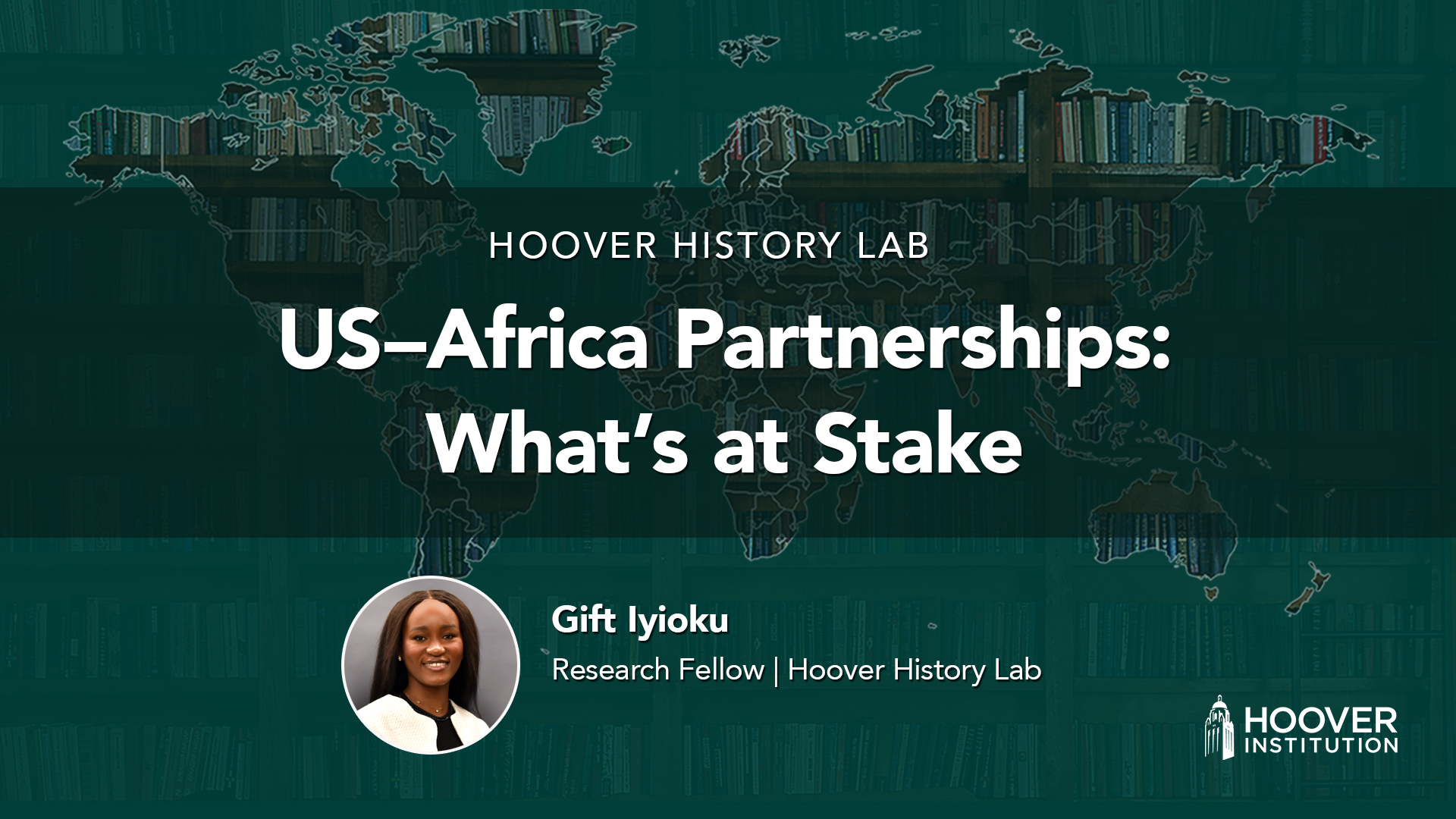
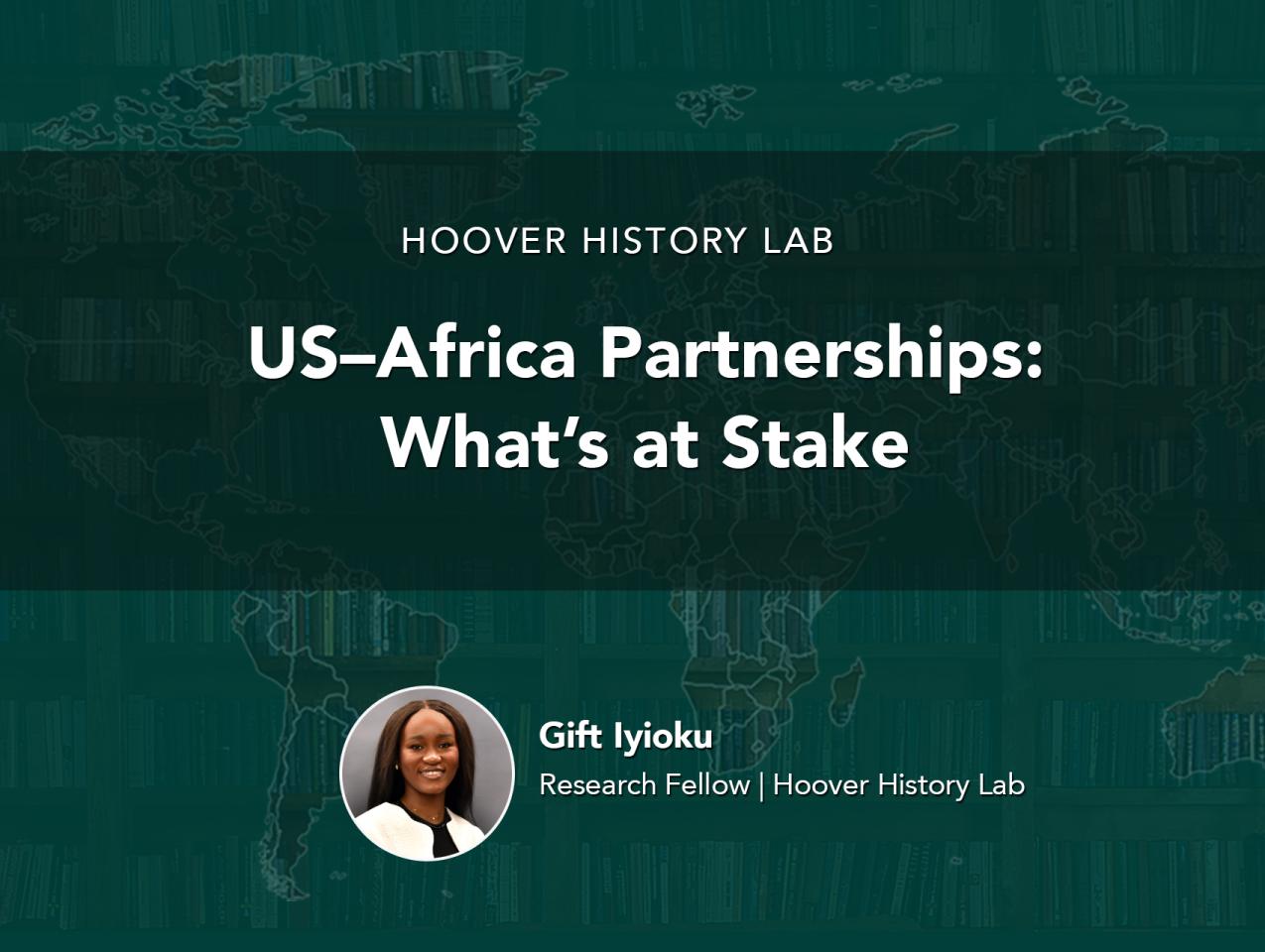
US engagement with Africa spans trade, security, diplomacy, and development, but its priorities do not always align with the strategic and economic interests of individual nations. The Democratic Republic of Congo, Nigeria, and Djibouti illustrate this disconnect, from limited American investment in critical mineral processing to an emphasis on security that has overshadowed opportunities for broader economic cooperation. A more effective US–Africa strategy requires moving beyond traditional approaches toward country-specific partnerships that advance American interests, respond to local priorities, and deliver lasting mutual benefits.
ABOUT THE SPEAKER
Gift Iyioku is a PhD candidate in German studies at Stanford University with a minor in political science. Her interdisciplinary research examines Afro-German migration and autobiographical narratives of African migrants. She has contributed to African development policy with UNESCO-IACIU and the Africa Progress Group. At Hoover, she researches Africa’s demography and migration, aiming to translate academic insights into effective public policy.
RELATED SOURCES
- Recalibrating Selective Engagement in US-Africa Relations by Gift Iyioku
ABOUT THE SERIES
Policy in Brief by the Hoover History Lab analyzes contemporary global policy challenges, offering insights and providing possible solutions through a historical lens.