


- State & Local
- California
- California Decides
Way back in the early days of the Cold War, a partisan debate over American foreign policy boiled down to a simple question: Who lost China?
For Democrats, then in control of both the White House and Congress, the matter was a source of embarrassment in that the world’s most populous nation had turned red (as in Communist, not conservative) after the defeat of the Nationalist Chinese forces who had been allies of the United States in World War II.
And for some Republicans, the fallout from what transpired on the other side of the Pacific Rim presented an opportunity to prey on the electorate’s jangled nerves (the Soviet Union detonating its first atomic bomb and the People’s Republic of China formally declared just thirty-three days apart in the fall of 1949). Thus, only four months after the rise of Red China, came the spectacle of Senator Joseph McCarthy claiming that the US State Department was riddled with “fellow travelers” complicit in the success of the Maoist regime.
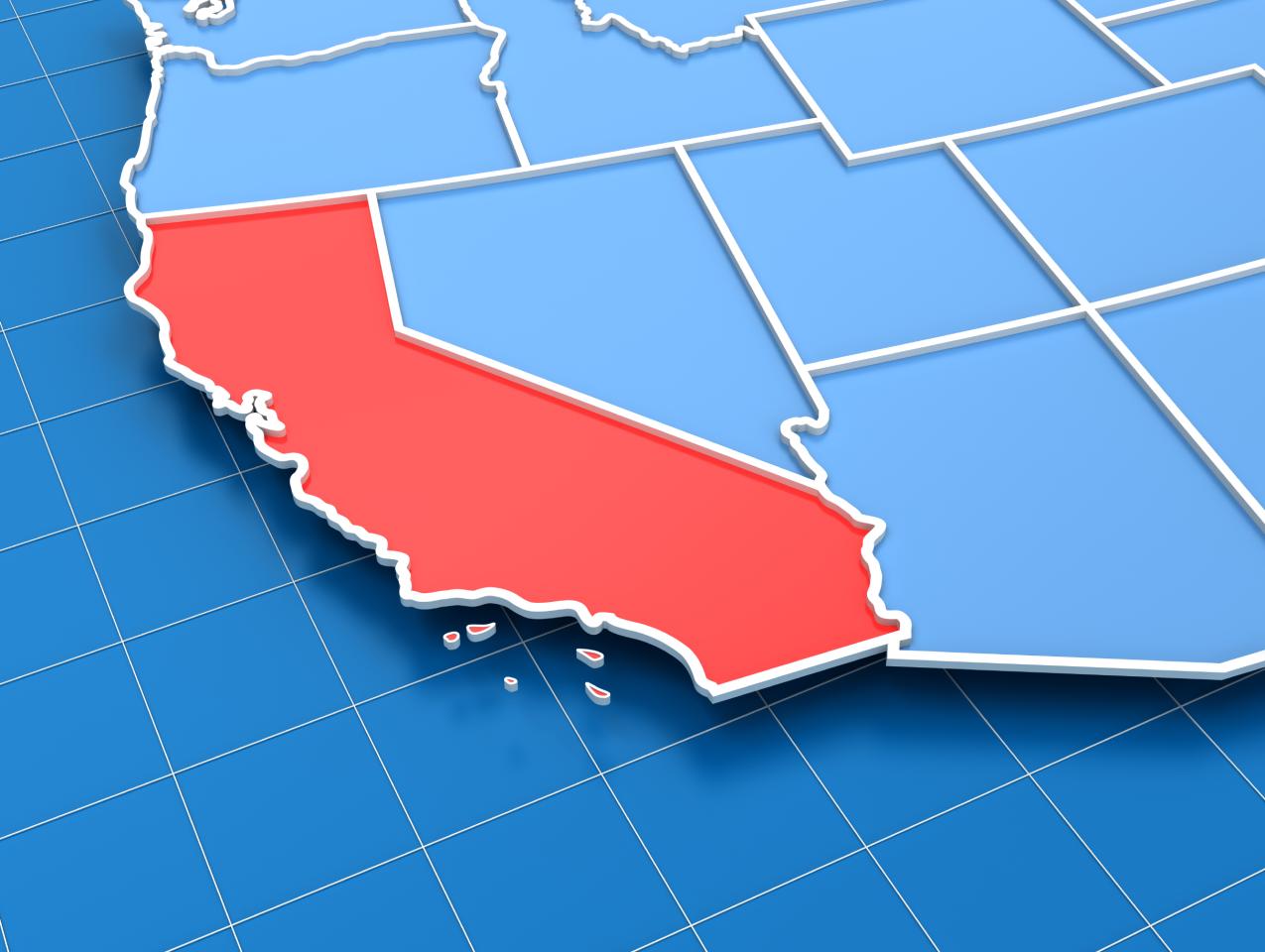
In the America of 2026, a similar question can be asked on a matter of domestic politics: Who lost California?
Or, to put it differently: Who or what killed two-party competition in the Golden State?
It’s a fair question to ask on the eve of a November election that likely will see more of the same in California: after the votes are counted, Democrats in control of every statewide constitutional office, supermajorities in both chambers of the State Legislature and, thanks to a partisan gerrymandering scheme approved by voters last fall, only four of California’s fifty-two congressional seats occupied by a Republican.
Of course, this wasn’t the California of previous generations: a state that sent native son Richard Nixon and adoptive son Ronald Reagan to the White House and, throughout the twentieth century, elected fourteen Republican and only four Democratic governors.
So, who or what “lost” California and the notion of a healthy, two-party competition?
Let’s look at a few of the “usual subjects.”
Pete Wilson. The last Republican to win an “open” gubernatorial race in California (by a difference of less than 1.5 percent), Wilson would earn a second term in 1994 courtesy of a 14.5 percent landslide—a good year for Republicans in the Golden State as GOP candidates also prevailed in the contests for state attorney general, secretary of state, state insurance commissioner, and state treasurer (full disclosure: I served as Wilson’s chief speechwriter during his second term).
Why Wilson is considered a “suspect” by some: his steadfast support of 1994’s Proposition 187, which aimed to cut off certain public benefits (public education and health care) for undocumented Californians, and a media narrative that the ballot measure instantly turned the Golden State blue by roiling Latino voters.
The problem with that narrative: Latino disaffection alone didn’t account for Republican Dan Lungren’s 20-point loss in 1998’s gubernatorial race (Lungren receiving only 17 percent of the Latino vote in that election).
The bigger GOP disconnect in the first of many future landslides wins for Democrats: women. According to Field Poll exit surveys in November 1994, the pro-choice Wilson carried the women’s vote by 7 percent over Democrat Kathleen Brown. Four years later, the vocally pro-life Lungren lost the women’s vote by 25 points—in human terms, roughly one million California women bailing on the Republican candidate for governor.
Fast-forward to 2003: Arnold Schwarzenegger drew 31 percent of the Latino vote, despite running in the recall election against a Latino lieutenant governor. Three years later and now an incumbent seeking a four-year term, Schwarzenegger upped his share of the Latino vote to 39 percent (not that far off from George W. Bush’s performance in the previous presidential election).
But the fact that Schwarzenegger could twice win statewide contests within twelve years of Wilson supposedly poisoning the well suggests the latter isn’t the real villain here.
So maybe the bad guy is . . . the action hero?
Arnold Schwarzenegger. Schwarzenegger’s improbable rise to the governor’s office in the October 2003 recall election was hailed by some as the beginning of a Republican renaissance in California.
But that renaissance was closer to dark ages: Only one Republican candidate won a statewide election during Schwarzenegger’s landslide re-election win in 2006. Moreover, the GOP’s share of the electorate began a steady decline—from 34.3 percent of registered voters at the time of Schwarzenegger’s second win to today’s 24.8 percent.
Still, to blame Schwarzenegger for the California GOP’s decline overlooks the notion that Schwarzenegger didn’t see himself as the tip of a Republican spear. To wit, here’s Schwarzenegger on the night of his recall win, vowing to “reach out to Republicans, to Democrats and independents. . . . I want to be the governor for the people. I want to represent everybody.”
Further evidence that Schwarzenegger wasn’t much interested in the heavy lifting of a Republican rebuild and rebrand: his scolding of the GOP while still in office—in this instance, an appearance at a state party’s fall convention in 2007 during which he told a roomful of activists: “If our party doesn't address the needs of the people, the needs of
Republicans themselves—the voters, registered Republicans included, will look elsewhere for their political affiliation.”
Schwarzenegger added: “I am proud to be a member of the party of Abraham Lincoln. I am proud to be a member of the party of Ronald Reagan.” But “in movie terms, we are dying at the box office. We are not filling the seats.”
Nearly two decades and several MAGA-centric elections later, that’s a concern shared by some mainstream Republicans going into next week’s election. Which takes us to a third possible “suspect” . . .
Donald Trump. Tempting as it is for his antagonists to blame Trump for everything wrong under the California sun, this is one time that the current president gets something of a pass. In part, it’s because the GOP decline dates back to 1998, when Trump was busy in the opinion pages of the New York Times offering advice to a scandal-plagued Bill Clinton (“the president's only option is to leave his wife (before she leaves him), resign from office, and go out and have a good time!”).
That’s not to say that Trump isn’t part of the problem: three times now over the past decade, he’s been at the top of the GOP ticket. His best performance: 38.3 percent, while running against California native daughter Kamala Harris (Trump’s previous totals: 34.3 percent in 2020; 31.6 percent in 2016). Few if any candidates down-ticket can survive when a party’s presidential nominee trails by nearly 3.2 million votes.
But Trump speaks to a larger problem for Republicans in California: a disconnect with a national party whose style and temperament since the Republican Revolution of 1994 has grown increasingly Sunbelt socially conservative—too much so for a California that tilts left on such matters as abortion rights and environmental protection.
Which takes us to a fourth and final “suspect” . . .
Charles Darwin. Yes, “the father of evolution,” as California’s blue landscape is a testament to how voting populations evolve.
Here, let’s turn to the opposite of blue California: a redder Florida.
It wasn’t that long that Florida was the ultimate swing state in presidential elections (Barack Obama won it twice after George W. Bush did the same). Today, the Sunshine State has Republicans holding every statewide elected office and GOP supermajorities in both chamber of the state legislature (sound familiar?).
Why the change? Credit an evolving electorate. In the Florida of 2018, registered Democrats outnumbered Republicans by about 250,000 voters. Today, it’s the GOP holding a 1.5 million advantage.
But let’s also acknowledge the greatest disrupter of this decade: the COVID pandemic (among those who moved to Florida in early 2020: California Governor Gavin Newsom’s parents-in-law).
In 2024, more than half of inbound Floridians born in some thirty-three states registered as Republicans during the presidential-election year (that includes about 50 percent who were born in California, with higher percentages among former residents of Maryland, Montana, New Hampshire, North Dakota and Pennsylvania).
Perhaps not coincidentally, the Florida Department of Transportation two summers ago installed “Welcome to the Free State of Florida” signs that greet motorists heading in from Georgia and Alabama (in case you’re wondering what California has to offer in terms of billboard makeovers: new signs with green-and-blue seas, towering elk, and salmon—in other words, selfie-bait rather than a gateway to freedom).
And that helps to explain how Florida, the only Southern state in 2020 where Trump improved his two-party vote margin over his performance in 2016, wasn’t in play during Trump’s third run (in 2024, Trump carrying Florida by 13.1 percent—about the same margin of victory as in Ohio, Texas, and Iowa).
As for California, nearly 410,000 individuals moved to the Golden State from 2023–24, while 662,000 left for another state, with Texas, Nevada, and Arizona the preferred destinations. Surprisingly, it’s rural Alpine County that has the highest share of newcomers from other states, from 2020 to 2024—odd in that Alpine County has the highest share (70 percent) of seasonal, recreational or occasional homes of any of California’s fifty-eight counties.
So much for the cradle of a revolution.
One final thought about California and ballot-box competitiveness: differentiating between individuals and ideas.
This year’s governor’s race in California marks the fifth consecutive such election featuring either a Republican with no prior record of holding public office or, in the case of then-state senator Brian Dahle, the runner-up in 2018’s governor’s race, a GOP incumbent with little name recognition or financial resources.
In what’s become a bad version of Groundhog Day, Republican candidates with just enough resources and moxie manage to make the runoff (sometimes, with the help of a Democratic opponent looking for easy pickings come November). If Republican Steve Hilton goes down to defeat next week, the narrative continues: Hilton ran a spirited primary campaign but lacked the kind of war chest needed to bankroll an extended and expensive media courtship of California’s independent voters.
Instead, it’s the battle of ideas—the Golden State’s slate of initiatives—that offers a glimmer of hope.
Two years ago, California voters overwhelmingly approved an anti-crime ballot measure that was an affront to Sacramento Democrats. In this election cycle, it’s a ballot measure (Proposition 45) seeking to reform the state’s much-maligned CEQA statute and another initiative (Proposition 43) upping the threshold for approval of local tax measures that seek to circumvent a political establishment that spurns such reforms.
That might come as small consolation come Election Night in California, when many candidates’ races will be called as soon as the polls close—a few close contests and some contentious ballot measures needing maybe days and weeks to decide, thanks to the Golden State’s notoriously slow vote count.
As Darwin might say: it’s the nature of things in a very blue California—unnatural as it may seem to previous generations.