Today, Hoover supporters gather for the Institution’s annual fall retreat, with a special appearance by Google DeepMind CEO Demis Hassabis. Roland Fryer speaks to Russ Roberts about what happens when the data tell an academic something controversial. And a district court in Kansas cites a podcast discussion between Hoover fellows Eugene Volokh and Orin Kerr in a case that involves automated license plate readers.
Hoover Institution News
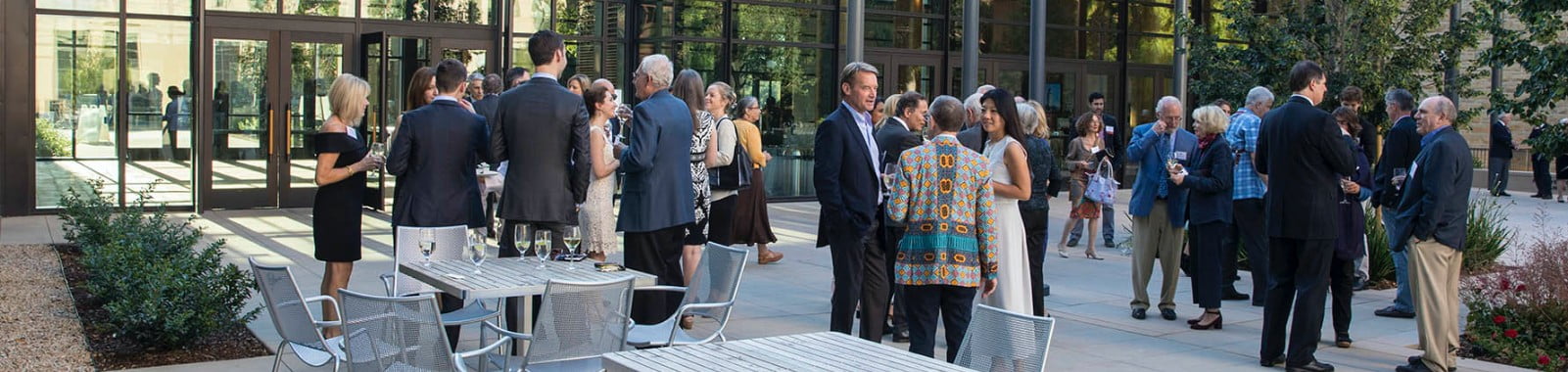
The Hoover Institution hosted its annual fall retreat on October 22–23, welcoming supporters for two days of events that touched on challenges facing the US at home and abroad, the midterm elections, and what’s next in AI. The retreat came at a pivotal moment, as the fellowship advances new scholarship and policy solutions to help secure a prosperous and stable future for America amid a period of profound change. Director Condoleezza Rice welcomed Demis Hassabis, CEO of Google DeepMind, for a keynote discussion about AI’s future potential, especially in healthcare. Read more here.
Higher Education
What happens when the best students are afraid to have tough conversations and the best scholars are afraid to do unpopular research? Harvard economist Roland Fryer talks with EconTalk’s Russ Roberts about the new million-dollar Carob Trust Prize for Academic Courage, launched with investor Bill Ackman, to reward scholars who follow the data wherever they lead. Fryer reflects on staying cheerful in the face of hatred, why he works for disadvantaged kids rather than academic journals, how he uses AI to let students try to prove him wrong, whether peer review is broken, and how great teaching kindles purpose, not just knowledge. Watch their conversation here.
Europe
In the New York Times, Senior Fellow Timothy Garton Ash argues that this month’s result in the midterms should not convince European leaders that they can sit back and let America return to being the security guarantor they’ve become accustomed to. Instead, they must continue to forge new relationships, rearm, and rebuild their capabilities. “Never again will the United States be what it was for much of the past eighty years: a ‘liberal leviathan,’ in the Princeton scholar G. John Ikenberry’s telling phrase. Europe must not wait on a mirage from the past,” Garton Ash says. He says Europe must continue to strengthen ties with like-minded states and “increase [Europe’s] own resources of hard power, as well as economic and soft power.” Read more here. [Subscription required.]
Trade
In a presentation to participants in the 2026 Hoover Summer Policy Boot Camp, Senior Fellow Stephen Redding, a Stanford trade economist, lays out what he says are the reasons the United States reverted to high tariff barriers after decades of leading global trade liberalization. In 2025, the country reversed course, imposing sweeping tariffs and escalating trade tensions with China. From the postwar trading system to the return of higher trade barriers, Redding shows how America’s shifting trade policies are transforming international commerce and global supply chains. Watch it here.
The Constitution
In a case involving two people accused of cocaine trafficking in Kansas in 2025, a district court judge cited a recent discussion between senior fellows Eugene Volokh and Orin Kerr in his decision to refuse a motion from the accused to suppress evidence gleaned from a search. The case involves the use of automated license plate reader (ALPR) systems (often installed along public roadways) that indicated a suspicious pattern of travel for the two accused men, who argued that the use of ALPR data to indicate that a search of their car might be necessary violated the Fourth Amendment. The Kansas judge rejected their claim. Use of AI-guided Flock cameras and ALPRs made up a significant portion of an October 27 episode of Free Speech Unmuted. Read the decision here.






Related Commentary