








- Military
- History
- Revitalizing History
The proliferation of land-based missiles, cheap drones, and integrated anti-access/area-denial networks has overturned centuries of assumptions about naval dominance, allowing regional powers—and their proxies—to hold critical maritime trade at risk. Traditional sea powers must adapt on two fronts: preventing chokepoint closures through deterrence by denial and mitigating them through resilience by design.
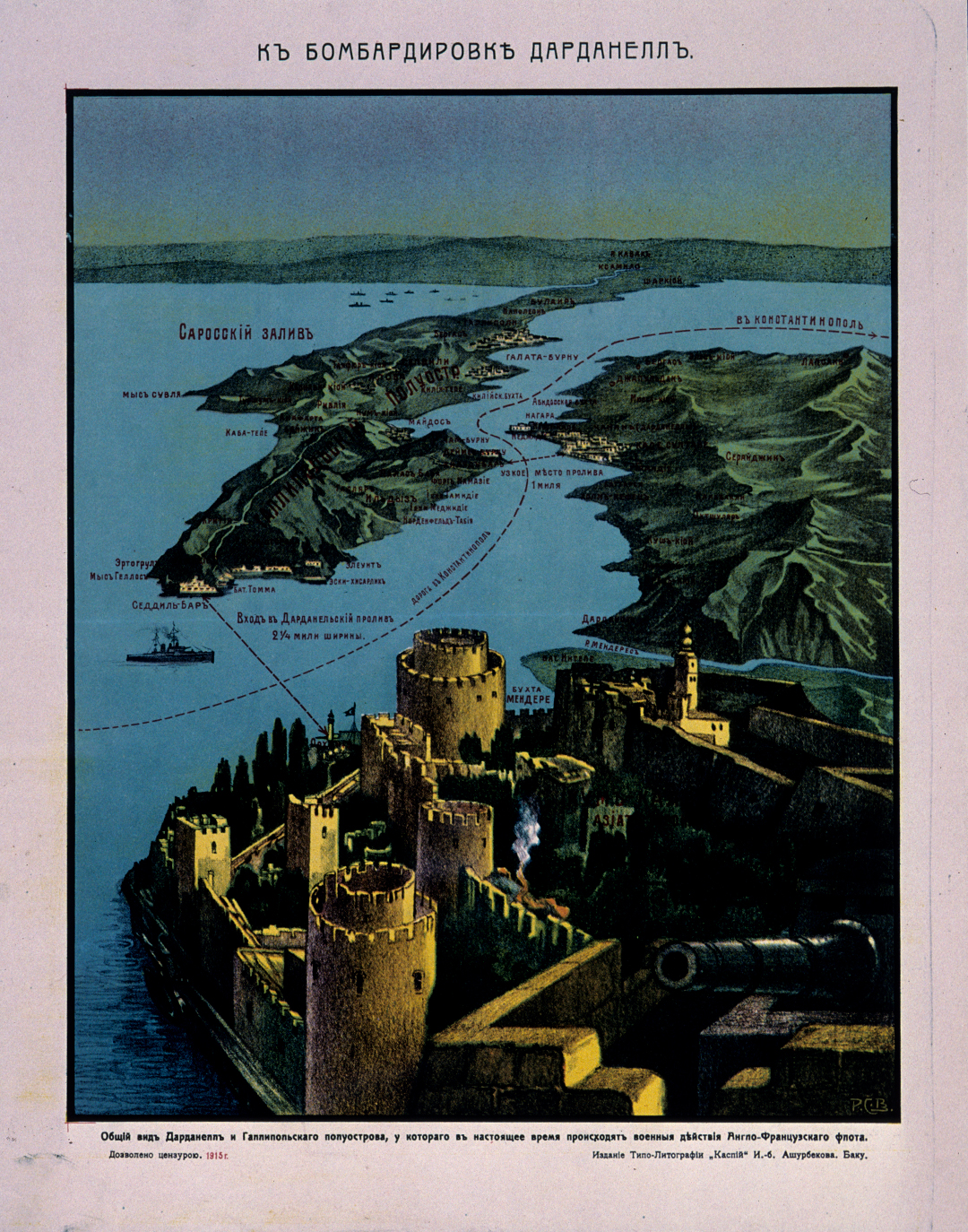
The global economy floats. More than 80 percent of world trade by volume, and over 70 percent by value, moves by sea. Nothing else comes close for bulk commodities—oil, liquefied natural gas, grain, iron ore—and nothing will anytime soon. But the sea lanes that carry that commerce are not evenly distributed. They funnel through a handful of narrow passages: Hormuz, Malacca, Bab el-Mandeb and Suez, the Turkish Straits, Panama. Whoever can close one of those doors, even briefly, holds a lever on the world economy.
For most of history, that lever belonged to navies. The young American republic sent its first frigates to the Barbary Coast because merchant hulls were being seized and crews ransomed—commerce protection was the U.S. Navy’s founding mission. During the Civil War, the Union’s blockade strangled Confederate cotton exports—cutting them by an estimated 95 percent—and starved the South of arms and matériel. The Royal Navy’s distant blockade of Imperial Germany did much the same to the Kaiser’s wartime economy a half-century later. And in two World Wars, Allied convoys fought German U-boats and surface raiders across the Atlantic to keep Britain fed and armed. The lesson of all of it seemed settled: control of the sea meant control of seaborne trade, and control of the sea belonged to whoever put the strongest fleet on it.
That balance has shifted. Lord Nelson is often credited with the observation that “a ship’s a fool to fight a fort,” and for two centuries the aphorism described a tactical problem you could sail around. No longer. Today’s “fort” is a reconnaissance-strike complex: precision-guided ballistic and cruise missiles, swarming drones costing a few thousand dollars apiece, sea mines, over-the-horizon sensors, and the networks that tie them together. The fort now reaches hundreds—in China’s case, thousands—of miles to sea. A land power no longer needs a blue-water fleet to contest the maritime commons; it needs missiles, mines, and a targeting picture.
We are not speculating about this. The Houthis—a militia, not a navy—used anti-ship missiles, one-way attack drones, and unmanned surface vessels to drive commercial traffic out of the Red Sea, cutting Suez Canal transits roughly in half and forcing shipping around the Cape of Good Hope at a cost of ten to fourteen additional days per voyage. Iran, even with its conventional navy badly degraded, retains the ability to threaten closure of the Strait of Hormuz—through which roughly a fifth of the world’s petroleum liquids pass daily—with land-based missiles, fast-attack craft, drones, and mines. And China has built the most formidable A2/AD architecture on earth precisely so that, in a Taiwan contingency, it could complement its rapidly growing navy with a coastal fortress: a blockade or quarantine of the island enforced as much from the mainland as from the water. Naval forces can no longer assume uncontested access to the world’s chokepoints. That is the strategic fact of our era, and it demands answers on two distinct fronts.
Prevention: Deterrence by Denial
The first task is convincing any adversary that an attempt to close a chokepoint will fail—or cost far more than it gains. Several lines of effort deserve priority.
First, turn the A2/AD logic around. What works for the coastal defender works for the coalition, too. Land-based anti-ship missiles in allied hands—systems like the Marine Corps’ NMESIS batteries operating from the Philippine archipelago, or Japanese Type 12 missiles along the Ryukyus—make the first island chain a two-way firing range. Sauce for the goose is sauce for the gander.
Second, distribute and proliferate. Concentrated naval power presents concentrated targets. Large numbers of attritable unmanned surface, undersea, and air vehicles—the logic behind the Pentagon’s Replicator effort—complicate an adversary’s targeting problem, absorb the first salvo, and keep sensors and shooters in the fight.
Third, restore magazine depth. Precision munitions win engagements; inventories win campaigns. Recent conflicts have drawn down stockpiles of interceptors and strike weapons—PAC-3, SM-6, Tomahawk—faster than industry can replace them. Multi-year procurement, expanded production lines, and co-production with allies are deterrents in their own right.
Fourth, contest the kill chain, not just the missile. Every reconnaissance-strike complex depends on finding, fixing, and tracking targets. Resilient, proliferated space-based sensing on our side, paired with cyber, electronic warfare, and deception to blind and confuse the adversary’s, attacks the system at its weakest links rather than trading interceptors against warheads at unfavorable exchange ratios.
Fifth, take mine warfare seriously again—on both sides of the ledger. Mines remain the cheapest, most effective chokepoint-closure weapon ever devised, and mine countermeasures have been chronically underfunded for decades. Offensive mining capability, meanwhile, is among the most cost-effective tools we hold against an adversary’s own amphibious and commercial fleets.
Sixth, deepen allied access and burden-sharing. No single navy can hold every strait. Diversified basing, prepositioned logistics, combined patrols, and frameworks from AUKUS to the Quad spread both the risk and the responsibility—and signal to any would-be blockader that closing a chokepoint means taking on a coalition, not a country.
Mitigation: Resilience by Design
Deterrence can fail, and honest strategy plans for it. If a chokepoint closes tomorrow, the damage is determined by decisions made years in advance.
Strategic reserves come first. National petroleum reserves, coordinated internationally through the IEA’s collective-action mechanisms, buy time—but only if they are actually filled, and only if allied release is rehearsed rather than improvised.
Second, build and maintain bypass capacity. Saudi Arabia’s East-West pipeline can move roughly five million barrels per day to the Red Sea, and the UAE’s Habshan–Fujairah line delivers crude directly to the Gulf of Oman—together offering meaningful, though partial, insurance against a Hormuz closure. Comparable thinking applies elsewhere: surge capacity around the Cape, overland corridors, LNG supply flexibility, and diversified sourcing all shrink the leverage any single strait confers.
Third, address the insurance choke before the physical one. War-risk premiums, not missiles, are what actually clear commercial traffic from a threatened sea lane. Government reinsurance backstops and pre-negotiated indemnity arrangements—the modern equivalent of wartime convoy insurance—can keep hulls moving when private markets balk.
Fourth, recapitalize sealift and the merchant marine. The Ready Reserve Force averages well over forty years of age, and the pool of U.S.-flagged ships and qualified mariners has withered. In a contested reopening of any strait, escorted convoys return—and convoys require both escorts in numbers and merchant hulls worth escorting. This is an area where allied shipbuilding capacity, particularly Japanese and Korean, should be treated as a strategic asset.
Fifth, harden the logistics backbone ashore. The 2017 NotPetya attack cost Maersk some three hundred million dollars and shut down terminals worldwide without a single shot fired. Ports, terminal operating systems, and shipping networks are part of the chokepoint problem; their cyber defense is part of the answer.
Sixth, be ready to reopen, not merely to endure. Rapid mine clearance, salvage, emergency repair, and the naval escort capacity to restore safe transit under fire are the difference between a closure measured in weeks and one measured in seasons.
The Stakes
The maritime commons has been the connective tissue of the global economy since the age of sail, kept open in the modern era largely by American and allied sea power. That guarantee is now contested by weapons that cost a fraction of the ships they threaten. The answer is not nostalgia for uncontested command of the sea—it is a clear-eyed pairing of deterrence by denial with resilience by design, integrated across land, sea, air, space, and cyberspace, and shared among allies. Keep the doors open if we can; make sure the house still stands if, for a time, we cannot.
—Admiral James O. Ellis, Jr.

