



- Military
- History
- Revitalizing History
Introduction
Air power is a relatively new feature of warfare. Conversely, military coercion, actions to force an adversary to change its behavior short of full-scale war, is as old as history itself. Coercion is a tool of statecraft that offers the benefits of winning a war without incurring the costs. The rise of air power has arguably increased the attractiveness of coercive statecraft, especially for wealthy democratic states that are concerned about casualties. Coercive bombing is viewed as a low cost, low commitment tool for achieving foreign policy objectives. The salient questions are: Does coercive bombing work, and more specifically, what are the conditions that make coercive bombing a viable tool for achieving political objectives? Knowing the answers to these questions should inform strategy choices and more importantly, avoid strategic blunders.
In the Beginning
The promise of air power mostly originated from the mind and writings of Italian Brigadier General Giulio Douhet during the Interwar period. His theory has two parts. First, “command of the air” requires air power to aggressively bomb to destroy enemy bases, logistics hubs, and civilian populations deep inside enemy territory where they are most vulnerable. And second, with command of the air achieved, victory in all other domains will be ensured. For Douhet, command of the air meant a degree of control sufficient to prevent enemy aircraft from flying. He was adamant that a determined mass bomber attack would always get through any defenses put in its way.
For Douhet, the ascendancy of the defense in ground warfare rendered decisive combat actions infeasible. However, he did believe that ground and naval actions mattered. But they would be efficiently and effectively executed, almost automatically. In other words, after command of the air is achieved and the enemy’s bases, aircraft, industrial capacity, and the means to mobilize its population to maintain its military forces are destroyed, the war is mostly won. And then, only limited numbers of ground and naval units would be required to mop up the battlefield.
Explicit in Douhet’s concept was that command of the air, essential for winning, required priority of resource allocation. Additionally, air power could not be subordinate to, or in support of, ground or naval forces. This necessitated the creation of an independent air force that controlled all military aircraft. Douhet conceded that air support to ground and naval forces was possible only after command of the air was achieved.
It should be no surprise that air officers in other countries would warmly, quickly, and uncritically embrace Douhet’s ideas. After all, it was in their interests to do so. The U.S. Army Air Forces, the British Royal Air Force, and even the German Luftwaffe fell into line. However, the Soviet Union and Japan were exceptions. Stalin’s purge of leading military officers eliminated their chief air theoretician. His replacement, and the purge environment, did not favor proffering new ideas. For Japan, geography and very conservative leaders made strategic bombing infeasible.
While the principles for successful land warfare evolved over centuries of practical experience by military leaders, Douhet’s principles were futuristic, arguably brilliant, and purely speculative. Uncertainty did not dampen the enthusiasm of Douhet and his international band of evangelist air power followers. But the military adage, “No plan survives first contact with the enemy,” would apply to Douhet’s new conception of war in the crucible of World War II.
World War II—The First Test
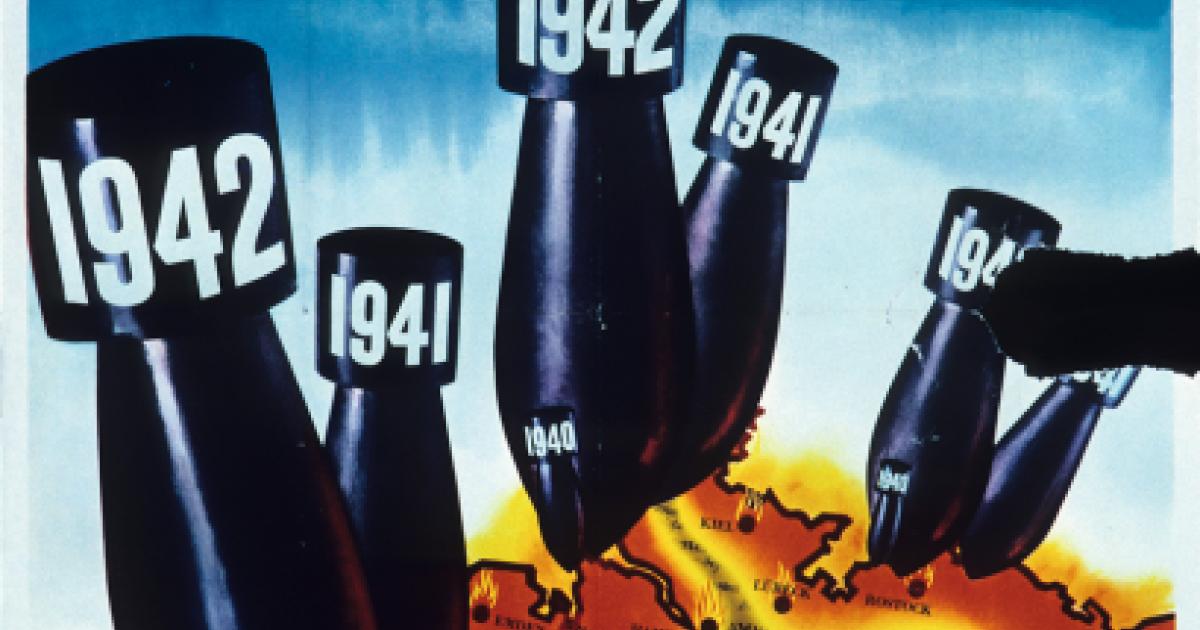
The airmen’s penchant for exaggeration can also be attributed to Douhet. Almost every facet of his thesis was proved wrong. This does not mean that air power in World War II was irrelevant because it certainly was not. Still, producing the physical destruction and morale decay for swift victory envisioned by Douhet was elusive. His calculations for the tonnage of bombs, the number of aircraft, and the relative ease of destroying designated targets were pure fantasy. The World War II bomber fleets, the amount of ordnance they carried, and the repetitive missions they flew far exceeded anything Douhet imagined. Still, quick and decisive results from bombing never materialized. Land and naval action not only never lost their primacy but were most effective on the offense, not mired down on the defense as Douhet believed. His assumption of static land fronts was wrong.
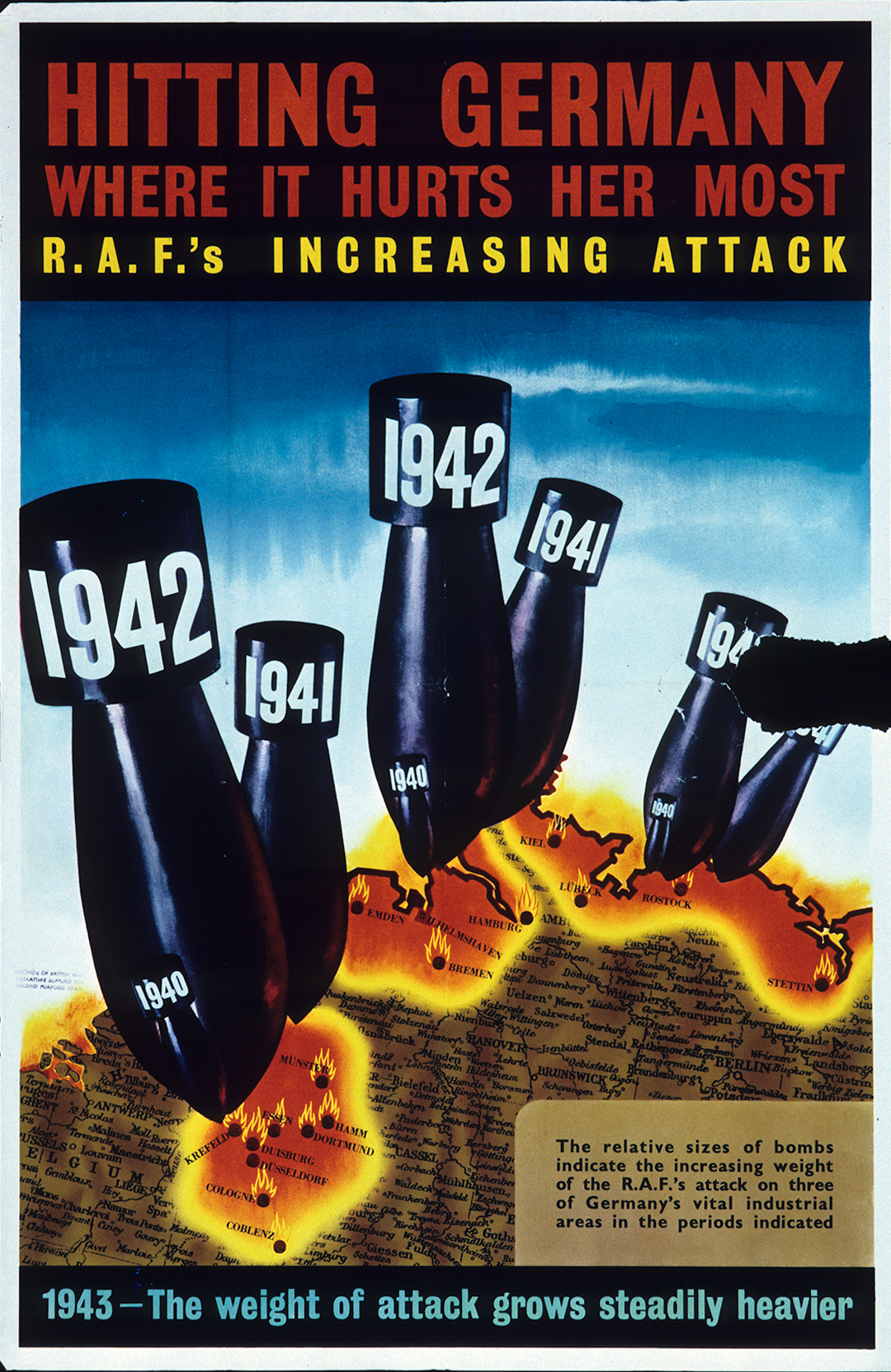
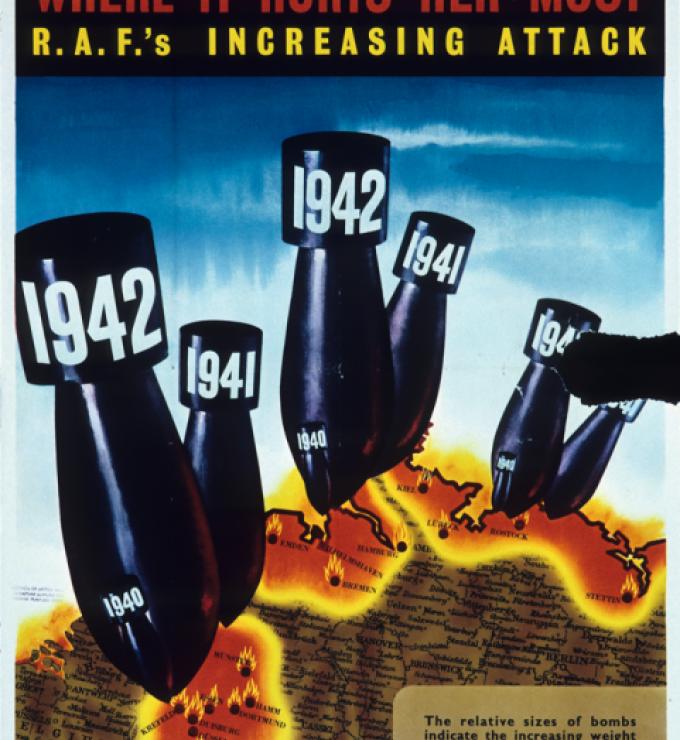
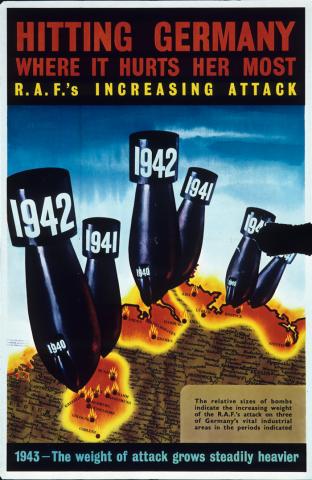
Douhet’s insistence that “Nothing a man can do on the surface of the earth can interfere with a plane in flight,” was also off the mark. Many got through but many did not. His minimizing the effectiveness of air defenses proved costly. The U.S. Eighth Air Force lost thirty percent of its air crews monthly during the height of the bombing offensive over Germany. Over forty percent of the airmen were killed on operations. Thousands more were wounded and became POWs. The R.A.F. Bomber Command sustained sixty percent losses from killed, wounded, and POWs.
The full extent of the damage inflicted on the Nazi’s war machine from the air was mostly unknown. Albert Speer, Hitler’s Minister of Armaments and War Production, provides an inside account in his memoirs. In short, allied bombing forced the Germans to develop elaborate defensive measures. Air defense capabilities were quickly developed to counter the effectiveness of the bombing. Additionally, the bombing campaign triggered adjustments to war production. Spreading out stockpiles and decentralizing production as much as possible minimized a decisive blow. Speer claimed that the bombings could have been much more effective and brought the Nazi war production to its knees with better targeting strategies and repetitive bombings of key facilities. In other words, allied bombing strategy and damage assessments were lacking. Still, thousands of guns had to be pointed at the sky and manned by tens of thousands of German soldiers. These guns and soldiers could have been employed against Allied ground forces if it were not for the new air front over Germany. As much as a third of Germany’s war effort was diverted away from the front lines towards protecting the rear area.
Speer’s assessment of the devastating bombings of German cities was especially insightful. Rather than weakening the morale of the populace as Douhet assumed, it had the opposite effect. It spurred the people to do their utmost in supporting the German war effort. It promoted toughness. Speer estimated that the roughly ten percent loss in production capacity from the bombings was more than compensated for by the increased efforts of German workers. Allied assessments after the war about bombing cities validate Speer’s assessment but go further. Bombing cities to destroy morale was not only a waste of bombs, but it was also a waste of half the total tonnage dropped that could have been used to better effect.
The link between the strategic bombing of Japan to its surrender, to include the dropping of two atomic bombs, is also surprisingly inconclusive. Intensive air attacks against Japan did not begin until early 1945. By that time, Japanese air, naval, and merchant fleet capabilities were already decimated. Her ground forces were isolated. Japan was already defeated and its leaders knew it. But it is not unreasonable to claim that the bombing solidified the consensus among Japan’s leaders that surrender was required. At the same time, the initial demand by the United States for unconditional surrender created deadlock in the cabinet even knowing continuing to fight was hopeless. A communique from the U.S. Secretary of State declaring that the ultimate form of the future government of Japan would be based on the will of the Japanese people broke the deadlock. This modification to unconditional surrender that protected Japan’s Imperial Heritage made the terms of surrender acceptable.
While most of the assumptions Douhet used to build his conclusions about command of the air proved wrong, the conduct of the war generated new principles for the future of air power. The bombing of Germany and Japan was a new experiment, and much was learned the hard way. Airplanes, and fighters in particular, supported actions on the ground and sea and won the respect of the older services. It was the tactical employment of air power that mostly contributed to victory. This should not have been a surprise since it was the ground and naval wars that dominated. Interdiction targets such as fuel depots and refining facilities, and transportation hubs, were particularly lucrative because their destruction limited enemy ground actions and therefore facilitated Allied maneuver. In the Far East, airplanes decided sea battles. During the Battle of the Coral Sea, not a naval gun was fired though both sides sustained great losses from the air. These realities were widely at odds with Douhet’s ideas.
The lack of understanding of a target as a system may have been an obstacle against air power being strategic and decisive. The general air strategy used by the Allies targeted the entirety of a complex target like fuel production, aircraft manufacturing, or transportation networks. Massive bombing of these targets diluted the effects and made recovery easier. A systems approach would have concentrated the bombing on one or two critical components for each target system, without which the system could not work.
Such an approach may have presented too difficult a task for intelligence directorates. It is no less challenging today and precision guided munitions do not alleviate the intelligence challenge. Unfortunately, the tendency to observe the massive destruction of bombed targets and assume commensurate destruction of war production capabilities and civilian morale continues to be folly. There is usually much less than meets the eye from seeing burned, devastated cities, industrial centers, and military complexes.
Despite inconclusive evidence that bombing during World War II was decisive, no reasonable observer can deny that the aerial war did not hasten the end of the war. And airpower should have had an impact considering forty-five percent of British war resources went to the R.A.F. and thirty-five percent of American war resources went to the Army Air Forces. Allied air power was best used in support of the other Services. In Germany, the airplanes supported the armies; in the Pacific, they supported the navy. There was too much interdependence among the services during this initial experiment with air power to unequivocally overstate the impact of airpower on the war’s outcome. This fact, however, did not dampen the misplaced significance of the air component’s contribution to victory and its future use.
Beyond the World War II Experience
In the decades after World War II, many new cases of the use of air power as a coercive instrument would lead to a more precise understanding of the conditions under which coercive bombing may succeed. Prominent scholars led by Robert Pape, Daniel Byman, and Michael Horowitz used qualitative and quantitative methods to add to the knowledge derived from World War II. Synthesizing their key findings reveals that coercive bombing is most likely to work when: (1) escalation dominance exists and is maintained, (2) an adversary’s military strategy can be successfully weakened, (3) a third-party threat can be mobilized, (4) demands are limited, and (5) aerial attacks are coupled with other military actions. Contemporary scholarship has also confirmed what was learned in World War II: Bombing civilians and civilian infrastructure does not coerce. Therefore, policy makers can take the morally preferable path of not attacking these targets without compromising the likelihood of successful coercion. Additionally, coercion remains very difficult.
Escalation Dominance
Escalation dominance is the ability of the coercer to incrementally increase the costs of defiance while simultaneously denying the adversary the ability to neutralize those costs or counter-escalate. It is important to remember that coercive contests are dynamic. In other words, the enemy has a vote. Even a relatively weak adversary can affect a coercer by inflicting casualties that generate political blowback. An adversary highlighting its civilian casualties can cause revulsion. While such actions do not have to slow down military actions, they can hurt public support for the war and impact escalatory options.
An adversary can also thwart escalatory options by reducing the vulnerabilities of targets through dispersion, camouflage, and organizing teams to rapidly repair damaged facilities. Plus, many potential adversaries have moved key facilities underground, significantly reducing their vulnerability to bomb damage.
Defeating the Adversary’s Strategy
Exploiting vulnerabilities in an adversary’s military strategy increases the likelihood of successful coercive bombing. Simply put, thwarting the enemy’s theory of victory neutralizes incentives for continuing to resist or engage in hostile behavior. Once an adversary’s leaders realize that victory is impossible, they are more willing to make concessions. The challenge is to first obtain a precise picture of the situation. The World War II intelligence challenge of identifying the most critical node of a complex target for destruction dwarfs the challenge of fully understanding an adversary’s theory of victory and its vulnerable nodes. While artificial intelligence and modern information technologies would have greatly improved target analyses in World War II, they would not produce the complete analysis needed to undermine an adversary’s theory of victory. The knowledge of an enemy’s interests, decision-making process, and the way it would likely respond to coercion is learned from human sources operating on the ground, not technical means. Developing this human intelligence network cannot wait for the war to start. The precise picture or complex profile of the adversary is central to designing a successful coercive strategy, especially when air power alone is used.
Third Party Threats
The threat of coercive bombing and the subsequent strikes trigger peripheral effects. Regional actors may find it advantageous to align with the coercer. Internal opposition groups or opportunistic military or militia groups may see an opening to seize power. Exploiting third party actors magnifies the level and complexity of the threat and changes an adversary’s cost-benefit analysis. It raises the cost of resistance making concessions more likely. Despite these apparent advantages, leveraging third parties usually has a price. Forming a coalition to oppose an adversary involves amalgamating the interests of every coalition partner. The result may be a watered-down version of the coercer’s initial aims and methods. On the other hand, a coalition of like-minded nations functions like a home fuse box. Overloading the electrical system will cause the fuse to blow before the house burns down. A coalition moderates action and can keep one country from going too far, too fast and finding itself in an unsustainable quagmire.
Using internal third-party actors can create its own risks. Specifically, they are difficult to control and there is no guarantee that their political ascendancy will result in a more pliable regime than the one they replaced. Nevertheless, the advantages of intelligently using third party actors to alter the adversary’s calculus can be the difference between coercion success or failure.
Limit Demands
Coercion is more likely to succeed when the demands are limited. And the maximalist demand of regime change will almost certainly fail when bombing is the instrument of choice. Thomas Schelling said that “Coercion by threat of damage also requires that our interests and our opponent’s not be absolutely opposed…. Coercion requires finding a bargain, arranging for him to be better off doing what we want—worse off not doing what we want—when he takes the threatened penalty into account.” When the perceived costs to an adversary are too onerous, no level of threat will compel compliance. In other words, the greater the demands, the greater the required level of effort by the coercer. Bombing alone is insufficient to achieve maximalist objectives.
Bombing is Not Enough
Coercive bombing is increasingly viewed as a low-cost, low-commitment tool for policy makers. It is a legitimate restriction by civilian leaders on the use of force. It also signals the level of commitment to a cause. Putting boots on the ground dramatically changes the level of commitment and the stakes, both on the ground and in the domestic political milieu. It also increases the likelihood of success. Restricting coercive statecraft to bombing without employing other military forces hinders the coercer’s efforts and impedes escalatory options. Moreover, it can make the adversary doubt the coercer’s credibility to escalate or even sustain ongoing operations. Reputational damage for failure to coerce will affect future attempts of coercive statecraft.
Conclusions
Knowledge about the effectiveness of air power as a tool of coercive statecraft is the first step towards minimizing bad strategy choices. It is interesting to note that Germany’s 1940 bombing campaign against Great Britain was largely ineffective. This knowledge failed to inform air planners in the subsequent bombing campaigns against Germany and Japan. The air campaign in Germany killed more civilians than American and British casualties combined. In Japan, a relatively short bombing campaign killed more people than the United States lost in the entire war. Like in Great Britain, bombing did little to undermine civilian morale or stop the production of war materials. Despite these facts, air power gained a level of notoriety out of proportion to its actual contributions.
The key contemporary question is: Can air power alone coerce an adversary to change behavior? The answer in almost any scenario is no. Coercive bombing does not work, especially when the five conditions discussed above are absent. Nonetheless, coercive bombing as a tool of statecraft is likely to persist because political leaders will continue to seek cheap solutions to complex foreign policy problems and air power evangelists will oversell their product. The overuse of air power thrives on ignorance. The allure of the limited commitment, low-cost coercive bombing option is in sharp contrast to the reality that the coercer must be fully prepared to employ its full capabilities until the adversary accepts its demands. Coercion is difficult and an air power-only strategy rarely works, but almost always signals a lack of commitment and undermines future attempts at coercion. Think once, twice, three times before launching a coercive bombing campaign to change an adversary’s behavior on policies it considers important.