Published: February 21, 2017

Market share alone doesn’t make a company a monopoly. The critical feature of a monopoly is its ability to prevent others from offering competing products or services. And often, it’s the government that’s keeping entrepreneurs out.
 

DISCUSSION QUESTIONS

  1. Does a company need to be the only provider in order to display “monopolistic behavior?”
  2. Why is it that one company in one industry with a dominant market share might be a monopoly, but another company in a different industry might not be?
  3. How often is a monopoly created by the government and how often is it the result of the free market?

Cast

Thomas Sowell

Thomas Sowell

Richard A. Epstein

Richard A. Epstein

Milton Friedman

Milton Friedman

It’s pretty clear why monopolies are dangerous and unwanted - they squelch competition, increase prices, reduce choice, and diminish innovation.

But there's also a lot of confusion about what is or isn't a monopoly.

For example, almost 70 percent of web searches go through Google, and 90% of the world's zippers are made by YKK. But a company's market share doesn’t make it a monopoly.

The critical feature of a monopoly is its ability to prevent others from offering competing products or services.

So no matter how big Google gets, anyone can compete against it. Think about it - you can actually use Google to find a different search engine!

The companies and organizations we should worry about are the ones that have special treatment from the government, which helps prevent others from starting new businesses or offering alternatives to consumers.

These anti-competitive measures may include artificially raising the cost of starting a business, stricter mandates and regulations on others, or even making competing services outright illegal.

For example, in over a dozen states, it’s currently illegal for Tesla to sell cars directly to consumers, because car dealer associations have a government-supported monopoly on auto sales.

This is good for car dealers, but it’s definitely NOT good for consumers, who face fewer options and higher prices.

So, the next time you notice high prices, lack of innovation, or a lack of choice - ask yourself who - or what - is keeping the competition out?


 

Related

VIDEO

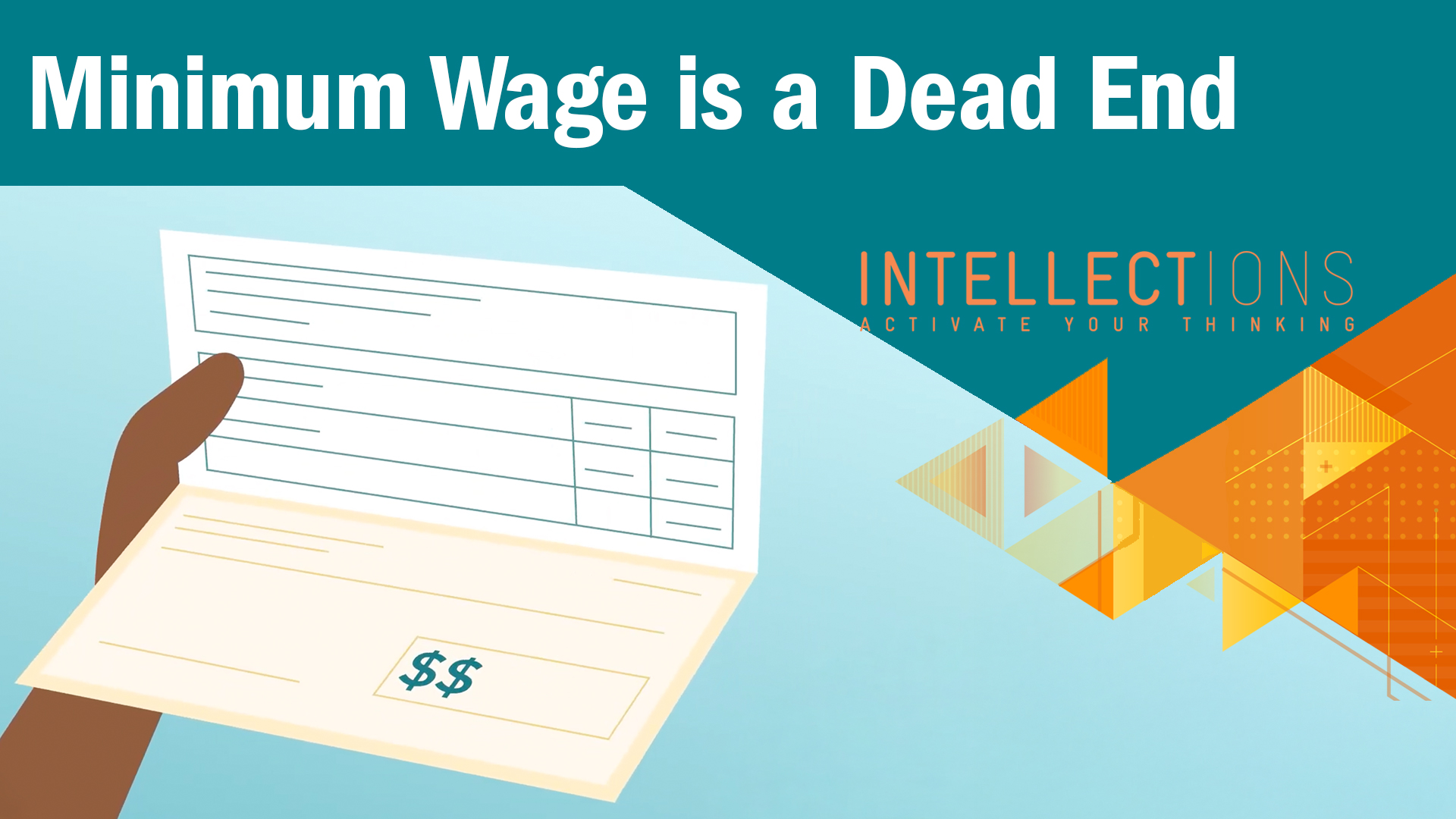
Is Minimum Wage A Dead End?

Minimum wage policy is intended to increase earnings for low-wage workers and reduce poverty. Evidence from state-level increases, however, shows that businesses may respond by changing how many people they employ, how many hours they offer, whom they hire, and how much work they automate. Workers who remain employed may earn more per hour, but others may lose income or job opportunities, while many of those who benefit do not live in poor households. The Earned Income Tax Credit (EITC) directs support toward low-income working families without putting other workers’ jobs or hours at risk.

Articles

Money and Power: Historical Lessons for Stablecoins and U.S. Dollar Dominance

Economics Working Paper 26126

September 8, 2026

Videos

California’s War On Wealth—And America’s War On Terror

Is the progressive dream of wealth taxes soon to be reality – or a fiscal and economic nightmare – should voters approve Proposition 40 and a one-time 5% tax on the holdings of the Golden State’s billionaire class? And 25 years after one of the darkest days in the republic’s history, what is the legacy of the 9/11 attacks on America?

September 9, 2026