Published: June 27, 2017

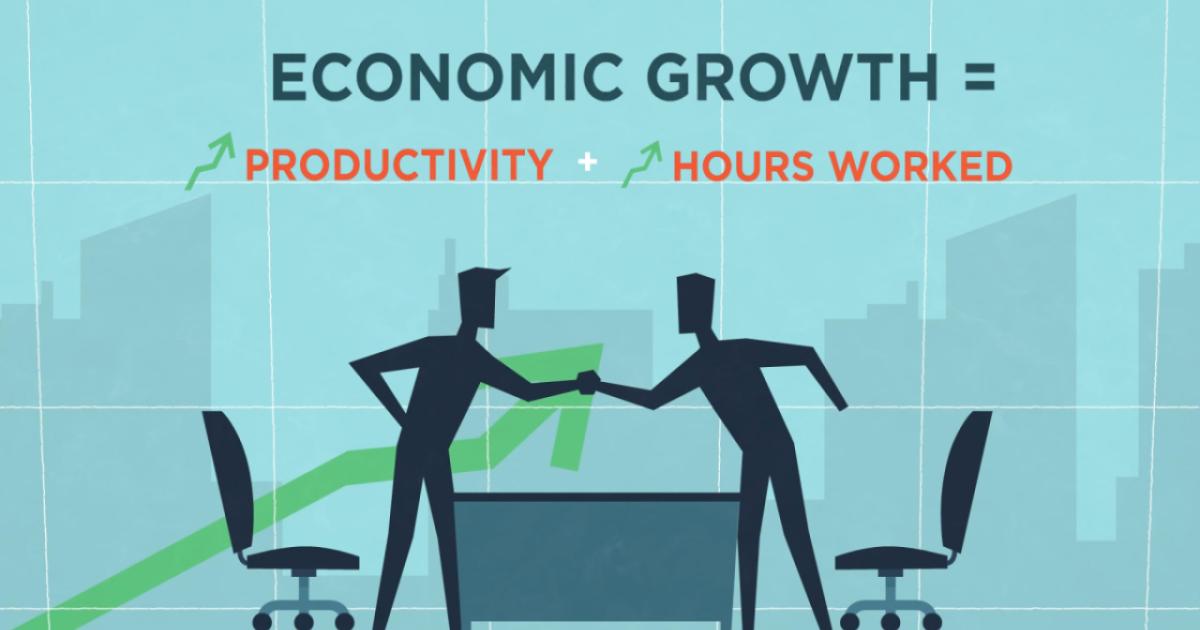
Economic growth increases when more people work more productively. However, economic growth has slowed in the last decade, as increases in productivity and hours worked have fallen to fractions of their previous rates. Returning to rapid economic growth will require policies that encourage individuals to rejoin the workforce and businesses to invest in physical capital.

Discussion Questions

  1. How can we encourage productivity among workers?
  2. What are some examples of technology that have improved productivity among workers?
  3. Why might some people choose not to participate in the labor force?

Additional Resources

Cast

John B. Taylor

John B. Taylor

Economic growth has been slow for the last decade.

To understand why, it helps to consider the factors that cause growth rates to change.

Economic growth comes from upticks in productivity AND increases in the total number of hours worked in the economy.

When more people work more productively, the economy grows.

Productivity increases when workers produce more than they did before. This occurs either because workers obtain higher levels of education or because companies invest in physical capital like tools, factories, and equipment that enable employees to increase their output.

Recently though, productivity has grown at only a quarter of its historical pace, largely due to reduced investment. Economic growth has lagged as a result.

And the percent of people working today is much lower than previously expected. Even after taking into account the Baby Boomers retiring, there are millions of able-bodied adults who are no longer participating in the workforce.

Getting back to our historical level of growth is possible, but it will require policies that encourage people to rejoin the workforce AND policies that spur more investment in education and the tools that help make workers more productive.

Related

Congressional Testimony

Examining Healthcare Markets: Fraud And Competition

(23:52) Hoover Institution fellow Dr. Brian Miller testifies in front of the House Judiciary Subcommittee on the Administrative State, Regulatory Reform, and Antitrust in a hearing titled "Examining Healthcare Markets: Fraud and Competition."

September 14, 2026

VIDEO

Should We Regulate AI (Before It's Too Late)?

Artificial intelligence could become one of the most consequential drivers of productivity and economic growth in a generation. Yet concerns about job displacement, misinformation, and political disruption have prompted calls to regulate the technology before its effects are fully understood. History shows that major innovations disrupt existing industries while creating new forms of work and enterprise that policymakers rarely anticipate. Premature regulation risks entrenching established firms, limiting competition, and expanding government influence over information. The challenge is to address genuine harms while preserving the freedom and experimentation that allow innovation to advance.

Articles

Can We Solve Gun Violence?

Cities are the economic engine of America. The gravest threat to that engine is gun violence. Beyond the lives lost and families devastated, every murder that happens in an American city reduces that city’s population by seventy people—fewer people and businesses moving in, more moving out.

September 10, 2026