series_item_video
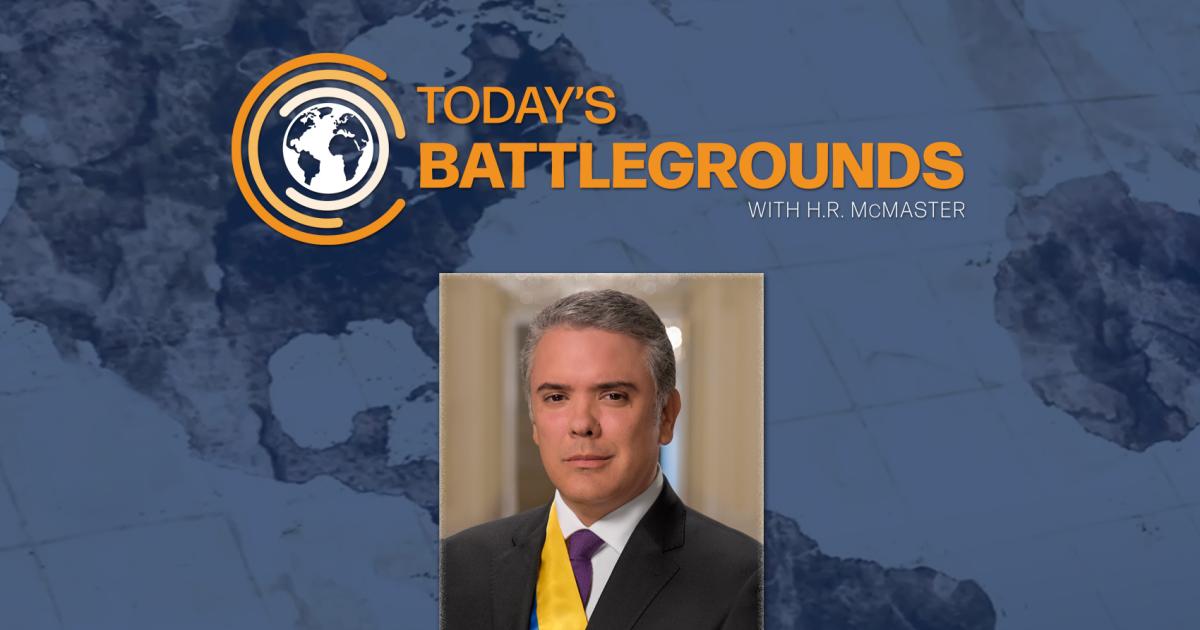
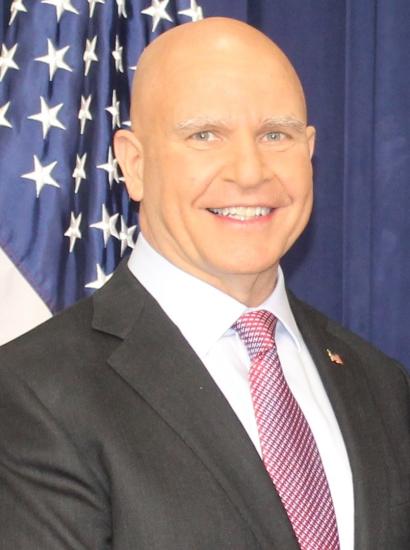
Join Iván Duque Márquez, former President of Colombia, and Hoover Senior Fellow, H.R. McMaster, as they discuss the implications of Colombia’s June 2026 runoff election, the threats associated with narcotics and transnational crime, and how the United States and Colombia can strengthen security and confidence in democratic institutions.
The conversation examines Colombia’s evolving security challenges, including narcotics trafficking, transnational criminal organizations, and the role of the armed forces in restoring security and the rule of law. Duque and McMaster also discuss U.S.-Colombia security cooperation, democratic resilience across the Americas, and political and economic developments in Venezuela and Cuba. They examine the influence of authoritarian powers in the Western Hemisphere and the importance of strengthening democratic institutions and regional partnerships in the face of growing geopolitical competition.
Recorded on June 29, 2026.
- In order to make America great, you need to make the Americas great. This is today's battlegrounds. Our discussions with leaders from around the world consider how history produced the present, and how we can work together to overcome obstacles, to progress, seize opportunities, and build a better tomorrow. On this episode of Today's Battlegrounds, our focus is on Columbia. Our guest is Yvonne Duque Marquez, the 34th president of the Republic of Columbia. President Duque served from 2018 to 2022 after a career that combined public service, economic policy, and international development. Before entering the presidency, he worked for more than a decade at the interim American Development Bank, and later served in Columbia Senate. During his administration, he emphasized security, counter-narcotics, economic growth, and democratic governance. He gained international recognition for granting legal protection to nearly 2 million Venezuelan migrants, fleeing authoritarian rule, and economic collapse. Since leaving office, president Duque has continued his work as a scholar and public policy leader through fellowships at major universities, and the establishment of the Yvonne Duque Center for prosperity and freedom, making him one of the most influential voices on democratic resilience and hemispheric security. Columbia's modern history has been shaped by the longest running armed conflict in the Western Hemisphere. By the late 1990s, the revolutionary armed forces of Columbia or FARC controlled large portions of the country and financed itself through kidnapping, extortion, and drug trafficking. With the support of Plan Columbia, a US assistance program launched in 2000. The Columbian state pushed back the insurgents and emerged as one of Latin America's most dynamic economies. The 2016 Peace Agreement with the FARC formally ended the country's largest insurgency, but did not end the conflict. The National Liberation Army or ELN still holds substantial territory along the Venezuelan border and transnational criminal organizations remain entrenched in rural areas. President Gustavo Petros 2022 election introduced a strategy of negotiations under the banner of total peace. Four years later, armed group fighters have nearly doubled. Cocaine production continues to climb, and the ELN has broken off talks pointing to these failures. President Trump de-certified Columbia as a counter-narcotics partner sanctioned President Petro and reduced usaid. Though tensions have since eased, even amid this friction, the United States and Columbia remain partners in a hemisphere at an inflection point. Latin America's left word pink wave is receding as voters in Argentina, Ecuador, Bolivia and Chile replaced left-leaning governments with center right alternatives. Cuba faces its worst economic crisis in decades, and Brazil holds a defining election in October, China has displaced the United States as South America's top trading partner and is moving aggressively to lock in critical minerals, ports and telecommunications across the region. Nicola Boro is now in US custody, opening the door to rebuilding Venezuela and the return of the 8 million refugees who fled his oppressive and criminal regime. Colombians voted June 21st in a runoff for President Petros successor results continue the regional shift to the right with nationalist newcomer adore Esper defeating Petros chosen heir Senator Yvonne Zepeda. We welcome President Duque to discuss the implications of Columbia's runoff election, the threats associated with narcotics and transnational crime, and how the United States and Columbia can strength in security and confidence in democratic institutions. President Yvonne Duque, welcome to today's Battlegrounds. It's great to see you. Thank you for making time for me and for our international audience. Well, general, it's a great honor for me to be here with you. Not only I have big admiration, but also I have an eternal sentiment of gra gra of gratitude with you because of all the support you gave to Columbia in difficult times and also for all what you did in order to strengthen our military capacities in our country. Well, I'm, I'm a huge fan of yours. Your leadership as president and, and what you've done since your presidency too, especially reaching out to youth who are disadvantaged and giving them hope and, and it is just, it's just great to have you on this program. And of course, I think we should start with, with Columbia and the situation in Columbia after the election. It was a very consequential choice there, I think. And between Yvonne Edda, an ally of the previous president, president Gustavo Petro, who had pledged to continue negotiations with armed groups and Albido de la Esper, a a conservative populist outsider endorsed by President Trump who promised a military offensive against, against the cartels and and organized crime groups. Could, could you share your assessment of the outcome as, as, as the new president comes into office? Well, I think the first thing to say is that many people have tried to characterize the political debate that we have in this election as a battle between the left and the right. And I think that will be too simplistic. I think it, it was really a, a discussion about the continuity of the negative petro policies and petros appeasement with criminal groups and petros interest to disrupt the Colombian constitution versus someone who defended the rule of law, who defended security as the cornerstone of democracy. And someone who was more inclined to defend the, the market economy vis-a-vis the model of permanent government intervention in different sectors in the economy as this has been in the, in the Petro model. So Alado, he ran as an outsider, but he defended most of the policies that have been cons, consistently successful in Colombia, in different administrations regarding the promotion of investment, the defense of security, and given the country trust and, and, and also belief from international investors for the long run. And I think he was able to win that, that popular sentiment. And he won in a very complicated election because Petro, for the first time as president involved, that only the government budget, but he tried to permanently promote his candidate. We never seen something of that magnitude in Colombia because actually the Colombian constitution prohibits the president to actively campaign in favor of a candidate. But even with that said, Velardo won. This is a big win for the Colombian democracy, and we all hope that he does well in his administration. Of course, the first challenge he's gonna have is this security crisis. And, and you know, you, you already alluded to Petros policies, what he called past total or total peace and, and, and negotiating with every armed group in the country. His premise was that engagement withdrawal, these groups out of conflict. And I, I think you, you already mentioned there this, the, the, it was like the, a false dilemma between, you know, far left and far right. I think it was much more complicated than that, but some people were saying, hey, it was a, it was a choice between com completing, continuing this sort of this postal approach or a bouquet like, and, and, and Ecuador, I mean, I'm sorry, a El Salvador type approach to to, to these criminal networks. Could you describe what you think is we're likely to see in terms of security policy under the new president? Well, what Pedro calls past total general is really total appeasement. Yeah. And the reason why I say this is because during Petros four years in office, what we have seen is, for example, illegal crops have skyrocketed, have reached record highs. We have, we're producing more coal cut than ever even before plan Colombia. And that's one thing. The other thing is that when you look for example at the International Terrorism Index, you can see that Colombia for the first time in more than 13 years is within the group of the 10 more effective countries by terrorist activities in the last year. You can see that, for example, killings that are derived from terrorist acts have increased more than 40%. And terrorism activities in certain parts of the country have increased more than 70%. And that's happening because petro appointed many king pins of illegal organizations as peace builders. And I say peace builders, quote unquote, because they were actually removed from any action from the judiciary and the police. And that is just appeasement. While AIA proposed was going back to the idea of having the rule of law as the cornerstone of our democracy and security being a public good, that can and should be provided to all the citizens in our country. So his idea is not going against the Constitution. What he said is, I'm going to enforce the rule of law with the Constitution in my hand, and I'm going to re-empower the military forces and the police corps to be on the offensive line because we have also witnessed in the last four years how all our strategic and tactical capacity has been weakening day by day because there is a clear decision made by Petro in order to give more authority to the criminals. And this week as we speak general, there was one of the most maybe recognized media outlets in Colombia, was able to present some evidence and how there was a closed door packed between the Petro administration and Clan del Gofo, one of the biggest cartels in the country, so that they could enter a peace process, be beneficiaries of peace deals that would remove them from any criminal prosecution and the criminals requested to the government, the removal of generals and criminals that were on the offensive line. And those things happen. And that's just a clear demonstration of how this four years of petro in office have been the most reckless and the most insane policies ever applied against the criminals because it was actually all in favor of, of the criminal activities in our country. And I think Lardo was able to, to get a clear message to the people saying that he was going to work since day one as a commander in chief, that will empower the forces and would do everything it takes in order to bring them to justice. And I think that was very clear, understood by the Colombian people in this election. And let me just say something else. When people talk about the debate between left and right, I see it differently. I'm seeing a real debate between autocrats, those who want to disrupt the constitutions and Democrats, those who are defending the constitutions. This is a battle between demagogues, those who propose quick and easy solutions, but they incubate long-term troubles and pedagogues that are able to tell the people that there's no win without sacrifice and that everything has to based, be based in a clear, sustainable, managerial style of government. And that's why this debate was so important because I think Columbia was able to protect the Constitution and was able to bring back a sentiment of trust that had been lost in the last four years. You know, it seems to me like the, the situation that Columbia's facing is analogous to the early two thousands when President Uribe came into office, took these groups on. Of course, it's been, you know, it's been a complicated path forward, especially with President Santos and his, his deal, you know, with the, the ELN and, and you know, how do you see the situation today and what's necessary? I, I think it seems even more dangerous to, to me these days, Mr. President, 'cause you have, like, you, you have new capabilities that the, that these cartels are using. They're using drones that make it look like, you know, Ukraine a little bit. In terms of the combat there, could you maybe describe nature of the challenge? I, I don't think we are in the same situation, but we were at the brink of going back to the same situation and, and I think we have to be clear on something. The reason why President Riva was so successful was because he took security as the cornerstone of making our constitution viable. He made security the trigger of a virtuous cycle that brought investment and guarantee the reduction of poverty in the country. So he embraced those policies. President Santos embraced them for a few years, that's why he was successful in his first term. Then he decided to go the other, the other side, and, and he started to introduce policies that, that were reckless. During my administration. We recovered many of this. And let me tell you just something with, with, with a clear indicator I had to face during 30 months of a 48 months administration, because we don't have reelection anymore in Colombia, COVID-19 general, but my level of economic growth and our administration was more than Santos second term, and more than Petros administration, actually it was double than Petros administration still facing epidemic. Why? Because we still work with security of the cornerstone of making our constitution viable, bringing confide and investment and guaranteeing that we have the resources to close the social gaps. What we have today, it's even more complicated that, that we have seen in other years. Why? Because we are now having one of the largest fiscal deficits in the world. We have duplicated our national debt in the last four years. We have the healthcare system at the brink of a financial collapse because Petro decided that they didn't, he didn't want any private operators in the healthcare sector. So he quit paying them on time. And as you know, that creates a domino effect in all the cycle of payments to the hospitals, the doctors and, and the rest of the, of the aggregated value chain. So AO needs to fix this very quick. And in terms of security, I already described the situation, but you know better than anybody else, that in order to improve security, you need to put resources where your mouth is. You need to put resources. Whereas your strategic focus is, and the fact is that all the lagging of military and police investments of the last four years is more or less the equivalent of $3 billion. And with their fiscal constraints that we have, it's gonna be more difficult to raise those resources and something else. We are at the brink of having a Nino phenomenon that is going to stress the whole energy system of Columbia. And because of all the reckless policies that Petro embraced against the private sector in the provision of energy in the country, we need now to update all our supply of energy within weeks, if not months, in order to guarantee that we don't have lockouts in the next six months. So Velardo needs to hit the ball running, he needs to enter the administration with a group of savvy people that know how to manage and that are able to fix all this time bombs that he's going to inherit so that they don't explode. So it's gonna be a very difficult challenge. And I'm pretty sure with the support of the United States, with the support of international communities and also with a sense of unity in the country, he's gonna be able to navigate the storm and we have to do all it takes to help him do it the right way. That's, you know, on the security front, I mean, the big advantage for Columbia is you have such a professional armed forces. I mean, I've got to know many of them over the years. Many of those leaders, they're extremely well-trained, well, well led. What kind of support are, are do you think you'll, they'll be looking for from the United States as they, they take on a, a very, you know, complex security situation with the cartel's, new capabilities, drones and other new capabilities? I think there are at least five top priorities. One, and I think the US needs also to look this with a critical lens. And I remember when you were a national security advisor that we had this conversation, president Santos, my predecessor, stopped the aerial spray against illegal crops in 2015. And at that time, he sold that idea to the Obama administration under the premise that that was going to be helpful in order to reach a peace agreement. So he signed the agreement. And since 2015 until the time that I was in office elected president in 2018, we passed from 50,000 hectares of COA crops to more than 230,000 hectares. And you know, that we had to battle the situation in my administration with pure manual eradication, which takes a lot of time, a lot of money, a lot of people. So we need to bring back the aerial spray system in Colombia, the US is the number one provider of assistance technology and even the herbicides that are required to make this happen. But we need to fix something that is stuck in the Colombian constitutional court. I tried for, in multiple occasions to get a waiver from the constitutional court to have that tool. Again, at that time we didn't have a minority in the court. We didn't have people in the court that were sympathetic with this idea. Now I think we're, we at least have half of the court, if not a minimum minority, that we'll be able to give that waiver to the president. But we need the United States not only to support us in getting that waiver, but the United States support in order to make it happen and happen fast. That's one thing. The second thing has to do with a strategic operations against the most dangerous team pins. And you also know this well, when you were National Security Advisor, I remember that I, I talked with you later, I talked with General Mattis and we got the authority so that we could use precision technology in order to bombard the compounds where most of these schemes kingpins were located. And we need to have those authorities back and we need as support in order to be strategic and that we can minimize any collateral damage, but be effective dismantling those, those organizations. I will also think that has to bring back the Orion campaign, a campaign that we started in 2018 when I was in office with, with the Trump first administration, that we got 18 countries and you were there when this was created. We got 18 countries helping us do interdiction against narcotics in the Caribbean. So I think Colombia has to play again, an a starting role in, in the Orion campaign. Fourth, I think we need to update our intelligence. We have a, an intelligence that has, has been badly deteriorated and fifth and, and last maybe, but not least, but I'd say this, this fifth item has to do with something that for me has been a disaster. As you know, when I was in office, we tried to buy strategic fighter plane from the United States, and it took us a long time in order to get congressional approval. And then we started the negotiation. The reason why we didn't finish that deal at the time was because the Ukrainian war started and many of the f sixteens that were refurbished that we were going to receive in Colombia were sent from Denmark to support the, the, the defense of the Ukrainian people. But in the petrol administration, that acquisition of the F 16 never evolved and they ended up buying grip planes in Sweden that, as you know, don't have neither the same capacity, the same technology, and we don't have the same technical support that we would've gotten if this would've been a state of state with the United States. And it's critical for our strategic protection, but also can be a way of a strengthening the corporation between Columbia and the United States when we have exchanges of, of pilots experience technical training. But also Colombia can play in a strategic role for any regional hemispheric defense purpose as the most important ally of the United States in the region. So I would say those five things will be something of immediate need for ado in which the US can be pretty much supportive. You know, Mr. President, I think there's a lot of opportunity because of the way that the United States under the Trump administration is giving the attention to the hemisphere, that that is needed for quite, for quite some time. That attention has been focused on, on the problems of, of the cartels and the narcotics trafficking, which obviously affects the United States, but affects Europe in in a profound way as well. And, and of course the countries in the region. But can you maybe share your assessment of the situation in, in the hemisphere in the neighborhood, now that you've seen kind of the, that shift what people were calling the pink wave to the, to the far left. And we saw that in Colombia, we saw it in Peru, we saw it in Chile, we saw it in Argentina. It's still maybe, but maybe a little bit in Brazil. But certainly, you know, there are a lot of examples of failures of that far left approach, Venezuela being the biggest of them. And of course there's a big change there. How do you see the trend in the hemisphere now after, after the arrest of Maduro, after the election results in your country, but also in, in Peru, you know, and, and what Melee is doing in Argentina and the Chilean government. It seems like it's been a pretty significant shift in recent years. Well, I'm glad you asked that because before President Trump assumed the second administration general, I wrote a piece where I said that in order to make America great, you need to make the Americas great again. And by, by saying that, more than a cliche or more than a slogan, what I was trying to say is that the United States needs to see the hemisphere not as a front yard or a backyard, but as our, as the region where we can strengthen the values and principles of democracy. And we can't take that for granted. We have a democratic charter that was signed by Colin Powell and Secretary of State in the morning of September 11th, 2001 in Peru. The same date of the tragical events that we all don't, don't, don't want to remember, but we have to always honor the victims and the heroes of, of that tragic day. But that day, the Democratic Charter of the Americas was signed, and that charter clearly says that we don't allow dictatorships in the hemisphere. And this year we're celebrating 250 years of the US Declaration of Independence. And it's more than just a, a, a US historical document. It is clearly the charter that inspired many in this hemisphere to understand that it's freedom, democracy, a free market economy and, and the freedom of individuals to fight for the pursuit of happiness. What define says. So I think this is an opportunity to have a doctrine where what we want in this hemisphere is to get a hemisphere free of terrorism, free of narco traffickers, free of populism, free of democracy, and allowed to have a vibrant democracy that strengthens day by day. And that is a way of seeing the US influence in the region. It's not just, it's not just commercial opportunities because the commercial opportunities are there, it's more than just investment. It's thinking with values and principles that define and that are also connected with the US historical evolution. And I think that is something that, that can be considered by the US and a strategic opportunity. And if, if we look at the region based also on their assets, we are a region that has maybe the largest concentration of oil reserves in the world. If you consider Venezuela, we have one of the highest concentrations of lithium pobo and other materials that are very important for strategic energy security matters and, and also energy transition for the years to come. But we are one of the regions that has maybe the, the, the largest concentrations of arable land and fresh water in the world. So this is a region that can also serve many a strategic security purpose for the US national security, but also for the hemispheric security. And the US can be an enabler of closing the social gaps by promoting more investment, by working more with networks of aggregated chain, aggregated value chain. And also for us being close to market, also think about nearshoring or French shoring where us can deploy investments that has in Asia maybe highly exposed to other kinds of risk through this region. So if you look at this opportunity, I think what we are seeing now in the hemisphere is positive. There's a transition going on in Venezuela, maybe not as this at the speed that maybe I would want or many other people would want, but it's, it's a realistic transition taking place. And I think the US should keep on putting the, the, the food in the accelerator so that this transition to democracy also happens fast. But with a new institutional architecture, the fight against the cartels in Colombia, it's going to be very important as it's gonna be in Ecuador, in Chile and Argentina. But also having a region that is also conceived under the premise that the free market economy is the only way to build lasting prosperity. I think this is oppor is a great opportunity for the us. So in a nutshell, I think the things that we're seeing in the region are up, make us optimistic, but we can't take for granted that this radical left in Latin America has tried to infuriate the people. They have been supported by criminal networks in different countries and they want to disrupt the constitutional order. And sometimes, if not, in most of the cases, they serve the strategic enemies of the United States that want to derail the way this sphe works, especially when we think about the rule of law, the rule of law and democracy. So this is an opportunity where I consider this more than Monro or Don Row. This should be the, the US by centenary doctrine in order to expand the values that we have all shared in a constitutional order based on democracy journal. Yeah, it's a very powerful message. And I think there is a, it is just a moment of tremendous opportunity and we need each other in all of these areas, whether it's, you know, supply chain resilience, growing our economies, energy security, and of course we see with these tragic circumstances in Venezuela with the earthquake, we need each other at times of natural disaster. For example, could you maybe share your thoughts maybe about what's happening in Venezuela, but then also not just in connection with the earthquake, but the political transition and, and how you see the, the transition away from the chavistas to something, you know, a more durable form of representative government restoration of the Venezuelan constitution there. So, So let me, let me, let me try to describe the situation from January to now. The way I see it. If, if, if I were in President Trump's shoes on an early January, and maybe you were the, the national security advisor, I will tell you hr, we need to get this guy out of Venezuela, bring it to us justice. I don't want any American dead and I don't the country to jump into chaos. So those two things happened. Not a single American soldier was killed in an operation that was flawless from all the military intelligence perspective is one of the most successful operation of that magnitude ever done. And I think that it's, it's something that we all have to praise from, from the American military and intelligence establishment. It was impeccable. And Mato is facing a, according to the United States, not because there was a a a, a preconception, it's because he was indicted and there's preparatory material about his linkages with criminal organizations. You remember that we also supported in my administration, the US in order to, to move fast on on that indictment. 'cause we had a lot of, of preparatory material. So that is positive. Now the political operation is even more complex. Why? Because people believed that it was gonna be easy. Just, you know, let's take Maura out and then Maria Corina will be the president next day. Well, that couldn't happen for multiple reasons. Why once the military in Venezuela is absolutely wrecked, they have thousands of generals in order to distribute power in all the country. And most of the lines of power have been addicted to criminal connections where they make lots of money. So you have to rebuild the military, otherwise you won't be able to have institutional control. They don't have independent powers. There's not a free congress, there's not a free judiciary, there's not a free electoral power. So you need also to fix that institutional architecture. And then you had a, an economy that was in absolute ashes. It was absolutely destroyed. So you had to build the economy and make the institutional change and then accelerate the transition. So that's why when Marco Rubio, secretary Rubio said that it was gonna be a stabilization transformation and transition and that they could overlap. I fully agree. I fully agree. So I think what we have now is not the best. I don't even like Delcy Rodriguez, I don't even call her president. I consider her the housekeeper in chief in Venezuela where she takes order and she tries to deliver as much as he can. But I think the US knows that all this puzzle has to be fixed and it has to happen fast. And I think the best thing that could happen is the US to give a date on where the free elections of Venezuela are going to take place. Even if it's next year, the, it will be very important to have a date because it gives hope, optimism, and, and helps people understand what the institutional architecture looks like. But now we have also the earthquake and one has this earthquake revealed that for decades there was no preparation for something of this magnitude. They don't have military engineers capable of doing anything. They don't have rescue teams, they don't have the capacity to provide humanitarian attention. They don't even have people that are capable or professionals in removing the rubbles and allowing the country to face reconstruction. So that's why this is going to be a very important challenge for the US general. I think the US has to use a lot of its capacity, especially, and you know, the military groups of engineers is one of the best in the world that can rapidly go and help organize the system and have, and and also organize the contractors that can remove the rubbles, find the bodies, try to give a stability and also start working in reconstruction. But even to work in reconstruction, you need to have contractual stability. There's no contractual stability in Venezuela. You need to have the possibility for companies to bid and work in what the reconstruction should look like. So the opportunity for reconstruction, which is real also requires to have a minimum level of legal security and stability. And the only one that can provide that at this moment is the United States of America. So this is, is a big challenge, but I'm pretty sure with the experience that the US has in reconstruction, in, in, in situations of this kind, maybe this can also be, instead of being a, a tragedy in, in terms of, of making things slower. I can, I think it can be an accelerator, but obviously I have to say, I have to express my condolences, my sorrow because this is one of the saddest tragedies that we have seen in Latin America. And everything we can do to help our Venezuelans brothers and sisters, we have to do it. We're trying to help here from Colombia sending humanitarian solutions or humanitarian response equipment. But this needs to be really to be coordinated by the United States of America at this point. Absolutely. I think it is a terrible tragedy, obviously, but, but as you mentioned, maybe an opportunity for, you know, you know, renewal almost, you know, for, for the whole country. And many of my friends have just returned, you know, they returned home to, to be affected by this earthquake. So of course we'll keep them in our thoughts and prayers and urge everybody we can to, to, to assist as we look at at, at the region. You know, of course Columbia was affected in a profound way by, by the, you know, the chta destruction of, of, of Venezuela I think with 3 million or so refugees in, in in Columbia. And, but from a a regional perspective, it seems like there is, there are, there are these shifts continuing away from the kind of the, I guess you could call 'em far left progressive dictatorships. Could you, could you share your assessment of, of some of maybe the, the remaining kind of problems in the region I'm thinking of, of Nicaragua and the Cuban army regime. What, how do you see, do you see the shift continuing in a way that will allow people to regain a say in how they've governed? We saw a big shift, for example, in Bolivia and of course Rodrigo pos there is, he's has a very difficult situation with the far left agitating, you know, still for morales there. H how do you see the trend and is this durable in your view? Well, first of all, let me start with Cuba and, and my way of seeing it is, if not now, then when this is the best opportunity historically speaking for the US and the whole hemisphere to pressure a real transition to democracy in Cuba and that transition to democracy can be the best opportunity for the Cuban people. They have seen the ingenuity obliterated, they have seen the liberties totally destroyed. They have seen all the abuses from those who have exercise power while the people in the island are suffering day by day now no energy, they are lacking access to food. So I think there is a real opportunity, and I think Marco Ruby as Secretary of State with his historical roots and family roots and in Cuba has to be the leader of, of making this happen. If, if is, if it's not Mark Ruby, then who? Right? So I I I believe this is, this is an opportunity and we all have to see this not as an intervention, not as an occupation. This is really a liberation. I mean, we don't, we don't deserve to have a hemisphere where dictators think they can destroy populations. Fidel Castro, UR Ortega, they are the vic so of Latin America, they, they are the same kind of of criminals that have destroyed everything that, that, that, that a, a society demands, which is liberty, opportunity, freedom. So I, I think this, this is a moment where, where the work has to be finished and there are different ways of doing it. I think Cuba can, can be pressured without a, a massive military intervention. And I think that the people in Cuba know that the regime is not going to deliver anything positive for them. So it's how you allow the people to have the transition to move to a different state of, of, of, of affairs. And also how the US also plans fiscally to support the transition in Cuba because Cuba doesn't have the minerals or the oil that Venezuela has. So for Cuba on its own to raise to the level of a middle income country would take decades. So it needs a lot of, of a, of a fiscal booster at this time. And I think the US needs to consider this as something that has to go hand in hand with any form of transition. In the case of Nicaragua is different because Nicaragua really is one guy who is destroying the country. ZTE Ortega, And it Ortega it Ortega and Celia. And because I mean, you don't see Rio Orta in, in, in Nicaragua. You see people that are afraid of the regime. You see people that are intimidated by the regime, but they don't have a powerful popular base supporting it. It's repression was as guaranteed their staying power. So I think we also need to do something hemisphere to, to get out of, of, of Ortega and allow the nikas to experience back again the, the possibility to be free to elect who runs the government. And, and the reason why I mention all this general is because the radical left in Latin America is not just ideological. They're trying to infuriate the people and they want the people to behave like hooligans. The term that was used for all the stream fanatics of football teams in Europe in the 1980s and nineties, where they always like to use violence to be exercised against the, the fans of another team. And they don't care if the team wins or loses. They only care about being violent and about being quote unquote violent defenders of the team. Well that's what what the left has been trying to do in Latin America. So they are trying to ideologies children in public education and they wanna turn them into radicals. And this is not something that is minor. Look what happened in Argentina, that, hi Maa, the minister of finance that had inflation at 300% won the first round with 38% of the vote, right? Can you imagine what, what, what an American politician will do in Depas by having an inflation at 300% level, right? He'll be cooked, he'll be grilled in an election in Argentina, they got 38% of the vote. Why? Because they have federalized. They have, they, they, they have done that with, with, with the youngest population. The same thing happened with the QAs in Ecuador. They have been twice in a row or three times in a row or four times in a row in a second round of elections, right? Because they have a base of 30%. The same thing in Bolivia, the same thing in Columbia. They got 49% of the vote. So we need to win the, the battle of ideas by understanding what their methods are. They have conquered public education and they have instrumentalized professors to be the ones who promote this radical ideology. So this is a moment where we have to bring freedom back again to education system. We don't want professors to tell the students how they should think. We want professors that allow children to curate how they build their intellectual curiosity and how they choose. And that is a battle that has to be win and it has to be won in the, in the next years and decades. And I think the United States has a lot to contribute and, and that contribution is also by helping us having more opportunities, having more American investment, having more trade with America, having more interaction with America, that allows us to win that ideological battle by showing the people reality versus what they want to promote as an ideology that is based on prejudice. And, and that's why this is so critical at this point in history general. Hey, thanks, thanks Mr. President, that, that's, that's great. I mean, we have some similar problems in the US I think given some recent election results in New York as well, with people who sort of idealize or have this idea of, of a socialist utopia. In reality it hasn't worked out very well. But also I, you know, of course this has a big geo iCal, dimen geostrategic dimension to it associated with Russian Chinese Iranian influence in the hemisphere which fall, which follows into these, into these far left progressive dictatorships. Could you maybe share with our viewers your assessments? I know you've done some work on this as well about the degree to which those countries are working together to advance their interests to foment anti-American sentiment and, and, and, and also to support really the extinguishment of democracy in these, you might, you might call it these progressive dictatorships. We have stand in, in, in multiple conferences and, and even in, in my, in the clouds in the classrooms that the most important export of the United States is not the dollar, it's not technology, it's not military equipment, it is democracy and freedom general. That's the most important export. And the reason why it's so important is because I do believe that there can be rich countries run under authoritarian regions, authoritarian models, but prosperity that is based on the constant renovation of ingenuity to disrupt, to transform can only happen in democracies. And we can't take this for granted. And the Russians know that is the most powerful expert of the United States. And that's why Vladimir Putin has done a lot in the last 25 years in order to promote more authoritarian regimes in the world. He has also promoted many heads of state to establish constitutional dictatorships, people that win, quote unquote through elections and then change democracy to cracy and then to dictatorship. And they have been one of the largest promoters of this disruption in Latin America, who funds, who funds many of the Sao Pablo forum activities, who has legitimized through their governmental media outlets, the ideas of ma and Cha and some of the other radicals of the left in Latam who has provided technical equipment and who has done as much as possible to substitute American intelligence provision in Latin America than the Russians. Why do the Russians have so much intelligence corps in Latin America? Right? And it's clear they have an interest and they want to do as much to disrupt and create chaos. I mean, they've even tried it in the us I mean, you know, you know, they, they've tried it. Oh Yeah, right, Right. They've Tried it in the US so Absolutely. If They've tried it in the US can you imagine what can happen in Bolivia, in Paraguay, in Hawaii? In Colombia they've tried It. And, and Mexico, right, their largest and Mexico, The largest Russian ever embassy in the world is in Mexico City. So, so I mean, this is not a Tom Clancy novel. This is reality. And, and, and we have to understand that yes, there is a Russian interest to disrupt democratic order in the world and promote radical movement and, and anger the people and create landscapes, political landscapes where bridging the divide is more complex. They went through those methods. So we have to understand that yes, we want a democracy that is vibrant and we want alternation in power, which is, which is something that is healthy for the democratic system. And I don't mind that there are people that, that can be in the, in the Democratic left or in the Democratic right, as long as they defend the values. I mean, look at the case of Ricardo Lagos in, in Chile or Quez in, I mean, they're people from the left, but there are people that are defenders of the democratic order and defenders of security and defenders of independent powers, powers. But what they want is to have people that are radical and that want to change the democratic order and that I'm not going to be loyal to those principles. And that, and you can see as a pattern that once they come to office, the first thing they want to do is to dismantle the Pan-American sentiment where Latin American and the US are integrated through principles and values. So this is happening. I think now we have an opportunity not only to dismantle those structures, but also to deve the real strategy that the Russians have in Latin America, especially in times where Russia has already proven what they can be capable of doing. As they did in Ukraine, they invaded a democratic country and they wanted to take over the system. They go over the government and also basically annex the country to Russia back again. So there are many ways in which the Russians are operating in this, in this kind of way. And I think it's helpful not only to denounce, to reveal, but also to do the PTO so that people understand that this is not science fiction, this is reality. And yes, the Russian geopolitical interests that are aimed of affecting the order of democratic institutions, not only in Latin America, but in other parts of the world where the US has historical alliances. You know, Mr. President, can you maybe say a few words about the importance of America being an ex being example of a successful democracy and free market economy? I think part of the narrative from the Russians, the Chinese, is that American democracy is failing, right? And we can maybe play into that a little bit with our vitriolic partisan discourse. You know, some of the things, you know, president Trump says on truth social, his pursuit of greater executive power, but from my view, hey, checks and balances are in place, right? America is successful as a democracy and it's a federal system. I think with the World Cup in the United States, a lot of people from around the world are really getting to know America for the first time beyond what they see, you know, on television from either, you know, Russian or Chinese sources or our own cable networks, which don't help our narrative very much. Could you maybe explain the importance of really getting to know America and, and the importance of America's example as kind of this city on a hill? Well, you know, I've been, I've been a fan of the, of US History General and we're just days away of celebrating the 4th of July, 250 years since the Declaration of Independence. And I think it's one of the most important documents in world history, and it's actually where the real concept of, of democracy, modern democracy was born. But not just, just not just Dcra, it's also the concept of, of a constitutional republic, of a constitutional order. And, and those founding fathers, they didn't think alike. Actually, Thomas Jefferson had this amazing phrase where he used to say that when too much people think alike, there's not too much thinking going on, Right? And there were people like, like Madison and Hamilton who were president creation, and they, they thought sometimes differently. And you had Jefferson and you had the Adams and you have Washington. They all, they all were able to come together to think of an order where there is alternation of power, where there's a constitution that is this sacred text that defines the order of society, where there's an independent judiciary that enforces the law. And where the citizens have the supreme power of defining who runs a country. Sometimes we take this, this, this ideas for granted. We just believe they're part of a historical document. But this was the, the, the foundation of this marvelous experiment of social change and social order. And yes, there are many things that we can criticize in democracy. There's a lot of noise, there's a lot of debate. Sometimes there's back and forth, sometimes you have to face government shutdowns or, or be or, or, or things that are, that are blocked in, in Congress. You see many of those things. But I, but I prefer general as a human being. I prefer the noise and the disorder of democracy. That the silence of totalism and dictatorship. I prefer a country where I'm free to speak, where I'm free to debate, where I'm free to propose that a country where I, where where I can, where I feel afraid of expressing my ideas and my minds and my thoughts and my anger and, and the beauty of, of misconception is that the US has been able to celebrate 250 years without having one single dictatorship in its world, creating a bipartisan and by camera order. And I, I, and I like that when the Democrats government govern or the Republicans government, they have their ideas and, and they want to promote their ideas. But the beauty as well is that every single administration has been in the need of building bridges with the other side, with the other side of the aisle. There's no way that you can govern the United States just with one party way of thinking. And those moments where you had Tip O'Neal and Ronald Reagan, and you can knew Greenage and Bill Clinton, those times where you have people that, that didn't think alike, but were able to be unified by ideas that the, the American historical objectives and sentiments, that is something that, that has inspired the world. And I want the US as a society to value that, understand that this 250 years of acceleration, it's more than just the, the fireworks or the documents or the books or the historians. It's also the celebration of a way of thinking that has created a dream, an aspirational dream for many. I never hear about the Chinese dream or, or the Japanese dream or the Colombian dream. We hear about the American dream, not because it's a cliche, but because it's an idea where anyone can be president, where anyone can be a billionaire if they work their life for that purpose and have the capacity to make it happen. Or anyone can win a Nobel Prize if they work hard or anyone can win a scholarship. I think the US has been able to, to create that idea. And I think there's a historical moment to renovate what the American dream should look like, but also this is an opportunity to renovate those ideals with the technologies and the dynamism of the 21st century. But I see this as the greatest historical opportunity for the US general. Well, hey, this has been an amazingly informative discussion, but also an inspirational one. You know, I, I think for me, and, and I'm sure it will be for, for our audience as well, Mr. President, I'd like to just give you the last word on anything you'd like to say. Maybe, maybe your prediction on how Columbia's gonna do on the rest of the World Cup. Well, you know, general, I've been, you know, I'm a soccer fan. I've been enjoying the World Cup with my son. We went to, to Mexico City, we went to Guadalajara, we've been in Miami. Hopefully we'll be in Kansas and, and hopefully we'll be in Vancouver. But you know, our team is doing, is doing great. The players are giving their best. They have given us so much happiness and also giving us so much hope. And for many of these players of this generation, this is their, their last dance and, and they're showing how they're willing to give everything for our nation. So we just want Colombia to keep on doing great. And why not? Maybe we can start dreaming what will happen in the quarterfinals. Maybe if we win the next two games, we'll play Argentina. If Argentina does well and why not? We will have a revenge of the, of the Copa Medica final was here in Miami and, and why not think on the final. But you know, for now, as you know, it's one battle after another. And we just feel very proud of our players and proud of our national team. And by the way, the US has done very well in the cup so far. Yeah, they have, they have. It's been, it is been a great tournament and the Organization of the World Cup has been amazing. I'm more of a rugby guy than a, than a soccer guy, but I'm really even getting into it now. So Not for too long. Not For too Long. Hey, president Duque, thank you so much for joining us on today's battlegrounds and especially thank you for your continued voice in support of democracy and security and, and a hemisphere in which we can all work together to build a better future. It's a real honor to have you on today, on today's battlegrounds. Thank you. Well, thank you so much, general, it's always a pleasure seeing you and it's a real honor to be here in this program. As I said at the beginning, we're very thankful for all you've done for Colombia, and we will never forget how much you worked with us to pass from being a country at the brink of being a failed state in the late nineties to become a member of the OECD and be very important economic force in Latin America. So thank you so much. Thank you so much, Mr. President Battlegrounds is a production of the Hoover Institution, where we generate and promote ideas advancing freedom. For more information about our work, to hear more of our podcasts or view our video content, please visit hoover.org.
Related
Essays
Indo-Pacific Maritime Security Cooperation
This essay explores Southeast Asian perspectives on Quad-driven maritime security cooperation in the Indo-Pacific. Through expert analyses from Indonesia, Singapore, and Vietnam, it evaluates regional perceptions of Quad initiatives based on three primary variables: initiative leadership, the character of the activity, and geographic location. It emphasizes the importance of balancing distinct national interests with Association of Southeast Asian Nations (ASEAN) alignment.
October 13, 2026
Videos
H.R. McMaster On Trump's Iran War Ahead Of The Midterms, Murphy's Claims About US Base Access
Hoover Institution fellow H.R. McMaster discusses the state of the Iran war ahead of the midterms.
October 10, 2026