







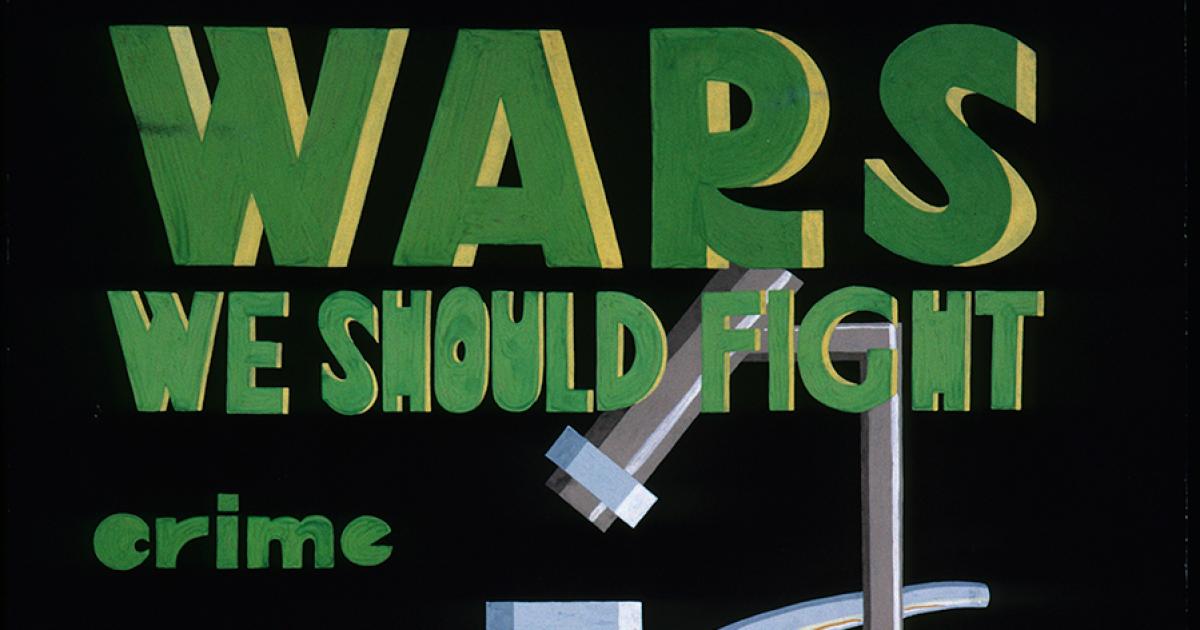
In the Western tradition, humankind’s grimmest collective experiences are represented by the four horsemen of the Apocalypse: pestilence, famine, war, and death, the latter a catch-all. One horror should be added to that stable—the inexterminable human activity that worsens every plague, food shortage, war, and even peace: corruption.
What’s astonishing about corruption is not its attraction or its persistence in all societies everywhere—no doubt the contractor who delivered the mud bricks that built Nineveh paid his share of kickbacks. What bewilders is our failure to acknowledge its extent and to recognize the immense harm it has done, does, and will do. To study organized societies without factoring in the many tolls (literal and figurative) that corruption takes as it inhibits progress, lays waste to the noblest aspirations, and further impoverishes the many to the benefit of a few fits the metaphor of recurring cancers. Even when we cut the tumors out until little is left of the patient, it returns.
The measure of a healthy society or one that has a chance to grow robust isn’t the absence of corruption but the extent to which it is detested and fought. A key factor in the rise of the West that we are not allowed to discuss is the long, slow triumph of the rule of law, including, crucially, the refusal to tolerate corruption that overreaches. Less successful societies do not suffer solely because of bygone imperial bogeymen but far more because of the prevalence of corruption.
Indeed, after long being held in relative abeyance in the core English-speaking countries, corruption is now enjoying a stunning resurgence in the United States that this citizen would have deemed impossible a decade ago. Almost overnight, the country with the most resilient and powerful constitution has become a shameful example of public looting by those whom we the people have empowered.
That makes it especially piquant that far too many Americans damn Ukraine—a spunky nation in the midst of an existential struggle—for corruption. After the horrid Soviet experiment, in which corruption was another means of control, the Ukrainians have struggled to excise the cancer, to rebuild a long-tormented society for a new age. Inevitably, there will be scandals and setbacks. But, at present, the Ukrainians are doing proportionately more to control corruption than is the government of the United States.
Not that we haven’t suffered corruption in the past. Of course we have. Just not to the current, flamboyant extent.
Anti-democracy, authoritarian-minded Americans who suggest that corruption in Kyiv renders Ukraine unworthy of support need to shelve their Putin-philia long enough to recognize and admit that corruption in Russia is magnitudes worse, built into the system by a bona fide deep state. Even now, the average American sees corruption as abnormal and wrong. For Russians, it’s the norm. And go farther afield, to the states around the world that suffer the worst developmental failures and you will find that fundamental human interactions are structured to accommodate corruption. Blaming Robert Clive’s victory at Plassey a quarter of a millennium ago for Bengal’s political shortcomings will not bear serious scrutiny.
Critics eager to scold Ukraine from their privileged American suburbs are “…shocked….shocked…” that high-level corruption would be uncovered in a country fighting for its existence. They might more profitably refer to our own wartime history. In 1861, as North and South grasped desperately for military supplies, entrepreneurs of the day leapt on the sudden abundance of contracts written in haste. Brooks Brothers, a firm already well-established, wangled a contract for thirty-thousand military overcoats. Saving itself a great deal of money, Brooks Brothers used a new adhesive technique called “shoddy.” The overcoats fell apart in the rain, but the English language did gain a new word.
In the Spanish-American War, soldiers died before they embarked for Cuba, slain by contaminated tinned beef furnished to the Army. Then the public’s perception of profiteering during the First World War grew so widespread that a comic strip would emerge featuring a wealthy tycoon named “Daddy Warbucks.”
No matter how just a war or its stakes, some human beings will put profit above any sense of duty. This is universal. Corruption is the enemy within that genuine patriots must fight in war and peace. The Ukrainians are fighting the good fight on this front, too.
What are we doing for the cause?
Ralph Peters is a retired U.S. Army officer and author.

