







- Military
- History
- Revitalizing History
The Panama Canal—the transoceanic waterway through which five percent of global commerce flows—is critical for U.S. national security.
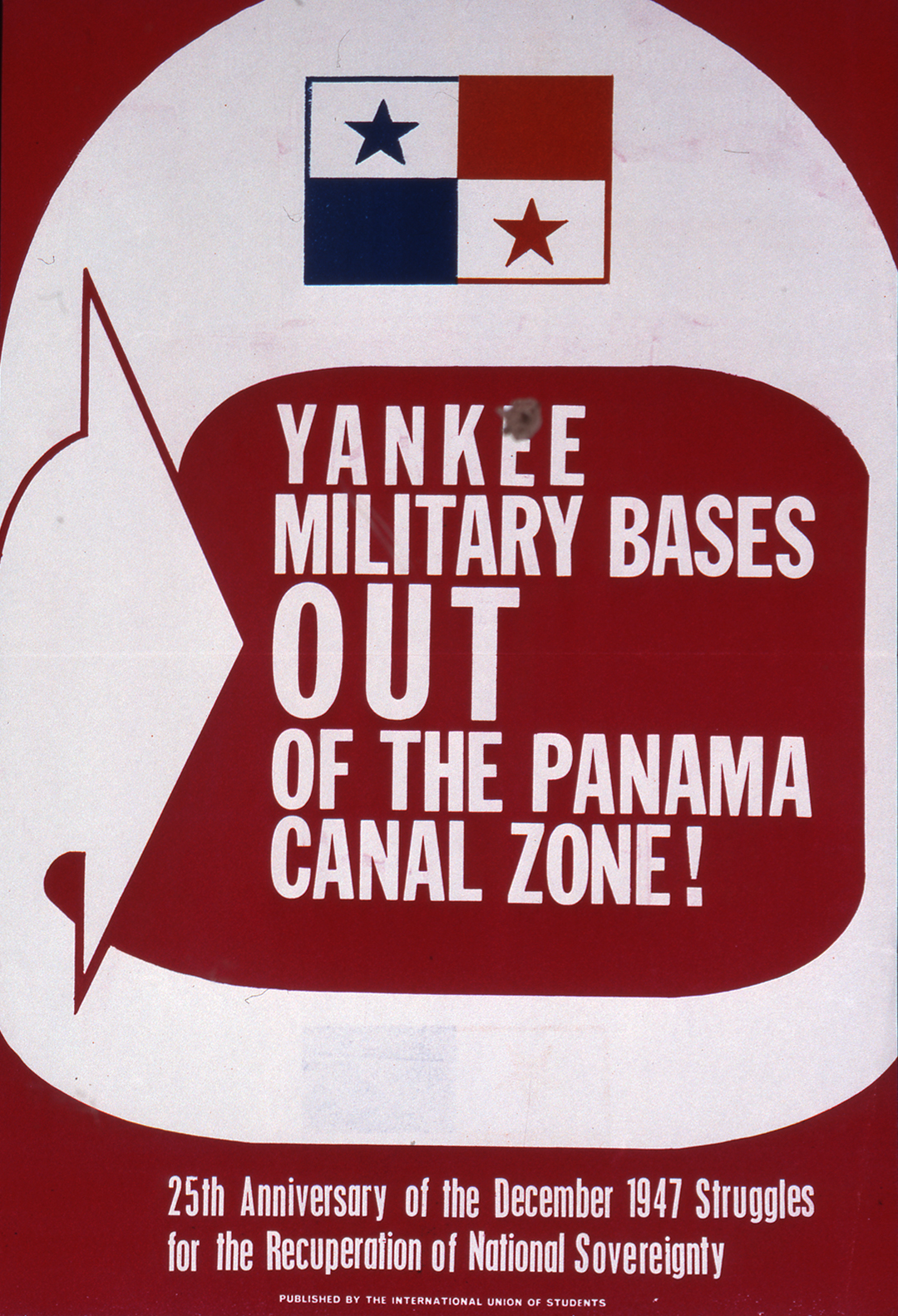
Since Alfred Thayer Mahan theorized maritime power in the late 19th century, policymakers have deemed a Central American interoceanic canal vital to U.S. interests. Theodore Roosevelt achieved this strategic imperative by backing Panama’s separation from Colombia in 1903, thereby obtaining rights to build and operate a canal through the newly-independent country. Following territorial acquisitions in Hawaii, Guam, the Philippines, Puerto Rico, and Guantanamo Bay, the Canal’s 1914 completion strengthened the United States’ growing global power, as commercial shipping and naval forces no longer needed to circumnavigate South America when crossing oceans.
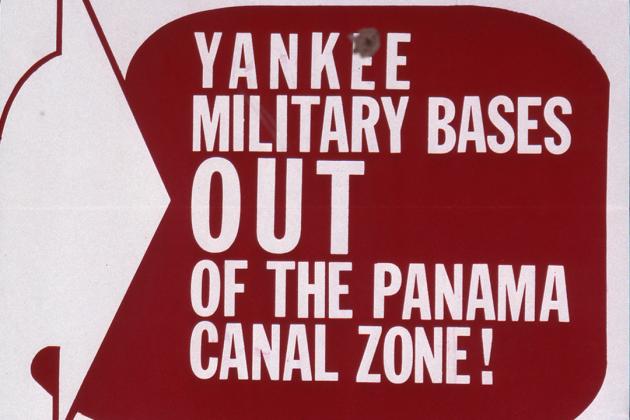
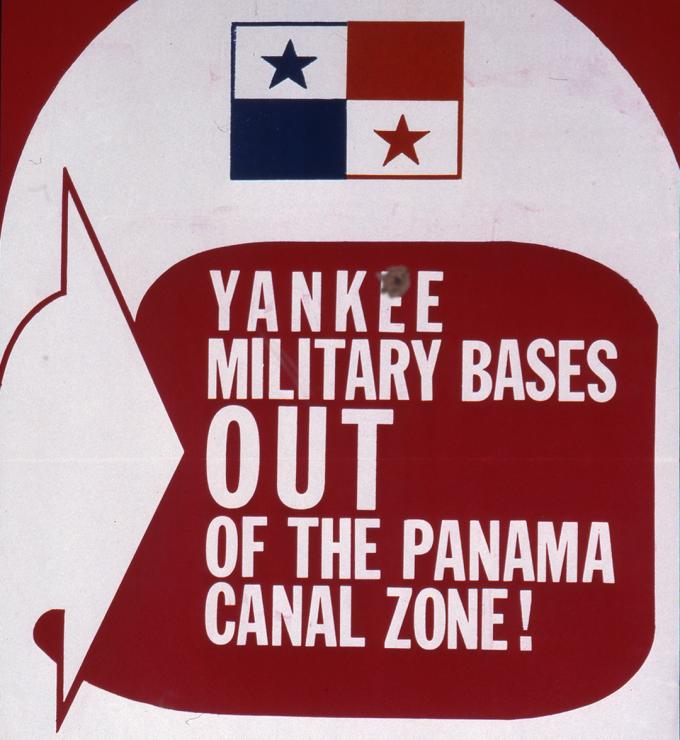
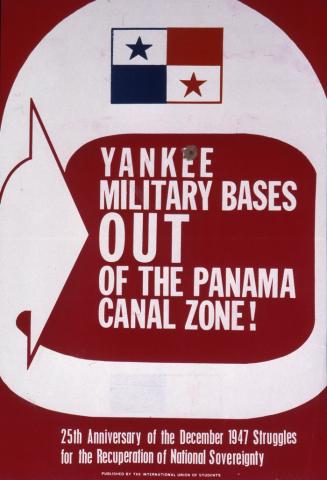
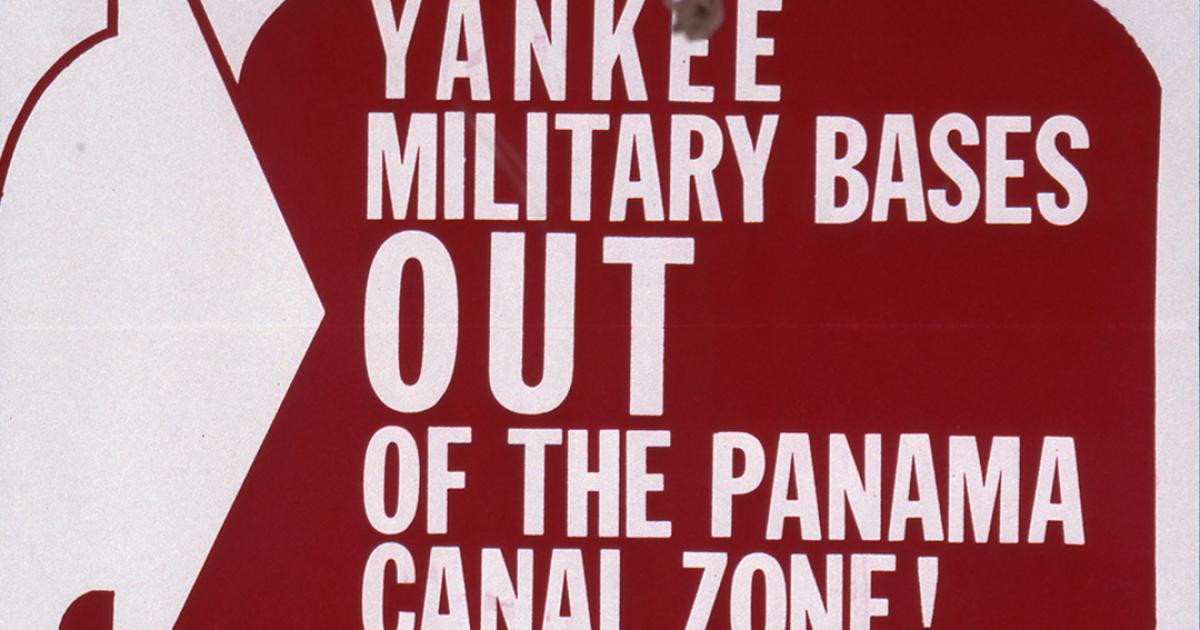
Though an engineering feat and a strategic milestone, the Canal needed defense. To protect the waterway, the United States built military bases in the surrounding U.S.-governed territory called the Canal Zone. In World War II, the Canal transported U.S. troops and supplies to Pacific island-hopping campaigns, and Imperial Japan sought to sabotage it via aerial bombardment. Throughout the Cold War, Washington maintained bases there to confront threats from Cuba’s Soviet-aligned and hemisphere-destabilizing communist regime. Although the Carter administration agreed in 1977 to transfer the Canal and its surrounding territory to Panama, the U.S. government maintained permanent rights, as bilateral treaties signed that year state, to defend the waterway from “any aggression or threat directed against the Canal or against the peaceful transit of vessels through the Canal.”
These rights have remained significant. Securing the Canal motivated the George H.W. Bush administration to invade Panama and extradite narco-dictator Manuel Noriega in December 1989. After a Hong Kong-based company began building ports at both canal entrances in 1997, U.S. lawmakers objected to potential nefarious Chinese influence at these geostrategic locations. Following its 1999 transfer, Panama’s government has skilfully managed the Canal, completing new locks in 2016 that doubled commercial capacity. Still, the U.S. military has led annual, multinational exercises for Canal defense, known as PANAMAX, since 2003. These week-long exercises include maritime and land operations to interdict suspicious vessels threatening the Canal’s free passage. Not only improving allied interoperability, PANAMAX also helps ensure the waterway maintains freedom of navigation.
No recent U.S. presidential administration has prioritized the Canal’s defense more than the current one. While earlier administrations largely failed to deter rising Chinese influence in Panama, the second Trump administration has repeatedly countered Beijing there. In February 2025, Marco Rubio paid his first visit as Secretary of State to Panama, where he demanded its president remove the “current position of influence and control of the Chinese Communist Party over the Panama Canal,” as a readout states. Hours later, Panama became the first Latin American country to exit China’s geostrategic Belt and Road Initiative. Two months later, Secretary of Defense Pete Hegseth visited Panama, where he signed bilateral agreements to increase security cooperation and declared, “The Panama Canal is key terrain that must be secured by Panama, with America, and not China.” Going further, the U.S. military has continued PANAMAX, conducting field operations this August for the first time since 2012. 1,700 personnel and 20 partner countries participated, including extra-regional allies Germany, the Netherlands, and the United Kingdom.
Despite these initiatives, the Canal remains vulnerable. Planting mines, sinking tankers, detonating bombs, or launching drones at its locks could block passage. Like Japan in World War II, China knows that U.S. forces would depend on the Canal if at war in Asia, increasingly possible as China’s military encroaches on Taiwan and the South China Sea. In fact, since Panama’s Supreme Court revoked rights of the aforementioned Hong Kong-based firm in January, Beijing has pressured Panama to reverse the ruling and thereby maintain influence at the strategically-located ports.
Facing these threats, the United States must improve surveillance and operational abilities in the Caribbean Basin. The U.S. military can do so by deepening partnerships with Panamanian, Costa Rican, and Colombian forces, which patrol Pacific and Caribbean waters near the Canal. Drones and artificial intelligence can help detect, monitor, and interdict malign actors at maritime and terrestrial entry points. Special operations units—proven capable of capturing “shadow fleet” tankers and even Venezuelan dictator Nicolás Maduro—must be prepared to execute surgical missions should an urgent crisis obstruct the Canal.
Finally, policymakers would be remiss to forget history’s lessons. In World War II, inter-American defense cooperation helped U.S. forces sink Italian and German submarines attacking Allied oil tankers throughout the Caribbean. This and comparable episodes have demonstrated that U.S. forces are stronger with regional allies than when acting alone in their shared hemisphere.
—Henry Large
Henry Large is a doctoral candidate in Latin American Studies and Rhodes Scholar at the University of Oxford, a Rising Expert for Young Professionals in Foreign Policy, and an advisor for Pan-American Strategic Advisors. He holds a master’s with distinction in Latin American Studies from Oxford and a bachelor’s in Spanish and History with distinction from Yale University. He has worked for the William J. Perry Center for Hemispheric Defense in Washington D.C., and his writing has been published in a variety of foreign affairs journals and Latin American newspapers. A Spanish, Portuguese, and Mandarin speaker, he has completed more than six months of research on U.S.-China competition in Taiwan, Panama, the Dominican Republic, Honduras, El Salvador, and Costa Rica.

