







- Middle East
- Determining America's Role in the World
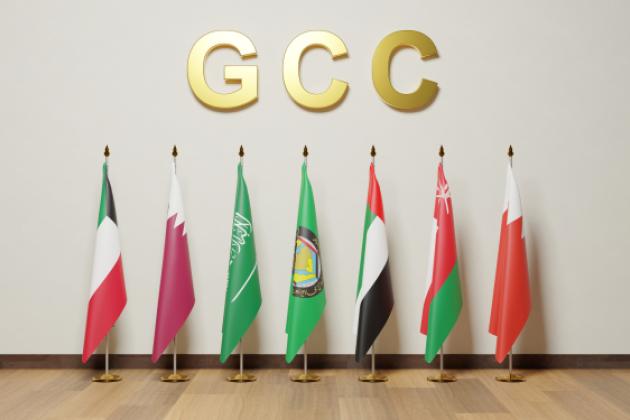
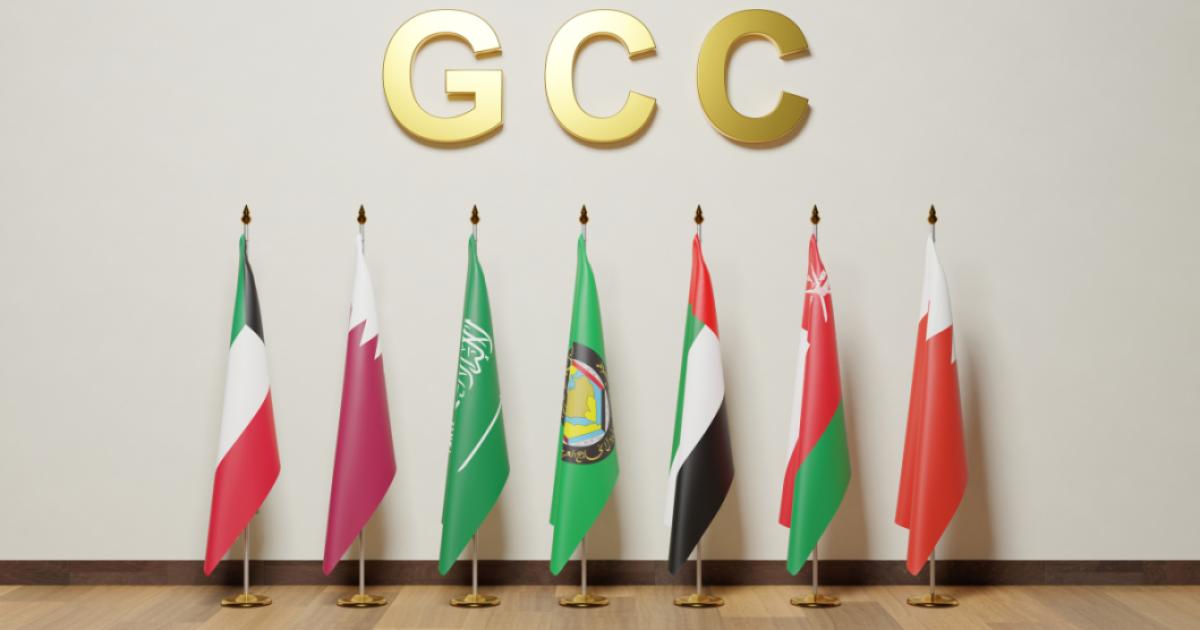
As the current conflict in the Gulf grinds on without resolution, pressure is mounting not just on defense systems, but also on aid budgets. Arab Gulf state aid budgets have historically been important alongside those from the European Union, United Kingdom, and the United States. Between 2019-2022, Saudi Arabia, the United Arab Emirates, Kuwait, and Qatar spent $28.9 billion on overseas development assistance (ODA). For decades that spending, mostly on a bilateral basis, functioned as a form of soft power and insurance, buying influence in fragile states, securing goodwill and reinforcing the Gulf Cooperation Council (GCC) states’ self-image as a stabilizing force in the Islamic world and, increasingly, across the Global South. What once served as a central pillar of regional influence - financial assistance, reconstruction funding, and humanitarian support - is now being squeezed by a harsher strategic reality defined by missiles, drones, and economic uncertainty.
The conflict is reshaping not only Gulf security, but also the strategic environment in which the United States works with some of its closest Middle Eastern allies. Through unilateral action, the Trump administration is simultaneously destabilising the region, reducing its own aid and development footprint while asking partners to shoulder greater responsibility for regional stability. GCC states appear to be beginning to do so through new mechanisms such as the Mecca Joint Defense Agreement, a mutual defense pact signed by Saudi Arabia, Pakistan, and Turkey on August 7, 2026.
The shift is unfolding alongside a broader transformation in the economic landscape. The economic diversification or Visions strategies of the GCC states, many introduced in the mid-2010s and that project into the 2030s, coupled with political consolidation, have helped redirect state investment along new policy lines. In addition, just as the 2007/8 global financial crisis created new opportunities for GCC state engagement in the international political economy, changes in the international aid landscape have had similar effects. The indefinite suspension of USAID from 2025 in favor of a “trade over aid” agenda, Europe’s ongoing shift from aid towards defense following the Russian invasion of Ukraine in February 2022, and the majority of NATO members committing to increase defense expenditure to 5 percent of GDP, are reshaping the global distribution of resources and leadership.
The European shift is explicit. In February 2025 the United Kingdom announced it would cut aid from 0.5 to 0.3 percent of gross national income by 2027 to fund defense spending of 2.6 percent of GDP, a transfer the government expects to release £6.5 billion for defense in 2027-28 alone. Preliminary OECD data for 2025 show Germany (-17.4 percent), France (-10.9 percent), and the UK (-10.8 percent) among the largest cuts by major donors. These developments are creating significantly more space for GCC states to contribute and influence global aid debates, even as their own security priorities are changing.
For Washington, this matters because GCC state aid has often complemented, or in some cases functioned instead of, Western stabilization efforts in fragile states such as Yemen, Sudan, Afghanistan, and Pakistan. A sustained reduction would create funding gaps that neither the United States nor European donors currently appear willing or able to fill.
The temptation is to see this as a simple trade-off: deterrence before development. That misses how Gulf states exercise power. Given their resources, the GCC states can project a distinctive kind of power. Usually, lacking the population size and military combat experience of their Western allies, they have often turned hydrocarbon wealth into global influence through trade, finance, logistics, infrastructure, industrial policy, and aid. Generally referred to as economic statecraft, this toolkit has aid as one of its least understood components. That is partly due to a lack of transparency concerning some forms of aid reporting and possible politicization of the aid process between donors and aid recipients. Funding is now rarely given away or channeled into support for Islamic causes such as mosques and madrassas, although certainly it continues in more limited forms. GCC state aid is increasingly manifested in a network of logistics hubs, pre-positioned supplies, trained staff, field relationships, multilateral engagement, and standing that converts GCC state wealth into presence and influence, especially in the fragile states that ring the region. As Arab Gulf state threat perceptions remain focused on the immediate region, these capacities are relevant to humanitarian policy, regime security, national resilience, peacebuilding and state-building.
The same threat from Iranian control of the Strait of Hormuz and aerial attacks, which have affected global energy prices and contributed to inflation, could also impact GCC state decision-making on the balance between their defense budgets and aid. In this case, the result would be a marked shift in security and defensive strategy, with a greater focus not only on deterrence and territorial defense per se, but also the ability to counter strikes, maintain functionality, and recover quickly – in other words, resilience. This strategy has already been adopted in some cases, but with further instability, the effect could be more pronounced.
The Iran War is one of the latest in a string of conflicts to have affected Gulf security but is also probably one of the most significant milestones in the reordering and reevaluation of GCC state security. The real policy choice is not zero-sum: defense versus aid. It is whether Arab Gulf states are able to preserve and expand the humanitarian infrastructure, logistics capacity, multilateral credibility, and crisis-response relationships that make aid a strategic asset, or whether they let short-term arithmetic erode an instrument they will want to reestablish in order to contribute to strategic relations down the line. Indeed, humanitarian infrastructure and impact is not the opposite of security. It is part of the same economic statecraft that addresses a myriad of growing regional and international security and development needs.
The Frontline Compact: Total Defense and Resilience
The Israel-US war with Iran has reinforced the GCC states’ transformation from a peripheral observer of the conflict into a frontline defensive theater, where security extends beyond territorial defense to safeguarding critical infrastructure, economic continuity, and national resilience. For the UAE, whose economic model depends on connectivity, investor confidence, and uninterrupted trade, protecting airports, ports, energy facilities, desalination plants, and digital networks, it has become as important as intercepting military threats. This reflects a fundamental shift in threat perception, from focusing primarily on deterring or countering an attack to asking how a state can continue to function when a strike does occur. This has strengthened a "Total Defense" approach that integrates military capabilities with civil preparedness, crisis management (including aiming for zero dependency on the Strait of Hormuz), and institutional resilience, enabling the country to maintain essential services and project stability even during periods of heightened regional instability.
The conflict also validated the UAE's long-term investment in a layered air and missile defense architecture, supported by diversified procurement, strong partnerships with the United States, United Kingdom, France and other aerial defense suppliers (notably Ukraine), and a growing domestic defense industry led by EDGE. The cost of intercepting a single incoming missile - whether through systems like Patriot or Terminal High Altitude Area Defense (THAAD) - can run into millions of dollars, while the missiles or drones they intercept often cost a fraction of that. However, rather than prompting higher defense spending, the war is likely to reshape procurement priorities towards interceptor stockpiles, integrated air and missile defense, early-warning systems, electronic warfare, and cost-effective counter-drone technologies. What matters is not just hardware, but software. For example, integrated command-and-control systems capable of processing vast amounts of data in real time. Iron Dome is often cited as a model, not because it is impenetrable, but because of its ability to prioritize threats and allocate resources efficiently. This is the future of defense: networked, adaptive, and data driven. It is also costly.
The war has also exposed the problem of magazine depth. A layered defense is only as good as its stock of interceptors, and a prolonged campaign of cheap drones and missiles is designed precisely to exhaust that stock faster than it can be replenished. This is where expanding indigenous production becomes strategic rather than merely industrial: expanding domestic manufacture improves sustainment, replenishment, and operational flexibility, while diversified defense partnerships reduce overreliance on any single supplier and strengthen the UAE's broader strategy of strategic autonomy and resilience. The lesson Arab Gulf military planners have drawn is not that deterrence can be bought outright but that it must be sustained and that sustainment depends on capacity built before a crisis rather than procured during one. From purchasing advanced arms, the emphasis is now on resilience, redundancy, and domestic production to sustain operations and build autonomy over time.
The point is that the state has come to treat continuity, the ability to keep functioning under pressure, as the object of security. The same logic that leads a government to pre-position interceptors and harden its networks also leads it to value the outward-facing capacity that keeps it relevant in the region’s crises. That instinct, applied outward rather than inward, is what makes Gulf aid a strategic instrument, and it is why the two halves of this story belong together.
How are the GCC States Adapting?
These adaptations are not simply regional developments. They will shape the future of US security partnerships, defense cooperation, and burden-sharing across the Middle East over the coming decades. The GCC states are known for their strategic adaptation, having experienced successive conflicts over previous decades, from the Iran-Iraq War (1980-88), the Gulf War (1990-91) and the US-led invasion of Iraq (2003), as well as the existential crisis felt by some of these monarchies due to the Arab Spring (from 2010). Strategic adaptation refers to the continuous adjustment of foreign policy instruments, partnerships, and domestic capabilities in response to changes in the external strategic environment. By expanding policy options and reducing dependence on any single external partner, strategic adaptation enables states to preserve security, strengthen strategic autonomy, and enhance long-term resilience. The war has forced each GCC state to adapt to different registers, shaped by geography, history, and military exposure. These factors will help determine where and when the geostrategic, socioeconomic, and hard power pressures on changing aid policy will bite first.
All Iranian targets and adversaries face a problem: how to protect increasingly connected economies and critical infrastructure from threats that are cheap (e.g. drones), persistent, and harder to deter than conventional military attacks. Saudi Arabia, by virtue of its 2023 normalization agreement with Iran, its focus on inward investment, and its geography and access to the Red Sea, has weathered the conflict with comparatively less economic disruption. Its ability to re-route exports and serve as a logistical backbone – including touting NEOM as a logistics hub, Yanbu as an alternative port option, and the East – West pipeline for oil exports, has reinforced its centrality within the Gulf Cooperation Council.
But even Saudi Arabia is not immune to the broader trend of instability. The Kingdom’s emphasis on “system resilience” reflects an understanding that future conflicts will not be short, decisive, or easily contained. They will be prolonged, complex, and financially draining. Despite a 2025 United States – Houthi negotiated ceasefire, the Houthis have launched attacks on commercial shipping in the Red Sea and against Israeli targets, using missiles, drones and armed boats. They are also becoming more active against Saudi Arabia. There is every possibility that the informal Saudi – Houthi truce could end after Houthi strikes against the Kingdom in July 2026. In such a rapidly evolving context, significant aid commitments could become harder to justify, particularly when domestic transformation agendas and defense costs in the Gulf, Red Sea, and beyond demand sustained or substantial increases in funding. Kuwait is in an exposed position, having suffered attacks from Iran-aligned militia in Iraq to the North as well as from Iran itself to the East.
Meanwhile, Qatar’s long-standing strategy of mediation as a form of security has been fundamentally undermined. The premise that diplomacy with US security assistance can provide an impenetrable shield has been severely tested, both by Israeli strikes against Hamas and Iranian strikes against Al Udeid air base in 2025, but also by US unilateralism after Qatar helped negotiate the Memorandum of Understanding (MoU) between the US and Iran in 2026. Iranian strikes have squeezed Qatar’s revenues as the country recovers its gas export capacity and capabilities. The result is a more complex foreign and security policy in which mediation remains a significant part but is being complemented by the search for stronger forms of deterrence that recognize the limits of external security guarantees. A closer alignment with the United States could further tighten the fiscal space available for aid if it comes at a higher transactional cost.
The United States remains the primary security partner for most, if not all the GCC states, but its ability to supply sufficient interceptor systems is increasingly in question, given competing demands from Europe and Asia. This has prompted Arab Gulf capitals to explore alternative partnerships, including with European defense industries and, more cautiously, with countries like China. The systemic shift is facilitating the ongoing diversification of defense partnerships and supply chains. For the United States, this presents both an opportunity and a concern. If Washington remains the preferred provider of advanced air and missile defense capabilities, deeper interoperability with GCC state militaries will follow. If it cannot meet demand quickly enough, the GCC states are likely to further diversify procurement in favor of European and select Asian suppliers while continuing to expand their indigenous defense industries.
Europe, for its part, is undergoing its own strategic awakening. The push for greater defense autonomy has opened new avenues for cooperation with GCC partners, particularly in areas like aerial defense such as counter-drone technology and joint production. This emerging alignment, along with GCC state relations with China, reflects a shared interest in securing critical waterways, including the Strait of Hormuz - a chokepoint whose vulnerability has become starkly apparent. Control over this narrow passage is perhaps the single most consequential variable in the current equation. If Iran continues to assert aggressive control over the strait, the economic impact on littoral Gulf states such as Qatar and the UAE would be severe. Insurance rates for shipping have already spiked, trade flows have been disrupted, and hydrocarbon revenues are in decline. Under sustained conditions of this kind, maintaining aid at previous levels could become difficult.
This is partly why the Arab Gulf states are increasingly advocating for an international coalition to guarantee freedom of navigation. Such an arrangement would not only distribute economic and political risk but also alleviate some of the financial pressure associated with constant high-alert defense postures. It would, in effect, externalize and diversify part of the security burden. The Strait of Hormuz also explains why trade, not aid, is becoming the instrument of first resort. The changing threat perception extends beyond the Gulf, to the Red Sea, Horn of Africa, as well as to the Levant, all of which are increasingly viewed through a similar security-centric lens. The security parameters or sub-regional security complexes of the Middle East are therefore becoming wider as the threats become both more diverse and increasingly interlinked.
Gulf Aid, Soft Power and Mediation
Aid is the outward-facing half of the same statecraft driving the defense build-up. As GCC states define security in terms of stability, continuity, and resilience, the boundaries between defense and security and economic statecraft will become blurred. The shift is likely to affect the balance between defense and aid as well as how GCC states deploy their economic statecraft. As national security and economic interests become more differentiated, GCC states may increasingly favor bilateral partnerships that allow them to target assistance, investment, trade, and diplomatic engagement towards specific priorities rather than addressing common interests or relying on multilateralism. The GCC states became vital actors in Africa not through armies but through relief flights, warehouses, and funding, and that indispensability is a form of security: it buys goodwill, access, and standing precisely in the arc of instability that borders the Gulf and threatens national interests.
Should instability persist (the security situation deteriorated within days of a Memorandum of Understanding), it may become more difficult to fund expansive foreign aid, maintain domestic economic stability, and sustain high-intensity defensive operations. The Arab Gulf states could be forced to choose to favor defense, as the Europeans have during the war in Ukraine, with serious potential long-term consequences for their global standing. To cut aid capacity to pay for missiles is not to trade a luxury for a necessity; it is to weaken one instrument of influence to strengthen another, and to do so in the crises where GCC state reach is hardest to replace.
Qatar has used aid and facilitated negotiations involving Hamas, Afghanistan, Sudan and the Democratic Republic of Congo; Oman continues its longstanding role as a mediator, (having lost some trust with the Trump administration which has instead favored mediation from Pakistan and Qatar); Saudi Arabia and the UAE have expanded their diplomatic engagement well beyond the Middle East, including in Africa and in the Russia-Ukraine conflict. At the same time, mediation has become considerably more hazardous as the Iranian strike on Al Udeid Air Base in Qatar and Israeli operations targeting Hamas leadership in Doha demonstrated. Greater caution in hosting contentious actors is likely to coexist with continued reliance on mediation, aid, and defense as complementary instruments of statecraft. Whether these activities remain mutually reinforcing will depend partly on US policy. A more transactional American approach to regional engagement could unintentionally encourage GCC governments to prioritize bilateral trade and defense orientated relationships over broader humanitarian engagement.
Even as the UAE launched a consolidated aid agency (UAE Aid) in 2024, at a time when Western states were either canceling aid budgets or cutting them to fund defense, it has deepened its network of trade partners. The Comprehensive Economic Partnership Agreements (CEPAs) are designed with a range of partners in mind, including India, Israel, Türkiye, Indonesia, Cambodia, and Australia. Others are awaiting ratification or are still being negotiated. Many of them represent ‘dual use’ arrangements in which economic diversification policies are pursued in tandem with security cooperation and defense ties. This reflects the realization that economic connectivity and trade diversification can feed into both economic growth, defense and national resilience.
Reports of negotiations with Washington for financial backstops, including a potential currency swap arrangement, underscore how even wealthy Gulf economies are hedging against prolonged instability in the region. Trade, investment and defense are being treated as necessities of state survival - with the UAE’s move to expand ports and alter supply chains to avoid the Strait of Hormuz. This also reinforces a preference for bilateralism from the GCC state side that offers them greater flexibility to rapidly (re-)calibrate trade, investment, aid and security cooperation based on specific priorities. However, any sudden recasting of GCC state aid operations ignores the multi-level platforms on which some GCC states operate and the speed at which changes can be made.
Capability, Not Just Generosity
GCC state aid is not a single budget line. It is an ecosystem of state agencies, logistics platforms, quasi-state institutions, and multilateral partnerships. For example, the UAE channels its response through the Emirates Red Crescent, the Abu Dhabi Fund for Development, and, since 2024, a consolidated UAE Aid Agency. That consolidation is an act of institutional maturation, turning episodic generosity into sustained capacity. Saudi Arabia’s King Salman Humanitarian Aid and Relief Centre is a substantial operational actor in Yemen, the Horn of Africa, and South Asia. The Qatar Fund for Development anchors a significant portfolio in education, health, and protection. Kuwait hosted three major Syria pledging conferences in the previous decade. This is not symbolic activity. Furthermore, in 2024 the UAE directed $2 billion to contexts of high and extreme fragility, 83.9 per cent of its gross bilateral ODA, of which 48.4 percent was humanitarian assistance.
The logistics infrastructure is more consequential still. Dubai Humanitarian, the free zone that succeeded the International Humanitarian City, is now the largest humanitarian aid hub in the world, with 150,000 square meters of donated warehouse space. In 2024 it moved $137 million of aid to 106 countries on behalf of UN agencies and NGOs. In the first half of 2025 alone it distributed $48.8 million to 81 countries and held stock valued at $208.1 million, prepositioned for deployment. In total in 2025, it moved $110 million of aid to 101 countries. The World Health Organization alone drew $25 million of medical supplies from the Dubai hub in 2025, 41 percent of it for Sudan and 35 percent for Gaza. The UN Humanitarian Response Depot (UNHRD) network reports that roughly 60 percent of the humanitarian aid it dispatches globally now moves through Dubai. When a crisis breaks in Gaza, Sudan, Afghanistan, or the Sahel, the operational response often leaves the UAE within hours. During the current conflict, the WFP-led depot in Dubai has been re-routing stranded shipments of nutrition supplies bound for Afghanistan, a reminder that the hub is load bearing in precisely the crisis this article describes.
This matters because cutting humanitarian budgets does not simply mean giving less money. It can weaken the machinery that makes Arab Gulf aid effective: logistics hubs, pre-positioned supplies, trained staff, field relationships, and partnerships with UN agencies and NGOs. A government can reduce the budget quickly, but the operational capacity behind it may take years to rebuild. Hence, in humanitarian action, money is only part of the story, sustained capacity is what matters, and capacity is quick to cut and slow to restore.
The Geography of Dependence
If there is an aid contraction, it will not fall evenly. A small number of crises absorb a disproportionate share of Gulf humanitarian flows, and these are precisely the contexts where substitute donors are least likely to step in. Yemen illustrates scale dependence. The UN humanitarian response plan for Yemen was already underfunded before the current conflict. Saudi Arabia has been a major part of Yemen’s wider humanitarian financing ecology, although a substantial share of its support has been channeled outside the formal UN response plan. A significant reduction in Gulf funding would not produce a simple proportional gap; it would deepen an already severe funding crisis, because Western donors are neither positioned nor politically willing to cover the difference.
Sudan illustrates regional spillover. The war there has produced the largest displacement crisis in the world, and Emirati humanitarian contributions have been material to the response in neighboring Chad and South Sudan. Whilst the politics of the conflict itself are contested; the humanitarian footprint is not. Cuts transmit directly into food insecurity across the Sahel corridor and, through the Red Sea, into the wider security complex the Arab Gulf states are trying to stabilize.
Afghanistan, Pakistan, Bangladesh, the Philippines, and a range of sub-Saharan African education and protection programs illustrate silent erosion. These are the operations most exposed to ad hoc reductions because they attract the least domestic political attention in Arab Gulf capitals. They are also the operations where Gulf donors often constitute the entirety of the non-Western funding base. When they thin out, few substitutes exist.
Public Pledges and Quiet Funding
Fiscal pressure will not compress humanitarian spending uniformly. It will compress it selectively, and in predictable directions. High-profile flagship commitments, the kind announced at pledging conferences and bilateral summits, will be protected because cutting them carries reputational costs. The quieter, operationally significant contributions that fund logistics infrastructure, protection programming, and multilateral core funding are the ones most exposed to silent cuts.
This is the inverse of what strategic discipline would recommend. The high-visibility pledges are often the most fungible and the least operationally consequential. The quiet contributions are where humanitarian credibility is actually produced. A posture that preserves pledging visibility at the expense of operational capacity would be less effective and more expensive than one built the other way around. The pattern has a political logic: A flagship pledge is announced by a head of state, reported, and remembered; its cancellation would be read as retreat. A contribution to a UN pooled fund, or the running cost of a warehouse, or a protection program in a country few could place on a map, is noticed by almost no one. Under pressure, the rational bureaucratic move is to defend what is visible and let the invisible thin out. That is why it falls to policy, rather than the ordinary momentum of budgeting, to protect the quiet capacity.
The Multilateral Exposure
Over the past decade, Arab Gulf states have moved from the periphery of the UN humanitarian architecture toward its center. The UAE has been a top ten donor to several UN appeals; Saudi contributions to the WFP and UNICEF have been substantial; Qatar has funded specific thematic priorities. This has happened precisely as traditional donors contracted or withdrew.
For Arab Gulf policymakers, the multilateral system is not an abstract moral project but a force multiplier, allowing influence to travel through crises where direct bilateral engagement would be costly, politically sensitive, or operationally impossible. If their contraction coincides with the ongoing pullback of the United States, the United Kingdom, and major European donors, the system will not simply face a funding shortage. It will experience a structural crisis, because the donor-diversification assumption underpinning its architecture will no longer hold. The Arab Gulf states cannot rebuild that system alone if it collapses, and the options it currently buys through multilateral engagement will narrow with it.
Humanitarian Action and Reconstruction
Emergency humanitarian response and post-conflict reconstruction are, in GCC state practice, institutionally linked; the same agencies, political channels, and budget envelopes cover both. Whatever reconstruction liabilities emerge from the current conflict, in Gaza, Lebanon, Yemen, Sudan, or Iran, the regional expectation is that Arab Gulf capitals will finance a significant share. A humanitarian posture that becomes markedly more transactional would carry that logic into reconstruction, narrowing the concessional space on which the region has relied. The comparative advantage of Arab Gulf financing has been its political flexibility; a contraction that makes it more rigid, turning grants into loans and partnerships into transactions, erodes the very advantage that made Arab Gulf reconstruction finance worth courting.
Three implications follow for Washington. First, the stakes extend well beyond the Gulf region. From a human security perspective, the economic costs of the Iran War are already impacting vulnerable communities in and beyond the Gulf.
Second, many countries across the Middle East, Africa, and parts of Asia rely on GCC state funding for everything from budget support to infrastructure projects, and a sustained reduction could deepen instability in already fragile states and regions, creating a feedback loop that could ultimately undermine GCC state security interests. This is important because whilst the crux of GCC state threat perception is regional, there are often inter-regional dimensions to those threats.
Third, the direction of travel in the donor landscape makes GCC state aid policy more consequential. Official Development Assistance (ODA) from OECD DAC member countries fell by 6 percent in real terms in 2024 according to OECD’s final 2024 statistics published in December 2025, and preliminary data for 2025 show a further contraction of roughly 23 percent, with humanitarian aid taking the largest hit at almost 36 percent. The Gulf has been one of the few donor blocs moving in the opposite direction. The UAE reported a 55.5 percent increase in ODA for 2025, driven by a substantial increase in bilateral ODA, especially humanitarian aid to the West Bank and Gaza Strip; Qatar reported a 23.4 percent rise. If those contributions now flatten or decline under fiscal pressure, the shortfall will not be absorbed elsewhere.
What to Protect, What to Rationalize
For US policymakers, the objective should not be to discourage greater Arab Gulf investment in defense. Rather, it should be to ensure that growing defense expenditures do not come at the expense of the humanitarian and stabilization capacities that ultimately reinforce regional and international security. If contraction is likely, the useful question is not whether the GCC states should continue humanitarian engagement but which components to preserve and which to trim. Five principles order the choice.
First, protect the operational core. This means preserving the logistics and warehousing concentrated in Dubai Humanitarian, KSrelief’s field presence, the Emirates Red Crescent’s operational footprint, and the Qatar Fund for Development’s programmatic portfolio, the assets whose value far exceeds their annual cost. It also means multilateral core contributions and long-term commitments to the small number of crises, Yemen is chief among them, where Gulf funding is load bearing and no substitute donor is positioned to step in. And it means the reporting, evaluation, and coordination disciplines the Gulf has built over the past decade. These are not administrative extras; they are part of what has made Gulf humanitarian action credible, and credibility, once lost, is slow to recover.
Second, rationalize the symbolic and the duplicative: high-profile pledges that are routinely under-disbursed, overlapping bilateral initiatives that duplicate multilateral programming, and contributions that serve diplomatic signaling rather than operational impact. There is real scope here to save money without losing capability; a more disciplined approach would improve the ratio of influence to spend. The test is simple: does the line fund capacity, or does it fund a photograph?
Third, handle politically significant aid relationships with care: those with states where humanitarian need and strategic alignment overlap. Egypt, Jordan, Lebanon, and Pakistan fall into this category. The question is not whether to continue but how to structure assistance so that humanitarian and political objectives reinforce rather than contradict one another. Cutting bluntly here risks strategic relationships; funding without discipline risks credibility built elsewhere.
Fourth, preserve flexibility in reconstruction finance. The GCC states’ comparative advantage as funders has always been the political flexibility of their money: concessional, fast, and less encumbered than Western assistance. Reconstruction in Gaza, Lebanon, Yemen, or Sudan will test that advantage. If Gulf financing becomes so transactional that recipients treat it like any other loan, the region loses the very quality that made its money valuable.
Fifth, coordinate across the GCC where possible. The same crises draw funding from several Arab Gulf donors at once, often in duplication and occasionally in competition, and a period of contraction is exactly when that redundancy becomes unaffordable. Light coordination on who leads in which theater, and on how multilateral core funding is shared, would let the GCC states achieve collective reach with less individual spending.
Conclusion: Disciplined Selectivity, Not Blunt Contraction
GCC state aid is moving toward a more selective, more conditional, and more strategically aligned posture. That is neither surprising nor necessarily damaging. Blunt contraction, driven by short-term economic concerns, would erode the operational capacity (the hubs, the pre-positioned stocks, the field relationships, multilateral standing) that gives Arab Gulf aid its reach in exactly the crises where reach is hardest to buy. Disciplined selectivity, by contrast, would trim the symbolic and the duplicative while keeping capacity intact. The two look alike on a spreadsheet in the year they are decided; they look nothing alike five years later, when the Gulf either still has an instrument of influence in Yemen, Sudan, and the Sahel or is trying to rebuild one from scratch.
This mirrors a broader global shift. Washington has pressed ahead with a trade rather than aid agenda, and European governments, facing their own security pressures, have shifted spending from external aid toward defense resilience. The GCC states are now moving in a similar direction, but under the immediate pressure of war rather than through an extended period of reflection, consultation, and choice.
The most important change may therefore be in threat perception. GCC states are perceiving security not as matters strictly confined to defense or territory, but as the ability to sustain economic activity, access global markets, and respond to prolonged disruption. New strategies are emerging that favor defense diversification, ramping up indigenous capacity, and include redundancy in supply chains. The GCC states are not choosing between aid and security. They are reassessing how different elements of economic statecraft contribute to their national security in an increasingly contested regional environment.
For the United States, the policy challenge is therefore not to resist this shift but to help shape it. That means deepening defense cooperation where GCC state requirements and US capabilities align, while working with Gulf partners to preserve the humanitarian and stabilization networks that already exist and could underpin long-term regional security. If Washington ignores this transition, it risks finding that the institutions and partnerships that once shared the burden of stabilizing the Middle Eastern neighborhood have quietly diminished just as regional insecurity continues to grow.
Robert Mason, Ph.D., is an associate professor at the Anwar Gargash Diplomatic Academy in the United Arab Emirates. His research focuses on the international relations of the Middle East with an emphasis on the foreign and security policies of the Gulf states.
Rikard Jalkebro, Ph.D., is an associate professor at the Anwar Gargash Diplomatic Academy in the United Arab Emirates. His research sits at the intersection of peace and conflict studies, humanitarian action, and international relations, with a particular focus on peacebuilding, humanitarian diplomacy, and the politics of contemporary crises.

