

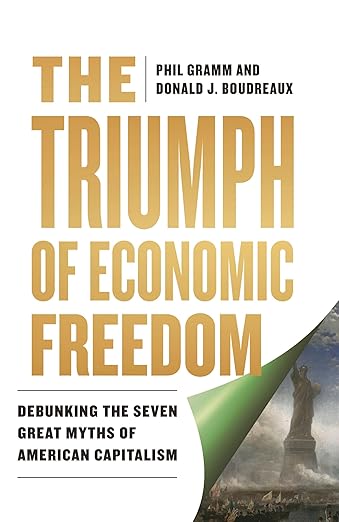
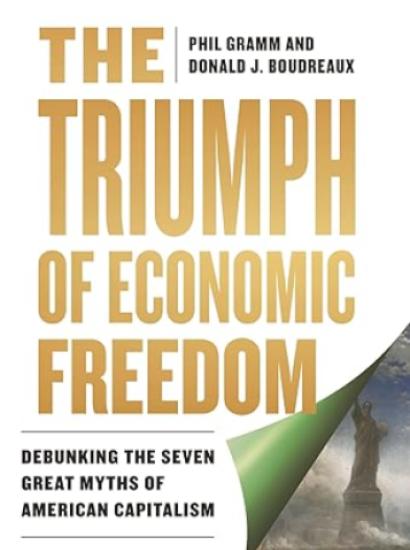
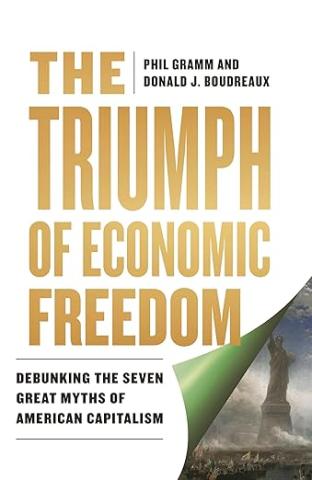
Since the dawn of the Industrial Revolution, capitalism has unleashed unimaginable growth in opportunity and prosperity. And yet, at key points in American history, economic disruption has led to a greater role for government, ostensibly to protect against capitalism's excesses. Today, government regulates, mandates, subsidizes and controls a growing share of the American economy.
In this book, Phil Gramm, one of America's premier public policy advocates, and noted economist Donald J. Boudreaux look at the seven events and issues in American history that define, for most Americans, the role of government and how the 21st century world works. To many Americans, these 5 periods of American history-the Industrial Revolution, Progressive Era, Great Depression, decline of America's postwar preeminence in world trade, and the Great Recession--along with the existing levels of income inequality and poverty, represent strong evidence for expanding government in American life. Gramm and Boudreaux argue that the evidence points to a contrary verdict: government interference and failed policies pose the most significant threat to economic freedom.
Setting up each topic with a “just the facts” approach that defies partisanship, Gramm and Boudreaux provide a compelling and highly readable powerful reassessment that will challenge open-minded readers to rethink the conventional wisdom and the policies that spring from them.
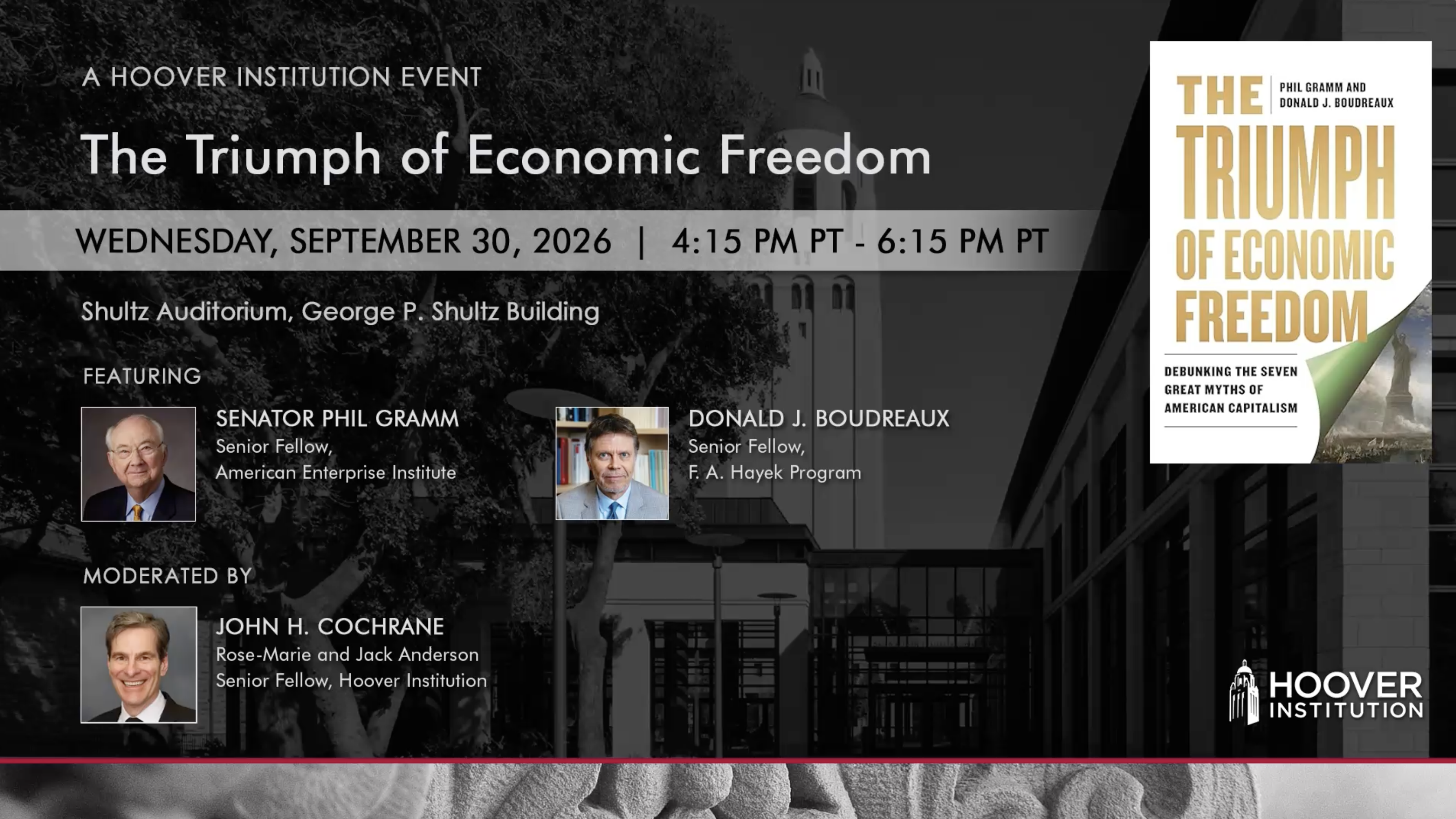
FEATURING
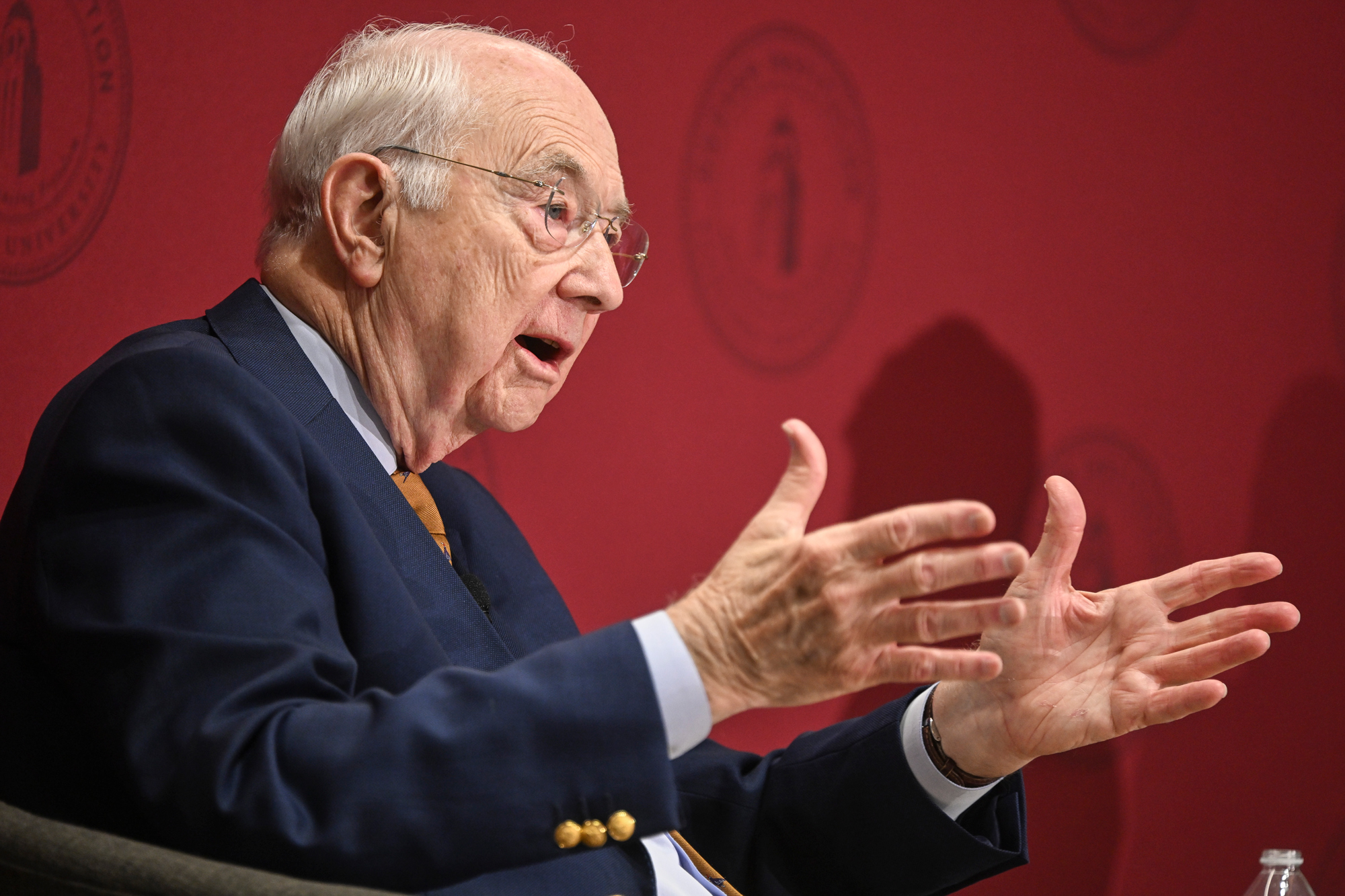
Senator Gramm joined Lone Star Funds as Vice Chairman in December of 2012. He served as Vice Chairman of UBS Investment Bank from December 2002 to December 2011. Senator Gramm served six years in the US House and eighteen years in the US Senate. His legislative record includes landmark bills such as the 1981 Reagan Budget (the Gramm-Latta Budget), the Gramm-Rudman Act and The Gramm-Leach-Bliley Act. Gramm is a Nonresident Senior Fellow at the American Enterprise Institute. He holds a Ph.D. from the University of Georgia in economics, the subject he taught at Texas A&M University for 12 years.
Donald J. Boudreaux is Professor of Economics at George Mason University and a Senior Fellow in the F. A. Hayek Program for Advanced Study in Philosophy, Politics, and Economics at George Mason’s Mercatus Center. He blogs daily at Café Hayek (www.cafehayek.com).
MODERATED BY
John H. Cochrane is the Rose-Marie and Jack Anderson Senior Fellow of the Hoover Institution at Stanford University. He is also a Senior Fellow of the Stanford Institute for Economic Policy Research (SIEPR), Professor of Finance and Economics (by Courtesy) at Stanford GSB, a Research Associate of the National Bureau of Economic Research, and an Adjunct Scholar of the CATO Institute. He authors the “Grumpy Economist” Substack.