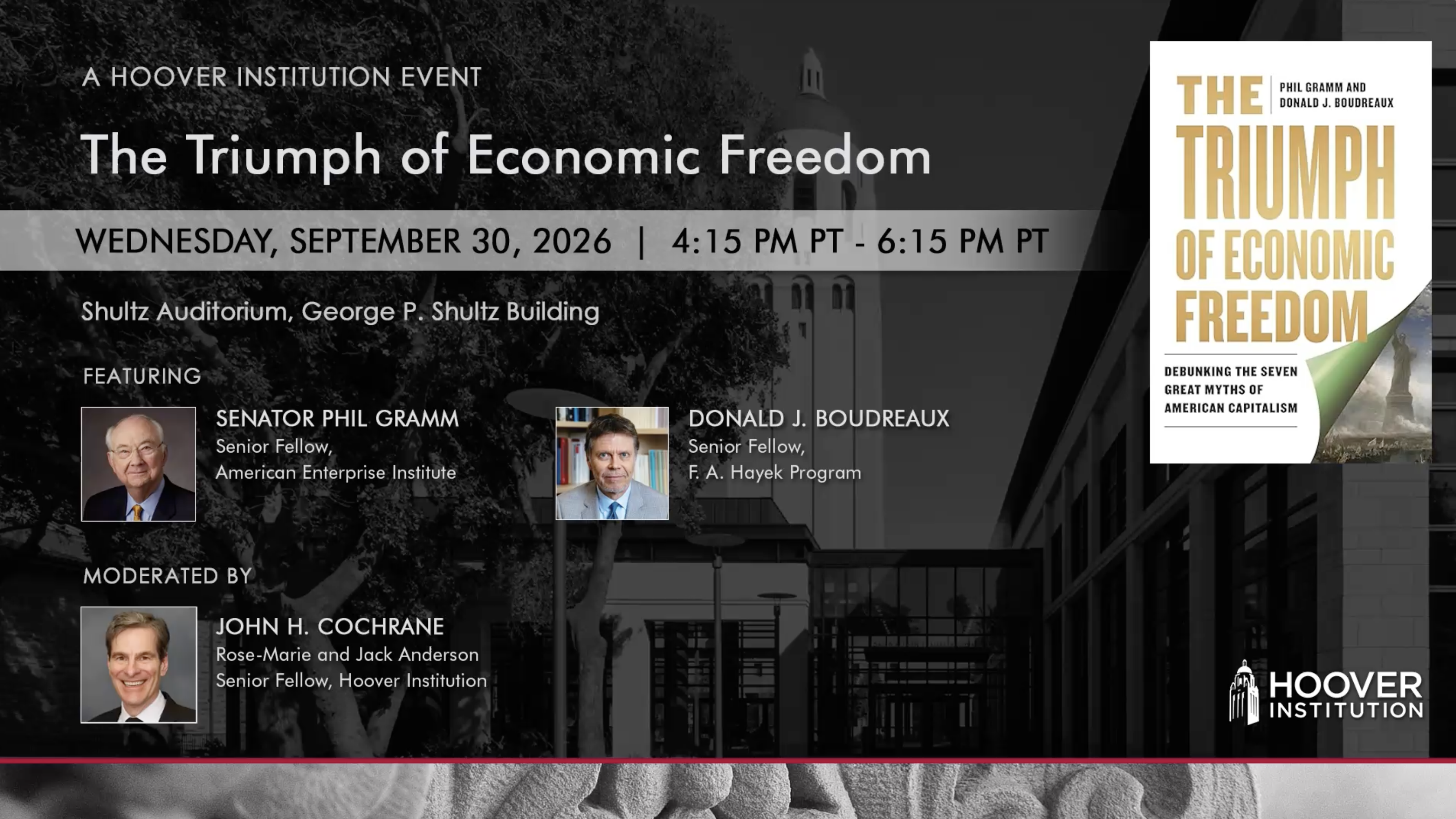











In The Triumph of Economic Freedom: Debunking the Seven Great Myths of American Capitalism, Donald J. Boudreaux of the Mercatus Center and former US senator Phil Gramm argue that capitalism’s history is widely misunderstood and that economic freedom—not government management—is the main driver of prosperity.
“This book stands out among many that describe the benefits of the free market, by focusing on the false myths of history taught at school,” said Hoover Senior Fellow John H. Cochrane, who hosted a conversation about the book at Hoover on September 30, 2026. “I have heard some even repeated inside the hallowed walls of the Hoover Institution—things like inequality is rising fast, or that China has severely damaged the US economy. These myths are false.”
In a talk sponsored by Hoover’s Economic Policy Working Group, Gramm and Boudreaux broke down the seven main points of the book:
The Industrial Revolution improved workers’ lives relative to the alternatives.
Gramm and Boudreaux acknowledge that the factories of 1800s Britain were harsh by today’s standards, but they show that subsistence farming and domestic service were worse. Rising wages, longer lives, and workers’ voluntary movement from rural areas into cities for factory work, they say, challenge the familiar story of industrialization as primarily exploitation. They point out that wages were basically stagnant from 1300 to 1830 in Britain, rising only once the Industrial Revolution took hold. From 1830 to 1900, the average lifespan in Britain increased 22%.
The Gilded Age’s big businesses benefited consumers rather than exploiting them.
The coauthors cite evidence that John D. Rockefeller and other supposed “robber barons” expanded production and lowered prices in the economy. They argue that antitrust regulation reflected pressure from less efficient competitors rather than consumer harm.
Government mistakes deepened and prolonged the Great Depression.
Gramm and Boudreaux blame the Great Depression on the Federal Reserve’s failure to prevent monetary contraction and argue that Herbert Hoover’s interventions and Franklin D. Roosevelt’s later New Deal policies discouraged investment. Responding to the claim that World War II stimulus spending finally ended the Depression, they distinguish wartime employment and military production from civilian prosperity. They also note that the collapse of government spending at the end of the war did not produce a return to the Great Depression, as was widely feared at the time.
Claims of worsening poverty and inequality today rely on misleading measurements.
Gramm and Boudreaux argue that analyses that exclude taxes and government benefits substantially understate lower-income households’ resources. They emphasize that measures of absolute living standards are more meaningful than differences in wealth between the richest and the poorest households. They also criticize federal and state benefit policies that take away benefits if people work, discouraging work and making advancement less rewarding.
Trade and productivity have not “hollowed out” America.
Gramm and Boudreaux distinguish declining manufacturing employment from declining productive capacity, attributing much of the employment decline in the manufacturing sector since the 1980s to automation and efficiency rather than, as is often argued, to Japan or China eating America’s manufacturing lunch. They acknowledge job losses among particular workers and communities but argue that trade brings broader benefits through cheaper goods and inputs, citing the opposite impact on steel and aluminum prices resulting from tariffs put on Mexico and Canada in 2025.
Protectionism and wealth taxes can undermine the prosperity they promise to protect or redistribute.
The coauthors accept narrowly justified national-security exceptions to free trade but warn that protection raises costs and makes industries less innovative. They similarly argue that wealth taxes can drive investment and taxpayers elsewhere, harming workers and future revenues. Both authors support immigration, although Gramm favors a more selective approach while Boudreaux is more open to removing quotas.
Economic freedom matters both for prosperity and for freedom itself.
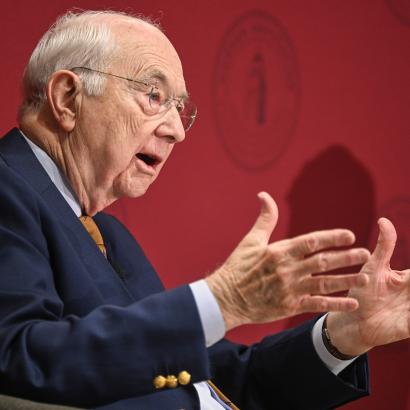
Gramm and Boudreaux argue that entrepreneurship, technological change—including AI—and people’s expanding wants will continue to create opportunities rather than permanently eliminate some types of work. Their broader message is that markets let people control their labor, purchases, and ambitions. Despite our nation’s current political polarization, Gramm remains optimistic that voters will ultimately reject policies that produce poor economic results.
Watch their discussion here.