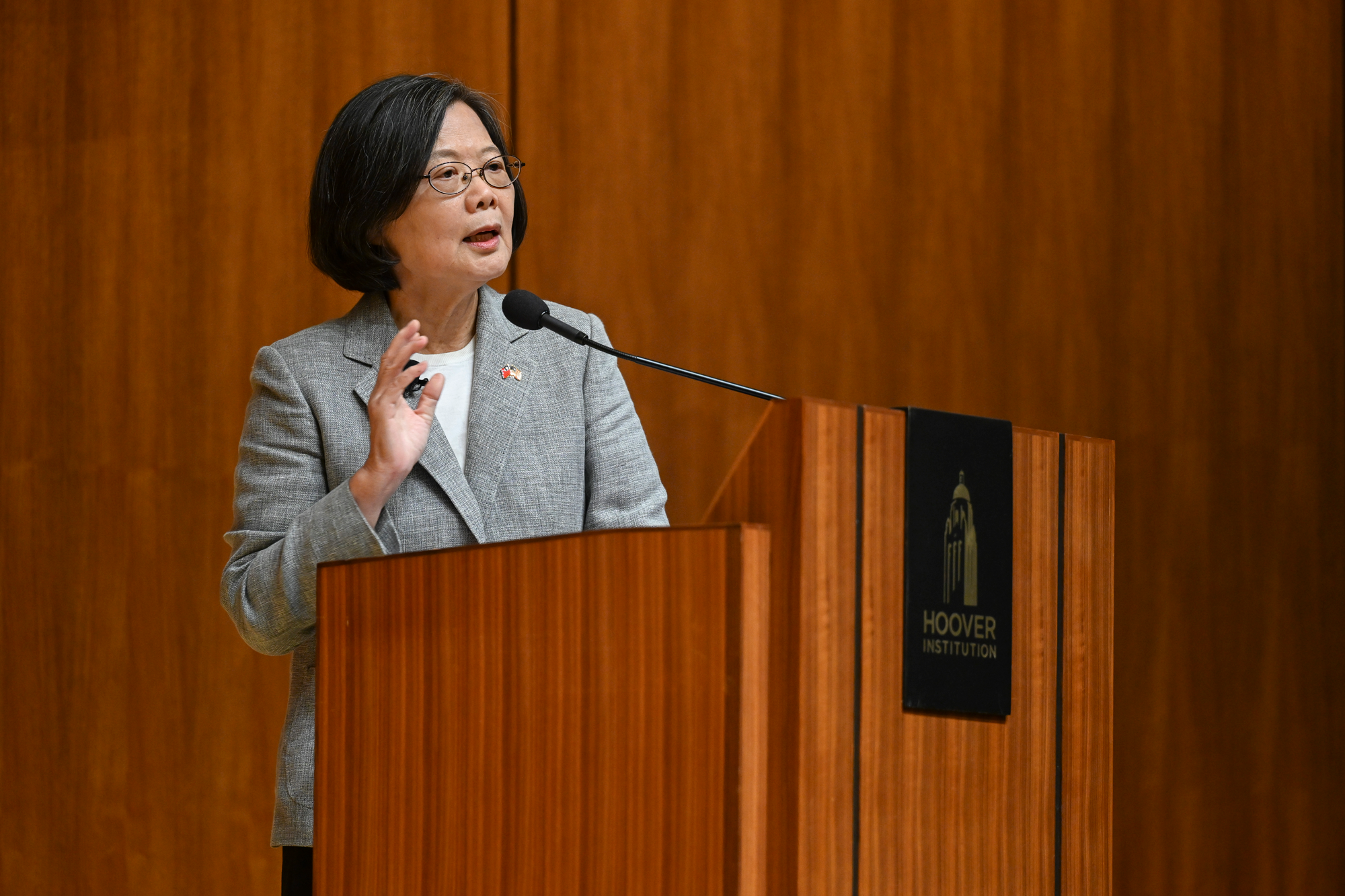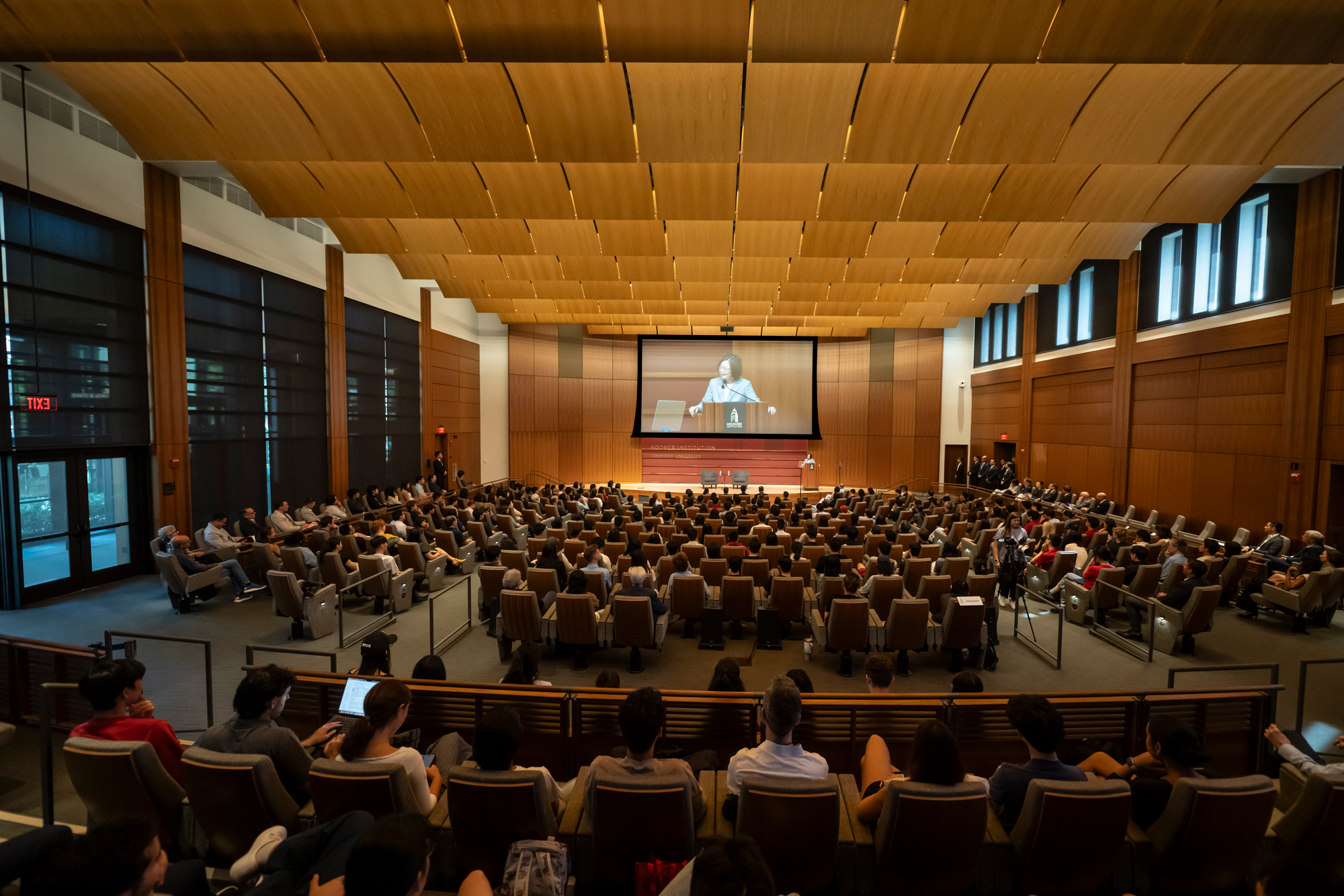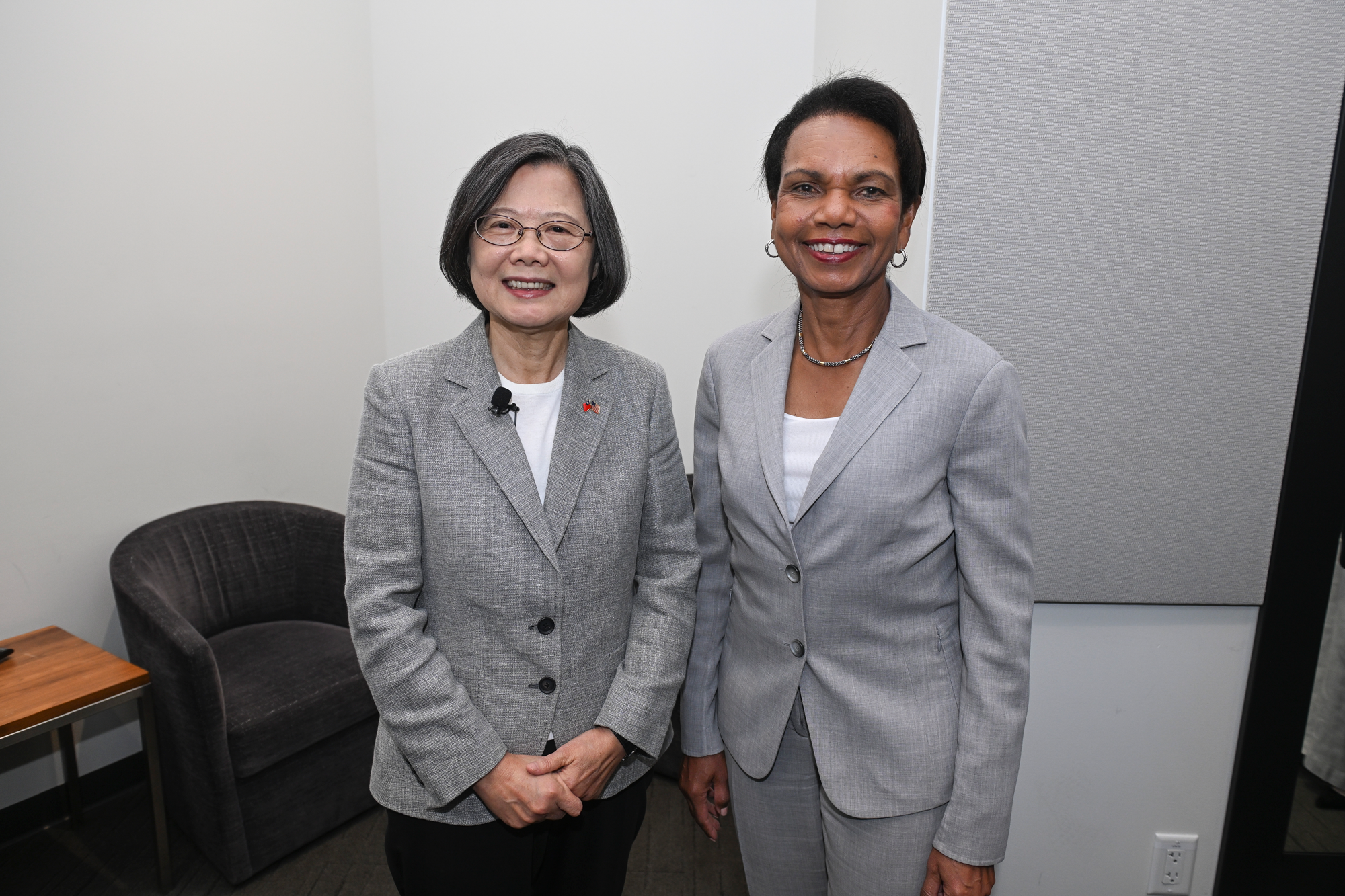







Hoover Institution (Stanford, CA)— In a world increasingly characterized by politicians insulting each other at lecterns and on social media, Taiwan’s former president Tsai Ing-wen told an audience of students, faculty, and the larger Stanford community that there is much to be said for staying out of the limelight and focusing instead on achieving results.
From serving as legal adviser to Taiwan’s delegation during its accession to the World Trade Organization to becoming its first female president in 2016, steering the nation through a global pandemic, and cementing its position as a linchpin in the AI computing supply chain, the characteristically modest and quiet stateswoman has built a career on precisely that approach.
“In a time when politics is increasingly polarized and provocation often attracts more attention than restraint, being a little boring may actually be useful,” Tsai said in the October 8 gathering. “Especially when your responsibility is to keep Taiwan secure and find enough common ground for a democracy to keep moving forward.”
Ing-wen’s visit comes as Taiwan continues to grow its resilience, its military power, and its interconnectedness with other economies to resist pressure from the People’s Republic of China to unify with the mainland.
As part of her visit to Stanford, Ing-wen also attended and spoke October 7 at Stanford DEFCON, a student-run conference under the auspices of Stanford’s Gordian Knot Center, co-directed by Hoover Research Fellow Joe Felter, which brings together venture capital, defense technology startups, US defense policymakers and researchers to increase the ability of the private sector to support US and allied militaries.
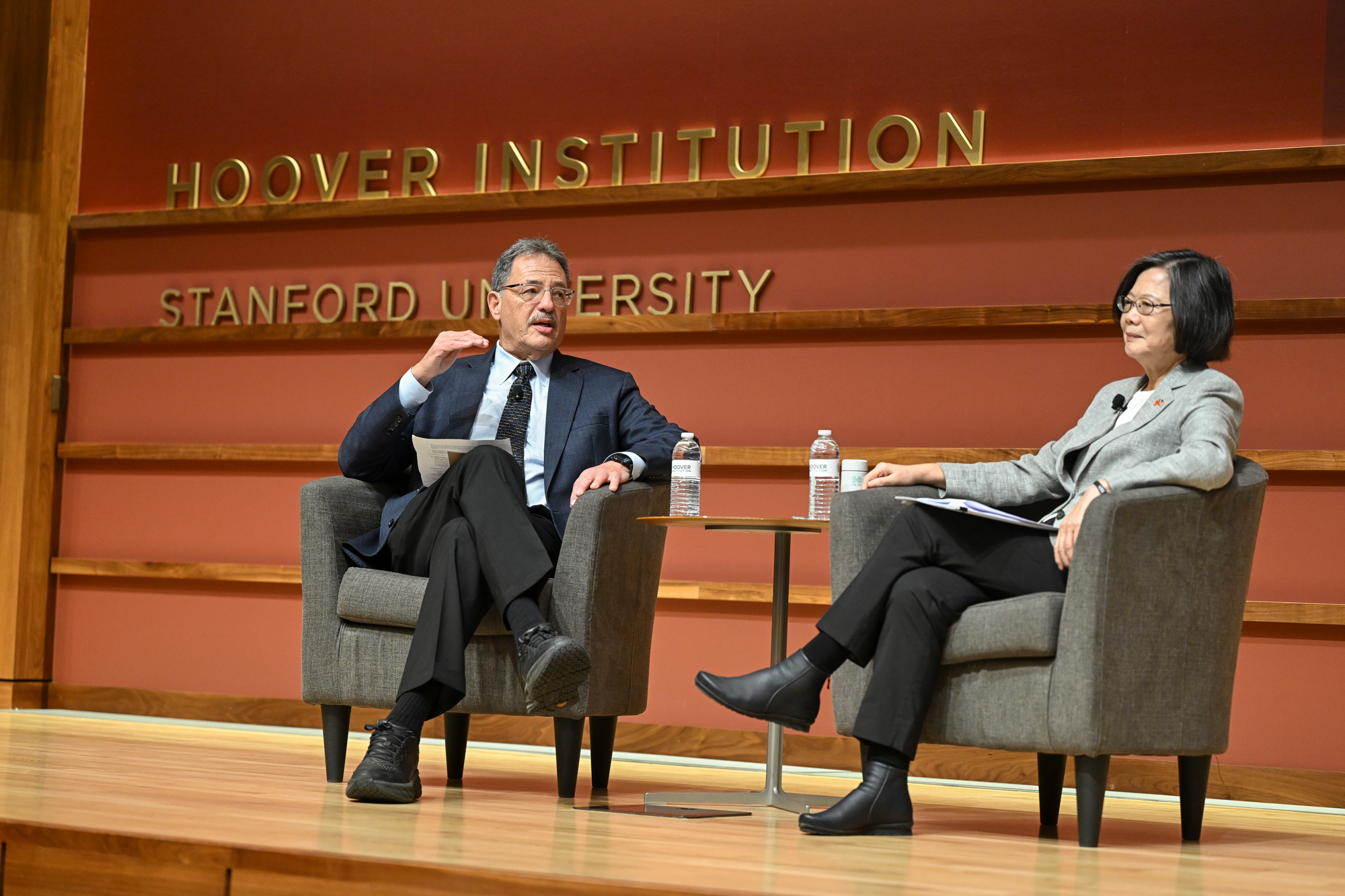
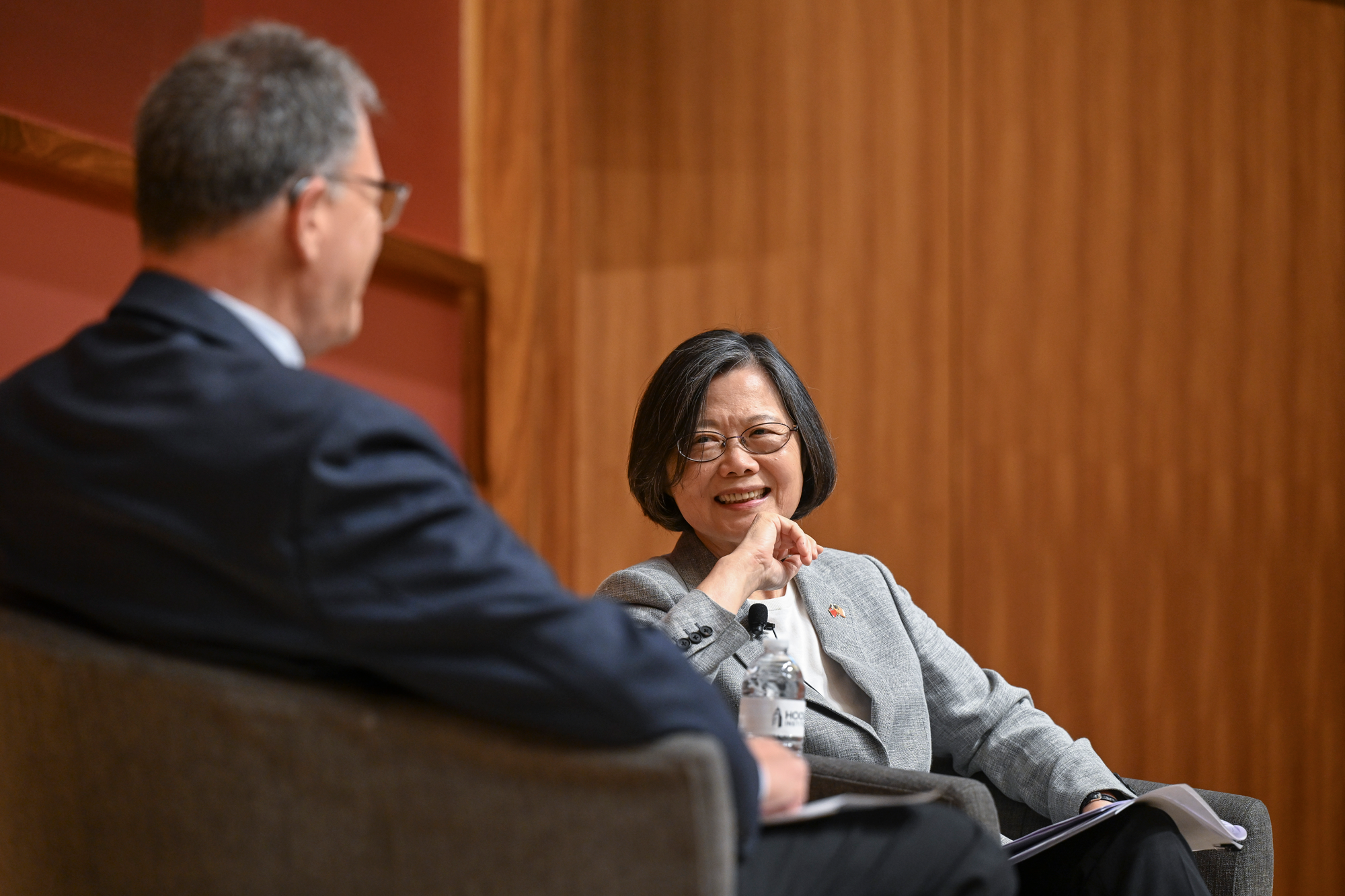
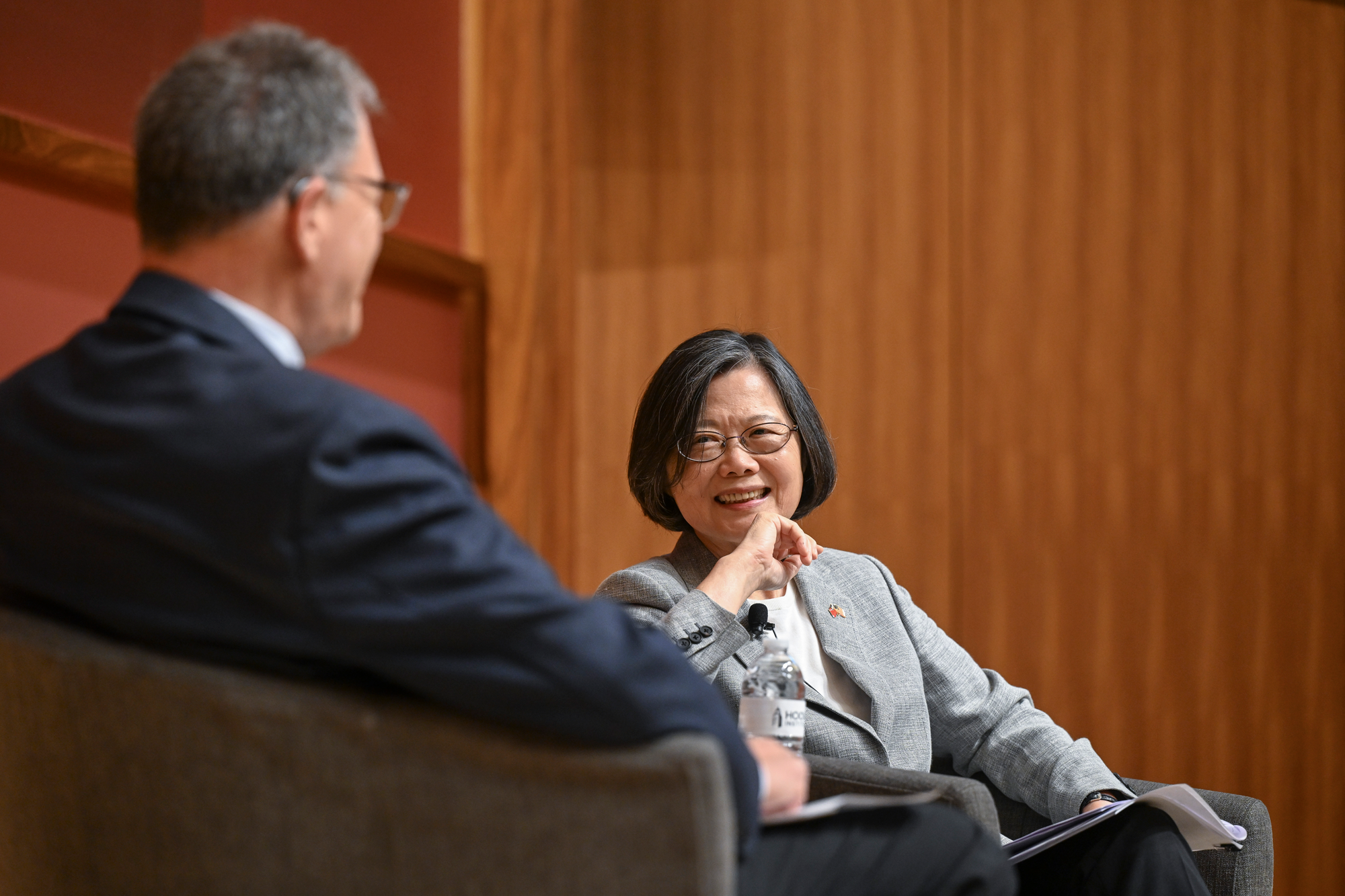
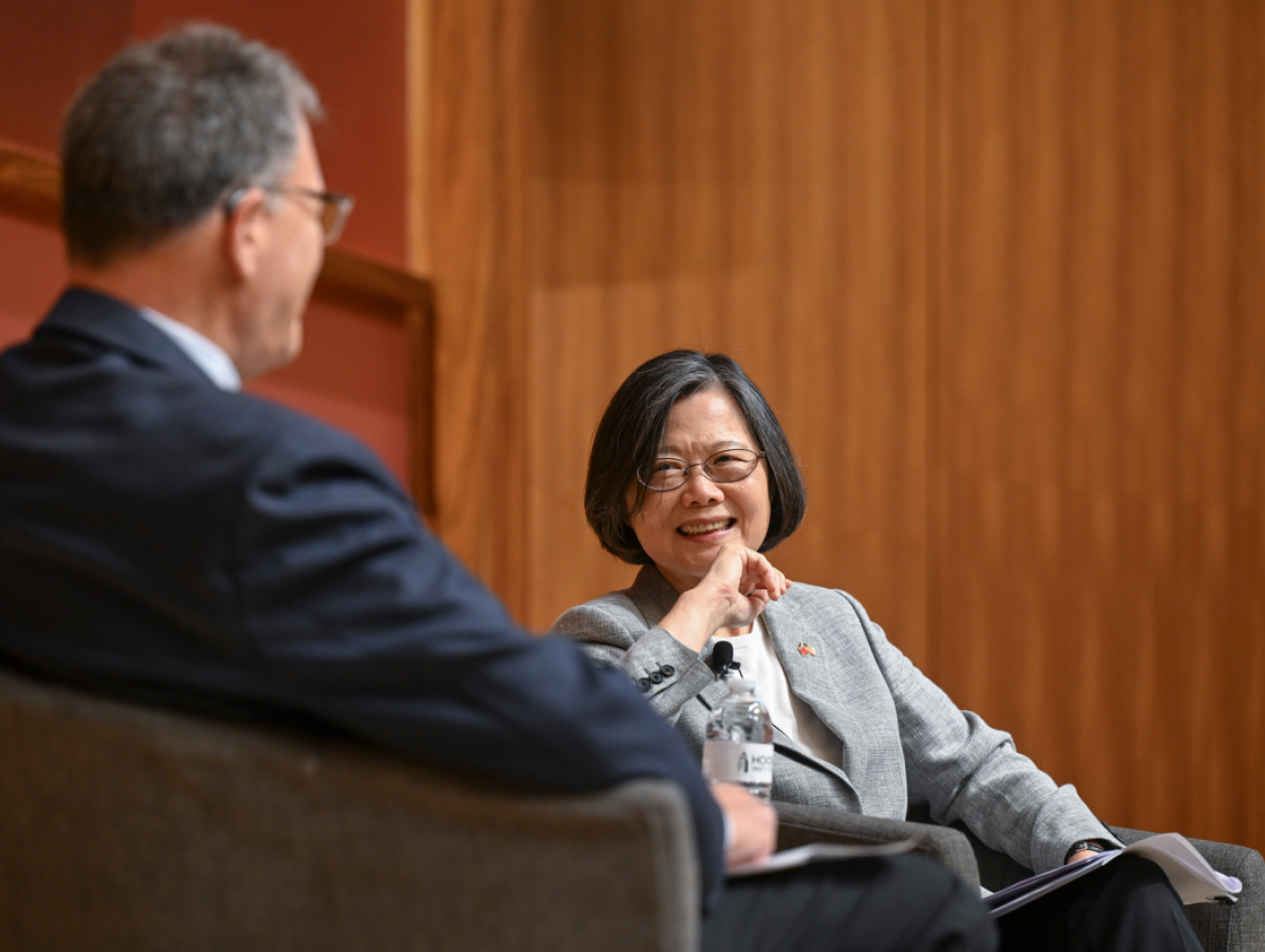
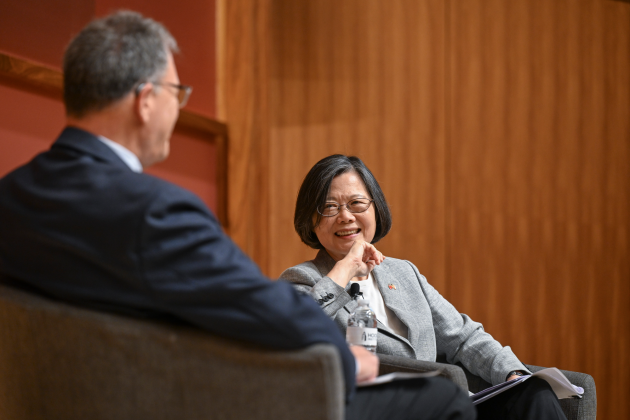
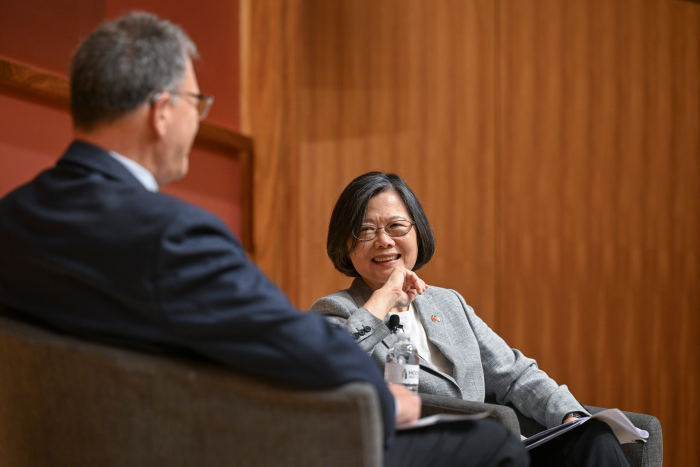
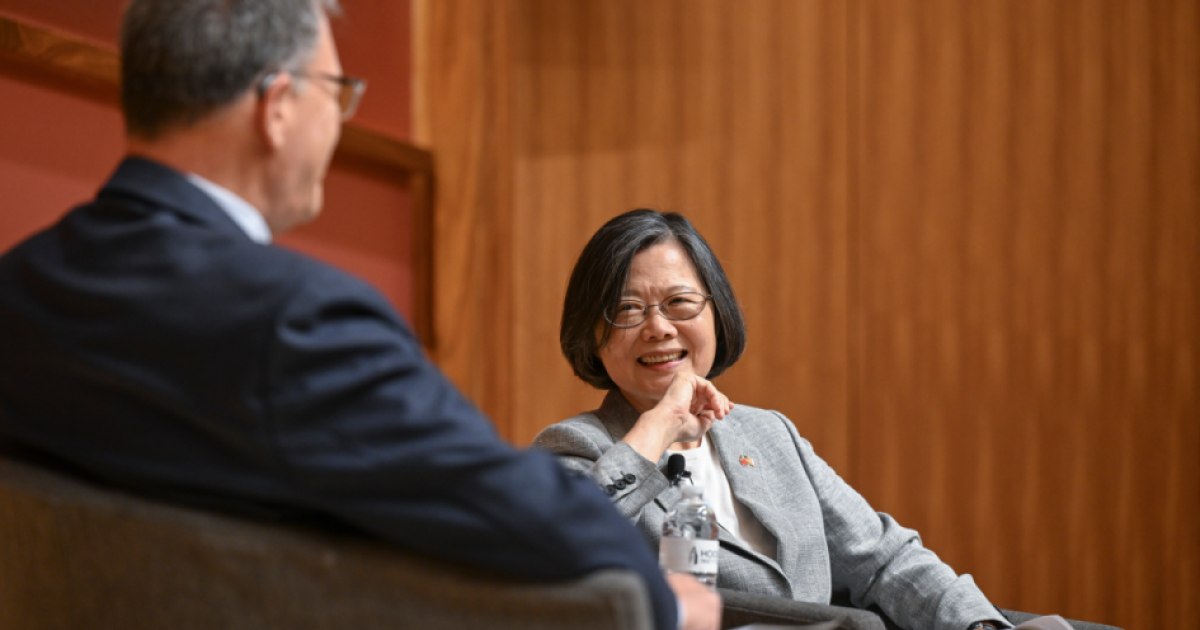
In a speech and a Q&A with Hoover Senior Fellow Larry Diamond, Ing-wen laid out her view of why Taiwan needs to be thought of as more than just a global computer chip exporter, her own challenges in office—including situations involving public sector pension reform and legalizing same-sex marriage—and what she hopes today’s students at Stanford can learn from her life’s path and public service.
Preparing Taiwan’s Future Defenses
As president, Ing-wen oversaw a major buildup in the defense spending of Taiwan and also extended the national obligatory military service for young adults to one full year from four months.
As part of the spending boost, Ing-wen said her government looked to the experience of Ukraine in its war with Russia, in which Ukraine has reoriented its military over the course of four years to embrace offensive drone capabilities. Ing-wen said she hopes that Taiwan shows the same determination as the Ukrainian people have shown if the country is ever tested by conflict.
“The Ukrainian people have taught a lot to people outside because they taught us to be resilient. They taught us to be determined,” she said. “The world did not know much about drones and its function in a moment of war. And now people understand how the drone, a small article, can be a very effective weapon in a major conflict.”
Taiwan’s defense plans call for thousands of autonomous air and sea-borne drones to augment its military capabilities.
So Much More than Semiconductors
Ing-wen quietly pushed back against the generalizations sometimes made about her home country.
“When people talk about Taiwan, the conversation usually centers around this work on semiconductors, the AI revolution and our relationship with China, the possibility of conflict. . . and, OK, maybe sometimes, bubble tea and dumplings,” she said, drawing laughter from the audience.
But she said there is so much more the world can learn from Taiwan, including how its deliberative political culture, high levels of public trust, and high democratic participation allowed it to solve deeply divisive issues.
One such issue was same-sex marriage. After the nation’s constitutional court ruled in 201 that banning same-sex marriage was unconstitutional, it set off a two-year period where the Legislative Yuan, Taiwan’s legislature, had to draft a new more inclusive law.
Ing-wen said that period contained intense but civil public debate, and eventually the legislature was able to draft legislation and settle the issue in 2019.
“The government was able to turn a deeply contested social issue into legislation through democratic processes, massive debates, and communications among the general public,” Ing-wen said. “Taiwan thus became the first in Asia to legalize same-sex marriage.”
Beyond its handling of domestic political questions, Ing-wen said Taiwan has done enough to demonstrate itself as a reliable security partner, keen on ensuring the Indo-Pacific Region stays free and open to trade, navigation, and peaceful cooperation among nations.
“We are ready and of course able to work with other democracies to make sure that the Indo-Pacific is a safe place.”
Reassuring Youth about the Advent of AI
A former academic, Ing-wen told the audience of mostly students that even though technological advancements like generative AI will change their schooling and career paths, some basic life-skills still apply.
“You need to be curious, you need to be adventurous, and you [need to be] willing and able to work with others,” she told the group.
There will be challenges, she said, alluding to her own first presidential election defeat in 2012, but she urged young people not to be discouraged and to give themselves as much time as possible to encounter and overcome setbacks.
“My advice that when you fail, that is not really a failure. It's just that God is telling you that it's not your time yet and you have to do more.”