








- Military
- History
- Revitalizing History
Any such topic is an invitation to generalize rather than think. While generalizations have their (limited) place in analysis, they are at least as likely to mislead as to enlighten us. Historical case studies do not provide universal answers; rather, it’s the details—the complexities—that frustrate our efforts to hasten victory.
Usually, this question arises when we hope to force an opponent’s surrender through airpower alone, or that airpower (or cyber-power tomorrow) will at least do the heaviest lifting. More often than not, we have pre-chosen the prescription without examining the patient. And, of course, the question presupposes that the enemy has an infrastructure of sufficient sophistication to merit attacking. Excluding the unique application of two atomic bombs to Japan, it’s difficult to find conflicts forced to the decision point primarily through airpower, whether the targets are enemy forces or infrastructure.
Perhaps the clearest triumph of airpower was the extensive use of poison gas spayed on native forces and the civilian population alike by the Italians in Abyssinia in the 1930s. Unable to respond, Emperor Haile Sailassie fled. As for infrastructure, there was none to attack.
Setting aside the exclusive use of airpower, there are a fair number of examples of attacks on infrastructure that did have an operational or strategic effect. In the dark comedy of Singapore’s surrender to a numerically smaller Japanese force, the deciding factor for the British—who had never anticipated a land attack—was the location of the colony’s reservoir outside the defensive perimeter. And many a siege throughout history was decided by the deprivation of goods and services (often with epidemic disease tossed in for seasoning).
But what about complex modern societies? Haven’t we grown so dependent on comforts and conveniences that we would be effectively disarmed if deprived? Well, not if you’re a rural Afghan. But what about a more tangibly modern society, such as Iran’s? Or Ukraine’s?
This raises the crucial issue of who is in charge, of loyalty and conviction. Many a middle-class Persian from Tehran’s northern suburbs might welcome a surrender and the ousting of the current regime, but he or she has no say in the matter.
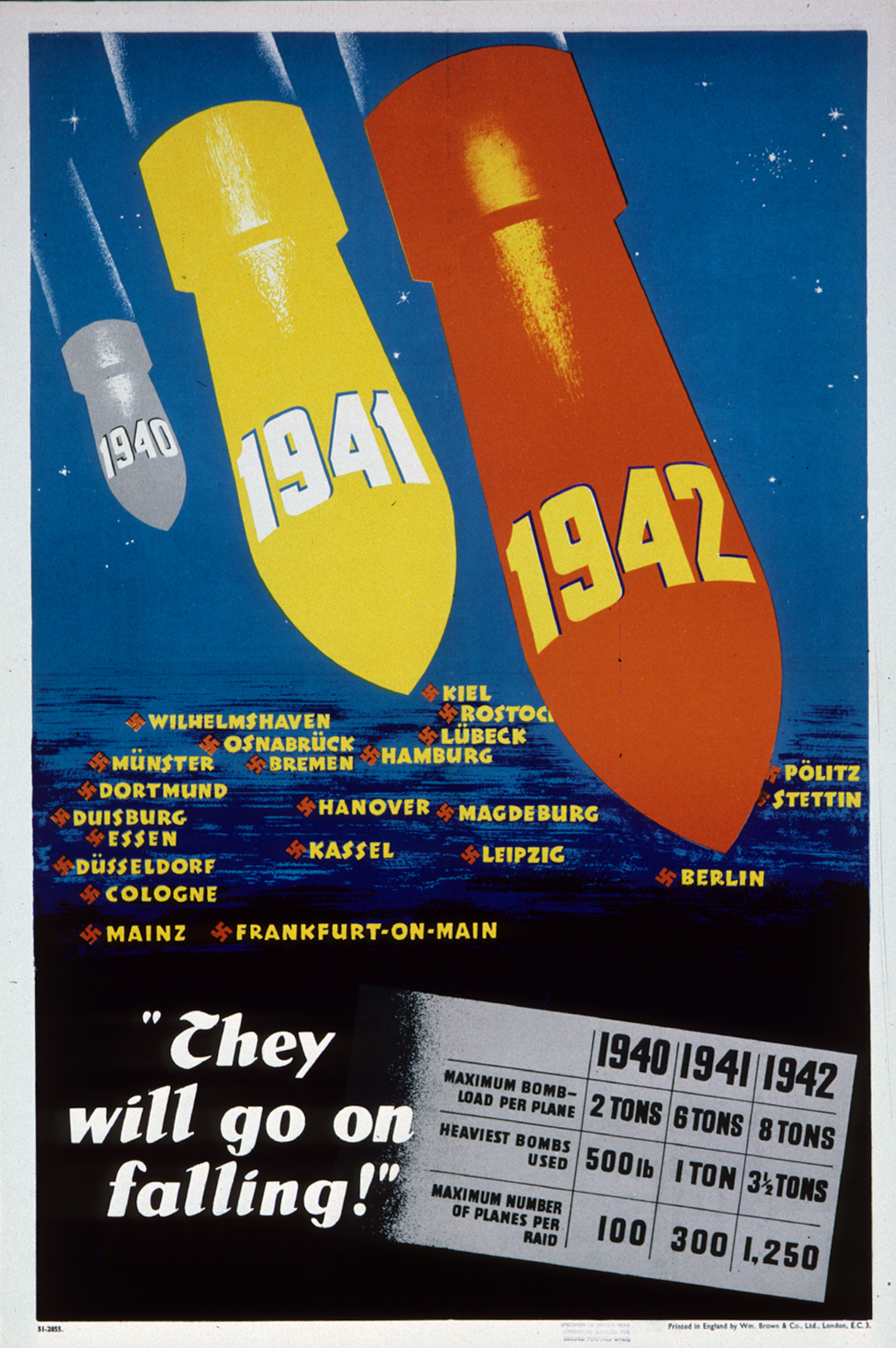
An even greater challenge appears when the society under attack retains faith in its national leadership—even fanatical support thereof. The heaviest bombing campaign and fiercest attacks upon infrastructure in history failed to entice Nazi Germany to surrender. In that case, we faced both an intractable regime and a population that, even after the fall of Berlin, contained at least a plurality of subjects who believed in their broken cause and in their own righteousness.
My own relatives in Nazi Germany, although not active supporters of the regime, were horrified by the results of fire-bombing but blamed the atrocity squarely on the Allies, without taking the measure of their own guilt.
Fascist Italy’s response to aerial bombardment of infrastructure was profoundly different. After the initial, relatively small-scale bombing raids on Torino, Genoa, Napoli and, not least, Rome, the majority of the Italian population just wanted their participation in the war to end. The cliché is true that, during the first two-thirds of Mussolini’s dictatorship, he did, indeed, greatly improve Italy’s infrastructure—but il Duce’s hapless military misadventures had soured the population by the time war came to the homeland. While last-gasp Fascist control kept up a withering war effort for another year, the regime’s appeal crumbled until, by mid-1943, the king and the “deep state” recognized the hopelessness of their situation and jumped sides to the Allies.
On the other hand, Hitler and Goering had utterly misjudged the grit and resolve of the British when they shifted from bombing airfields to the urban terror-bombing of the Blitz. Indeed, history is so rich in military miscalculations and disasters that anyone with a pre-determined agenda—a bureaucratic sales pitch—might find examples that can be twisted and turned to fit the prejudices of the moment.
What this question really asks is that we study this issue in depth and with intellectual rigor. Ukraine offers an immediate test case, with variables relevant to our own potential vulnerabilities. Meanwhile, one overarching maxim should be borne in mind, whether we engage in serious thought or just continue to bumble and fumble along: Those who seek an easy war are apt to find themselves trapped in a startlingly difficult one.