













Articles
Money and Power: Historical Lessons for Stablecoins and U.S. Dollar Dominance
Economics Working Paper 26126
September 8, 2026
Published August 4, 2020
Supporters of the public option say it will lower insurance premiums without increasing federal spending. Medicare and Medicaid began with similar promises, but political pressure led Congress to break its promises and increase federal spending by billions of dollars. The public option has a worthy goal, but we should be skeptical of plans that claim to offer affordable insurance without increasing federal spending.
Discussion Questions:
Additional Resources:
As private health insurance becomes more expensive, many people are looking for alternatives. One idea, called the public option, is an insurance plan run by the federal government that would compete directly against other plans on the market.
Supporters say it would offer lower premiums. But that's because it would pay doctors and hospitals considerably less than what private insurers must pay.
Supporters also say that there would be no additional federal spending, since the public option is supposed to charge premiums that would cover all the costs of the plan.
But if history is any guide, the plan wouldn’t work as advertised. Federal health programs like Medicare and Medicaid began with similar promises about what they would cost. But political pressure eventually led Congress to break its promises and increase annual federal spending by billions of dollars.
For example, when Medicare was created, the government was only supposed to pay for half of its costs. But in a few short years, the government increased its contribution to seventy-five percent, increasing the cost to taxpayers.
If the public option follows a similar path, Congress will quickly succumb to political pressure and subsidize enrollees and medical providers. The result would be a costly new program.
Finding ways to make insurance more affordable is a worthy goal, but we should be skeptical of plans that claim to offer affordable insurance to more Americans without increasing federal spending.
Articles
Economics Working Paper 26126
September 8, 2026
Videos
Is the progressive dream of wealth taxes soon to be reality – or a fiscal and economic nightmare – should voters approve Proposition 40 and a one-time 5% tax on the holdings of the Golden State’s billionaire class? And 25 years after one of the darkest days in the republic’s history, what is the legacy of the 9/11 attacks on America?
September 9, 2026
Videos
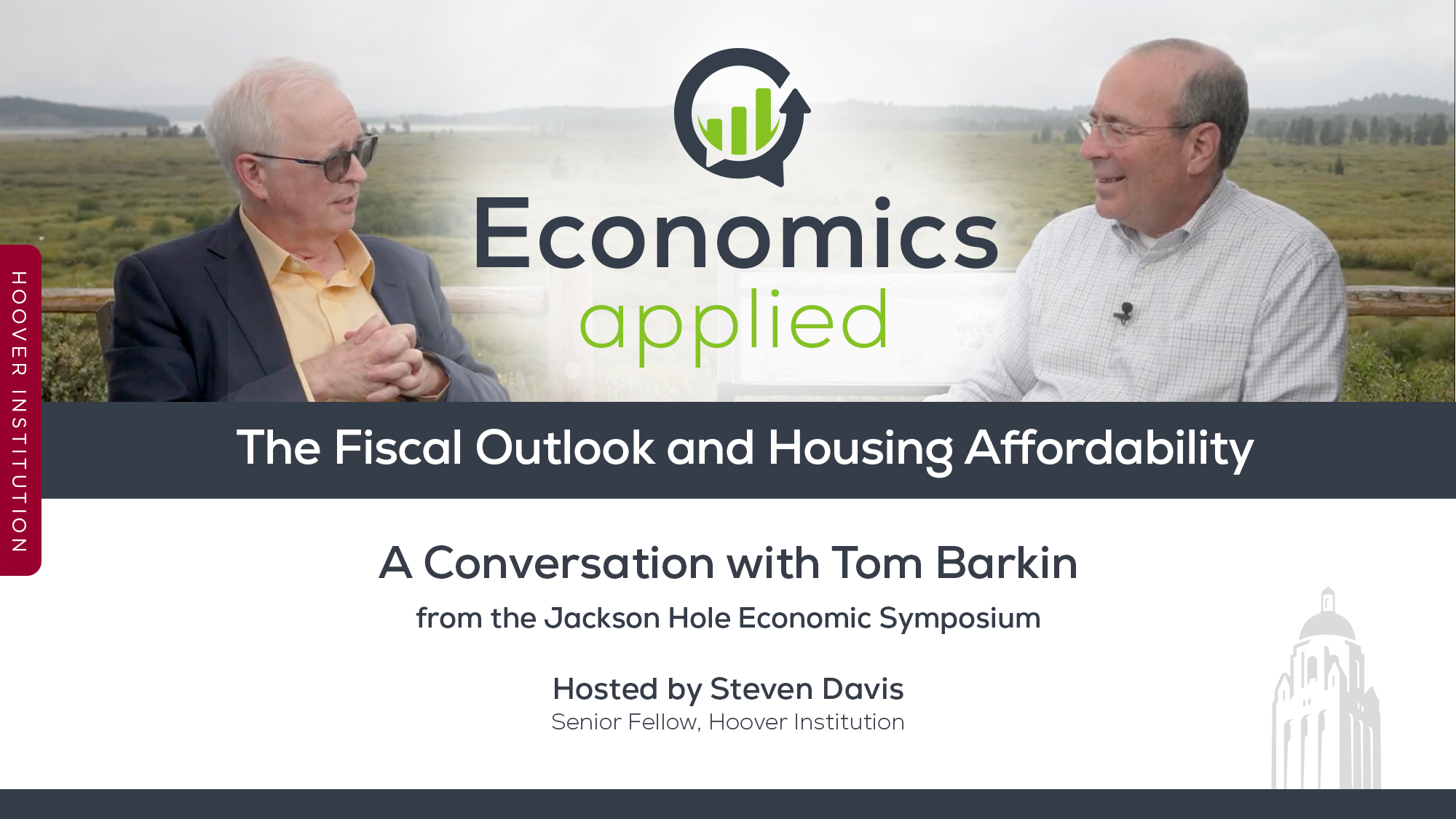
Raghuram Rajan joins Steve Davis at Jackson Hole to offer his take on Kevin Warsh’s speech and Scott Bessent’s recent bond market interventions.
September 9, 2026