

Matters of Policy & Politics

Matters Of Policy & Politics: “Nothing Is Over Until We Decide It Is”

Is the San Francisco recall a harbinger of political rebukes to come and is Gavin Newsom’s prolonged “emergency” an abuse of executive authority?

Matters of Policy & PoliticsFebruary 24, 2022
Matters Of Policy & Politics: “Nothing Is Over Until We Decide It Is”

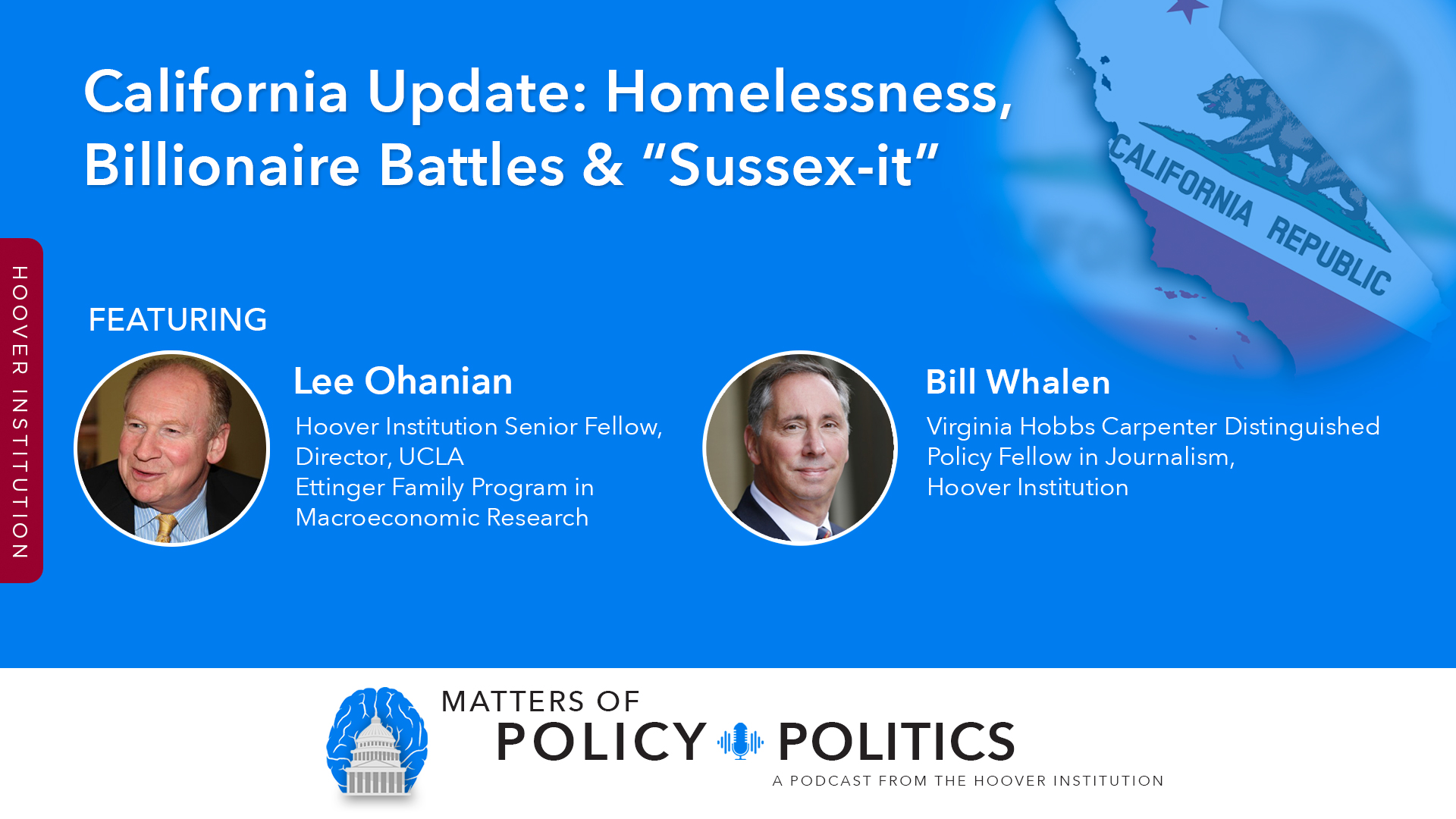
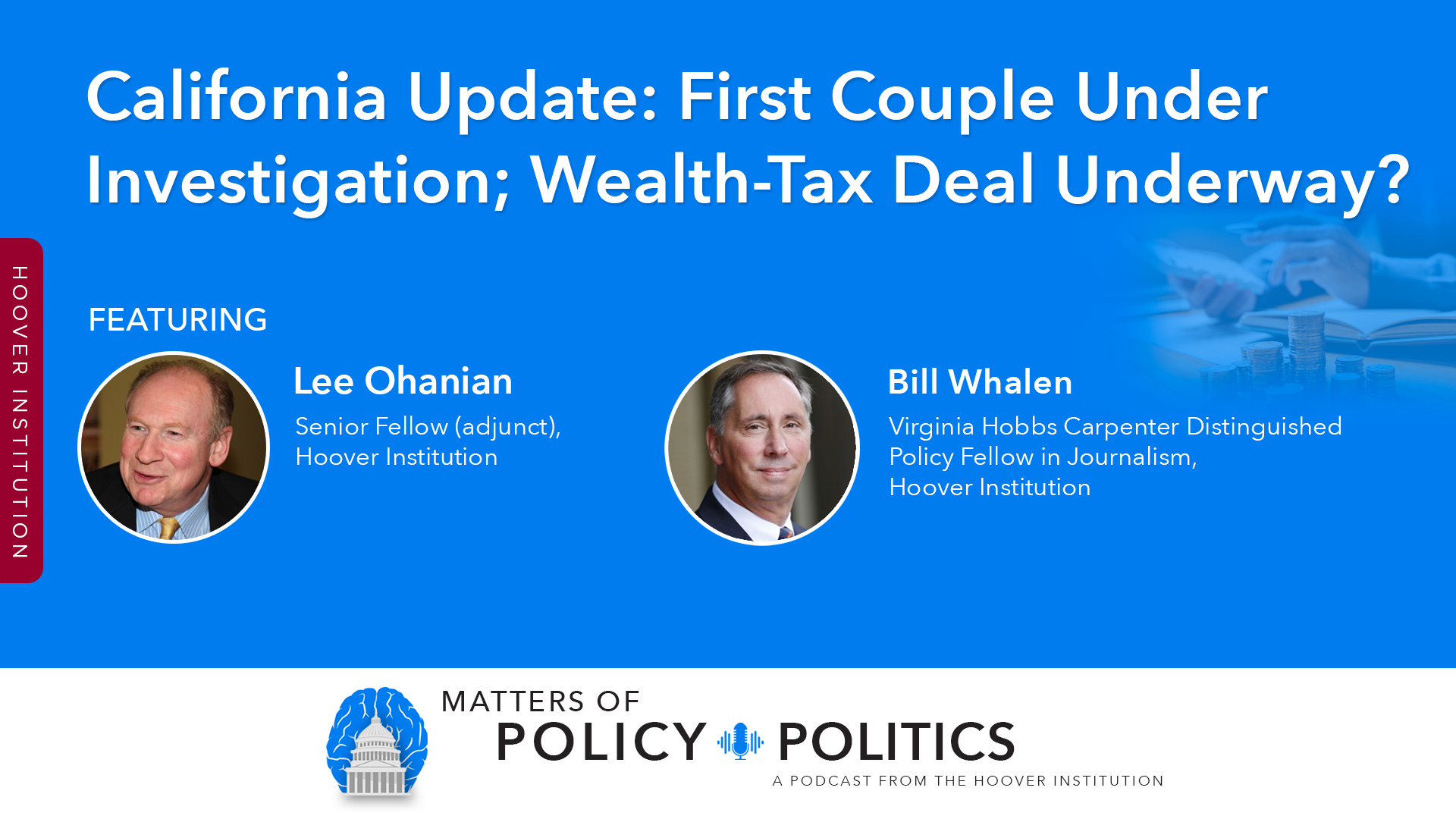
Gas prices soar in California, San Francisco voters lash out at three members of the county’s Board of Education, and a gubernatorially-declared “state of emergency” in the Golden State nears its second anniversary. Hoover senior fellow Lee Ohanian and distinguished policy fellow Bill Whalen, both contributors to Hoover’s “California on Your Mind” web channel, join Hoover senior writer Jonathan Movroydis to discuss economic “pain at the pump,” whether the San Francisco recall is a harbinger of political rebukes to come, and whether Gavin Newsom’s prolonged “emergency” constitutes an abuse of executive authority.  

Cast

Lee Ohanian

Lee Ohanian

Bill Whalen

Bill Whalen

Jonathan Movroydis

Jonathan Movroydis

Related

VIDEO

Should We Regulate AI (Before It's Too Late)?

Artificial intelligence could become one of the most consequential drivers of productivity and economic growth in a generation. Yet concerns about job displacement, misinformation, and political disruption have prompted calls to regulate the technology before its effects are fully understood. History shows that major innovations disrupt existing industries while creating new forms of work and enterprise that policymakers rarely anticipate. Premature regulation risks entrenching established firms, limiting competition, and expanding government influence over information. The challenge is to address genuine harms while preserving the freedom and experimentation that allow innovation to advance.

Videos

Incentives Are For Losers Featuring Adam Mastroianni

Adam Mastroianni and Russ Roberts explore what it takes to do the right thing when the incentives point the other way.

September 14, 2026

VIDEO

Is Minimum Wage A Dead End?

Minimum wage policy is intended to increase earnings for low-wage workers and reduce poverty. Evidence from state-level increases, however, shows that businesses may respond by changing how many people they employ, how many hours they offer, whom they hire, and how much work they automate. Workers who remain employed may earn more per hour, but others may lose income or job opportunities, while many of those who benefit do not live in poor households. The Earned Income Tax Credit (EITC) directs support toward low-income working families without putting other workers’ jobs or hours at risk.