







- Middle East
- Determining America's Role in the World
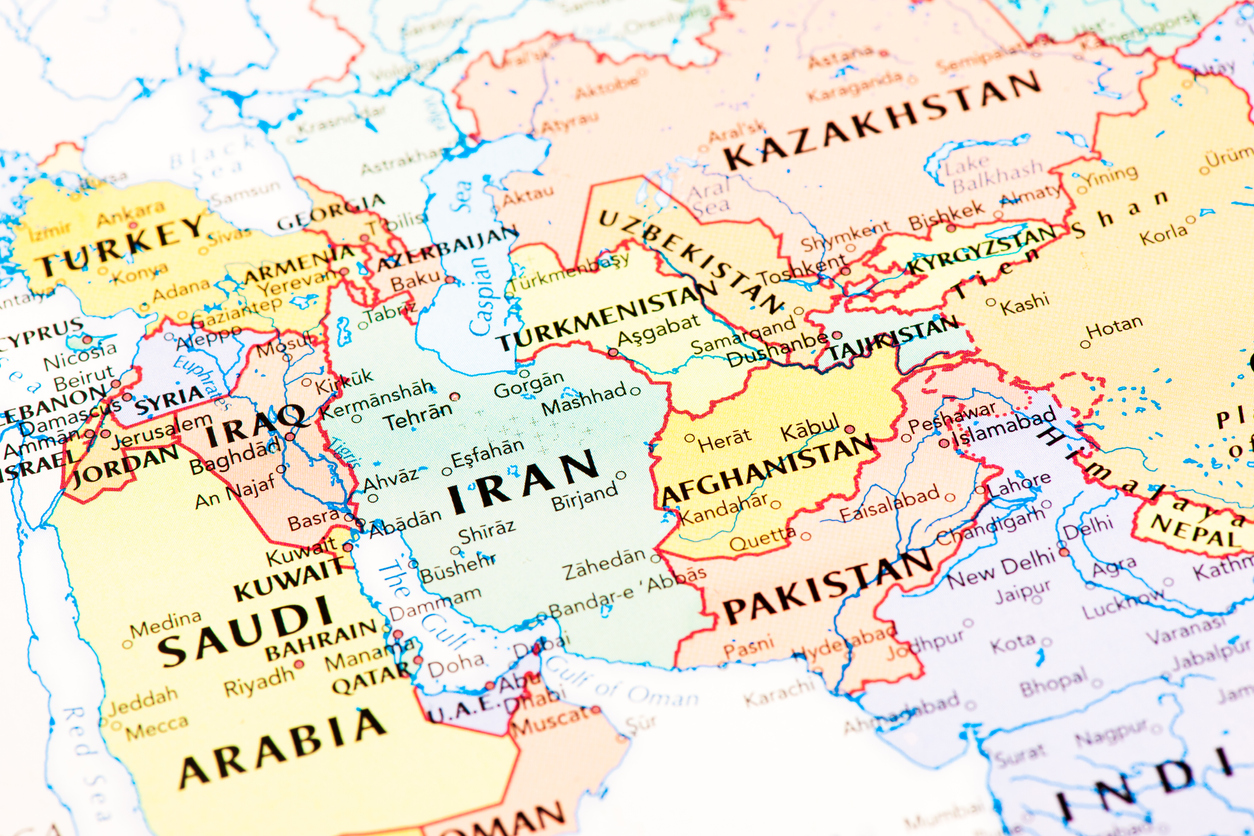
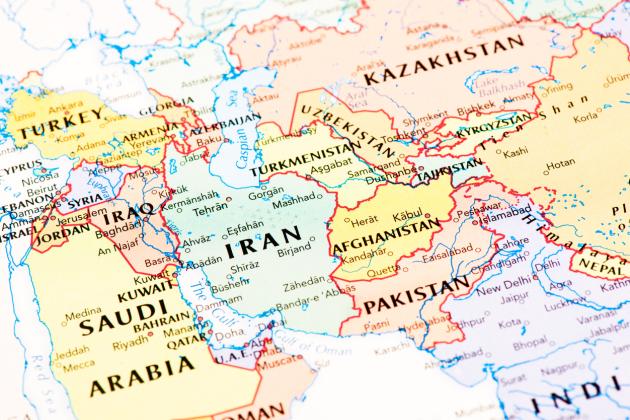
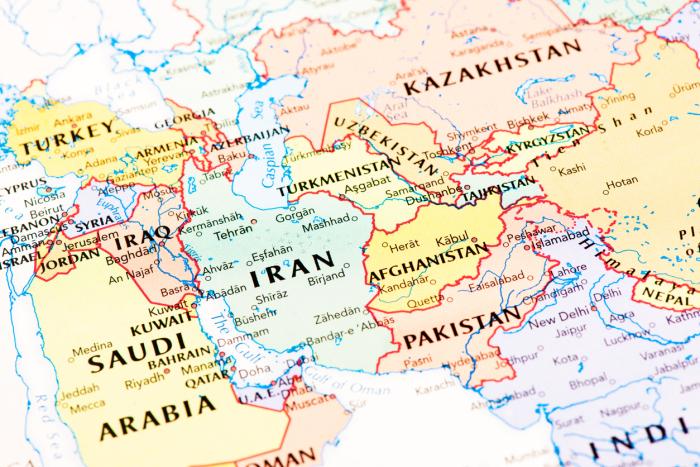
The trilateral defense agreement between Saudi Arabia, Turkey, and Pakistan, signed in Mecca on August 7th is more than another security cooperation agreement in the Middle East. It could signal a new phase in regional states’ efforts to build security networks that do not rely exclusively on the United States. From Israel’s perspective, this is a development that warrants careful examination—not because a military alliance directed against Israel has suddenly emerged, but because the regional architecture surrounding Israel is changing.
The agreement’s most prominent provision states that an armed attack against any one of the three signatories will be considered an attack against all three. In making this commitment, the countries have adopted a principle that, at least declaratively, resembles NATO’s concept of collective defense under Article 5. Nevertheless, it is too early to label the agreement a “Muslim NATO.” The interests of the three countries are not identical, the geographic distance between them is considerable, their threat perceptions differ, and there is still no evidence of joint command structures or operational commitments comparable to those of the North Atlantic Alliance.
However, the agreement’s importance should not be underestimated. Each of the three countries brings a different strategic asset: Saudi Arabia contributes economic power, vast energy resources, and influence in the Arab and Muslim worlds; Turkey brings a large military, an advanced defense industry, and NATO membership; and Pakistan brings its unique position as the only Muslim state possessing a nuclear arsenal. It is therefore the combination of these assets that gives the new framework its strategic potential.
A Region of Flexible Alliances
The Mecca Agreement underscores a fundamental transformation in the Middle East’s regional architecture. Alliances are becoming more fluid, increasingly ad hoc, and more closely tied to constantly evolving circumstances and interests. Rather than aligning permanently with a single great power or forming rigid regional blocs, regional middle powers such as Pakistan, Saudi Arabia, and Turkey are increasingly assembling overlapping partnerships based around shifting interests. The result is not the disappearance of alliances, but their transformation into more flexible and transactional arrangements.
This development is closely connected to the changing American approach to regional security. For years, Washington has sought to encourage its regional partners to assume greater responsibility for their own defense. This logic is particularly evident in the Trump administration’s emphasis on burden sharing, which calls on regional actors to play a larger role in maintaining stability rather than relying indefinitely on the United States.
This does not necessarily mean that Washington is withdrawing from the Middle East. Rather, it reflects an effort to redistribute responsibility within the regional order. The United States wants its partners to develop greater military capacity, deepen cooperation with one another, and assume more responsibility for deterring and responding to regional threats. From Washington’s perspective, this can strengthen regional stability while allowing the United States to devote greater attention and resources to other strategic priorities, particularly competition with China and, to a lesser extent, Russia.
On the one hand, Washington may welcome closer Saudi–Turkish–Pakistani defense cooperation as a sign of sucessful regional burder sharing, potentially easing pressure on U.S. forces. On the other hand, the broad collective-defense language could link crises that the United States has so far managed separately—such as India-Pakistan tensions, Saudi-Houthi or Saudi-Iranian escalation, or conflicts involving Turkey—creating pressures for wider involvement. This is particularly sensitive given Turkey’s NATO membership. Although the agreement does not extend NATO’s collective-defense guarantees to the other parties, it could nevertheless complicate Washington’s efforts to manage an increasingly complex network of interlocking security relationships, potentially increasing the likelihood of crises and the risk of escalation. As a result, the key question facing Wasington is whether the pact strengthens regional burden-sharing without increasing the risk of U.S. entanglement in externally triggered conflicts.
Yet the same process can produce consequences that Washington does not entirely control. As regional states acquire greater capabilities and assume greater responsibility for their own security, they also acquire greater strategic autonomy. They are less willing to accept a simple choice between dependence on the United States and alignment with its competitors. Instead, they seek to maintain relationships with Washington while simultaneously developing ties with Beijing, Moscow, Ankara, Islamabad, New Delhi, and other emerging centers of power. The objective is not necessarily to replace the United States, but to ensure that no single external power can dictate the terms of their security.
In this respect, the Middle East reflects a broader transformation in the strategy of middle powers. During the Cold War, many states in the developing world sought to preserve room for maneuver through non-alignment—avoiding formal alignment with either of the two superpower blocs. Today, the strategic environment is different. The international system is more fragmented, great-power competition is increasingly multidimensional, and regional states have more partners from which to choose. As a result, middle powers in the so-called “Global South” are choosing multi-alignment: maintaining simultaneous relationships with competing powers and, when possible, extracting benefits from all of them.
Saudi Arabia is perhaps the clearest example of this evolving strategy. From Riyadh’s perspective, the agreement is part of a wider trend that has been developing for years. Saudi Arabia is not abandoning its strategic relationship with the United States, but it is no longer willing to entrust its security almost exclusively to Washington. Saudi vulnerability to missiles and drones, coupled with persistent doubts about American willingness to bear economic, political, and security costs to alter the balance vis-à-vis Iran, is pushing the kingdom to broaden its portfolio of partnerships. Rather than choosing between Washington, Beijing, Ankara, and Islamabad, however, Riyadh prefers to maintain relations with all of them and reduce its dependence on any single actor. In this sense, the agreement is not necessarily an anti-American move—after all, all three members of the alliance are close to the United States, particularly to the current administration—but rather a form of risk hedging. At the same time, it sends Washington a clear message: the Saudis have alternatives.
For Turkey, the agreement offers an opportunity to reassert itself as a central player in Middle Eastern affairs. Washington increasingly views Ankara as an important pillar of regional stability, particularly given its role in Syria and its ability to engage with a range of regional actors. For Ankara, the agreement provides a platform to deepen its political, economic, and defense ties with Saudi Arabia and the wider Gulf beyond its longstanding partnership with Qatar, while further institutionalizing its burgeoning defense relationship with Pakistan. More broadly, the agreement strengthens Turkey’s position as an increasingly important security partner, leveraging its growing military-industrial complex to expand its strategic influence across the region and beyond.
Pakistan, meanwhile, maintains a longstanding strategic relationship with China while preserving important ties with the United States, Saudi Arabia, and other Gulf states. Its participation in the new framework therefore reflects not a rejection of existing partnerships but the pursuit of additional strategic depth and further institutionalization of its substantial security relationships with both Ankara and Riyadh.
The Limits of Collective Defense
The agreement also carries potential benefits for Israel. Strengthening Saudi Arabia’s security is not necessarily a negative development. Israel and Riyadh share interests in Gulf and Red Sea stability, freedom of navigation, and limiting Iran’s ability to undermine the regional order. If the framework improves Saudi Arabia’s ability to defend itself against missiles and drones and strengthens deterrence against Iran and its Houthi proxies, Israel could benefit indirectly.
Yet this is also where one of the alliance’s central weaknesses lies: it is unclear to what extent Turkey and Pakistan would actually be willing to fight on Saudi Arabia’s behalf. It is relatively easy to declare that an attack against one will be considered an attack against all; it is much more difficult to honor such a commitment once war breaks out and national interests collide.
If a conflict between Saudi Arabia and the Houthis escalates, it is far from clear that Ankara or Islamabad would enter a significant military campaign on Riyadh’s side. This is even more true in the event of a direct Saudi-Iranian war. Pakistan shares a long border with Iran and maintains a complex relationship with Tehran. Turkey, too, competes with Iran in some arenas while cooperating with it in others, including through trade and energy ties. Consequently, in a crisis, the critical question will not be what the agreement says, but what Ankara and Islamabad will actually be willing to risk for Riyadh.
Significant mistrust also remains between Saudi Arabia and Turkey. While their relations have improved considerably in recent years and include some security cooperation, particularly Saudi military procurement from Turkey, this rapprochement has not erased years of competition for influence in the Sunni world or disagreements over the Muslim Brotherhood, Qatar, Egypt, and the wider regional order. From Riyadh’s perspective, excessive Turkish influence in the Gulf is not necessarily desirable; from Ankara’s perspective, accepting Saudi leadership of the Sunni is not tenable.
Geography further complicates the alliance. Unlike NATO, the three countries do not form part of a contiguous strategic space. Turkey is focused on Syria and Iraq, Russia and the Black Sea littoral, the Caucasus, and the eastern Mediterranean; Pakistan is primarily concerned with India, its confrontation with Afghanistan, and border security; and Saudi Arabia is focused on the Gulf, the Red Sea, Yemen, and above all Iran. These three countries may benefit from cooperation, but they do not necessarily share the same threat perceptions or security priorities. As a result, this gap makes it difficult to turn a declaration of collective defense into a genuine military alliance.
The agreement also reflects an internal asymmetry. Turkey and Pakistan possess large, combat-experienced militaries, whereas Saudi Arabia’s substantial defense spending has not translated into comparable independent operational capability, in part because of longstanding “coup-proofing” practices and the maintenance of parallel security structures, most notably the Saudi Arabian National Guard (SANG). Traditionally drawn heavily from tribes in the central Najd region with longstanding ties to the Al Saud family, the SANG was established to protect the monarchy and serve as a counterweight to the regular armed forces. Yet these structural arrangements do not make Saudi Arabia a minor partner. Its principal contributions lie in its financial resources, advanced military equipment, defense infrastructure, strategic position along the Gulf and Red Sea, and capacity to finance joint defense-industrial projects. The result is likely to be a division of labor in which Turkish and Pakistani military capabilities are complemented by Saudi Arabia’s economic resources and strategic geography, rather than a partnership among three militarily comparable powers.
The nuclear question also looms over the agreement. Following the Saudi-Pakistani defense agreement in September 2025, a debate emerged over whether it provides Riyadh with a Pakistani nuclear umbrella. Turkey’s accession to the framework broadens that debate further. At this stage, however, there is insufficient public evidence to conclude that Saudi Arabia or Turkey has received a nuclear guarantee. Pakistan’s nuclear arsenal is primarily intended to deter India, and a commitment to mutual defense does not necessarily constitute a commitment to use nuclear weapons. From Israel’s perspective, the issue requires close monitoring, but there is no reason to attribute capabilities to the alliance that it has not been demonstrated to possess.
The Saudi-Pakistani relationship itself, despite its longstanding historical ties should not be taken for granted, and Islamabad’s commitment to Riyadh has historically depended on circumstances and interests. The clearest example came in 2015, when Pakistan rejected Saudi Arabia’s request to join the military campaign in Yemen, partly because of concerns about becoming entangled in a confrontation with Iran. Pakistani caution has also been evident more recently: forces reportedly intended to assist in defending Saudi Arabia were deployed only after the ceasefire with Iran and around the same time as the transfer of approximately $3 billion in Saudi economic assistance to Pakistan. Even within the closest relationship in the new triangle, security solidarity does not necessarily amount to an automatic commitment to go to war. Adding Turkey to the equation—with its independent interests and complex relationship with Iran—makes collective security even more conditional and complicated. The agreement’s real test, therefore, lies not in its binding language on paper but in the willingness of the three countries to pay a military, political, and economic price for their partners when their interests do not coincide.
Hedging is the Name of the Game
From an Israeli perspective, the significance of this emerging fault line lies not only in the alliances it creates but also in the divisions it exposes within the Arab and Muslim worlds. Most notably, the United Arab Emirates, Israel’s closest partner in the Arab world, is absent from the framework.
Abu Dhabi’s absence is significant. Relations between Saudi Arabia and the UAE have become more complex and competitive in recent years, despite the two states’ continued cooperation. Their disagreements concern, among other things, Yemen, economic competition, and the struggle for regional influence. If the new agreement is perceived in Abu Dhabi as a framework granting Turkey and Pakistan greater influence over Saudi security policy, it could increase Emirati suspicion. Instead of a united Muslim bloc, competing axes could emerge across the Arab and Muslim worlds.
For Israel, this has a dual significance. Fragmentation within the Arab world is not an Israeli objective, and Israel has no interest in exacerbating tensions between Riyadh and Abu Dhabi. At the same time, an increasingly multipolar and fluid regional system in which no single power can establish hegemony provides Israel with room for maneuver. The partnership with the UAE therefore becomes even more important in such circumstances, while in parallel, Israel can maintain channels with Turkey and continue pursuing rapprochement with Saudi Arabia. Saudi-Turkish competition, beneath the surface, may also limit the possibility of a unified regional bloc adopting an anti-Israel position. As a result, the emerging triangle should therefore not be viewed in binary terms—as either an immediate threat or an unqualified benefit, but through a more nuanced lens.
The Turkish component requires particular attention. Ankara has made its growing defense industry a central instrument of its foreign policy and uses exports of various military systems to expand its regional influence. The deeper Turkey’s foothold in the Saudi and Gulf markets becomes, the more it may compete with Israeli defense industries and accumulate additional political influence. Conversely, if Riyadh succeeds in using its relationship with Ankara to restrain Turkey and integrate it into a more pragmatic regional order, Israel could also benefit.
The broader risk is that the new framework could offer regional states a security architecture that does not need Israel. For years, Jerusalem hoped that the Iranian threat would help create a regional system in which Israel and pragmatic Arab states cooperate in defense, intelligence, and early warning. The new agreement points to another possibility: Arab states can build security mechanisms without Israel, reducing its centrality in the regional security architecture. The more Riyadh can simultaneously rely on the United States, Turkey, and Pakistan, the more Israel’s relative value in Saudi calculations could diminish. This does not mean normalization is off the table, but the availability of multiple alternatives gives the Saudis greater room for maneuver and additional leverage.
The real test of the agreement will be what follows the signing ceremony. If it remains primarily a political declaration, its significance will be limited. If joint command and coordination mechanisms are established, regular exercises conducted, air-defense systems integrated, intelligence sharing expanded, and joint defense industries developed, it will represent a more profound change. Equally significant will be the question of expansion: the future accession of additional countries, including Qatar or Egypt, could turn the triangle into the nucleus of a much broader regional framework.
The emerging triangle is taking shape against the backdrop of a significant shift in the regional balance of power: the weakening of Iran’s conventional capabilities and that of its proxies together with its efforts to institutionalize control over the Strait of Hormuz, alongside the perception of growing Israeli military and strategic strength over the past three years. Even if Iran remains the alliance’s primary target, the three capitals are not indifferent to Israel’s military superiority and its growing willingness to use force far beyond its borders. The new triangle is therefore not merely an attempt to deter Iran or compensate for a lack of trust in the United States; it also reflects a broader effort by major Muslim states to adapt to a changing balance of power and prevent a situation in which Israel is the regional hegemon without a sufficient counterweight.
This does not mean that an anti-Israel alliance has been established; nor does it constitute an immediate military threat. Yet the very fact that Saudi Arabia, Turkey, and Pakistan are strengthening security coordination at a time when Israel is increasingly perceived as a revisionist power willing to use force should concern Jerusalem. The resulting long-term challenge for Jerusalem is not merely the possibility that the alliance could act against it, but that its growing strength could encourage regional actors to move closer to one another in order to balance Israel.
The real test will come during a crisis. Agreements are signed in air-conditioned rooms; alliances are tested under fire. If Saudi Arabia finds itself in a serious confrontation with the Houthis, will Turkey and Pakistan actually come to its aid? And if Riyadh goes to war directly with Iran, will Ankara and Islamabad be prepared to regard it as their own war?
In the immediate aftermath of the pact signing, the Houthis have carried out multiple attacks on Saudi territory and maritime traffic, including repeated drone and missile strikes on Aramco facilities and sustained operations targeting shipping in and around the Bab el Mandeb strait. These incidents provide the first test case regarding the scope of the new collective-defense commitment. Does an attack by a non-state actor against Saudi critical infrastructure, or against international shipping linked to Saudi interests, constitute the type of “armed attack” envisaged by the agreement, and, if so, what obligations does it impose on Turkey and Pakistan? The absence of an automatic military response would not necessarily make the agreement meaningless: assistance could take the form of intelligence sharing, air and missile defense, maritime protection, logistics, or political support. Yet the episode illustrates that the significance of the pact will ultimately depend less on its Article 5 like language than on how the three governments collectively define aggression in practice and translate their commitment into operational arrangements across both land and maritime domains.
As long as the answers remain unclear, Israel should take the agreement seriously but not panic. It should not attempt to fracture this framework or openly act against it, as such a move could instead help the three countries close ranks. It would be better for Israel to exploit the region’s multiplicity of interests: deepen its partnership with the UAE, preserve channels with Turkey as much as possible, and continue pursuing rapprochement with Saudi Arabia.
The new alliance may alter the regional balance of power, but it also demonstrates just how far the Arab and Muslim worlds are from becoming a single strategic camp. For Israel, the challenge is not to prevent new ties from emerging among regional states, but to ensure that within the emerging system of competing axes, rivalries, and partnerships, Israel remains a player that is difficult to bypass—and worth partnering with.
Dr. Yoel Guzansky is a senior researcher and the Head of the Gulf Research Field at the Institute for National Security Studies (INSS), as well as an associate fellow at the Middle East Institute (MEI) in Washington, D.C. At the Hoover Institution he was a 2016-2017 W. Glenn Campbell and Rita Ricardo-Campbell National Fellow, a 2016-2017 Fulbright Scholar and a 2016-2017 Israel Institute post-doc Fellow. Dr. Guzansky served on Israel’s National Security Council from 2005 to 2010, coordinating Israel’s foreign policy vis-à-vis Iran and the Gulf states.
Dr. Jesse R. Weinberg is a Researcher at the INSS in the US-Israel and Global Powers Research Program.

