






A One-Time Tax With Lasting Effects
Saving The Welfare State
Fighting To Learn
Welcome to the
HOOVER INSTITUTION

Seeking to improve the human condition by advancing ideas that promote economic opportunity and prosperity while securing and safeguarding peace for America and all mankind.


Where curiosity presses play.
Turning frontier research on economics, policy, and world affairs into conversations you can follow.
- Featured
- For You

A One-Time Tax With Lasting Effects
Why billionaires are leaving in response to a proposed one-time wealth tax, and why the resulting income tax losses belong in the fiscal score.
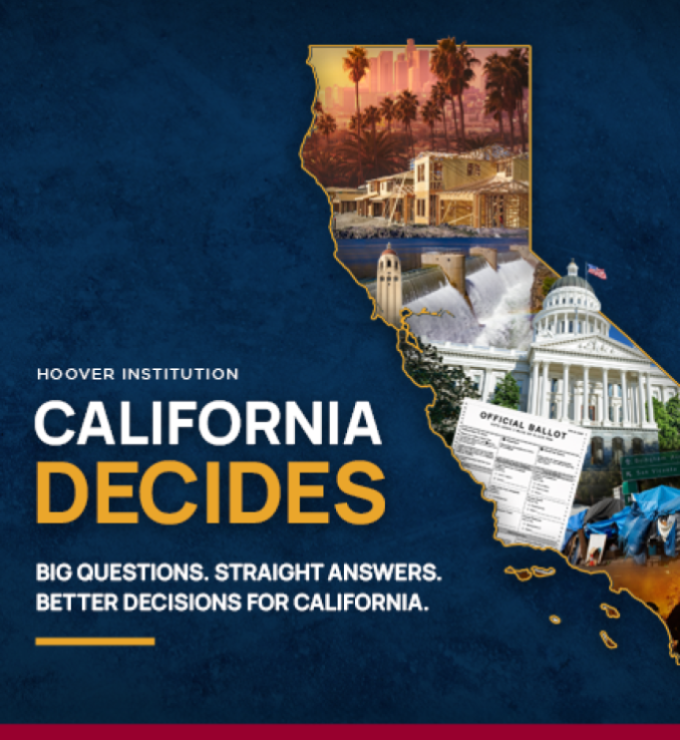
The Proposition Lab | California Decides
California Decides’ Proposition Lab is Hoover Institution’s nonpartisan publication and platform designed to help Californians better understand the issues, tradeoffs, and decisions shaping the state’s future.


What is MyHoover?
MyHoover delivers a personalized experience at Hoover.org. In a few easy steps, create an account and receive the most recent analysis from Hoover fellows tailored to your specific policy interests.
Watch this video for an overview of MyHoover.
Forgot Password
Login?
2027 Fellowship Opportunities
Applications are now open for the 2027 Hoover Fellowship Programs with opportunities for early- to mid-career scholars. For more information on the Hoover Fellows program and National Fellows program, click the links below.


Commentary on the News

The Billionaire Wealth Tax: A Recipe For Economic Disaster
California’s proposed Billionaire Tax Act would impose a “one-time” 5% tax on the worldwide net worth of individuals with more than $1 billion in assets. Supporters estimate it could raise roughly…
via PolicyEd
Core Institutional Priorities
Featured Fellows

Dan Berkenstock
Distinguished Research Fellow

Thomas Dee
Robert and Marion Oster Senior Fellow (joint)
Jonathan Gienapp
Research Fellow
Philip Zelikow
Botha-Chan Senior Fellow

Eric Wakin
Deputy Director/ Everett and Jane Hauck Director of Library & Archives | Research Fellow
Featured Work:
Keeping A Cold War Chilled: Mobilizing the Modern Defense Industrial Base
In a new century defined by another great-power competition, how does the United States match China in terms of integrating defense needs with its technological and industrial capacities?
Featured Work:
Why K-12 Public School Enrollments Dropped In 40 States
Hoover Institution fellow Thomas Dee found that changing demographics or transitions to private or homeschools didn’t account for about one-third of the 1.2 million students who exited public schools after the pandemic.

Featured Work:
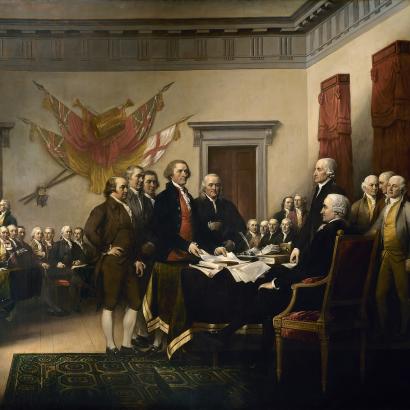
America's Promissory Note
Hoover Institution fellow Jonathan Gienapp discusses the Declaration of Independence’s historical context and emphasizes that the document’s immediate purpose was political: to justify revolution and to define legitimate liberty as non-domination—being governed by laws made with genuine representation and consent rather than by an alien will.
Featured Work:
American Energy: The Key To Success In the Digital Revolution
What can America do to win the culminating phase of the digital revolution before rivals like China decide who powers the AI age?

Featured Work:
Lives That Defied Tyranny
Choosing Freedom, a new exhibition, features courageous figures like Victor Herman, an American trapped in the USSR.

FEATURED PUBLICATIONS

Strategika
An online journal that analyzes ongoing issues of national security in light of conflicts of the past.
Read More“A Ship’s A Fool To Fight A Fort”: Chokepoints, Coastal Firepower, And The New Contest For The Maritime Commons


The Caravan
The Caravan is a quarterly publication on the contemporary dilemmas of the Greater Middle East
Read More
California on Your Mind
Analysis, politics, and the economics of the Golden State
Read More
More Videos & Podcasts
Can America Still Govern Itself? With Lanhee Chen
Hoover Institution fellow Lanhee Chen on why good policy so often fails politically.
The Regulatory State(s): AI Safeguards, Deregulation For Affordability’s Sake
While the public clamors for regulating artificial intelligence, what’s the most sensible approach for federal and state governments?
The Counter Revolution: Victor Davis Hanson On The Fall And Rise Of Trump
How did Donald Trump go from political defeat and the aftermath of January 6 to a second term in the White House?
Taiwan: Will China Make Its Move?
Elizabeth Economy and Bonnie Glaser discuss Beijing’s pressure on Taiwan and the risk of a crisis.
Library & Archives
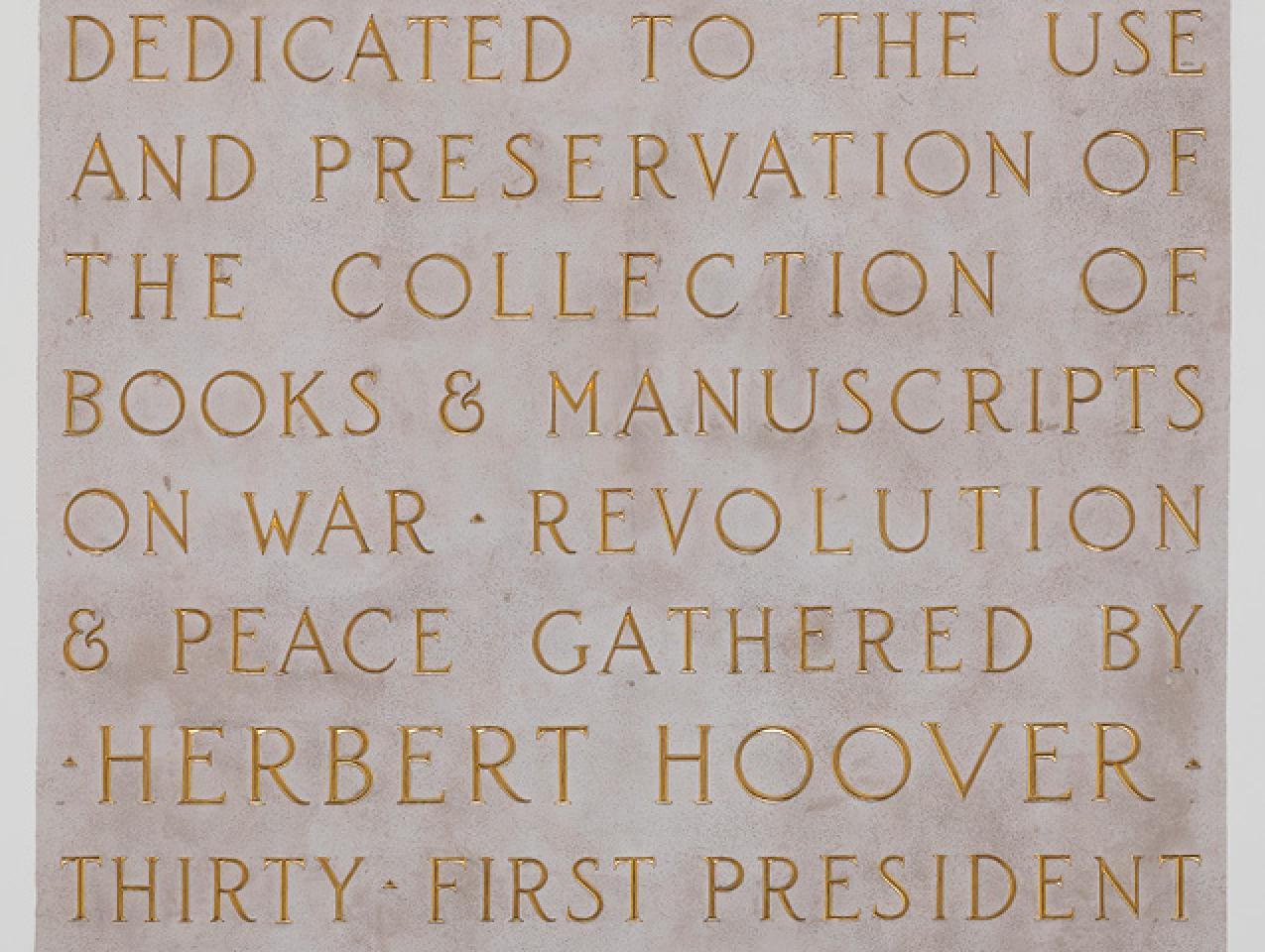
A World-Class Library & Archives
Founded by Herbert Hoover in 1919, the Hoover Institution Library & Archives is home to some of the world's most renowned collections documenting war, revolution, peace, and political, economic, and social change in the twentieth and twenty-first centuries.
Free and open to all, discover how to search the collections, arrange a research visit, or explore exhibitions by clicking below.

Exhibitions
The exhibitions Eastern Europe and Beyond: Photographic Albums Revealed (September 9, 2025–May 10, 2026) and Hoover@100: Ideas Defining A Century (ongoing) are open and free to all visitors to Hoover Tower, at the heart of Stanford University campus.
Learn More
Research Services
Planning an onsite visit to the reading room? Conducting your research from afar? Staff are ready to connect you with the most relevant materials through reference consultations, assisting with registration and material requests, digitization, and more.
Learn MoreCollections
Acquiring, preserving, and making accessible collections of enduring value, including more than one million library volumes and over six thousand archival collections.
Digital Collections
Our aim is to make full archival collections accessible to researchers around the world through the digitization of textual, graphical, sound, and moving-image materials.
Engagement
Building connections to our collections by sparking curiosity in audiences interested in the meaning and role of history through exhibitions, classes, tours, and special programing.
Poll
