- search:
-
hoover.org
-
archives
-
library

Expertise: Global political and economic policy
Recent Commentary
Links
A Health Care Plan for California
Awards and Honors
American Academy of Arts and Sciences
American Philosophical Society
Eisenhower Medal for Leadership and Service (2001)
George Washington Honor Medal from Freedoms Foundation (1986)
Koret Prize (1996)
Presidential Medal of Freedom (1989)
Truman Medal for Economic Policy (2007)
Related Publications
Communicating with the World of Islam
Implications of the Reykjavik Summit on Its Twentieth Anniversary: Conference Report
Reykjavik Revisited: Steps Toward a World Free of Nuclear Weapons (preliminary report)
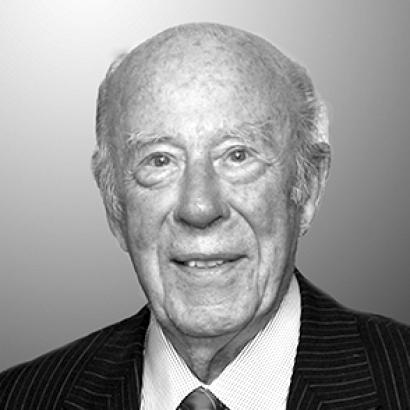
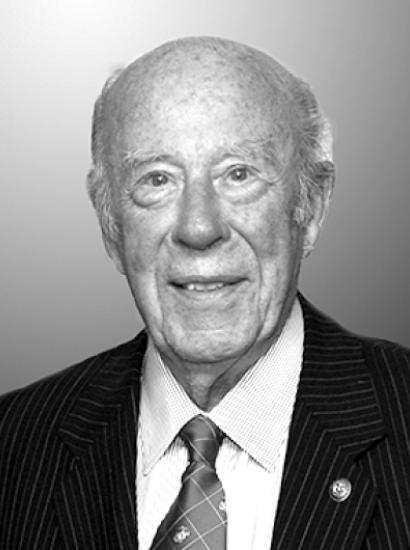
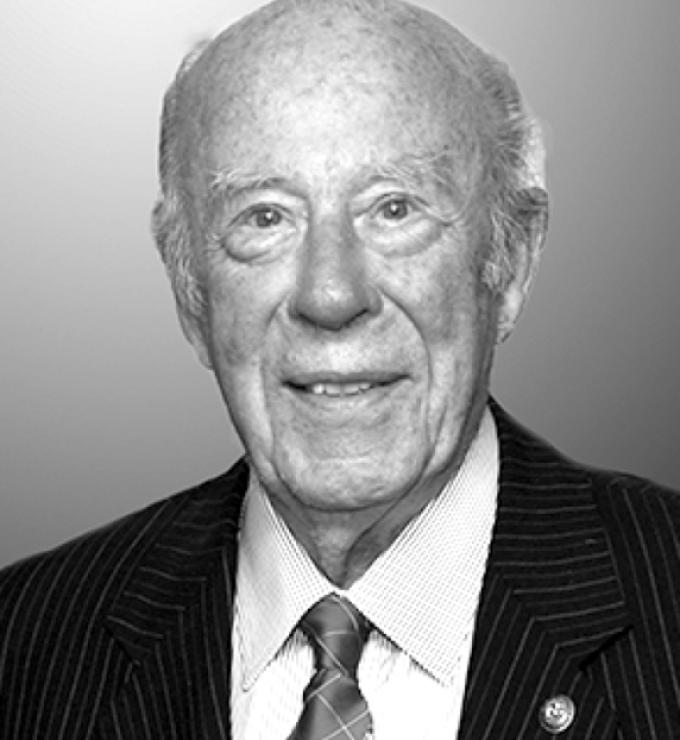
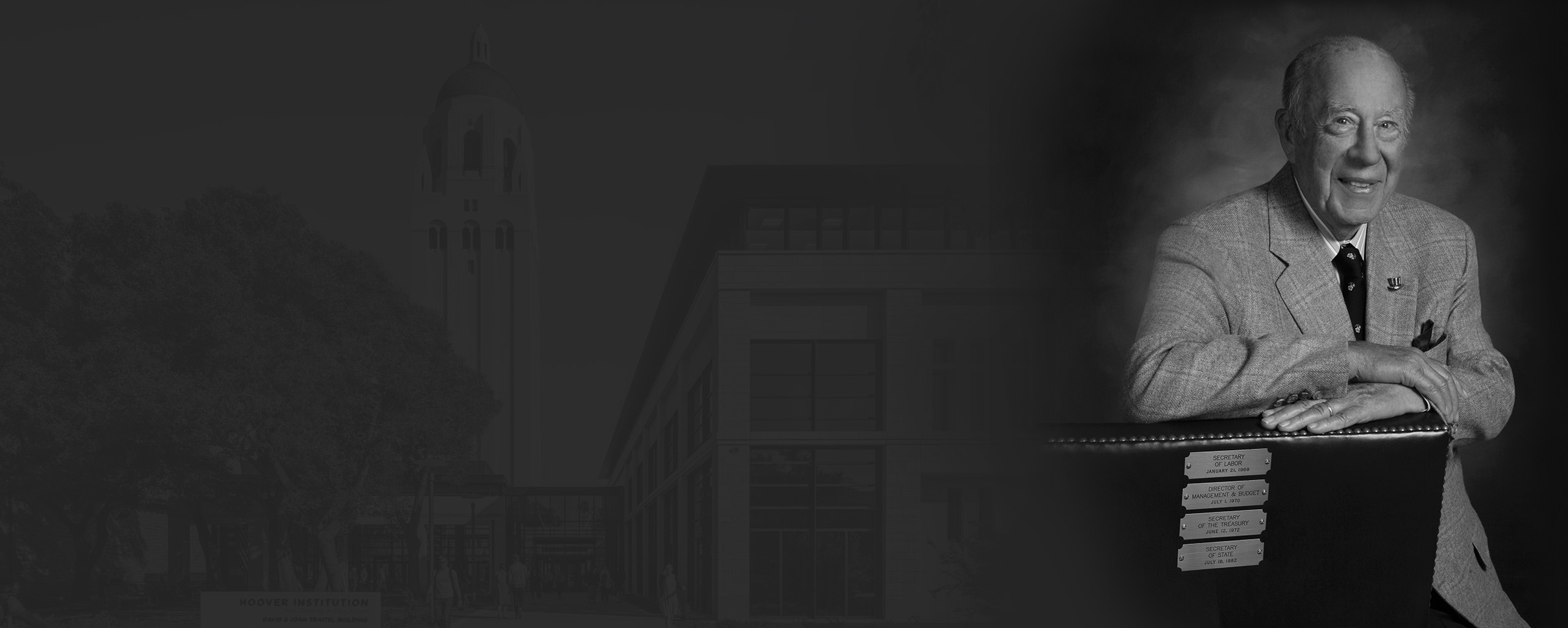
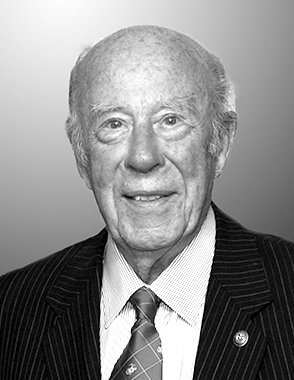
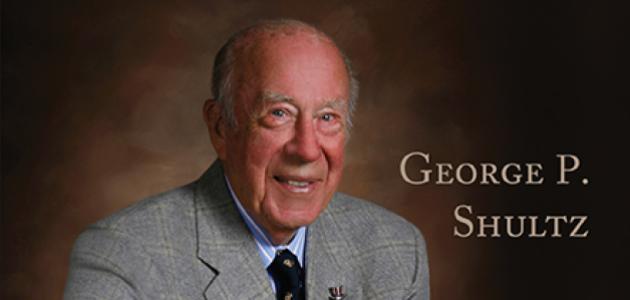
George P. Shultz is the Thomas W. and Susan B. Ford Distinguished Fellow at the Hoover Institution. He was sworn in on July 16, 1982, as the sixtieth US secretary of state and served until January 20, 1989. In January 1989, he rejoined Stanford University as the Jack Steele Parker Professor of International Economics at the Graduate School of Business and as a distinguished fellow at the Hoover Institution.
He is a member of the Board of Directors of Acuitus, Inc., Fremont Group, and Theranos, Inc. He is advisory council chair of the Precourt Institute for Energy Efficiency at Stanford University, chair of the MIT Energy Initiative External Advisory Board, and chair of the Energy Task Force at Hoover Institution.
He was awarded the Medal of Freedom, the nation's highest civilian honor, on January 19, 1989. He also received the Seoul Peace Prize (1992), the Eisenhower Medal for Leadership and Service (2001), and the Reagan Distinguished American Award (2002). He is the recipient of the Elliot Richardson Prize for Excellence and Integrity in Public Service, the James H. Doolittle Award, and the John Witherspoon Medal for Distinguished Statesmanship. The George Shultz National Foreign Service Training Center in Arlington, Virginia, was dedicated on May 29, 2002. Shultz was named a distinguished fellow of the American Economic Association in 2005. He received the American Spirit Award from the National World War II Museum in 2006 and the Truman Medal for Economic Policy in 2007. He received the Rumford Prize from the American Academy of Arts & Sciences in 2008 and the Commandant's Leadership Award from the Marine Corps–Law Enforcement Foundation in 2009.
His most recent publication is Deterrence: Its Past and Future—Papers Presented at Hoover Institution, November 2010 (Hoover Institution Press 2011), coedited with Sidney Drell and James Goodby. His other publications include Ideas & Action, Featuring 10 Commandments for Negotiations (2010); Ending Government Bailouts as We Know Them (Hoover Institution Press 2010) (coedited with Kenneth E. Scott and John Taylor); Putting Our House in Order: A Guide to Social Security and Health Care Reform (W.W. Norton, 2008), coauthored with John Shoven, Hoover senior fellow and director of the Stanford Institute for Economic Policy Research; Implications of the Reykjavik Summit on Its Twentieth Anniversary: Conference Report (Hoover Institution Press, 2007), coauthored with Hoover senior fellow Sidney Drell; Economic Policy beyond the Headlines (2nd edition), cowritten with Kenneth Dam (University of Chicago Press, 1998); and his best-selling memoir, Turmoil and Triumph: My Years as Secretary of State (Charles Scribner's Sons, 1993). His monograph Economics in Action: Ideas, Institutions, Policies was published in 1995 as a part of the Hoover Essays in Public Policy series.
He also authored Workers and Wages in the Urban Labor Market, with Albert Rees (1970); Guidelines, Informal Controls, and the Market Place, with Robert Aliber (1966); Strategies for the Displaced Worker: Confronting Economic Change, with Arnold Weber (1966); Management Organization and the Computer, with Thomas Whisler (Eds.) (1960); and Labor Problems: Cases and Readings, with John Coleman (1959); The Dynamics of a Labor Market, with Charles Myers (1951); and Pressures on Wage Decisions (1951).
From 1981 until his appointment as US secretary of state, Shultz was chairman of President Ronald Reagan's Economic Policy Advisory Board.
In 1974, he left government service to become president and director of Bechtel Group, where he remained until 1982. He rejoined the company in 1989 as a director and senior counselor, continuing in that capacity until 2006. While at Bechtel, he maintained his close ties with the academic world by joining the faculty of Stanford University on a part-time basis.
He became secretary of the Treasury in May 1972, serving until May 1974. During that period he also served as chairman of the Council on Economic Policy. As chairman of the East-West Trade Policy Committee, Shultz traveled to Moscow in 1973 and negotiated a series of trade protocols with the Soviet Union. He also represented the United States at the Tokyo meeting of the General Agreement on Tariffs and Trade.
Shultz served in the administration of President Richard Nixon as secretary of labor for eighteen months, from 1969 to June 1970, at which time he was appointed director of the Office of Management and Budget.
From 1968 to 1969, he was a fellow at the Center for Advanced Study in the Behavioral Sciences at Stanford.
In 1957, Shultz was appointed professor of industrial relations at the University of Chicago's Graduate School of Business. He was named dean of the Graduate School of Business in 1962.
He taught in the Department of Economics at the Massachusetts Institute of Technology from 1948 to 1957, taking a year's leave of absence in 1955 to serve as senior staff economist on the president's Council of Economic Advisers during the administration of President Dwight Eisenhower.
Shultz graduated from Princeton University in 1942, receiving a BA degree in economics. That year he joined the US Marine Corps and served through 1945. In 1949, Shultz earned a PhD degree in industrial economics from the Massachusetts Institute of Technology.
Shultz holds honorary degrees from the universities of Columbia, Notre Dame, Loyola, Pennsylvania, Rochester, Princeton, Carnegie Mellon, City University of New York, Yeshiva, Northwestern, Technion, Tel Aviv, Weizmann Institute of Science, Baruch College of New York, Hebrew University of Jerusalem, Tbilisi State University in the Republic of Georgia, Keio University in Tokyo, Williams College, and Peking University.