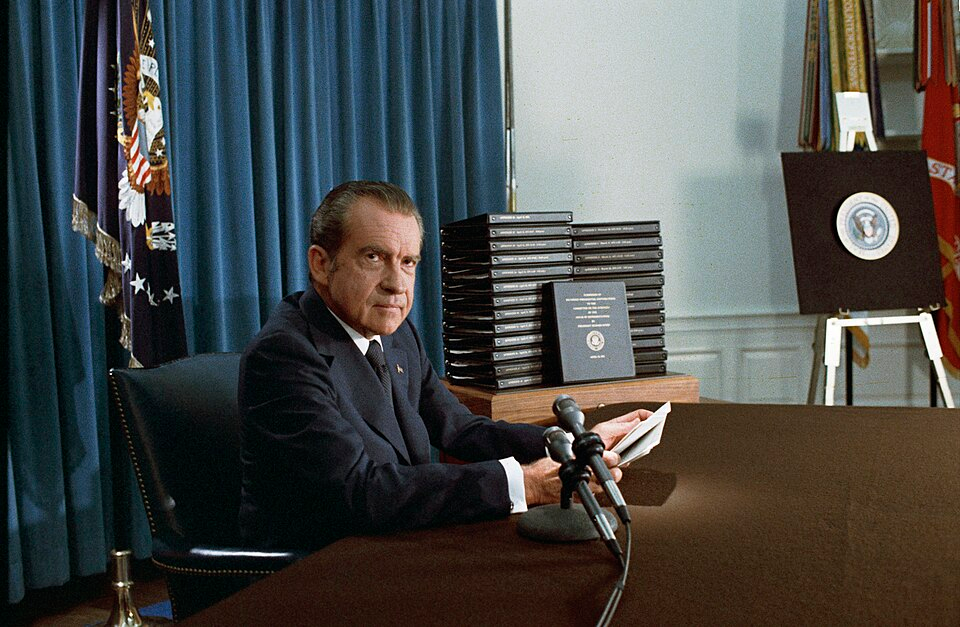
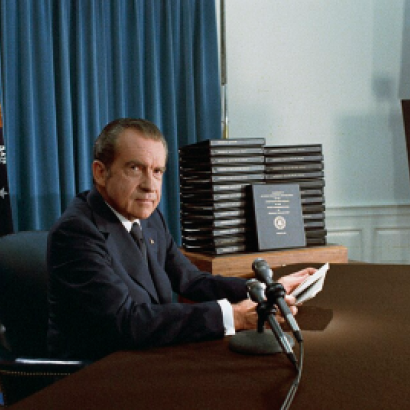
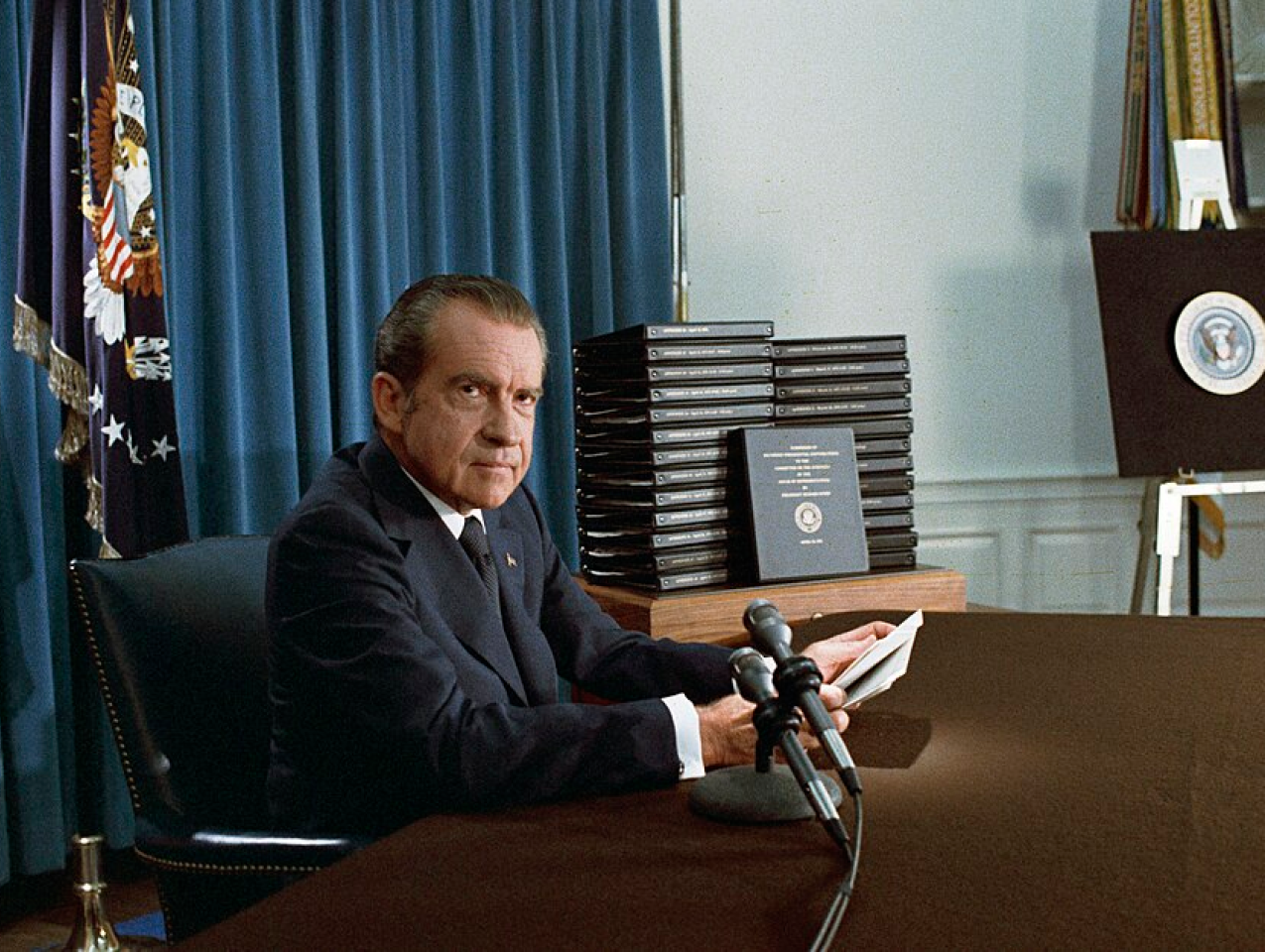
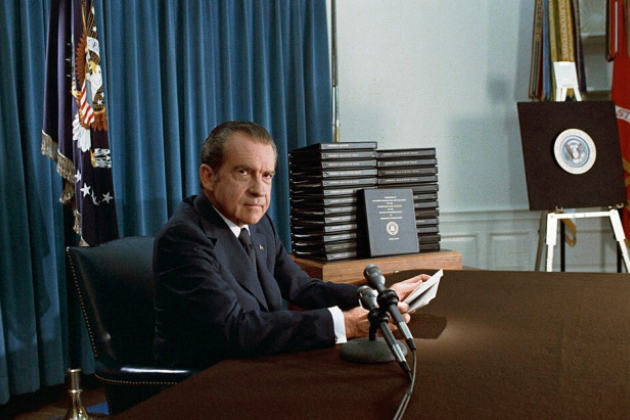
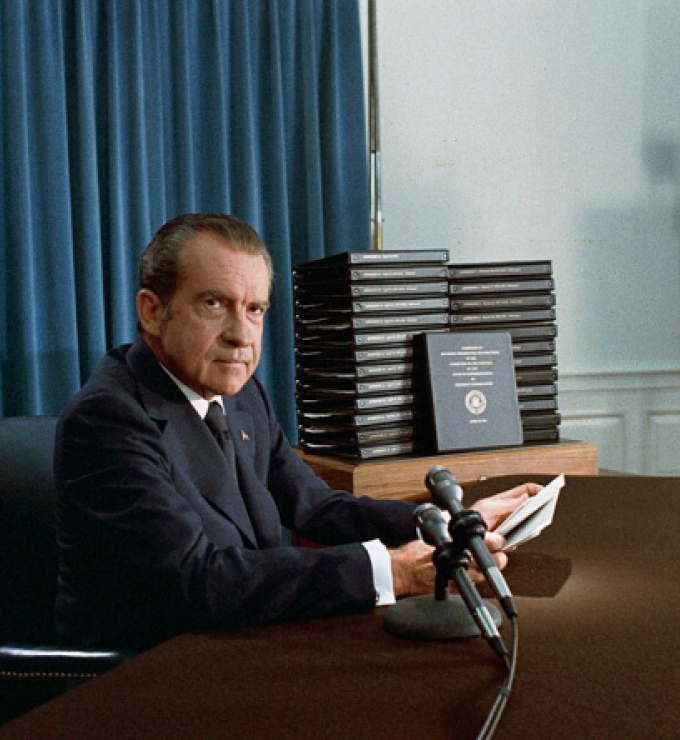
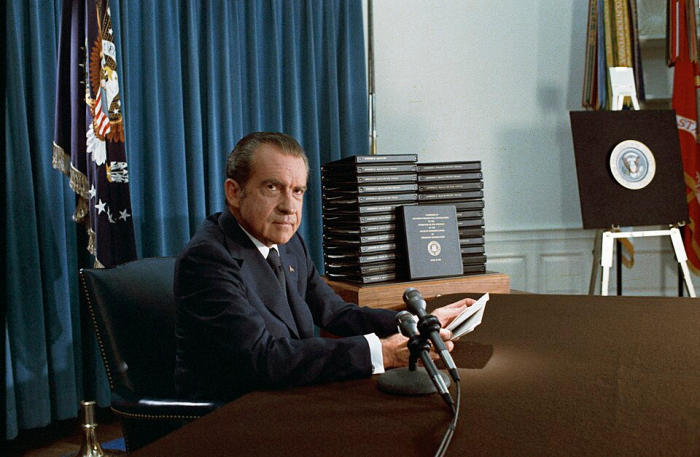
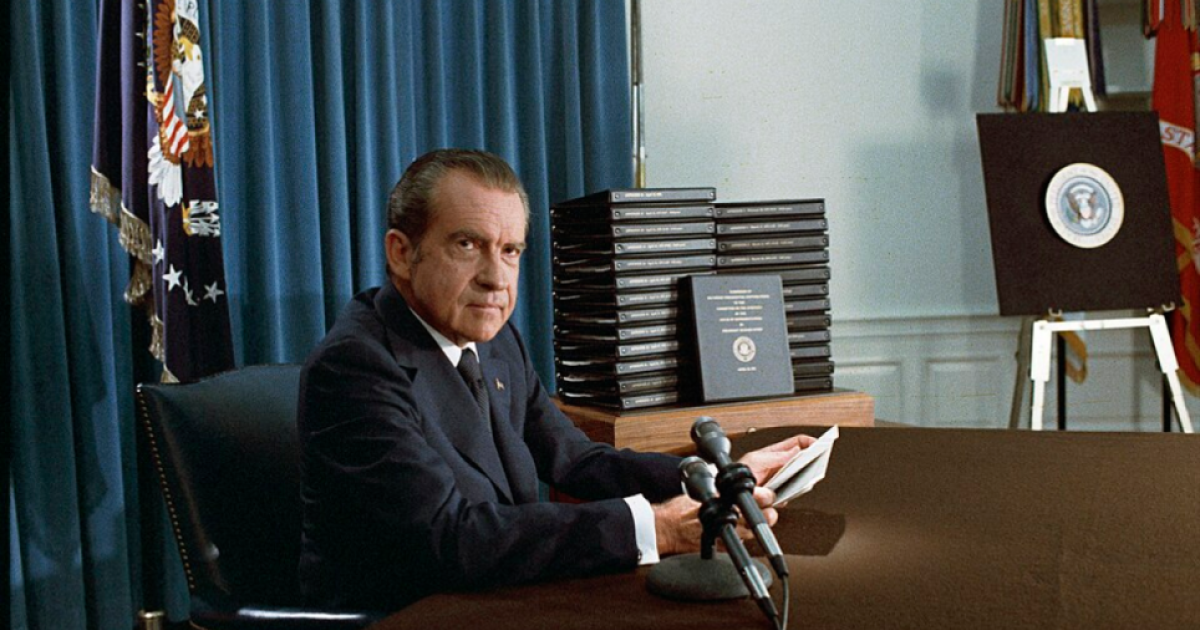
Hoover Institution (Stanford, CA)— A major new research initiative of the Hoover Institution’s Applied History Working Group Griffin Fellowship Program will produce a comprehensive, detailed transcription and annotation of the storied Nixon White House tapes.
Griffin Fellow Luke A. Nichter will lead the project, bringing new scholarly attention to more than three thousand hours of audio maintained by the National Archives and Records Administration (NARA).
Recorded secretly between February 1971 and July 1973, the tapes captured conversations across numerous presidential settings. These included the Oval Office, the Cabinet Room, Camp David, the Executive Office Building, and the Lincoln Sitting Room.
The recordings remain one of the richest and least systematically studied records of presidential decision-making in American history. Scholars and journalists have transcribed portions for over five decades, but no one has ever attempted to assemble a complete, standardized, and rigorously verified transcription of the full collection.
“This collection captures Nixon and his advisers thinking in real time, weighing options, managing crises, and making the calculations that produced the historical record we think we already know,” Nichter said. “Our goal is to give historians, and eventually the public, documentation they can trust down to the sentence, so that the tapes can finally be studied the way they deserve.”
Nichter also serves as the James H. Cavanaugh Endowed Chair in Presidential Studies at Chapman University.
Nichter is a leading scholar of the Nixon presidency. To create a faithful transcription, he developed a methodology that combines AI-assisted audio processing with careful hand verification against the original recordings.
This approach draws on his twenty years of experience with manual transcription. Early results from this new initiative have achieved a sustained accuracy rate of 98 percent on clean audio. Every transcript is checked against NARA’s official finding aids and cross-referenced for speaker attribution and historical context.
The initiative’s initial focus will be the Nixon tapes, while anticipated releases of recordings made by Presidents John F. Kennedy and Lyndon B. Johnson will offer additional opportunities for scholarly exploration. That trend will continue as NARA conducts additional declassification reviews. Recent breakthroughs in AI will allow researchers to derive new meaning from these various recording collections.
“I know from my own work on the role of Henry Kissinger what an extraordinary resource these tapes are,” said Sir Niall Ferguson, Milbank Senior Fellow and chair of the Applied History Working Group. “And yet the vast majority of the material has essentially been inaccessible to historians for half a century. With Luke’s expertise and the new power of artificial intelligence, we have already discovered remarkable things that fundamentally change our understanding of the dramatic events of 1971 to 1973, pivotal years in the history of the American presidency.”
Ferguson added, “This work is in the great tradition of Hoover as an institution dedicated to the study of modern constitutional and geopolitical history on the basis of primary sources. With the support of the fellowship generously endowed by Kenneth Griffin, Luke is going to make a seminal contribution to US historiography.”
The Nixon Tapes initiative has already surfaced material of historical interest. This includes previously undisclosed surveillance on a sitting congressman, real-time management of the China opening, and Nixon’s personal orchestration of a Wall Street messaging campaign.
The new transcripts show a president functioning as global statesman, political strategist, and public communicator, often within the same afternoon. As a whole, they illuminate high-level decision-making in real time unlike any other historical source.
Learn more about Hoover’s Applied History Working Group and the Griffin Fellowship Program.
For more information, please contact Jeffrey Marschner, assistant director of media and government relations, at jmarsch@stanford.edu or 202-760-3200.