


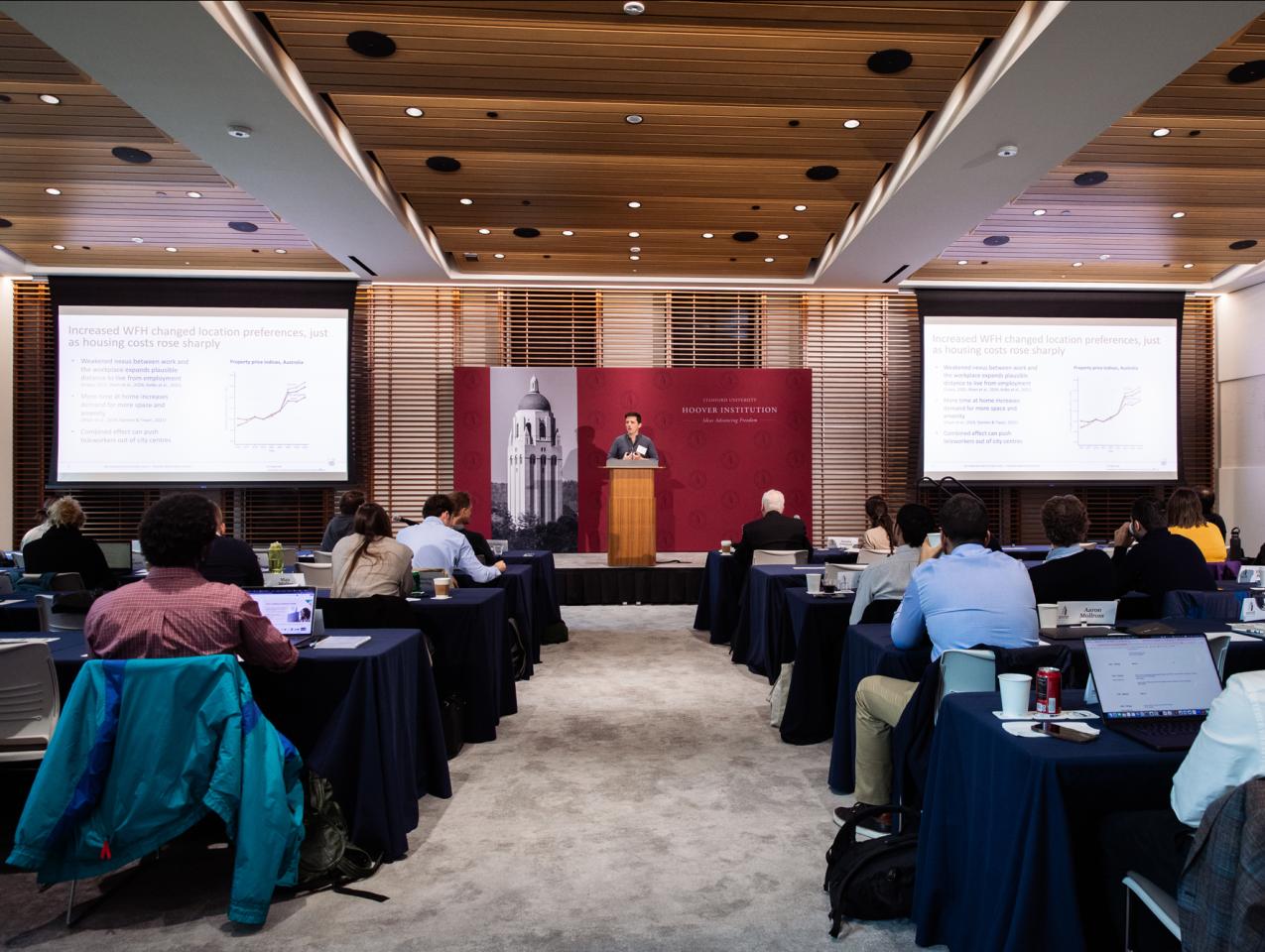
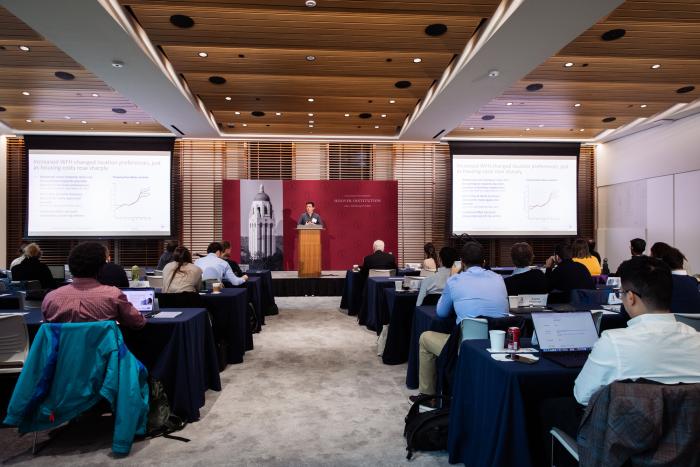
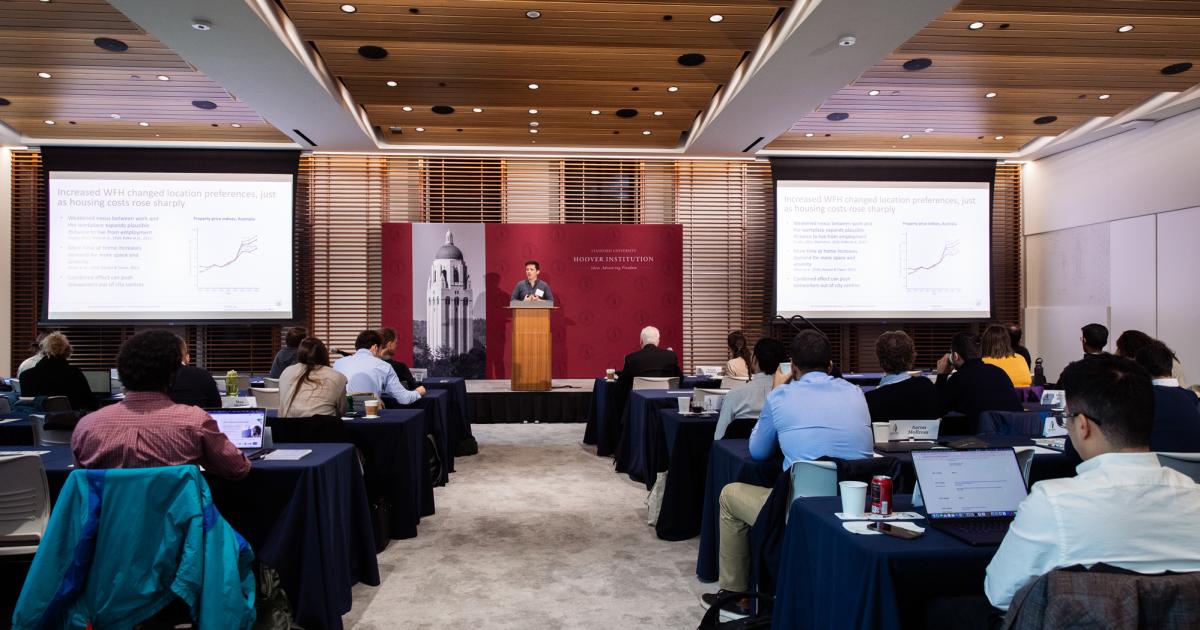
Hoover Institution (Stanford, CA)— Working from home lowers commuting air pollution by enough to prevent as many as 3,500 premature deaths in the US annually, Hoover’s annual Remote Work Conference heard in October.
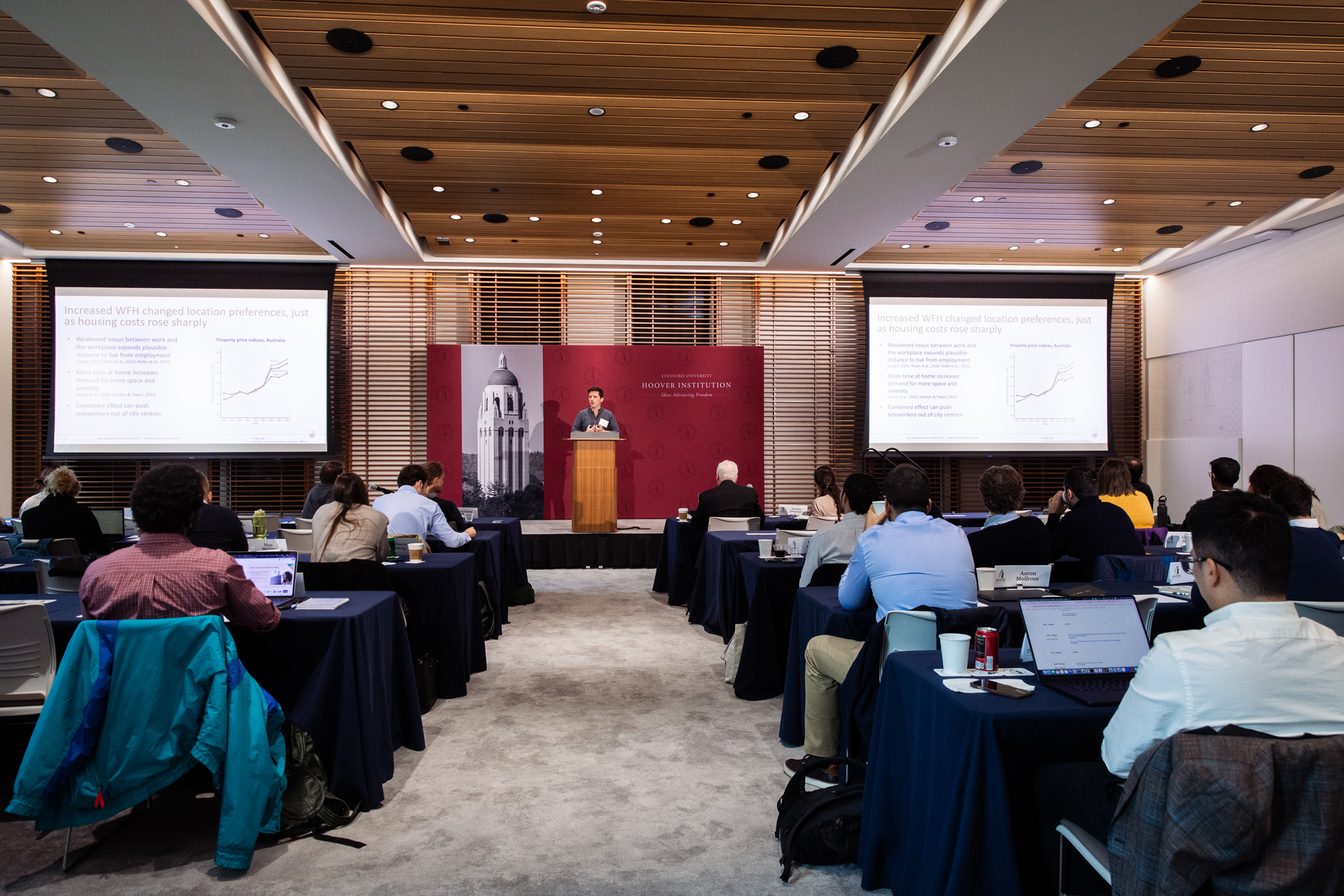
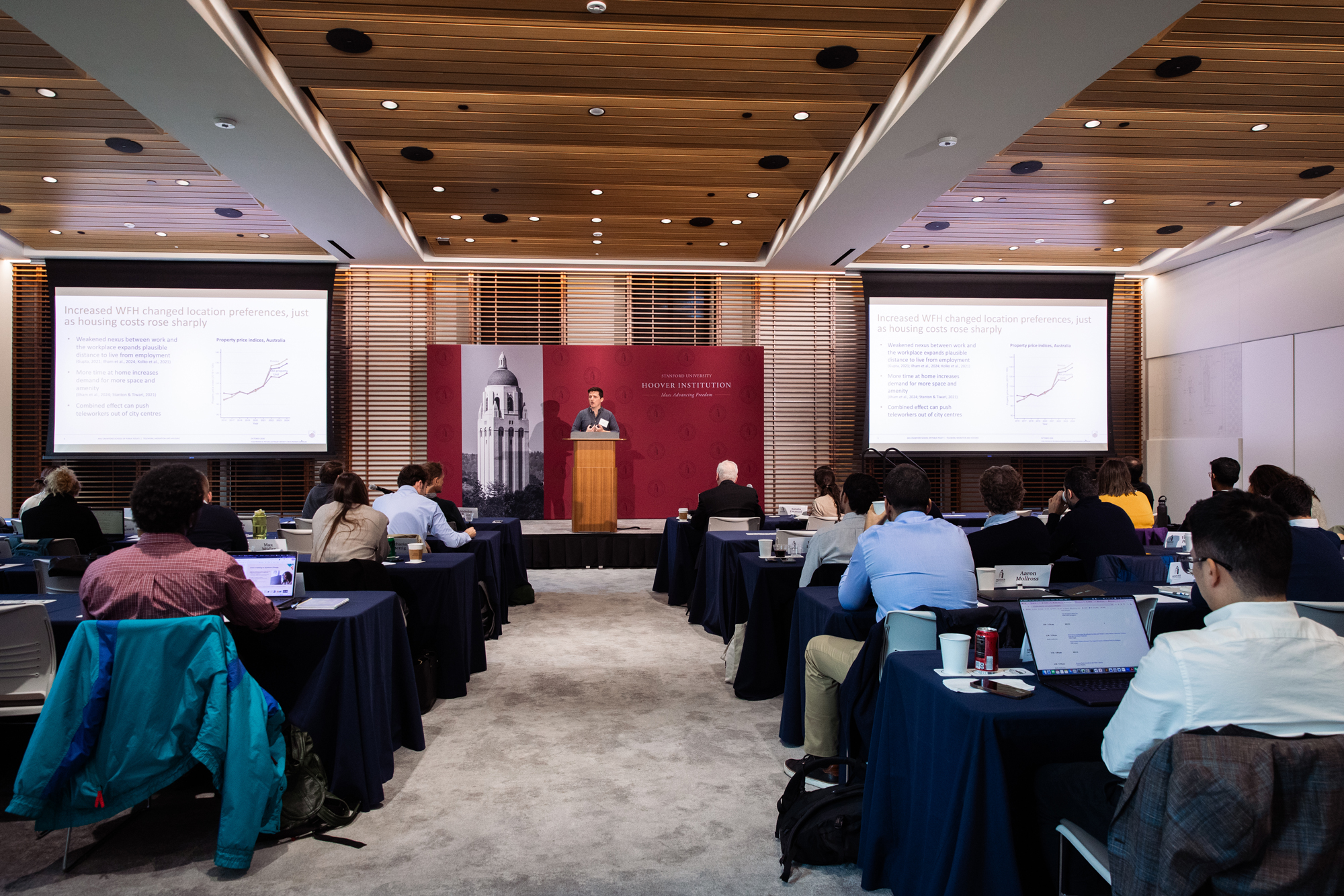
With remote work here to stay as an option for tens of millions of workers around the world, presenters at the annual Remote Work Conference, held October 28–30, showed how it has lowered car sales volumes in the US and reduced concentrations of hazardous nitrogen dioxide in major cities, but also failed to improve the job prospects of some of the most destitute aspiring workers in the Global South.
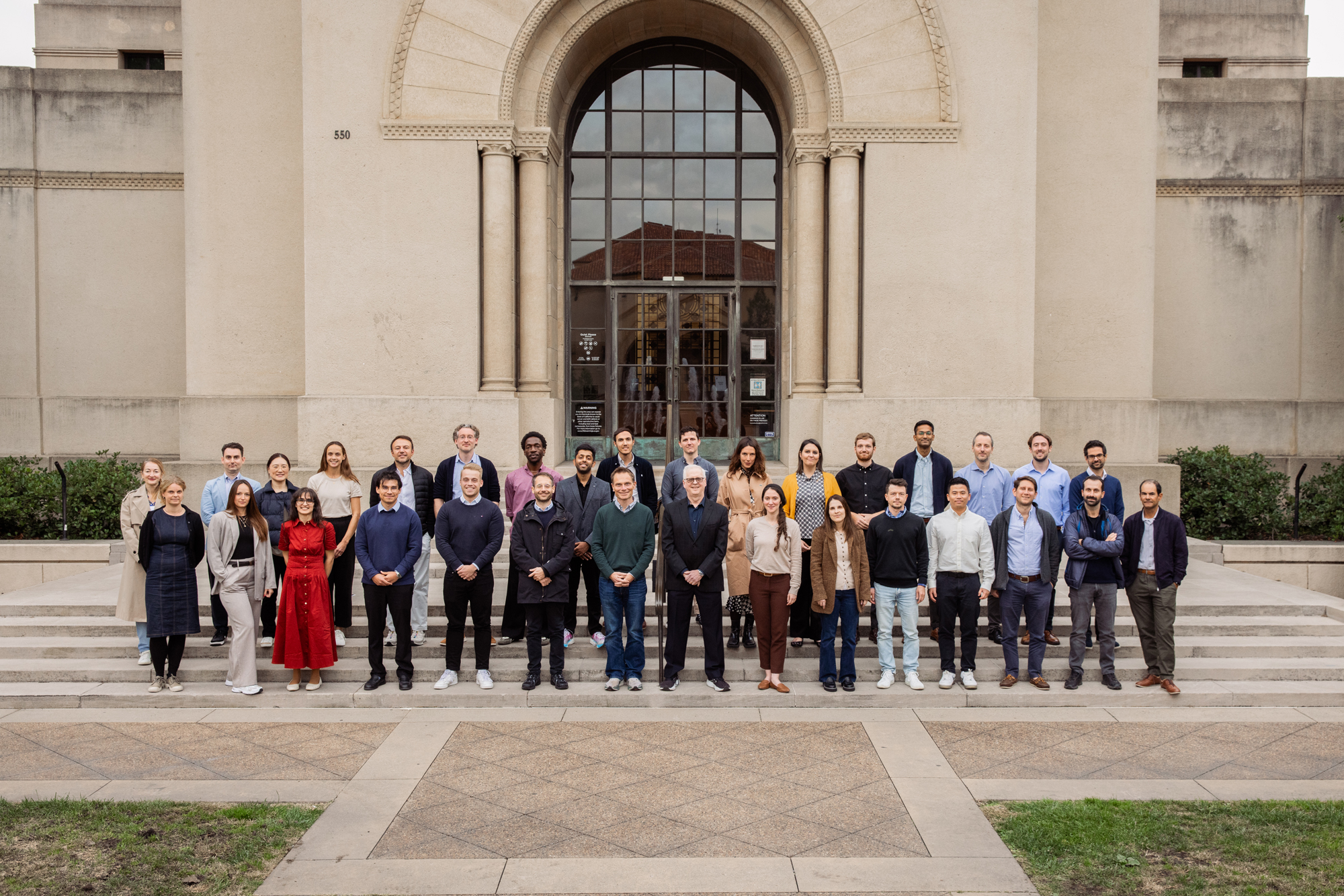
The gathering was co-organized by the Hoover Institution and the Stanford Institute for Economic Policy Research (SIEPR).
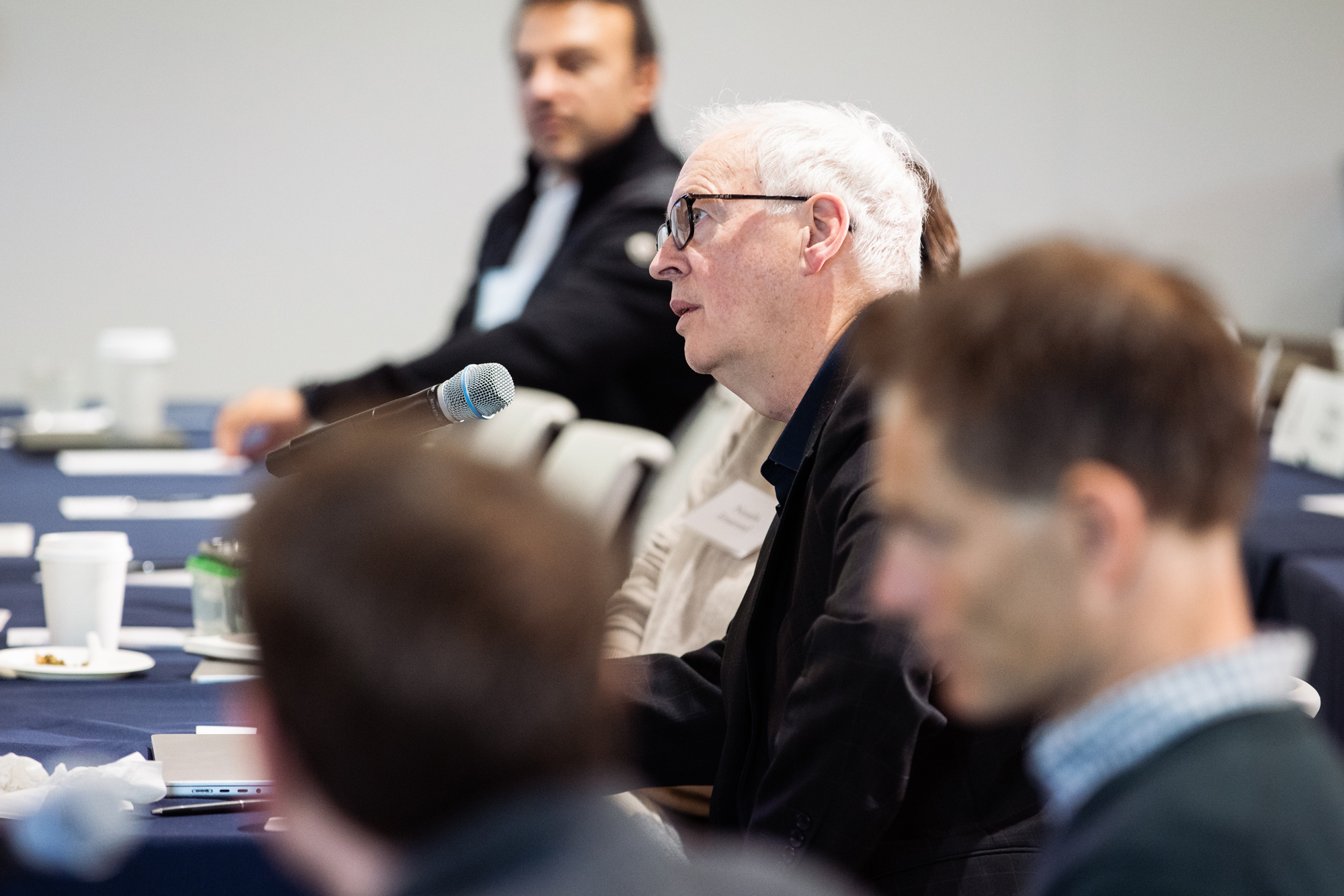
Scholars brought together by Hoover and Stanford at the conference found a host of novel ways to assess the impacts of working from home, both positive and negative.
The Survey of Working Arrangements and Attitudes, put together in part by conference convener and Hoover Senior Fellow Steven J. Davis, finds that, as of October, 27% of US workers work from home at least some of the time and more than 12% are fully remote.
SIEPR senior fellow Nicholas Bloom presented his team’s work looking at the air quality in major US cities after 2019.
He found that the concentrations of nitrogen dioxide (NO2) in cities with the highest rates of remote work participation fell by an average of 8% in 2025 compared with 2019.
NO2 is a gas emitted by gasoline- and diesel-powered vehicles. It dissipates after some hours in the air, but in the time before that it can contribute to diminished lung function, onset of asthma and greater susceptibility to disease.
Using the Environmental Protection Agency’s latest epidemiological model of air quality impacts, Bloom’s team estimates that this drop in NO2 prevents between 1,500 and 3,500 premature deaths per year in the US.
His team also demonstrated that this drop in NO2 could not be explained by the adoption of electric vehicles in each area.
In a related study, Maria D. Tito of the Federal Reserve Board of Governors and her team looked at a drop in light vehicle sales that coincided with the rise of remote work.
Looking at private car sales, corporate vehicle fleets, and government motor pools in 97% of US counties from 2015 to 2025, they found that between 150,000 and 250,000 fewer cars are being sold each year, even as the US population grows, because of falling demand for driving—both for commuting and for travel required as part of normal working duties—brought on by remote work.
Among vehicles in government and corporate fleets, they found that those vehicles were driven 16% fewer miles in years following the pandemic, and that sales and scrappage of older cars were down 13%.
Vincenzo Pezone of Luiss University presented “Teleworking and Workers’ Careers.” Using Dutch administrative data, Pezone and his coauthors compared workers in jobs that can be done remotely with similar workers in jobs that cannot.
Four years after the pandemic began, earnings had risen about 7% more for workers in jobs that can be done remotely than for those in jobs that cannot, mostly because they worked more hours. These workers also changed employers more often, particularly those mismatched with their firms. Overqualified workers moved to higher-paying firms, while underqualified workers tended to move to lower-paying ones, suggesting that remote work strengthened the sorting of workers across firms.
As in prior editions of the conference, presenters also brought with them findings that cast doubt on the benefits of working from home and found instances where its advent brought about real societal harms.
Dana Scott of Yale University presented “Flexibility for Both Parents: Remote Work and the Evolution of Child Penalties.” Using Swedish administrative data, Scott and a coauthor compared the penalties mothers face in employment, hours, and wages before and after the pandemic across occupations that adopted remote work to varying degrees. They found that remote work did not reduce those penalties.
Remote work saves mothers commuting time but lowers their productivity in the workplace and raises it in home production, so their responses differ and almost completely offset one another. Expanding flexibility may not be enough, the authors conclude, unless households change how they divide work in the home.
Cevat Aksoy of King’s College London found an even more concerning trend: a rise in domestic violence incidents that he and his coauthors attribute to the rise in working from home, especially in households where space is tight.
Using police call and arrest data from Los Angeles between 2013 and 2025, Aksoy and his coauthors examined all calls for domestic violence across neighborhoods.
In areas with the highest “work from home feasibility”—areas where workers are more heavily concentrated in fields that allow for remote work—they found that calls for domestic violence incidents increased 16% in 2022 compared with before the pandemic, driven by a 22% increase in calls for service on weekdays. There was no statistically significant increase in calls for service in those areas on weekends.
They also found similar patterns in nine other cities around the world, including Toronto, Canada; Oakland, California; London, England; and Perth, Australia.
Furthermore, they found that the increase in domestic violence calls was concentrated even more heavily in areas where homes are smaller.
Working from home with limited space, and perhaps small children to look after, makes it harder for victims to avoid contact with their abusers, in comparison with a setting where parents work apart from one another outside of the home, the study’s authors suggested.
Examining negative trends and outcomes created by working from home was just one way presenters evaluated the phenomenon.
Huiyu Li of the Federal Reserve Bank of San Francisco took a different approach, evaluating the impact on wages, productivity, and job satisfaction of workers ordered to return to the office.
Examining workers at large firms, she found that productivity among workers already considered high performers decreased by more than 5% upon a return to the office five days per week.
In addition, she found that return-to-office mandates lowered aggregate productivity across a whole firm’s workforce by about 2%.
Moving outside of established firms in high-income countries, Abdi Ambari of the nonprofit Na’amal presented the findings of a project aimed at helping refugees in East Africa prepare themselves for remote freelance piecework and contract work.
Across 2024 and 2025, Na’amal, with the support of the World Bank Innovation Challenge on Jobs and Migration, provided digital job training to 2,000 refugees in East Africa, with the aim of helping them break into freelance digital work assignments on platforms such as Upwork.
Ambari showed that while the training increased participants’ readiness and eagerness for work, their average earnings did not change after the training.
The participants faced a range of barriers: They were unbanked, and device reliability was a challenge. They did not have predictable electricity or internet access, and applying for a job on a platform sometimes cost money.
He said the study shows that training alone does not unlock employment—the challenge is converting training into a job offer.
Across three days, the research presented at the conference painted remote work as a force with effects well beyond the home office. Papers found that it can accelerate careers and sort workers across firms. Others traced its reach into the physical world: fewer vehicle sales and registrations, and cleaner urban air.
Yet the benefits were uneven. Remote work did not shrink the penalties mothers faced in the labor market, and training did not translate into digital remote jobs for refugees. The Los Angeles domestic violence findings showed that remote work can carry serious costs at home. Taken together, the research suggests that who has access to remote work, and how it is structured, matters as much as whether it exists at all.