



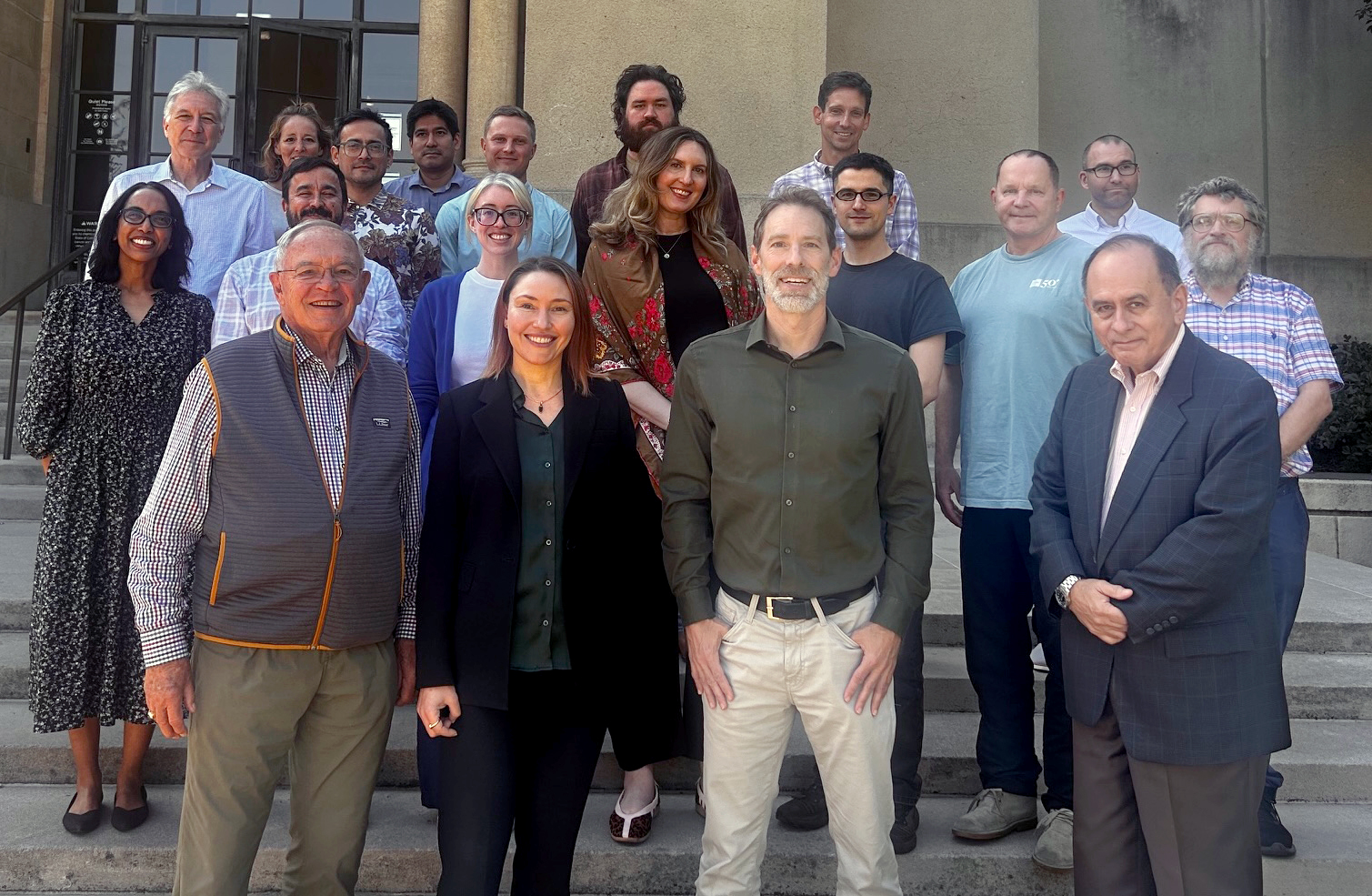
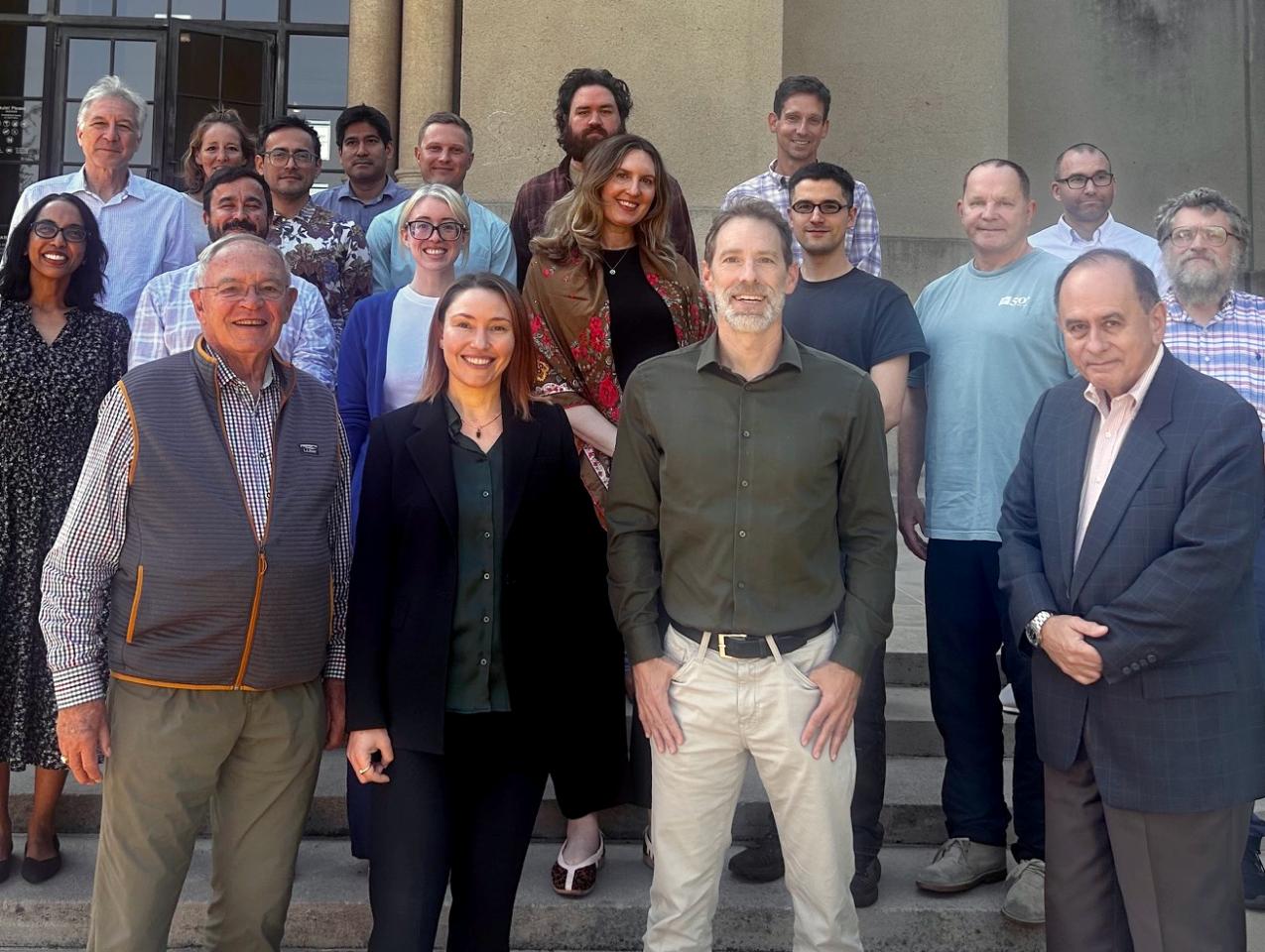
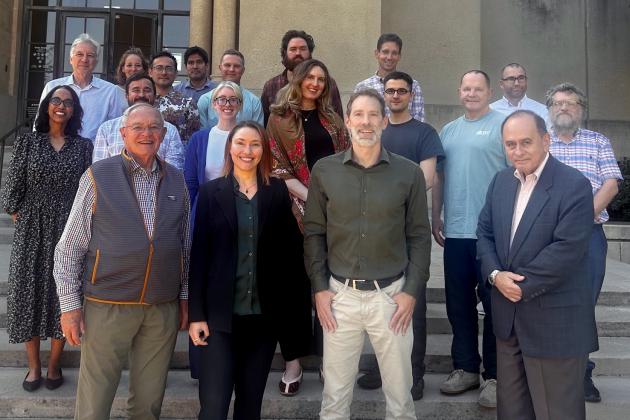

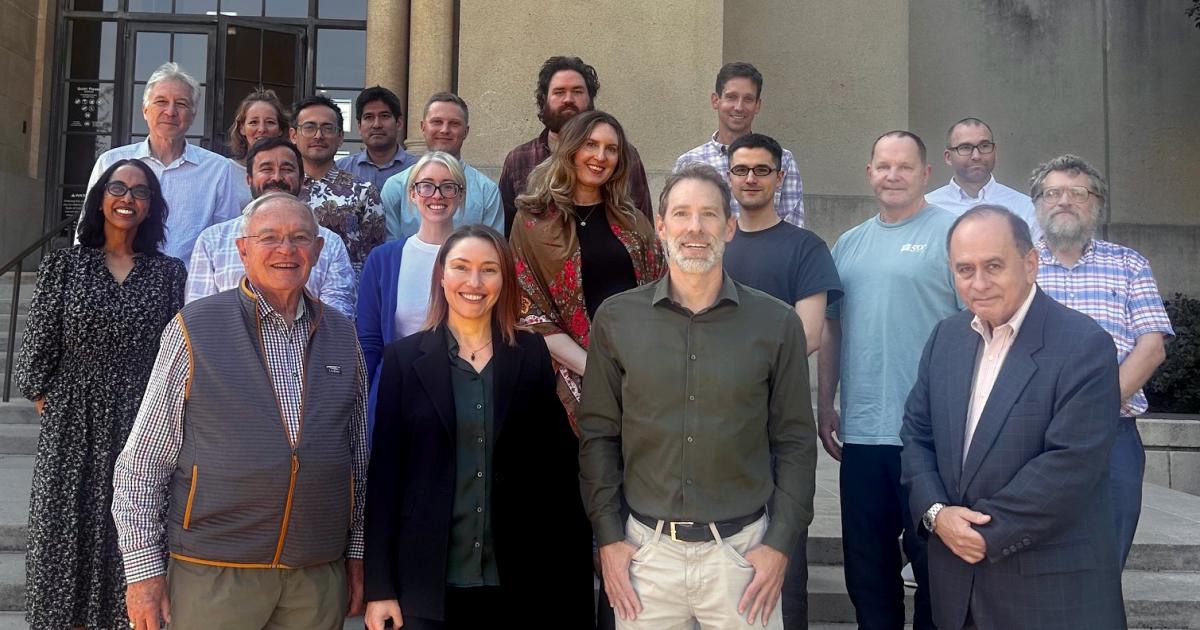
Hoover Institution (Stanford, CA)—Twenty-five scholars discussed recent research on the origins and current impact of policies in Indian Country on October 8–9, 2026, at the Hoover Institution.
The workshop, “Economic Policy for Indian Country: What Works?” was sponsored by Hoover’s Renewing Indigenous Economies project. Directed by Ilene and Morton Harris Senior Fellow Dominic Parker and former Campbell Fellow Donn Feir, it featured fourteen new research papers highlighting barriers to economic progress for Indigenous people. Discussions explored solutions and set an agenda for future research.
As Parker said, the workshop featured “some of the best new evidence on how Indigenous people organized economic activity prior to [European] contact, why assimilation policies were promoted by settler communities, and why high poverty persists across Indian Country today.”
Debunking Historical Myths
Research during the opening session debunked historical myths about Indigenous practices and productivity. In her paper, “Communal in Principle, Private in Practice,” economist Melinda Miller of Virginia Tech evaluated historical claims that nineteenth-century Cherokee farmland was idle and communal. After combing through historical US and Cherokee agricultural censuses, she concluded from the data that Cherokee farmers were more productive than neighboring non-Indian farmers, and that ownership was effectively private with strong individual improvement rights. Miller described how claims of communal idleness were advanced to justify top-down land allotment by the US government despite protests by Cherokee leaders. In 1880 congressional testimonies, for example, they pleaded “the statements made by you that we, or any of the Indians, are communists and hold property in common are entirely erroneous.”
Settler Reliance on Indigenous Knowledge
In his coauthored paper about Songlines, economist Aldo Elizalde of Queen’s University described evidence that European colonizers to Australia relied heavily on Indigenous knowledge (and infrastructure) when choosing where to settle during the nineteenth century. Using anthropological records, rock art, and explorer diaries, Elizalde and coauthors found that Aboriginal Songlines—oral maps carried in story, melody, and memory—strongly predicted European routes and early colonial settlement. Australia’s modern population remains concentrated along these corridors, demonstrating that Indigenous choices laid the spatial foundations for modern economies.
Political Economy of Indian Boarding Schools
Many scholars have studied the effects of forced assimilation through nineteenth- and twentieth-century Indian boarding schools on tribal families, cultures, and health, but few have evaluated their political motivations. Melissa Rogers, a political science professor at Claremont Graduate School, did so in a coauthored study on Indian industrial schools. Her paper examined the motivations behind why settler communities competed to be host locations for off-reservation boarding schools between 1880 and 1908. By analyzing historical newspaper coverage and congressional records, Rogers and coauthors showed how towns aggressively lobbied to host boarding schools, viewing them as lucrative opportunities for federal spending, jobs, tourism, contracts, and cheap student labor. Towns were more likely to secure a school if they offered land or financial contributions or if they were represented by a senator on the Indian Affairs Committee. The findings revealed that federal boarding-school policy was driven by local economic self-interest and political patronage.
Allowing More Water Trade in the American West
Leslie Sanchez’s coauthored paper about water right transferability and economic development on Indian reservations quantified the negative consequences of modern federal policies that prevent tribes in the arid American West from leasing their water to adjacent cities. The research presented by Sanchez—an economist at the University of California, Davis—shows the extent to which tribal water is more valuable if marketed for off-reservation urban uses. Leasing to non-reservation cities, however, requires congressional authorization, which not all tribes have. Sanchez concluded that simply recognizing tribal rights to lease water would create billions of dollars worth of mutual gains from trade to support off-reservation urban growth and on-reservation economic development.
Bureaucracy and Fractionated Ownership
Thomas Stratmann, an economist at George Mason University, presented a paper showing that divided ownership of Indian reservation land reduces the earnings generated from it. In a related paper, economist Kyle Froisland of UC Davis examined whether consolidating these divided interests into tribal government ownership could improve outcomes.
Stratmann and coauthor Olga Shanks, an economist, spoke about “Citizen Monitoring and Bureaucratic Output.” They studied how Bureau of Indian Affairs (BIA) management over fractionated Indian reservation land—some tracts have over one hundred owners—weakens individual owner incentives to press the agency for favorable terms in land-use leases. BIA records on thousands of agricultural leases from 2006 to 2010 reveal that cutting the largest owner’s share from 40 to 20 percent lowers lease income per acre by roughly 14 percent. Conversely, land tracts with a single majority owner yield significantly higher lease revenue. Stratmann and Shanks argued that addressing this issue requires reforms that consolidate land interests or establish formal bodies to represent owners before the BIA.
Froisland’s paper, however, claimed that consolidation of ownership to tribal governments may not improve income for tribal members, at least from agricultural uses. Froisland’s study, “An Analysis of the Land Buy-Back Program for Tribal Nations,” evaluated changes in the productivity of fractionated agricultural lands before and after tract ownership was consolidated under tribal ownership. Froisland finds no clear change in productivity, arguing this could be because the program trades one inefficient form of ownership—fractionated holdings by multiple individuals—for another inefficient form: government, rather than private, ownership.
Economic Effects of Landmark Court Rulings
Two workshop papers assessed the fallout from landmark Supreme Court rulings: McGirt v. Oklahoma (2020) and Cowichan v. Canada (2025). The evidence suggests that McGirt has had significant economic effects whereas Cowichan has not.
Sarah Johnston, an economist at the University of Calgary, presented her paper, coauthored with Dominic Parker, on “(Dis)Investment Under Uncertainty: Evidence from McGirt v. Oklahoma.” The study frames the five-to-four ruling (which implied Indian reservations spanning the eastern half of Oklahoma were never disestablished for purposes of criminal jurisdiction) as a legal shock with uncertain implications for whether state, federal, or tribal governments have jurisdiction over civil and regulatory matters. Focusing on the state’s oil and gas industry and comparing pumping, drilling, and leasing behavior in eastern vs. western Oklahoma before versus after the ruling, the paper found a strong industry response. On one hand, the ruling increased the pace of drilling on leased land by 50 percent and production from existing gas wells by 20 percent. This “racing” behavior is consistent with attempts to lock in current rules before anticipated taxing or regulatory policy changes. On the other hand, the ruling slowed the rate of long-term leasing by 90 percent, suggesting uncertainty significantly delayed new investment. The authors said the findings highlight the importance of clarifying regulatory and taxing rules across Indian Country within and outside of Oklahoma.
The study of the Cowichan decision, entitled “Uncertain Title,” was presented by Rob Gillezeau, an economist at the University of Toronto. That ruling recognized the Cowichan Tribes’ claim to Aboriginal title over 750 acres of land in Richmond, British Columbia, including private lands. While prior cases had applied Aboriginal title to Crown lands, the decision marked the first time a court has explicitly ruled that Aboriginal title can apply to land held in fee simple, prompting a heated public debate about its impacts on property values and economic activity across roughly 20 percent of land in Canada that has never been ceded via treaty. The paper evaluates the impact of the shift in jurisprudence on real estate markets, including sales prices and volumes of properties sold in unceded territories, and finds no meaningful effect for either residential or commercial properties. The findings are inconsistent with claims of dramatic impacts and align with a public belief that the Canadian government will protect individuals against any settlement costs.
A Philosophical Revolution
Hoover’s John and Jean De Nault Senior Fellow Terry Anderson gave an informal lunch talk titled “Future Visions for Renewing Indigenous Economies.” He described the evolution of academic research on tribal economies, why he founded the project at Hoover, and how he hopes policies will change in the future.
Anderson began by describing how his groundbreaking publications of the 1990s—including a Journal of Law and Economics article on the effects of land tenure on productivity and his book Sovereign Nations or Reservations? An Economic History of American Indians—were inspired by his visits to Montana Indian reservations both as a teenager and as a young economist. He recalled how this research, which documents the critical importance of property rights, was motivated by a prosperous member of the Salish-Kootenai Tribe on the Flathead Reservation who explained his economic well-being by simply saying: “I own this place.”
Anderson said he founded the Renewing Indigenous Economies project nearly ten years ago to help tribal leaders like Manny Jules, recently retired as chief commissioner of the First Nations Tax Commission, and Te Maire Tau, founding director of the Ngāi Tahu Research Centre at the University of Canterbury, New Zealand, advance a “philosophical revolution.” The revolution requires removing myriad barriers to self-governance and allowing Indigenous people to be true sovereign designers of their own destinies. Anderson said the future of Renewing Indigenous Economies requires removing constraints—formal or informal—that allow government bureaucrats to treat Native Americans as if they are “incompetent or incapable.”