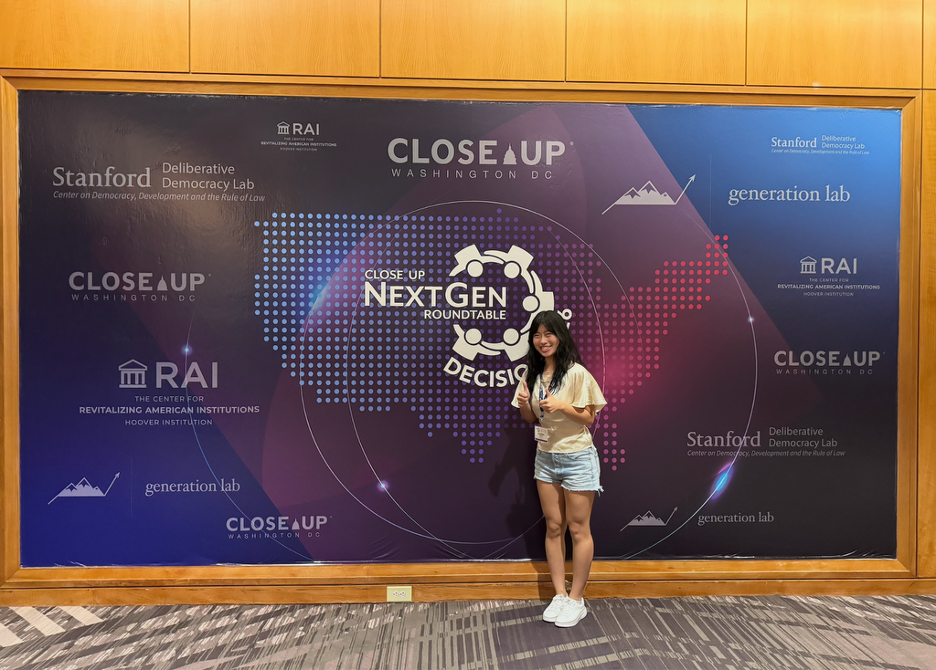
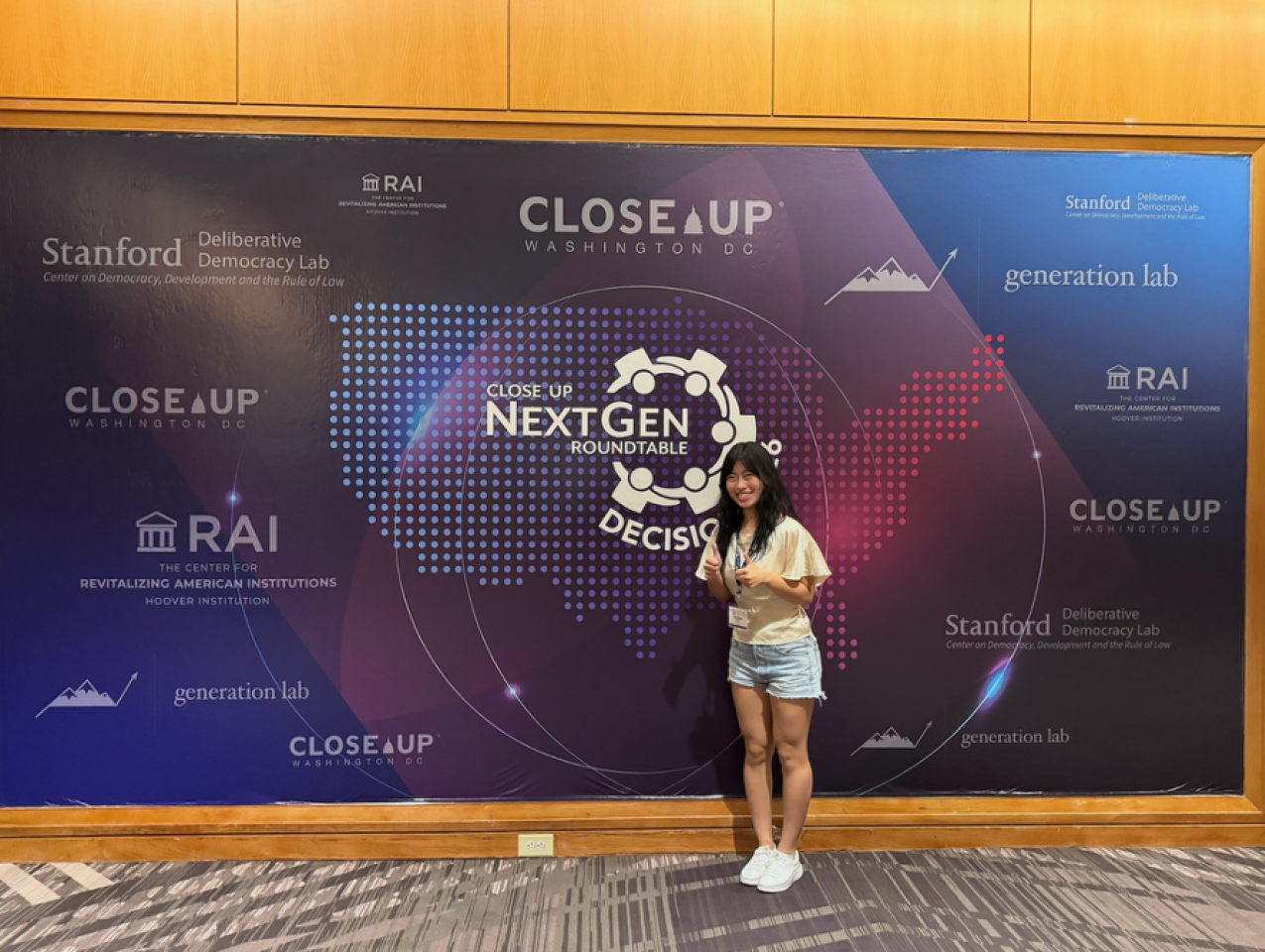
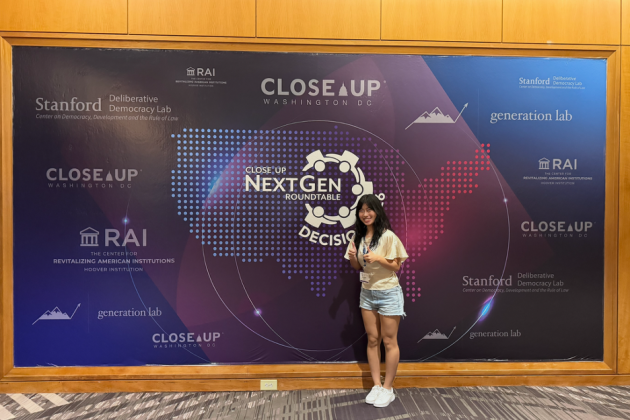
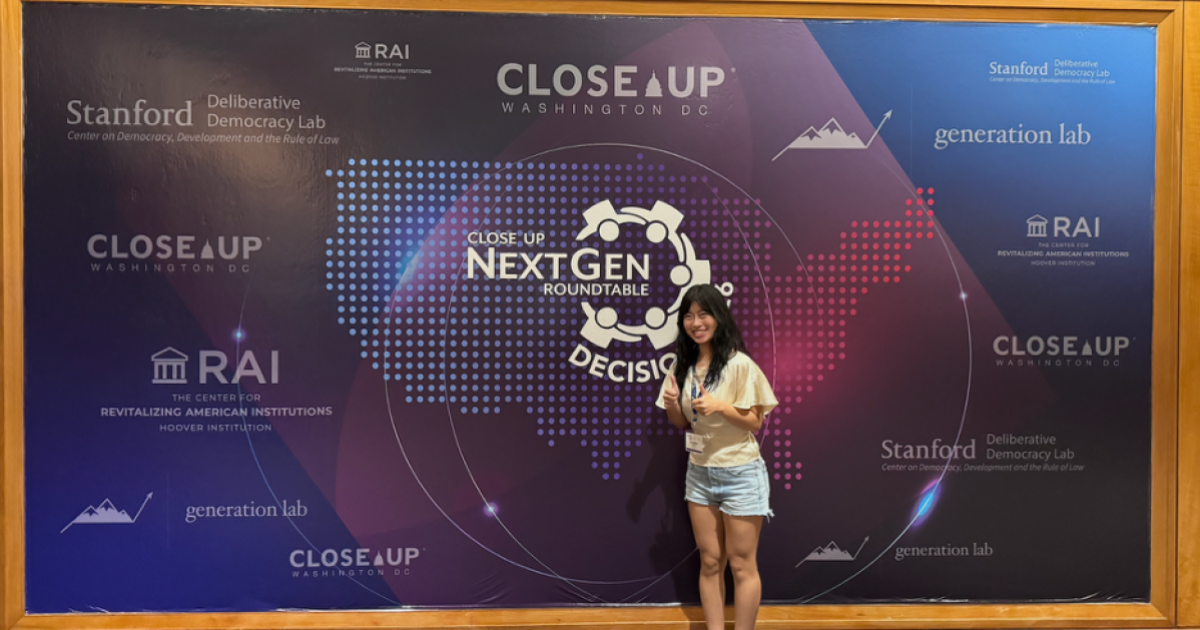
Hoover Institution (Washington, DC)—Can young Americans engage across political differences with curiosity, respect, and a genuine willingness to learn? The inaugural NextGen Roundtable: Decision 2026 offered a compelling answer: yes.
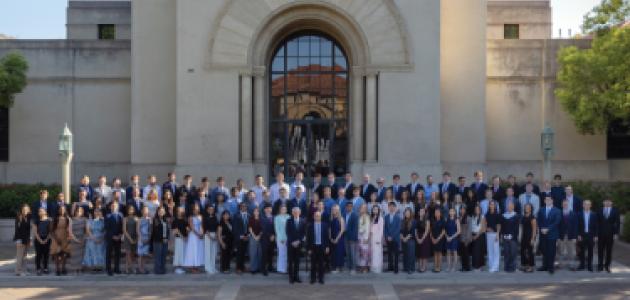
Convened July 8–11 in Washington, DC, the initiative brought together 400 first-time voters selected to reflect the demographic, geographic, and ideological diversity of the nation. Hosted by the Close Up Foundation in partnership with the Stanford Deliberative Democracy Lab, Generation Lab, and the Hoover Institution’s Center for Revitalizing American Institutions, the program challenged participants to deliberate—not debate—some of the nation’s most pressing policy questions ahead of the 2026 midterm elections.
Building on the success of America in One Room: The Youth Vote, the eventreflects a growing body of evidence that structured deliberation can strengthen civic knowledge, reduce polarization, and increase trust across differences. Rather than rewarding the loudest voices or encouraging partisan point scoring, the program had participants spend four days listening carefully, weighing competing arguments, consulting experts, and working through difficult issues in small, moderated groups. Topics included artificial intelligence, immigration, America’s role in the world, democracy, and elections.
Mia Charity, president of the Close Up Foundation, captured the significance of the event: “At a time when so much of our public discourse is centered on division, these young people demonstrated that the future of our democracy can look different. When we provide opportunities for young people to engage and deliberate across differences, they build the habits of citizenship that strengthen our country.”
What made the gathering particularly remarkable was not only the diversity of the participants but also the personal transformations many described afterward.
For Brock Pyle of Missouri, the experience challenged assumptions he had formed about people with different political beliefs. He reflected that meaningful conversations became possible when participants approached one another with humility and curiosity rather than a desire to win an argument. Vienna Dschung of Massachusetts emphasized how the deliberative format encouraged participants to move beyond stereotypes. By slowing down the conversation and examining evidence together, she found herself appreciating viewpoints she had rarely encountered in her own community.
For Ava Kate White of Arkansas, the program reinforced that civic participation extends beyond casting a ballot. Democracy also requires citizens who can engage thoughtfully with those who disagree. Luana Sharif of New York described leaving Washington with greater confidence that Americans can have difficult conversations constructively when given the right structure and expectations.
These students and others posted stories that captured their experiences during the event.
One of the program’s final activities invited participants to reflect not only on what they had learned from one another but also on their own civic identities. Using the Civic Profile, developed by the Center for Revitalizing American Institutions’ Working Group on Civics and American Citizenship, students explored their own civic knowledge, civic behaviors, and civic values. They then compared both their individual results and the cohort’s collective profile to national benchmarks. Rather than classifying participants by political ideology, the Civic Profile encouraged them to examine enduring civic tensions—such as between liberty and equality, individualism and community, and tradition and change—that shape how Americans think about public life.
Students reported that the exercise deepened their self-understanding while reinforcing their appreciation for the diversity of perspectives represented in the room. One participant reflected that the Civic Profile “helped me understand where my values are in the context of the country as a whole.” Another observed that “it measured differences in values in a way that I found displayed the underlying differences between my beliefs and those of my friends whose thoughts are superficially similar to mine.” By helping participants recognize both shared commitments and meaningful differences, the Civic Profile complemented the deliberative conversations that took place throughout the week and underscored an important lesson: Healthy democratic dialogue begins with understanding both ourselves and one another.
These students’ stories illustrate why the Center for Revitalizing American Institutions is proud to support initiatives like NextGen Roundtable. Americans’ trust in institutions depends not only on institutional performance but also on citizens’ confidence that democratic processes can bring people together to solve shared problems. Deliberative forums provide one model for rebuilding that confidence by demonstrating that disagreement can coexist with mutual respect, evidence-based reasoning, and a commitment to the common good.
As these first-time voters prepare to cast their ballots this November, they will carry with them more than new policy insights. They will have experienced a different kind of politics—one rooted in listening, learning, and shared civic responsibility. At a time when many question whether constructive democratic dialogue is still possible, NextGen Roundtable: Decision 2026 offers a hopeful reminder that the next generation is ready to lead by example.