


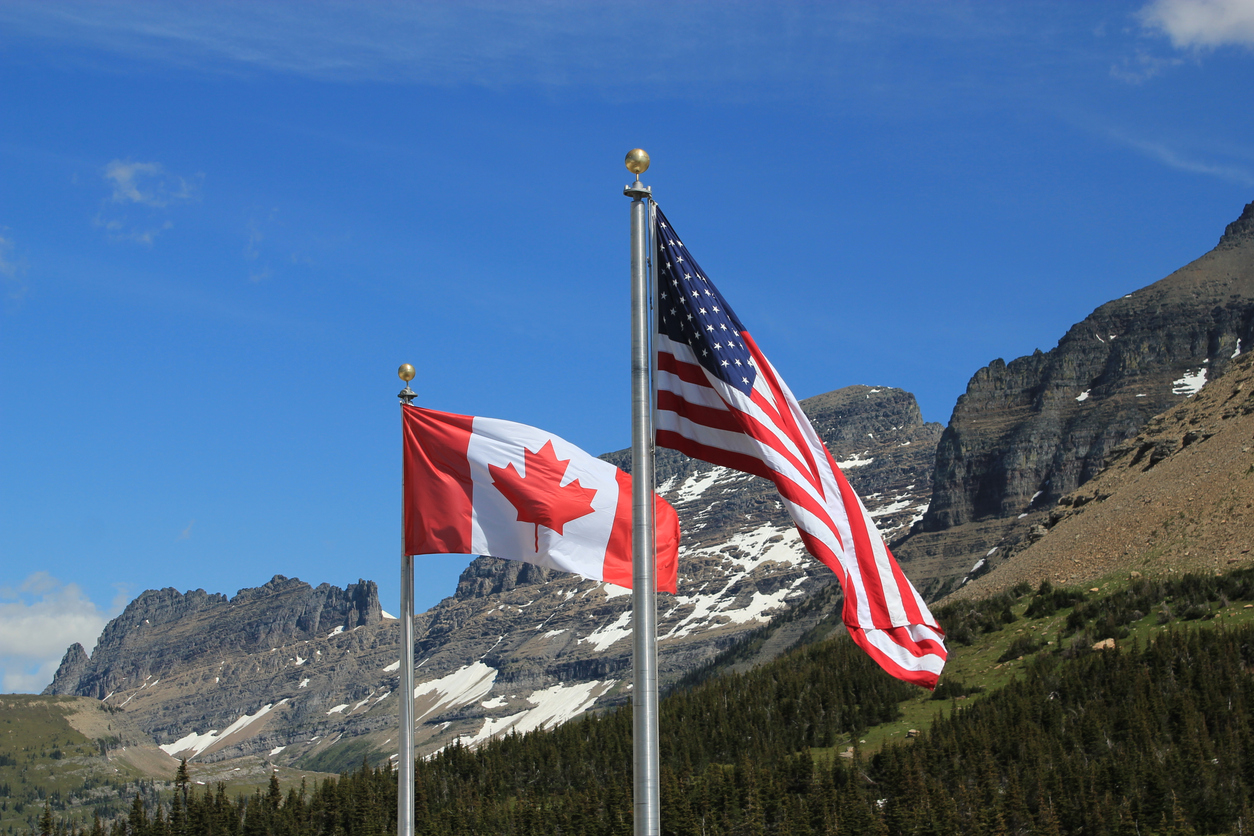
Hoover Senior Fellow Philip Zelikow and former trade negotiator and World Bank President Robert Zoellick have filed amicus brief in a new lawsuit against the Trump administration, contending a significant portion of the US tariffs on Canada are not legally justified.
Gellert Global Group, a New Jersey-based food importer, sued the Trump administration in October, contending the broad tariffs imposed on Canada starting in August rely on a nearly century-old law that does not properly apply to Canada at all.
With a detailed review of the relevant history as well as the law, Zelikow and Zoellick contend that the administration, in citing Section 338 of the Smoot-Hawley Tariff Act of 1930 to justify its tariffs, misinterpreted that law—a law that has never before been used to levy tariffs against anyone.
“For nearly a century, Congress has used Section 338 of the Smoot-Hawley act and its predecessor as a sanction against countries outside the system of reciprocal, unconditional most-favored-nation treatment, not against partners that extend that treatment to the United States,” Zelikow says. “Canada is such a partner.”
By using Section 338 against Canada, Zelikow and Zoellick argue the administration turns the law on its head, using a law that was always meant to encourage a trade deal to punish a country that made one. But the issue in this case goes far beyond Canada.
In the brief, they argue that the administration’s interpretation of Section 338 would overthrow the entire congressional design that has regulated commerce with foreign nations for more than a hundred years.
“It would create a world in which all deals are ad hoc and discriminatory, practically by definition,” Zelikow says. “This anarchy would be regulated only by presidential whim. That is not the congressional or constitutional design in this country.”
This action follows an earlier effort by Zelikow and Senior Fellow Michael McConnell in 2025 supporting the successful litigation that led to the 2026 Supreme Court decision that overturned the tariffs imposed under the International Emergency Economic Powers Act (IEEPA) as a misuse of presidential emergency powers. Zelikow then challenged the legality of successor tariffs that used Section 122 of the Trade Act of 1974. Those tariffs were subsequently ruled unlawful by the US Court of International Trade, a ruling which the administration has appealed.
In fact, Zelikow and Zoellick point out in their brief that in this term of office President Trump has had no congressional authority to negotiate any new trade deals at all. The last such authority was granted by Congress in 2015. That delegation, which also expressly prohibited raising tariffs, expired back in 2021.
The Gellert Global Group case is before the US Court of International Trade.
Click here to download the brief in the Canada case.