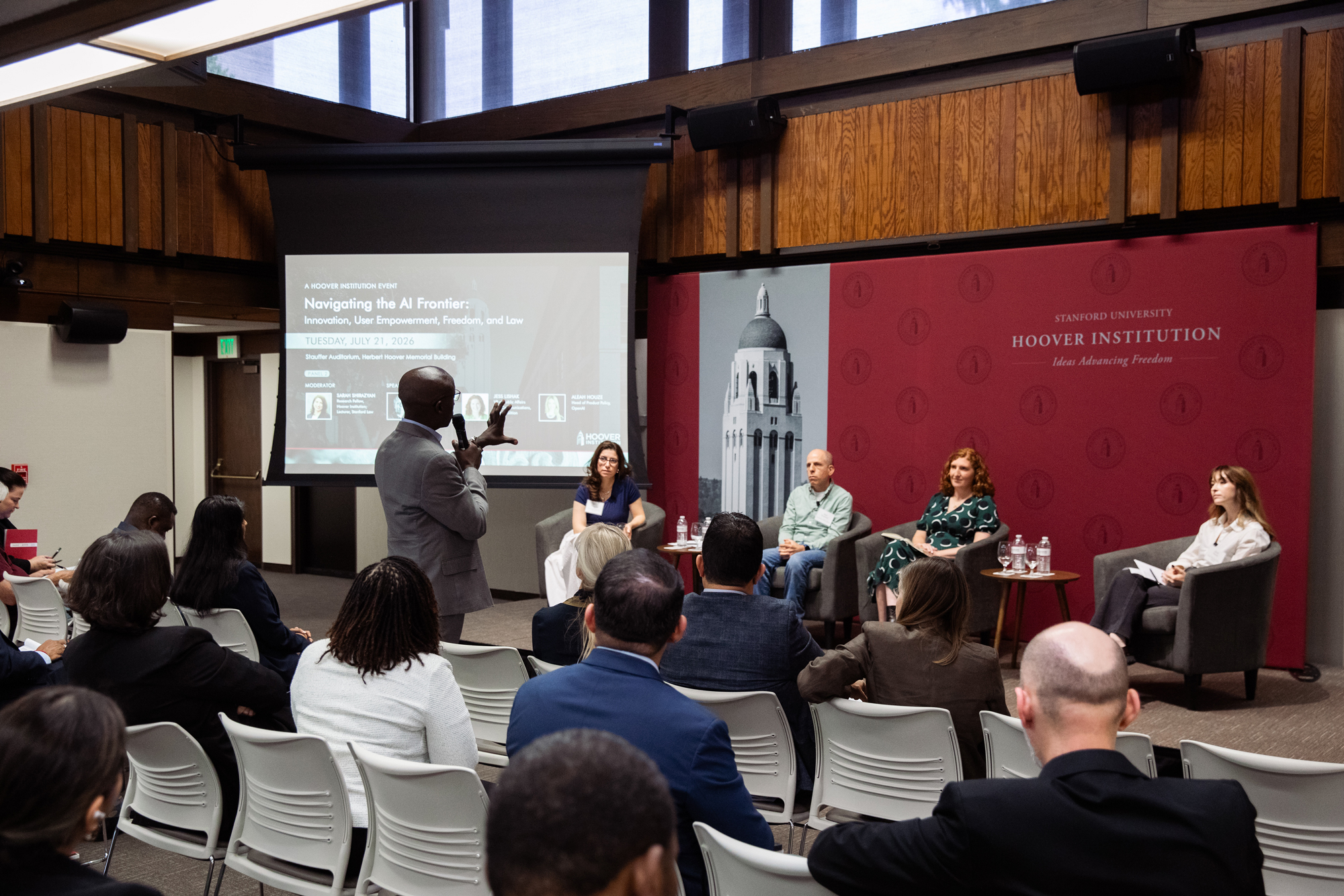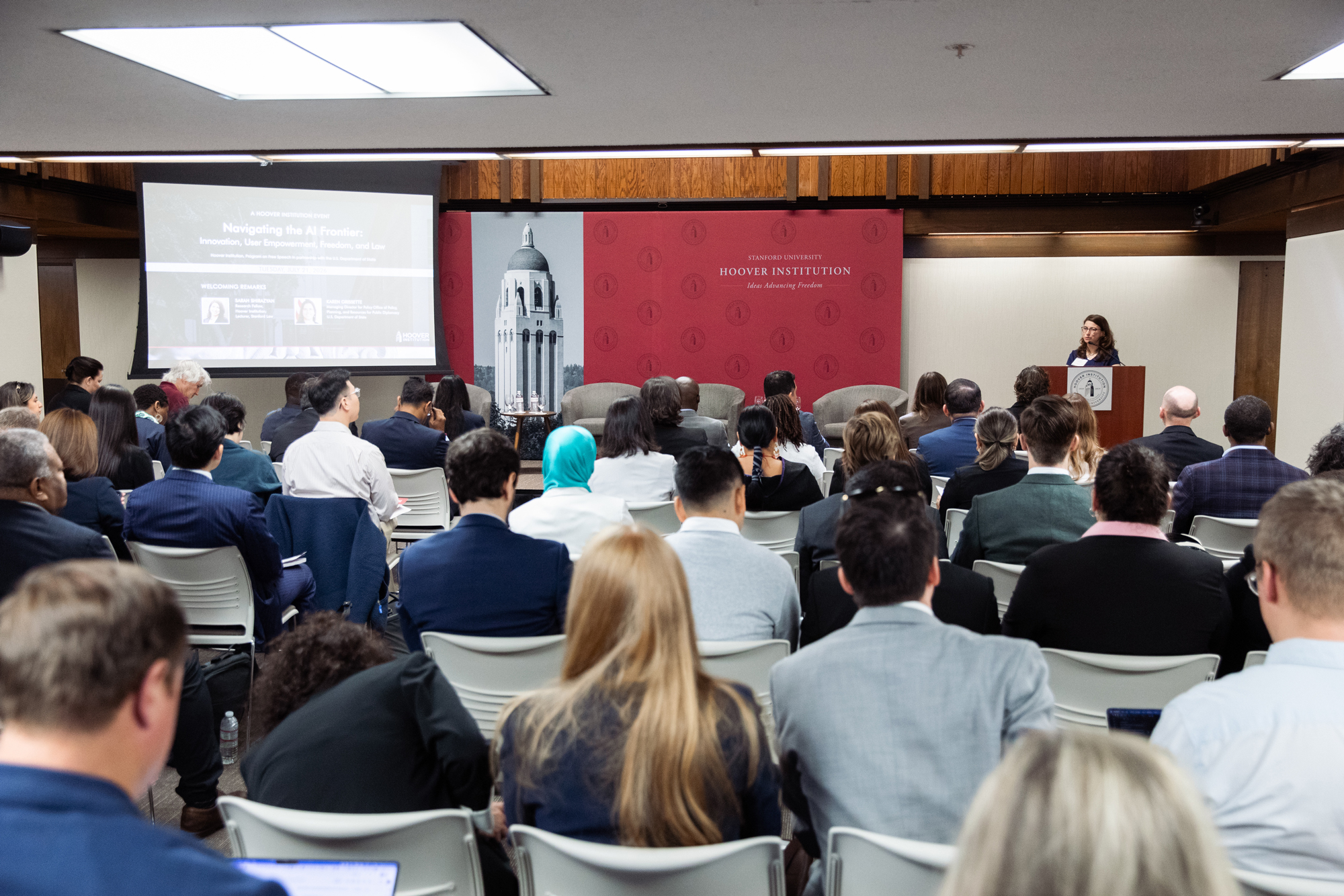
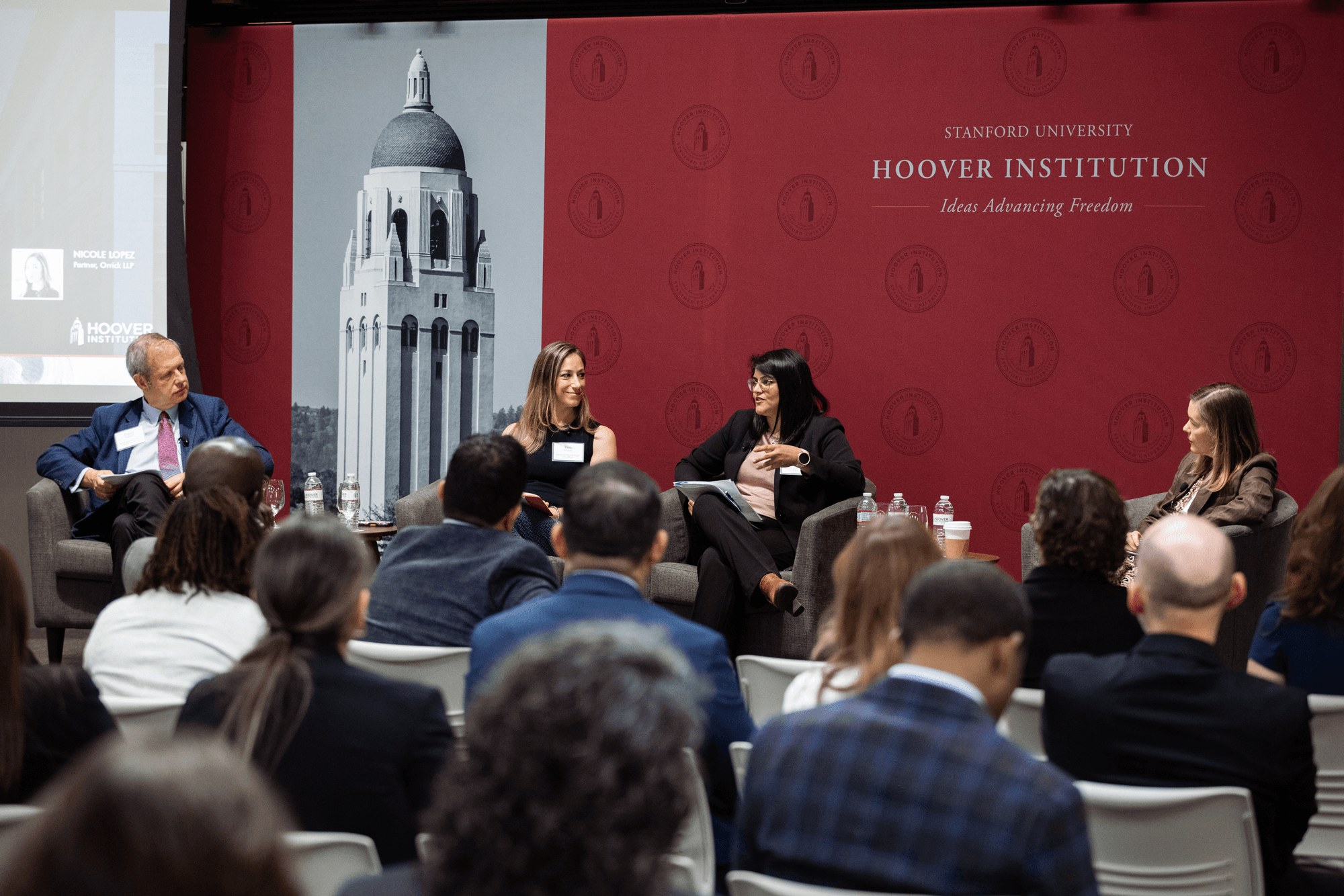

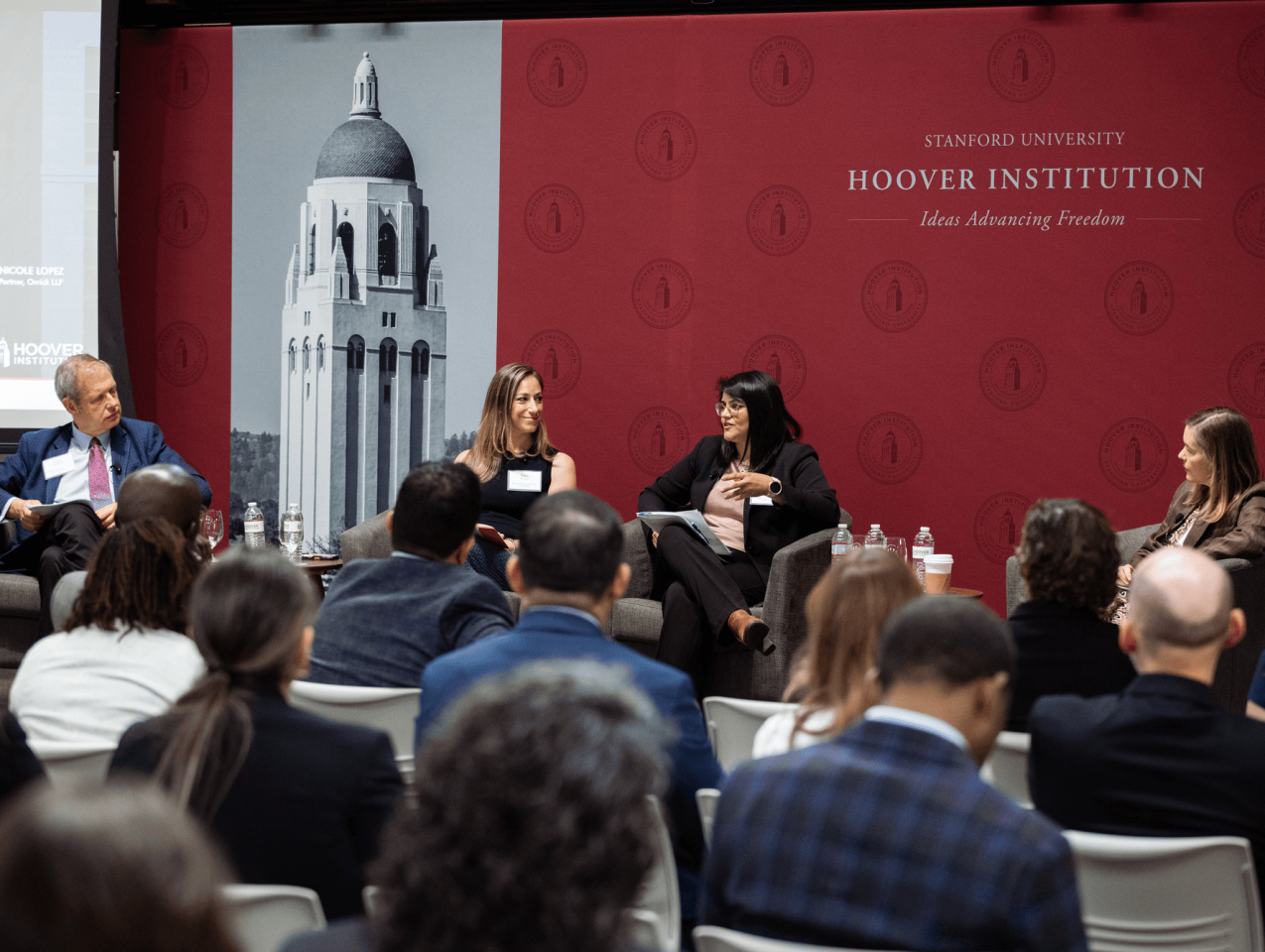


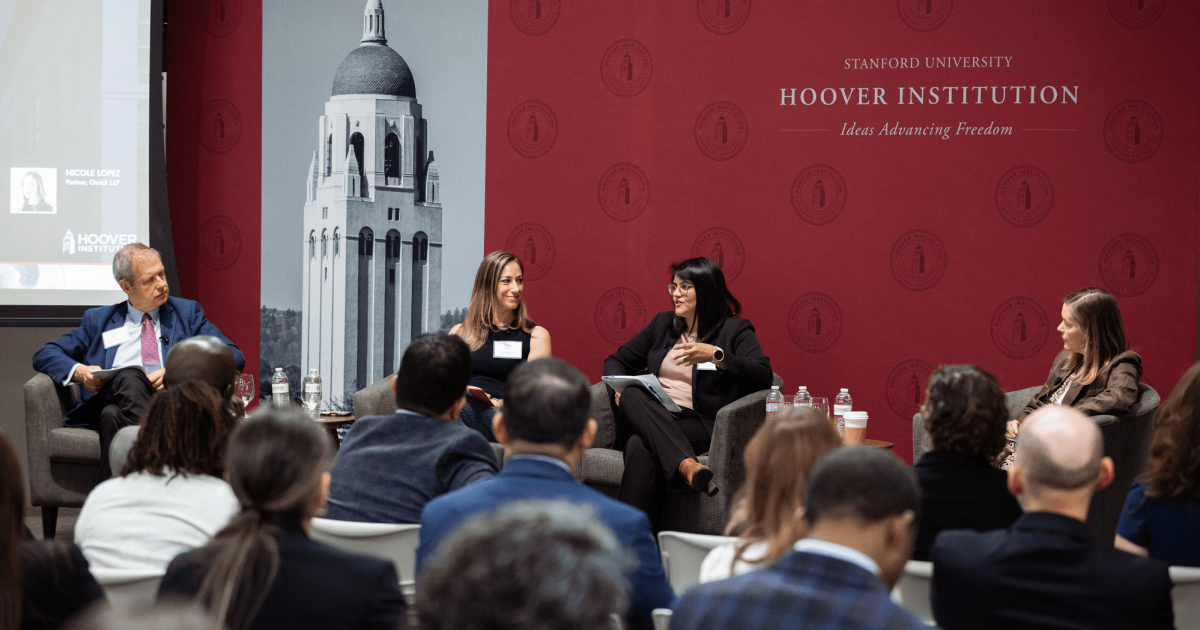
Hoover Institution (Stanford, CA) — The Hoover Institution, in partnership with the U.S. Department of State, brought together forty-seven foreign technology policymakers and foreign diplomats, State Department officials and policy leaders from leading AI companies on July 21, 2026, to discuss how governments can ensure widespread public benefits from artificial intelligence while protecting against possible harms.
The gathering opened with remarks from Sarah Shirazyan, Hoover research fellow with the Program on Free Expression. Two key questions drove the conversation: how to govern AI so that law supports innovation and human flourishing, and how AI itself can be used to protect people—countering fraud, scams, and some of the gravest risks facing children online.
The stakes, she argued, are high: breakthroughs in AI are reshaping economies, societies, and geopolitics at remarkable speed. The central challenge is whether these technologies will strengthen freedom, security, and human dignity or weaken them.
“No government, company, or university can meet this moment alone,” Shirazyan said. Echoing Herbert Hoover’s call to “improve the human condition,” she urged industry, academia, and government to work together so AI serves the greatest good in education, medicine, and the sciences.
Senior Fellow Eugene Volokh said the gathering could help policymakers better understand the viewpoint of industry, navigate the rapid pace of AI adoption in a way that best benefits the people of their countries, and seriously consider how to prevent AI misuse while protecting children and adolescents.
“All countries of the world are having to consider how to regulate AI without stifling innovation,” Volokh said. “I hope this program has helped the attendees think through that.”
To begin, speakers agreed the technology is moving at unprecedented speed. This creates a core challenge for regulators. If a regulatory process takes two years to complete, the technology will have changed dramatically by the time its rules take effect.
The volume of legislation coming out of U.S. state legislatures in recent times reflects this urgency. One speaker noted that roughly eight hundred AI bills were introduced across the United States in a single year. Of those, around 113 were youth AI bills—a milestone reached in a single year that took the social media era nearly two decades or so to hit.
A recurring theme was caution against rushed, overly broad rules that may or may not be technologically feasible with current or emerging tools. One participant warned that heavy compliance requirements, such as mandatory risk assessments and audits, hurt smaller companies far more than large firms.
Several speakers argued that policymakers should focus narrowly and thoughtfully on specific risks to allow the public to benefit from specific uses of AI such as education and augmenting the capabilities of persons with disabilities. One speaker argued that building AI is not enough to win: The nations that deploy AI across sectors of their economies will be the true winners.
Speakers on the first panel outlined three building blocks countries need to capture AI's benefits: compute, data, and adoption. On compute, cloud-first policies can deliver capacity in a cost-effective, scalable, and secure way. On data, speakers urged governments to invest in high-quality datasets—India, for example, built a repository of training data in many Indian languages for its national AI mission, and the United Kingdom treats government data as "open by default." And on adoption, supportive policies can help innovators put AI to work. In Australia, for example, small and medium size businesses can access government assistance to integrate AI into their operations.
Because AI crosses borders, speakers stressed the danger of fragmented rules. Harmonizing regulatory frameworks or global benchmarks could help. One participant pointed to International Organization for Standards (ISO) rules, such as ISO/IEC 42001, for AI risk management as a path to global interoperability.
Sovereignty came up often in the conversation. With 193 nations exercising control over their territories, governments feel a duty to protect citizens. Yet the world remains interconnected, with all nations inevitably relying on products and services provided by others. One speaker noted a surge in sovereign mandates for data, including three hundred data localization laws added in a single year. Concerns include foreign dependencies such as the risk that data stored abroad could be surveilled by foreign intelligence services. Cultural protection and sensitivity also emerged as a topic of discussion. Some of the industry panelists highlighted the trade-offs and security risks associated with overly broad data localization mandates.
Youth safety surfaced repeatedly. Regulators worldwide are focused on protecting children online, but no one solution surfaced as the “right” formula. Policy makers shared that they are carefully watching the current regulatory environment and the impact of age gating certain technologies or platforms. Others noted the importance of including child development experts and young people themselves in these policy discussions.
The conference’s second panel, moderated by Shirazyan, took up the day’s second question: how AI is changing digital threats—and digital defenses. Panelists described how digital risks and cybercrime, particularly fraud, scams, and dangers to children online, are evolving as bad actors adopt AI. They also discussed how the same technology expands what defenders can detect and disrupt at scale.
Speakers noted that frontier AI companies increasingly approach safety through multiple layers rather than any single intervention. They describe this a “safety stack” that runs from teaching models safety values during training, to usage policies, to post-deployment monitoring, red-teaming, and enforcement. The logic is that every layer would have to fail for a harm to get through.
Because much of this harm crosses platforms, no single company can tackle it alone, and Shirazyan asked how industry works together to detect and disrupt abuse that moves across services. Speakers pointed to Lantern, a cross-platform signal-sharing program that lets participating companies to share indicators to detect and disrupt online child sexual exploitation across services. One speaker said that in the past three years, Lantern members have shared more than two million signals, leading to over 350,000 enforcement actions by participating platforms—removing content, actioning URLs, and banning accounts. In some cases, those signals have also supported referrals to law enforcement for investigation. Panelists emphasized that cross-industry collaboration must be built with due process in mind.
Across the discussion, speakers urged the policymakers present to take a nuanced view of the rise of generative AI and not advance laws that involve blanket restrictions on AI use.
Learn more about Hoover’s Project on Free Expression here.