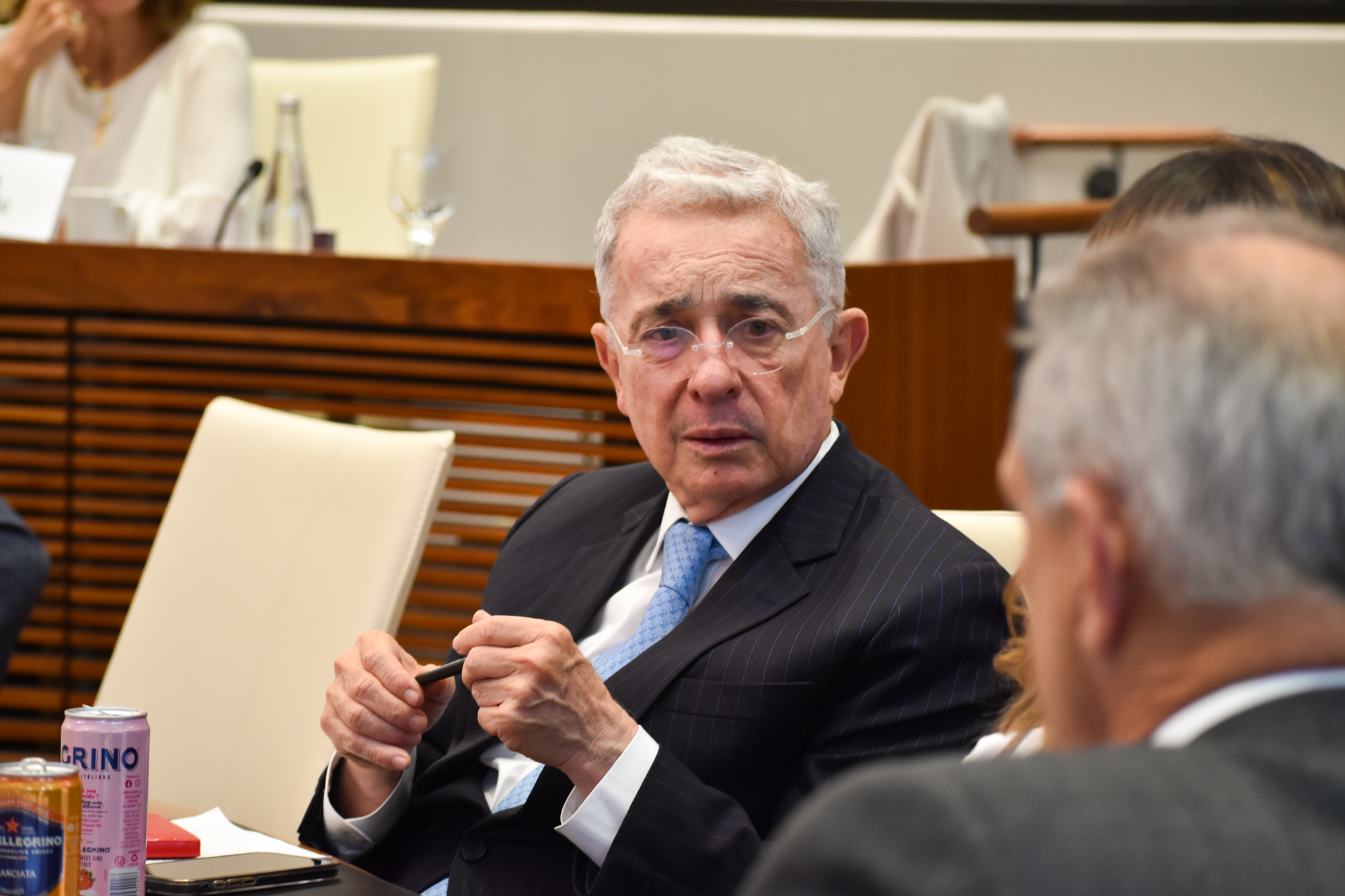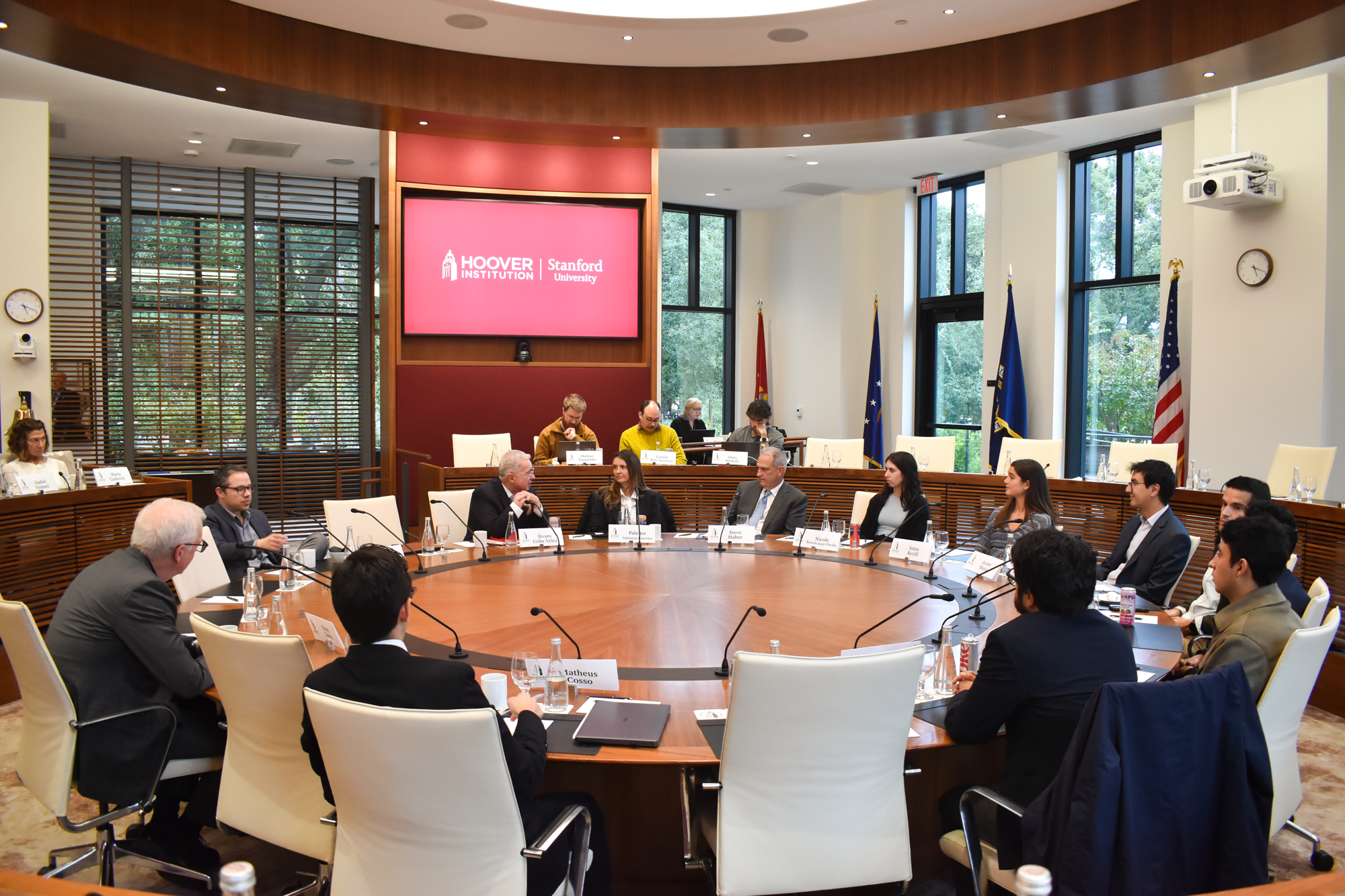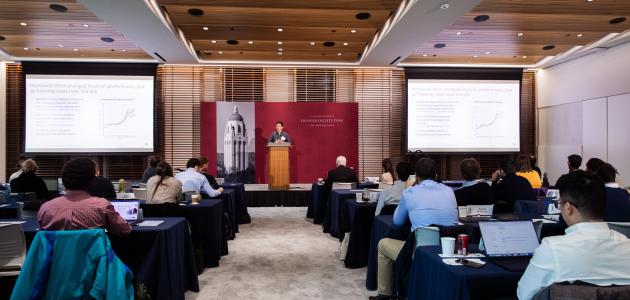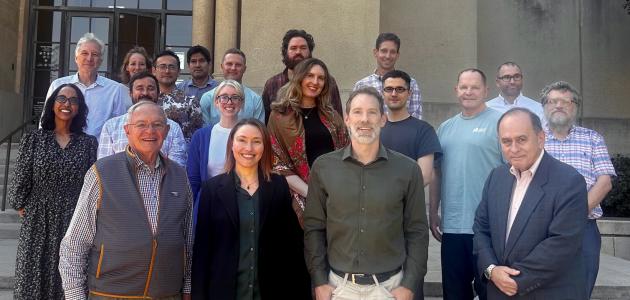



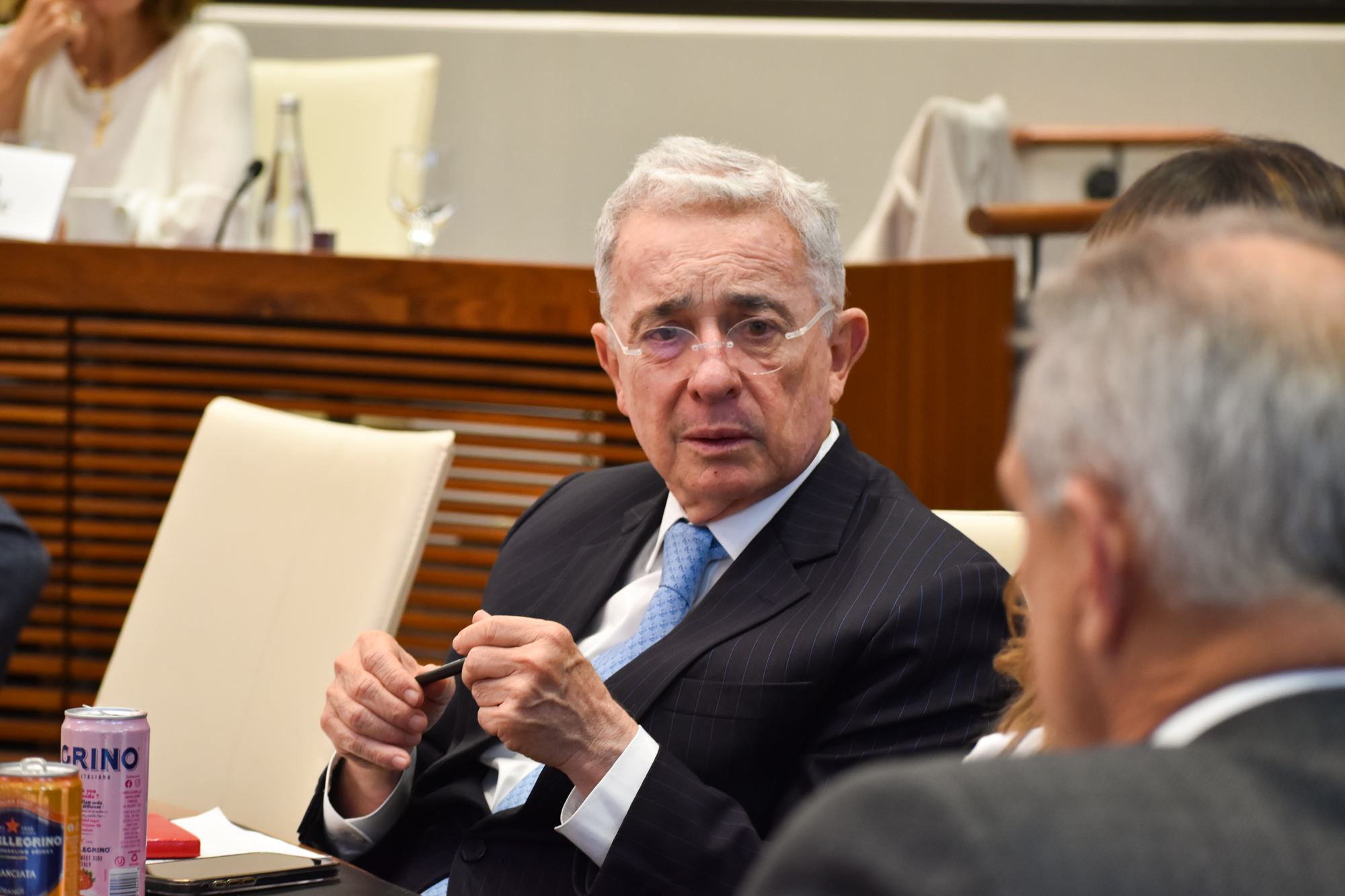
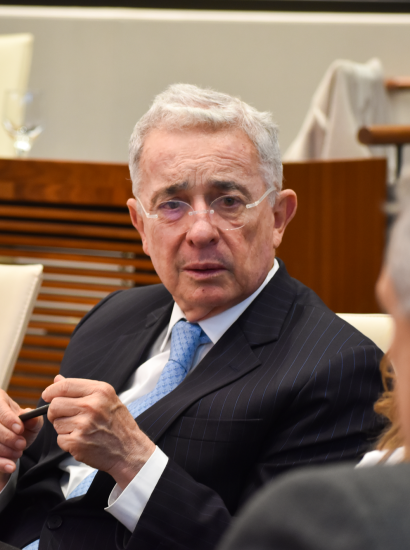
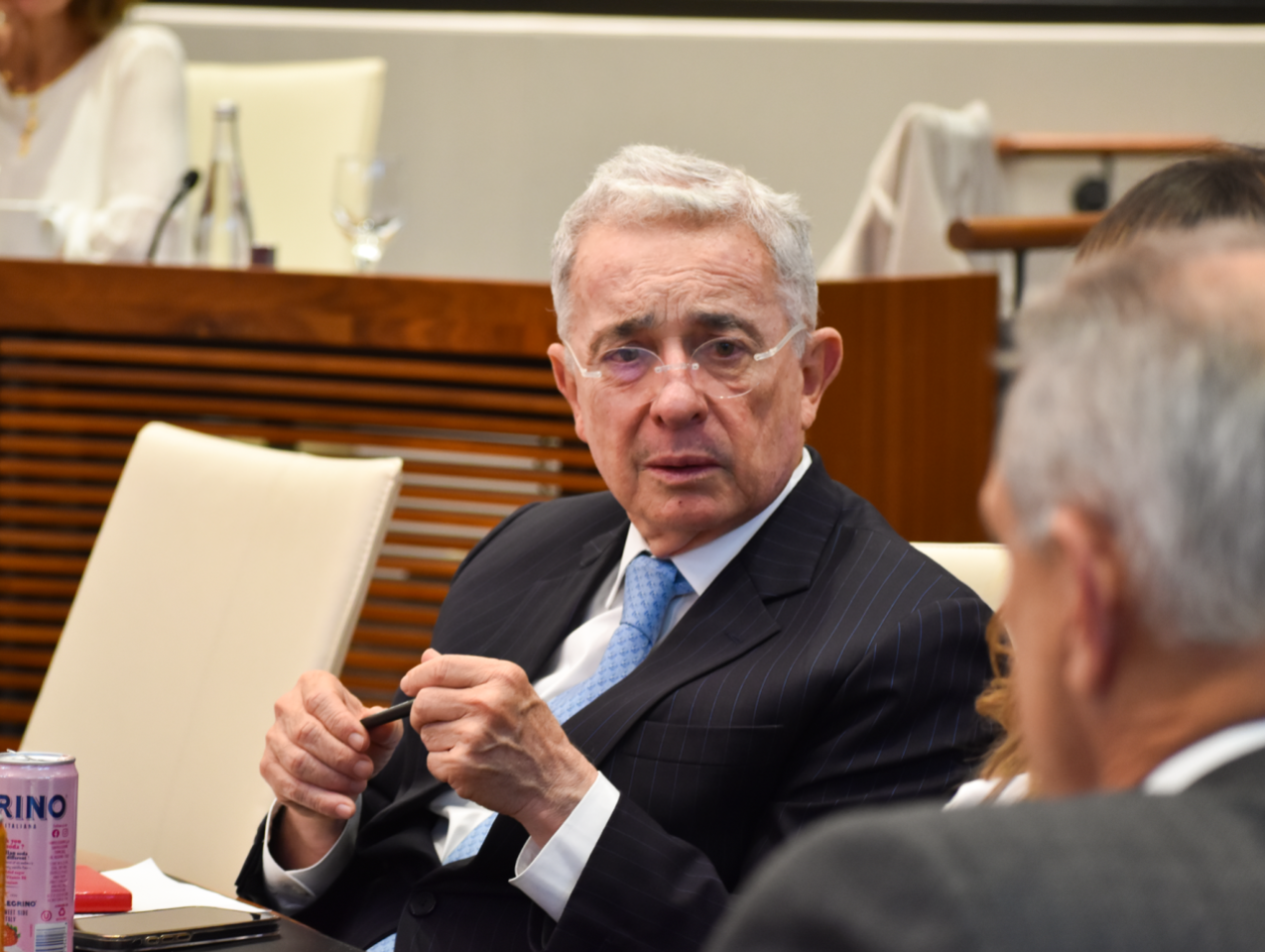
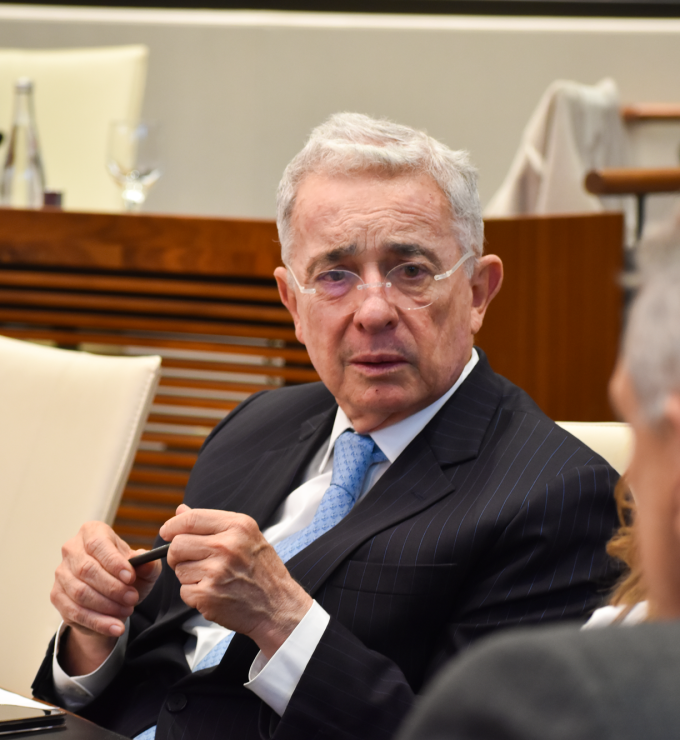
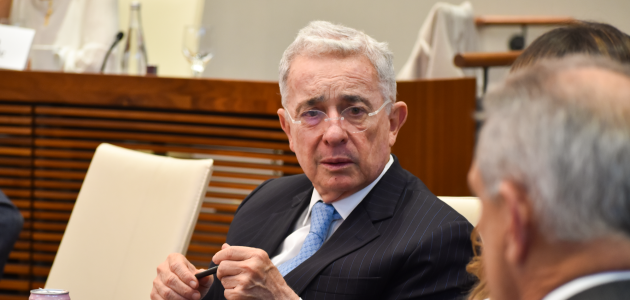
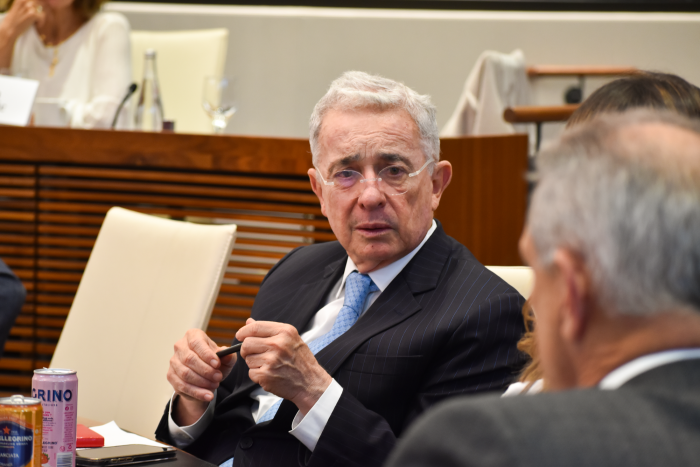
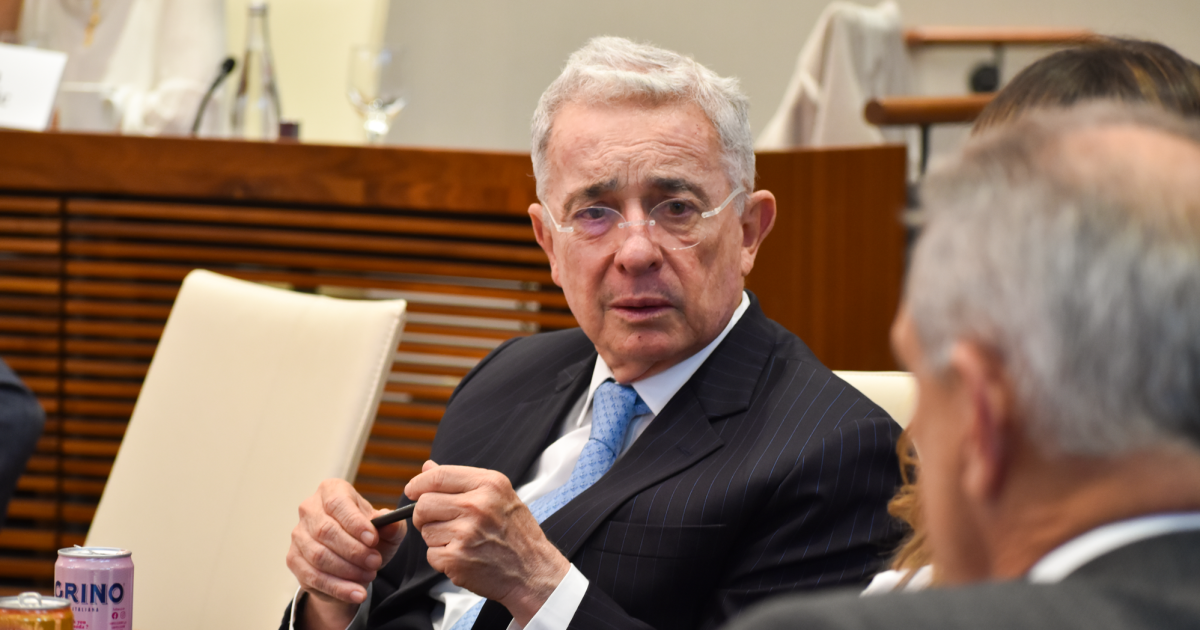
Hoover Institution (Stanford, CA)— A crucial challenge in 21st century Latin America will be how states ensure public safety without trampling on individual rights, former Colombian president Alvaro Uribe Velez told an audience at Hoover earlier this month.
Uribe, who served as president of Colombia from 2002 to 2010, oversaw a dramatic reduction in poverty in his country, built in part by an aggressive campaign against the criminal cartels and revolutionary groups, strong efforts to attract foreign direct investment, and a broad base of new social programs to assist the poorest Colombians in getting out of poverty.
During his tenure, social programs aimed at offering basic health coverage and cash transfers to the poorest Colombians scaled by as much as ten times.
At the same time, Uribe ordered the military and security services to capture territory controlled by extremist groups FARC, ELN, and the AUC.
His efforts pushed the extremist groups out of most towns and villages and drastically lowered the number of homicides and kidnappings throughout the country.
“He succeeded in reducing crime rates, dismantling paramilitary organizations, delivering significant blows against guerrilla groups,” said Senior Fellow Stephen Haber, who moderated the discussion. “And at the same time, he strengthened domestic investor confidence, promoted sustained economic growth, increased foreign direct investment, reduced poverty, and achieved the highest levels of healthcare and education coverage in the country's two-century-long history.”
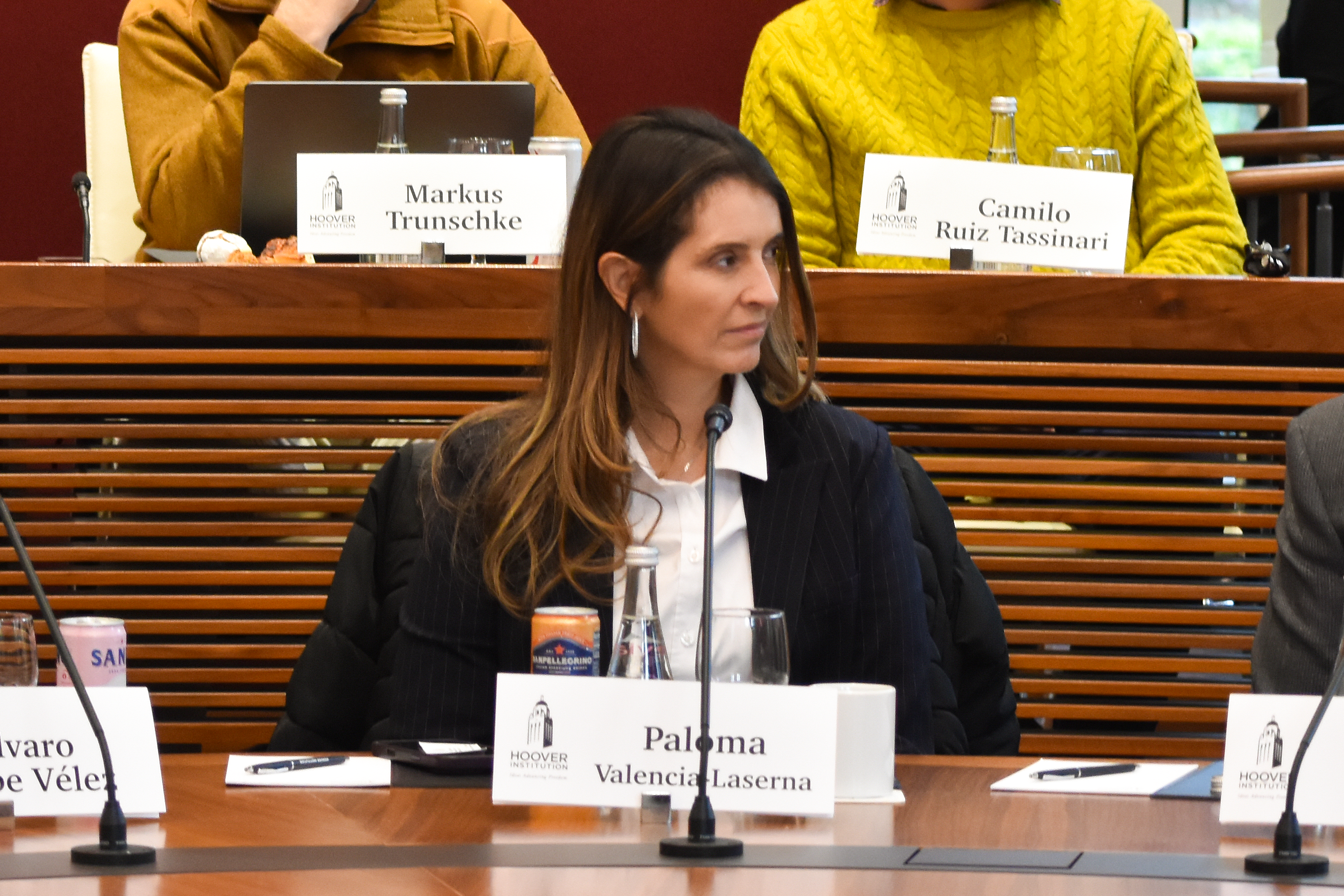
Speaking at Hoover on November 2 alongside former Colombian senator Paloma Valencia, Uribe said he fears that his administration’s approach, what he called “democratic security”—which he characterized as an effort to remove violence from the public realm so that peaceful economic growth could occur—was being replaced in some Latin American states by an approach that was purely carceral, violent, and not focused on development.
“When you manage to have a government which is strong enough to behave with authority and fulfill the necessity of security, but then you have a lot of investment in the poor people and you have economic growth, then you have a way in which all institutions began to appear to be more credible to everyone,” Uribe said of his approach to governing.
The discussion was cosponsored by Hoover’s Program on the Foundations of Economic Prosperity and Stanford Law School.
On Colombia Today
Of former president Gustavo Petro’s government, now replaced by that of conservative Abelardo de la Espriella, Uribe said growth during Petro’s term was primarily due to increased cocaine production, remittances from abroad, and an explosion in illegal gold mining.
“We had no new private investment,” he said. “The private sector stopped the creation of new jobs. All the new jobs that the country got were because of the expansion of the government.”
He cited UN figures showing that about 2,100 tons of Colombian cocaine made it past authorities in 2024, up from about 150 tons in 2010, when he left office.
Removing Maduro
In the wake of the US raid that resulted in the arrest of Venezuelan President Nicolás Maduro and his wife, Uribe said such an action was unavoidable, and was warranted because of the Maduro regime’s persistent human rights abuses, support for narcoterrorism groups, and overtures to Russia, Iran, Hezbollah, and Hamas.
But he and Valencia both urged that elections be held in Venezuela as soon as feasible.
“They did what they could,” Valencia said of ordinary Venezuelans. “They organized themselves. They campaigned against the regime. They were [put] in jail. They supported non-violence. They won the election, but nothing changed.”
“If Trump didn’t act, [Maduro would] still be there,” she added.
National Security vs. ‘Democratic Security’
Looking across Latin America, Uribe and Valencia expressed concern for states in the region that make national security paramount without taking into account the basic rights of citizens. Cuba is an obvious example.
“You have security, you have investment, you have private sector, but then you have state which is taking care of those who are in a very delicate and risky position in the society because you have to push until the market is big enough to fulfill what you need them to have,” Valencia said.