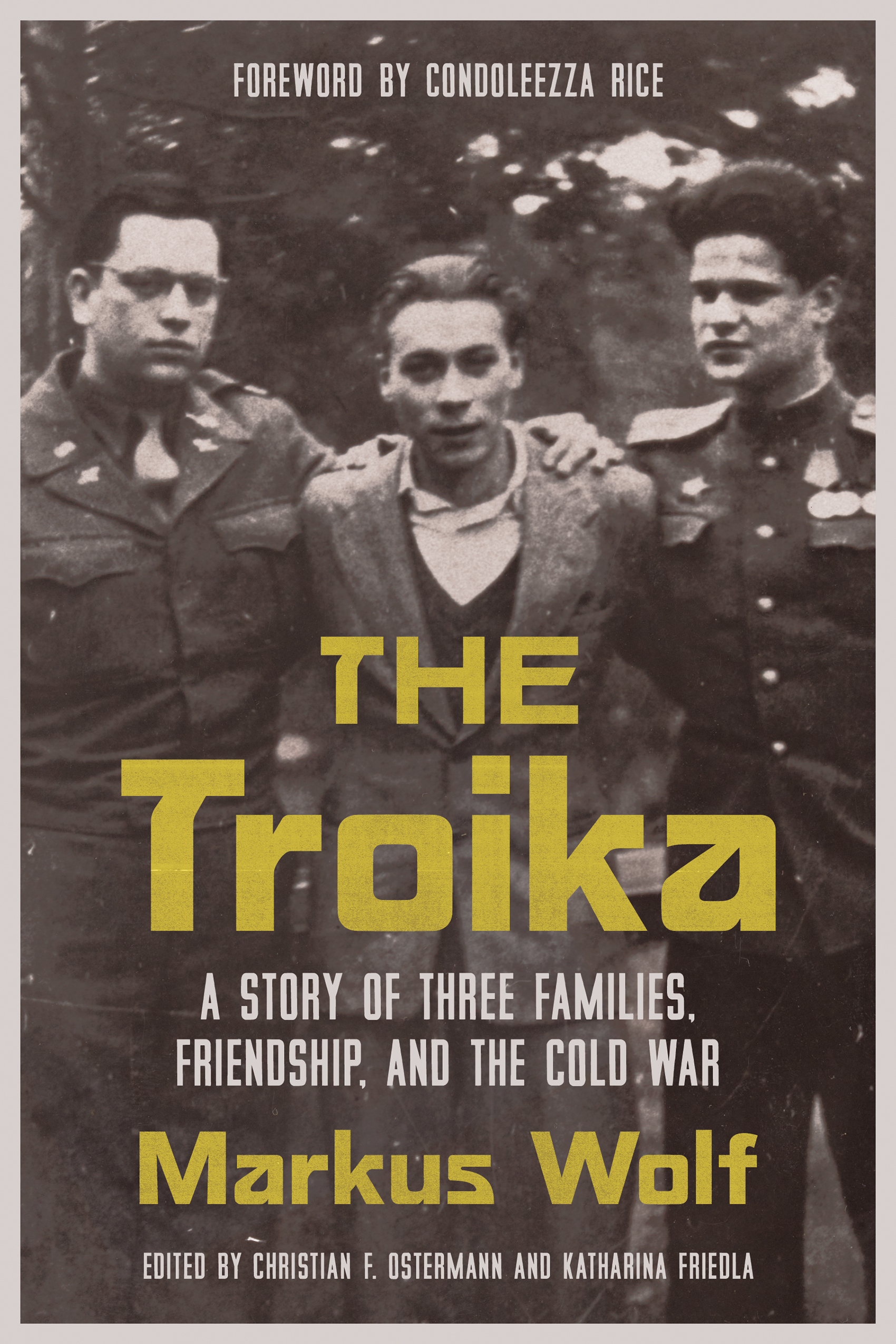
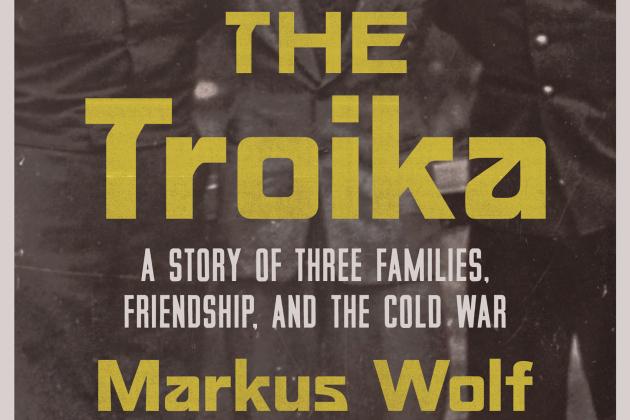
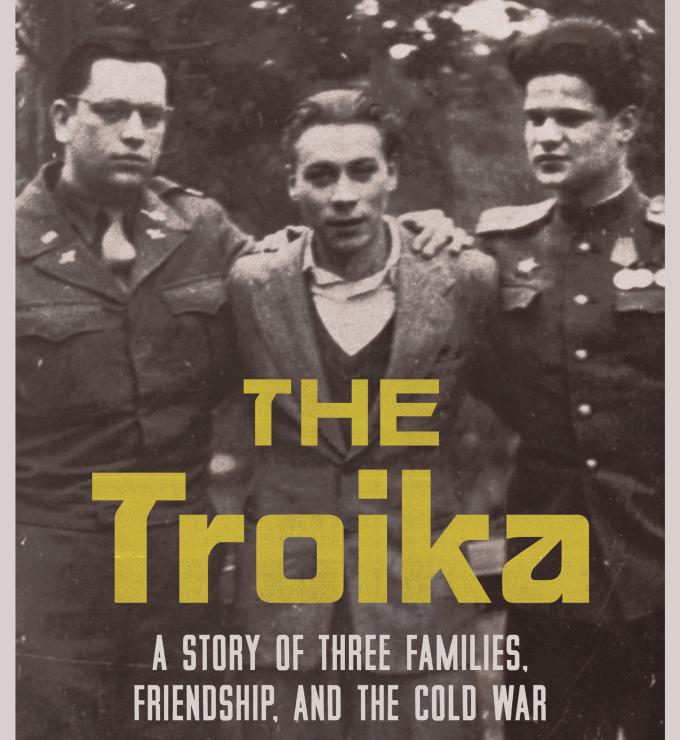
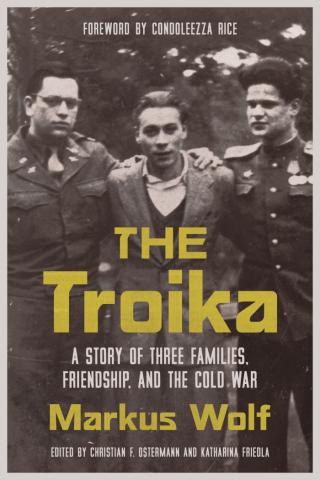
Hoover Institution (Stanford, CA) — In this new book, edited by two Hoover fellows and made available in English for the first time, Markus Wolf tells the story of how three expatriate Communist families in Moscow find their bonds and beliefs tested as they are scattered by World War II and confront the consequential ideologies of the twentieth century.
This now-legendary memoir was written by a leader of East Germany's notorious Stasi secret police. Wolf, known in the West as "the man without a face," was a notorious shadow figure who had loomed large in the East German intelligence service. The Troika was published in 1989, after his retirement. And with East Germany on the verge of revolution and collapse, it became a sensation with its critical reflections on the taboo subject of the Stalinist purges of the 1930s. The Troika is now available in English for the very first time.
The titular trio —two Germans and one American, their families drawn to the Soviet Union by the promise of Communism—grow up and become friends in Moscow's colorful Arbat neighborhood in the 1930s, experiencing childhood steeped in one of the most potent ideologies of the era: In the turbulent decades following the Russian Revolution, the city faced economic turmoil and political violence, culminating in Stalin's Great Terror.
With the arrival of World War II, the trio are pulled into the fray on different fronts: one with the Red Army, one among the Americans, and one on the side of the Third Reich. The conflagration brings them to different corners of the geopolitical map as they mature, survive the chaos of war, and struggle to reinforce or abandon the principles instilled in them as young men. They miraculously remain connected through the thorny contradictions of the Cold War—until the pressure of the times drives one of them to a tragic end.
The Troika is a sober testament to the twentieth century's divisive doctrines and a paean to the power of familial and friendship ties during some of the most trying episodes of European history. It is also a humanizing peek behind the curtain at a man who ultimately found it too hard to remain invisible as his country endured the seismic shocks of perestroika, glasnost, and, ultimately, the fall of the Berlin Wall.
Rooted in a wealth of rarely seen photographs and documentary materials, Markus Wolf's autobiographical tale deftly weaves various threads of a fraught century into a magnificent tapestry.
Praise for The Troika:
In a late-night meeting with Markus Wolf in Berlin . . . I saw a man who kept himself faceless as he guarded the secrets, and at the same time I saw a master showman. It was a rewarding glimpse into Wolf’s convoluted soul.
—Robert De Niro, actor, director, and film producer
The Troika charts the journey of a scruffy German kid coming of age in Moscow during World War II to becoming perhaps the boldest spymaster of the Cold War. A remarkable read.
—Milt Bearden, former CIA division chief and coauthor of The Main Enemy
Expertly edited, [The Troika] includes scores of interesting documents [and] reveals much about Wolf’s state of mind in 1989 on the eve of the collapse of the Berlin Wall.
—Norman Naimark, Robert and Florence McDonnell Professor of East European Studies, Stanford University; distinguished visiting fellow, Hoover Institution; and senior fellow, Freeman-Spogli Institute
Markus Wolf (1923–2006) was the head of the foreign intelligence division of East Germany’s Ministry for State Security from 1952 to 1986. After Germany’s reunification, in 1990, he became an author and memoirist.
Katharina Friedla is the Taube Family Curator and a research fellow at the Hoover Institution, specializing in twentieth-century Eastern Europe, Jewish history, and World War II.
Christian F. Ostermann is the Peter J. and Frances Duignan Distinguished Visiting Fellow at the Hoover Institution, research professor at the University of Maryland’s School of Public Policy, and the executive director of the National Cold War Center.
For coverage opportunities, contact Jeffrey Marschner, 202-760-3187, jmarsch@stanford.edu.