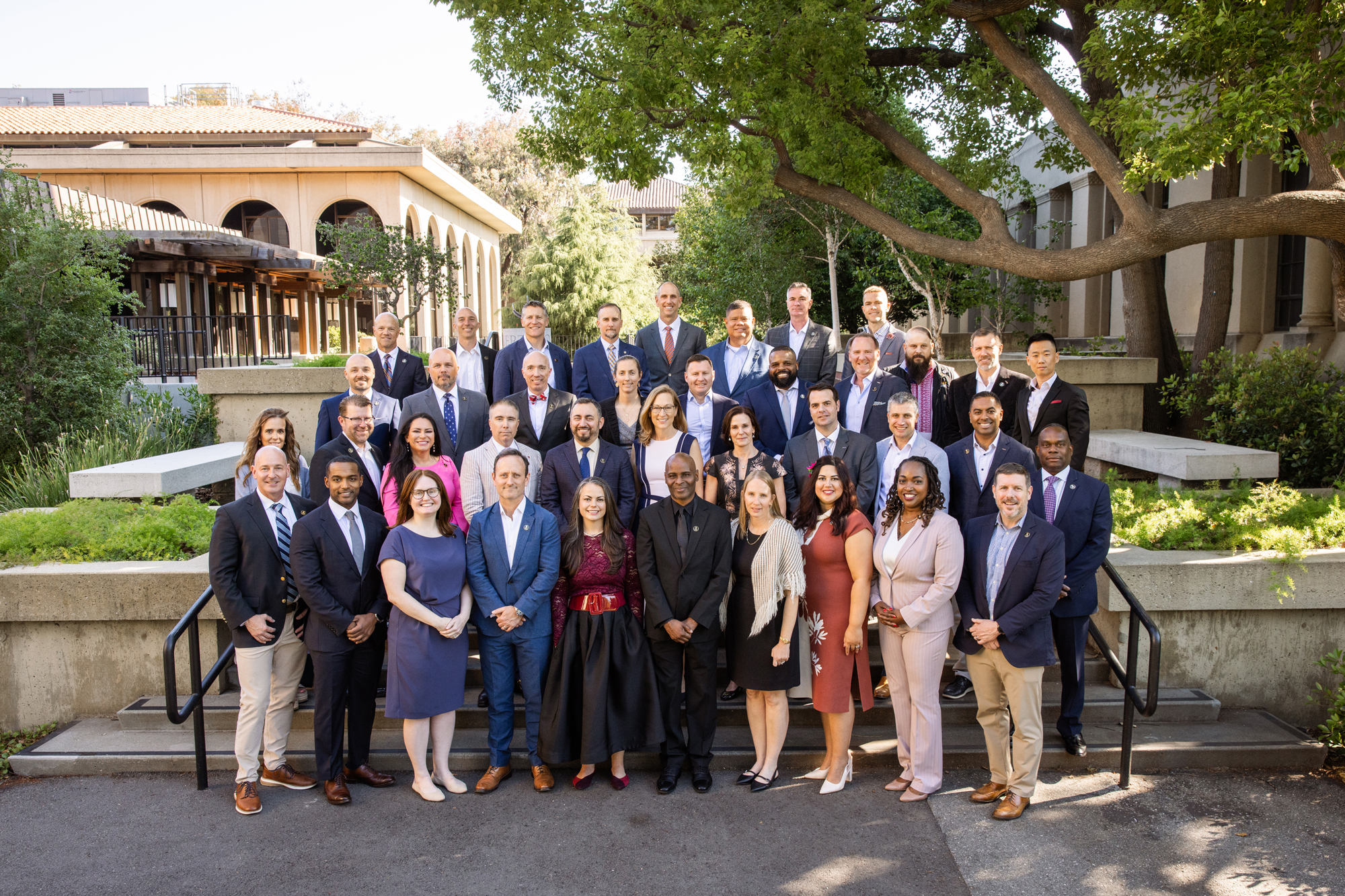
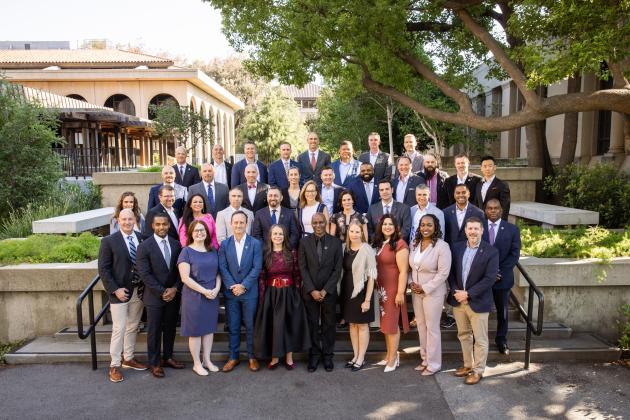
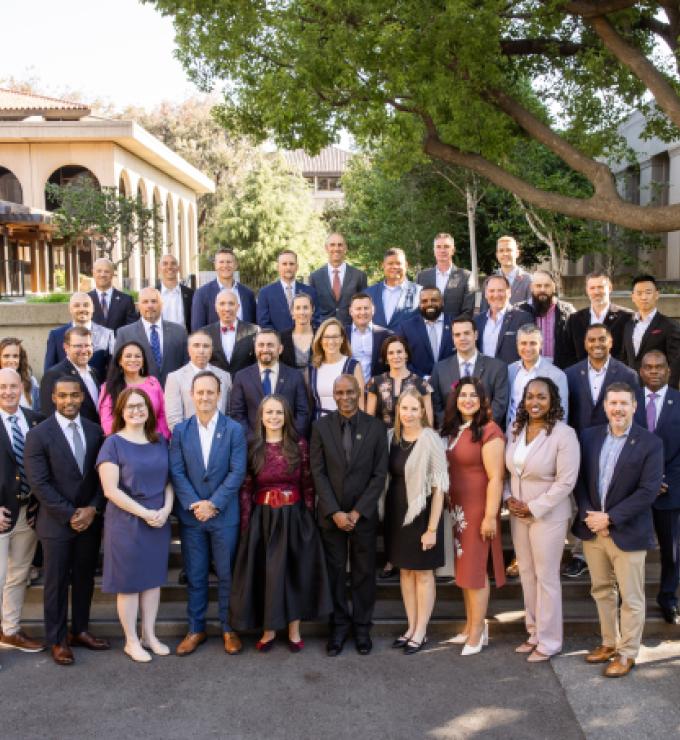
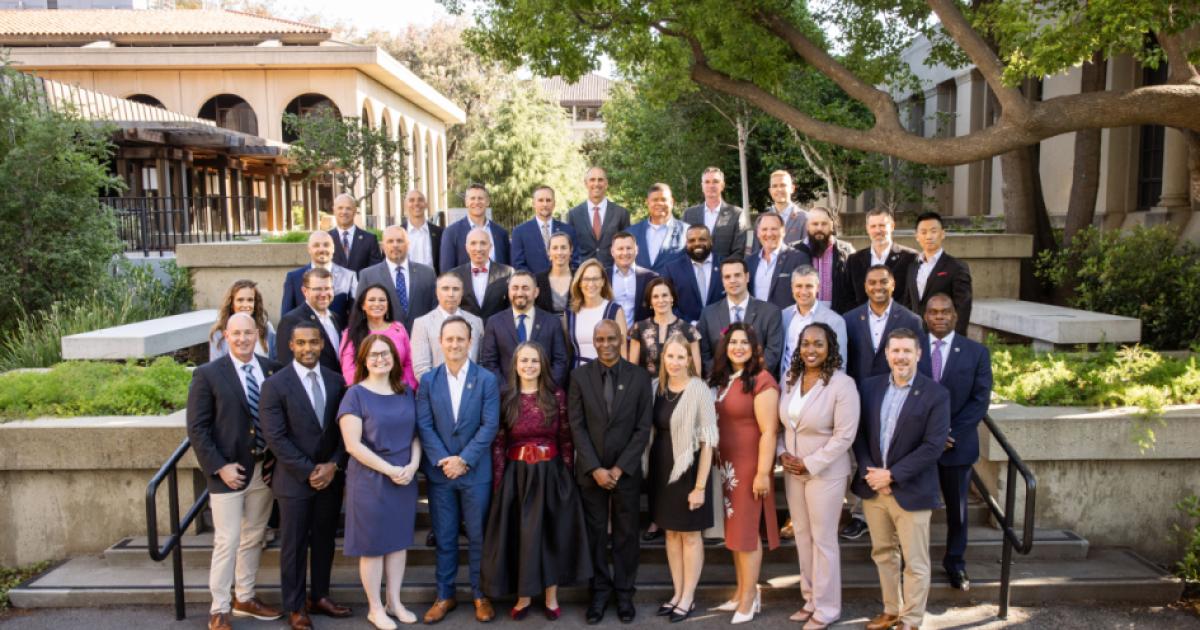
Hoover Institution (Stanford, CA) — Condoleezza Rice, the sixty-sixth US secretary of state, and Robert Gates, the twenty-second US secretary of defense, headlined a Hoover Institution gathering marking the fifth anniversary of the Hoover Veteran Fellowship Program, a year-long program that helps veterans develop actionable projects benefiting their communities and the nation.
From May 6–8, 2026, Hoover convened current and alumni veteran fellows for VFP at Five: Taking Point, a three-day celebration of the accomplishments and impact of the program’s first five cohorts.
Launched in 2021 under the leadership of Hoover Institution Director Condoleezza Rice, the Hoover Veteran Fellowship Program is a nonresidential fellowship for post-9/11 military veterans seeking solutions to pressing public challenges. The program provides accomplished veteran practitioners with access to the intellectual resources, mentors, and networks of the Hoover Institution and Stanford University.
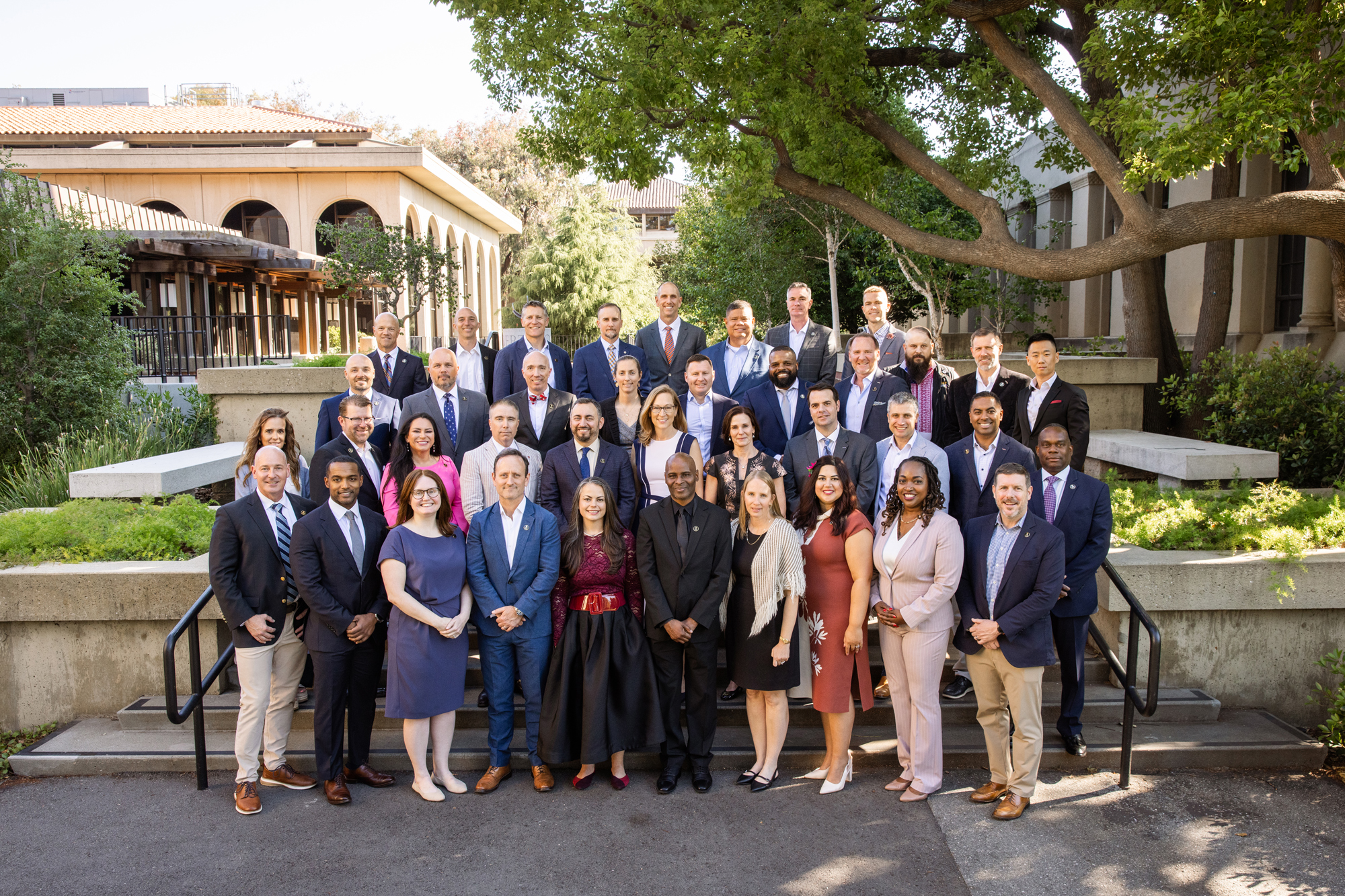
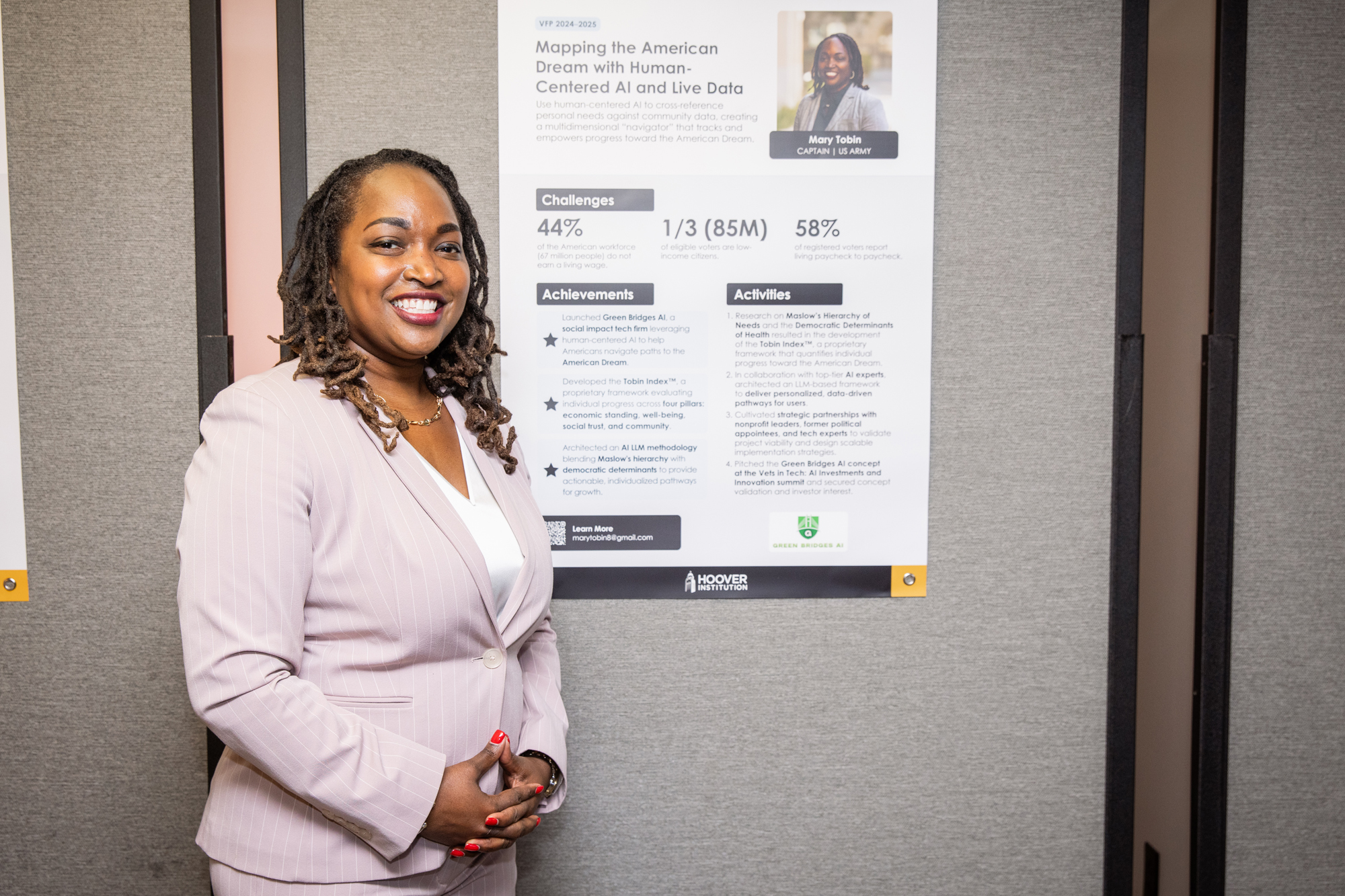
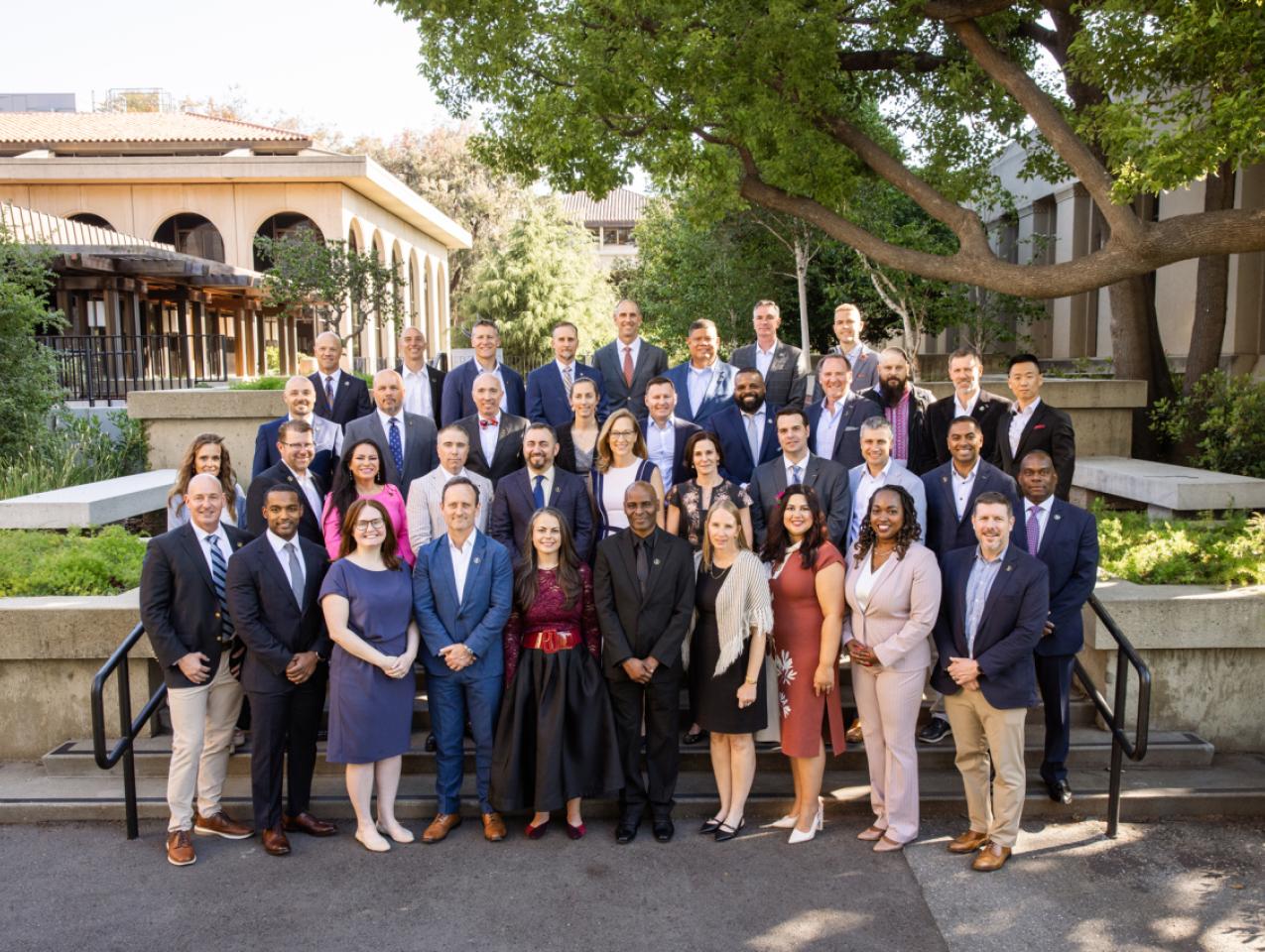
The anniversary gathering brought together thirty-eight current and former fellows, representing nearly every participant since the program’s founding. Fellows presented their capstone projects and demonstrated their community impact during the George P. Shultz Distinguished in Service Expo in Hoover’s Stauffer Auditorium.
“We’re proud to have them as a part of Hoover, we’re proud to have them as alumni,” Rice said of the veteran fellows. “They are a testament to Hoover’s values. You can improve the human condition by support of and dedication to the values of limited government, individual liberty, and private enterprise.”
Rice and Gates Discuss Leadership and Civic Responsibility
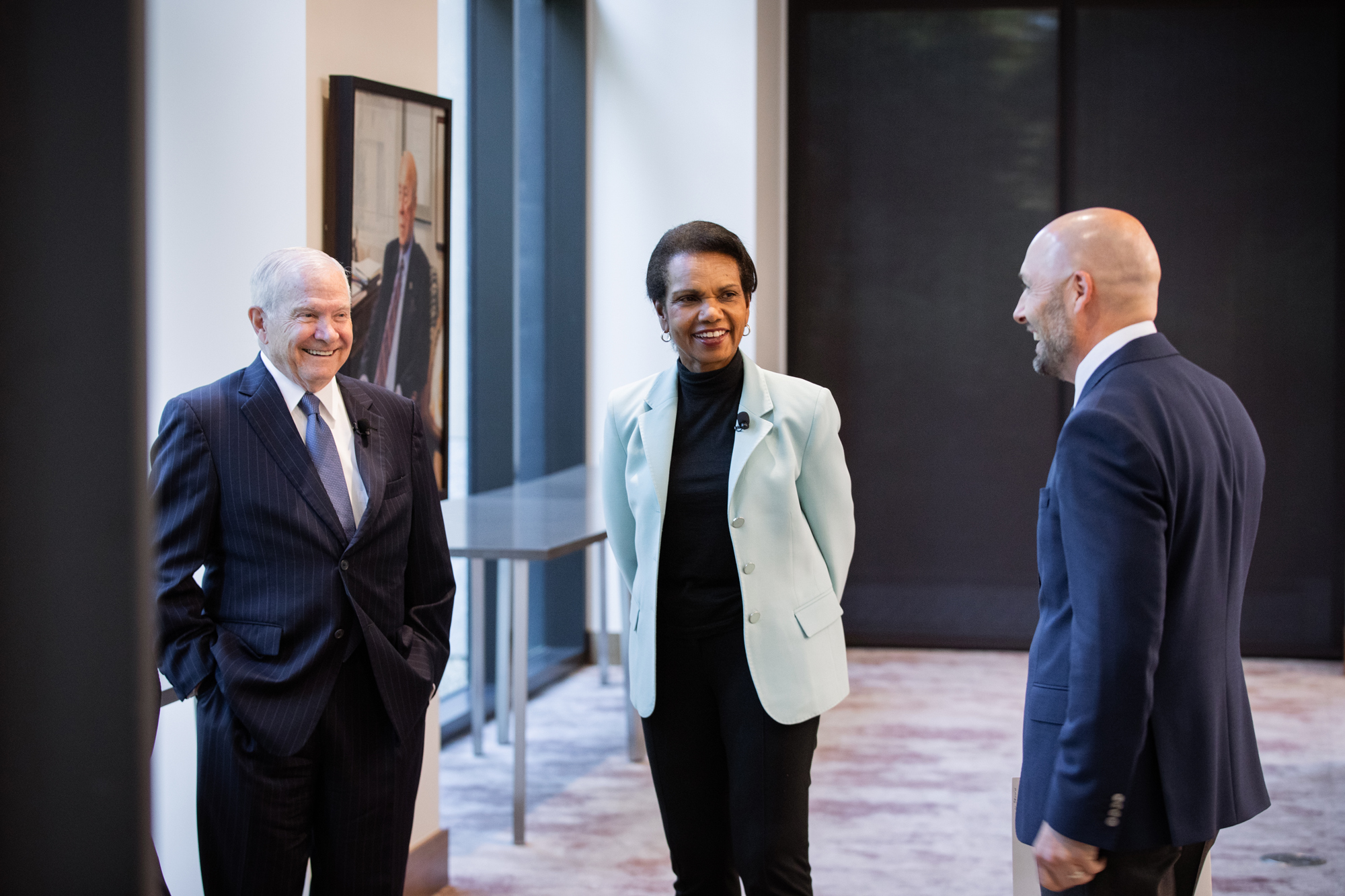
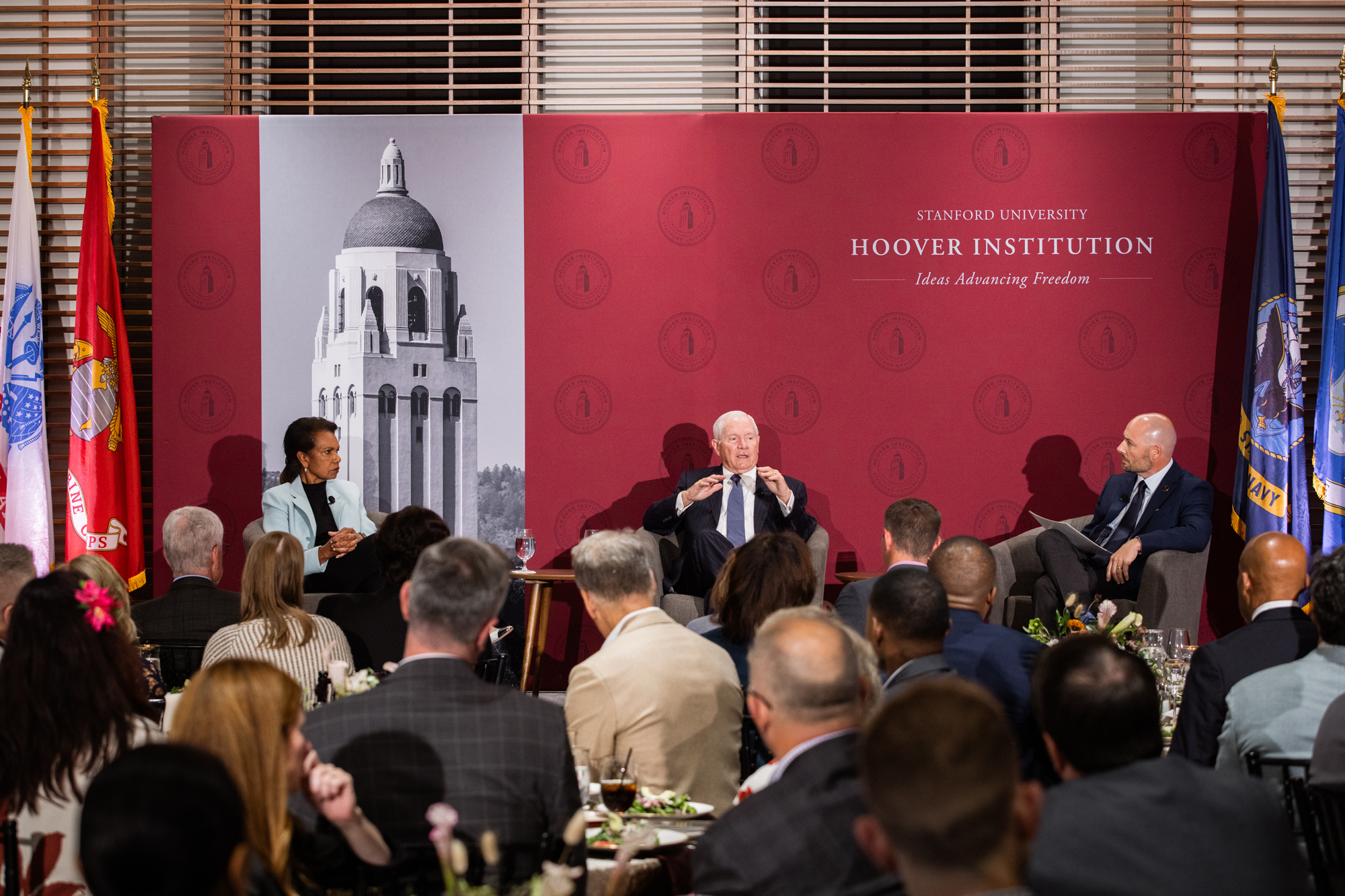
Rice and Gates joined the fellows for a dinner conversation moderated by Matthew Brown, a commander in the US Navy Reserve, CEO of Chimney Trail Health, and member of the third VFP cohort.
The discussion focused on leadership, democratic responsibility, and the obligations each generation inherits from those that came before it.
The conversation reinforced a central theme of the gathering: Each generation inherits responsibilities from its predecessors and must work to leave the country and its institutions stronger than it found them. Both Rice and Gates emphasized that strengthening American democracy begins with individual leadership and sustained engagement at every level of government and society.
Turning Military Experience into Public Impact
Over its first five years, VFP has supported forty-eight veterans and connected them with experts from across the Hoover fellowship and Stanford community.
At the center of the program is a capstone project through which each veteran fellow translates military experience and professional expertise into an actionable framework for addressing a clearly defined public-policy or community challenge.
The resulting initiatives demonstrate how veterans can apply the leadership, discipline, and problem-solving skills developed through military service to challenges at home.
Projects have ranged from combating human trafficking in US Pacific territories to developing technology that helps communities anticipate, contain, and prevent the spread of wildfires. One fellow is helping Afghan military veterans and their families who fled their country integrate into a small Massachusetts community.
For many fellows, the capstone becomes more than a year-long project. It develops into a sustained personal and professional mission.
Gregory Eason, for example, is working to unlock church-owned land in his hometown of Atlanta for the construction of affordable housing. Brown has built a company that incorporates basic cognitive behavioral therapy into training programs for the US armed forces and other high-stress, trauma-exposed workplaces.
Veterans Reflect on Their Next Chapter
A public panel moderated by VFP alumna Trillitye Paullin featured alumni reflecting on their transitions from military service, through the fellowship, and into their current work.
Panelists described how their time at Hoover helped them advance their capstone projects while moving into a new stage of civilian leadership. Several explained that projects they initially envisioned as one-year efforts had grown into potentially lifelong missions.
Additional sessions examined the post-9/11 veteran generation’s influence on military service, civil society, economics, and foreign policy. Fellows also participated in a workshop led by Allan Filip, Peter Dixon, and Chris Esposito of With Honor on campaign fundamentals and opportunities to pursue elected public service.
Stanford’s d.school (the Hasso Plattner Institute of Design) led a session on strategies for expanding community impact while concluding sessions focused on storytelling and sustaining the program’s values and relationships beyond the fellowship year.
The gathering included VFP alumni and Advisory Council members, Hoover fellows and staff, members of the Stanford community, and program supporters. Veteran Fellow Robin Johnson, a professional comedian, closed the event with a performance from The Hero Comedy Tour, which honors military personnel, veterans, law-enforcement officers, teachers, nurses, and other public servants.
Hoover is now accepting applications for the sixth cohort of the Veteran Fellowship Program. Learn more about eligibility and application requirements here.