


















Videos
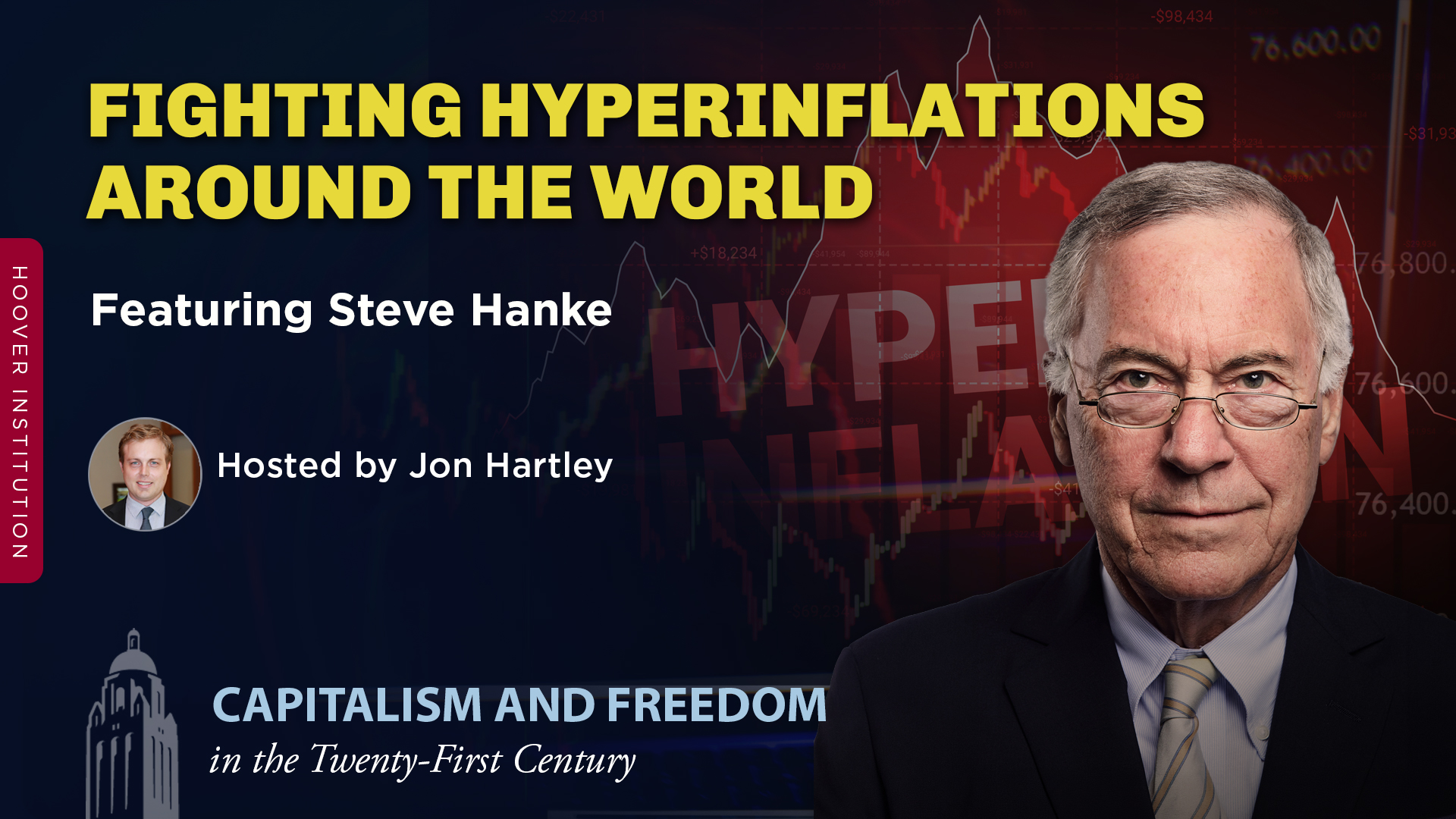
Fighting Hyperinflations Around The World With Steve Hanke
Jon Hartley and Steve Hanke discuss currency boards, dollarization, and fighting inflation around the world.
September 17, 2026

Published: July 8, 2019
The country is currently facing electoral and political instability due to economic and demographic changes that are breaking apart existing voting blocs. This instability will continue until one party finds a dominant set of issues that attracts a winning coalition of voters. Stabilizing the political landscape will require party coalitions to address critical issues like immigration, inequality, worker insecurity, environmental challenges, and trade in a way that brings together a stable majority of voters.
Discussion Questions
Additional Resources
We live in an age of electoral and political instability. For the past thirty years, political control of Congress and the presidency has alternated between the two parties with alarming frequency.
Political parties function by simplifying problems for voters. But the issues that matter and motivate voters constantly change, and when they change rapidly, political parties fall out of sync with what voters want.
Our existing political instability is occurring because seismic economic and demographic changes are breaking apart existing voting blocs. This instability will continue until one party finds a dominant set of issues that attracts a winning coalition of voters.
This isn’t the first time our system has experienced so much political instability. While the twentieth century was dominated by two periods of long, stable control, the late 1800s looked a lot like the modern era.
Massive industrialization changed the nature of the economy and therefore people’s lives. Previous voting blocs – largely defined by the Civil War – broke down as the issues of tariffs, gold & silver, and challenges from immigration split existing voting coalitions.
While parties figured this out, political control changed back and forth for twenty years, until the Republican Party found a winning combination that allowed it to dominate for thirty years –until the Great Depression, when Democrats put together electoral positions that saw them control Congress for the next sixty years.
Democratic control started to slip in the 1980s, when party ideologies increasingly homogenized. Conservatives sorted into the Republican Party and liberals sorted into the Democratic Party. Conservative Southern Democrats and liberal Northern Republicans became largely extinct. Along the way, party affiliation also changed, as independents, Republicans, and Democrats all equalized at roughly a third of the total electorate.
Sorting and polarization have significant electoral and partisan consequences.
First, partisans of each party are more likely to misperceive the other side, because they have so little in common. I am not sure this is true for most voters but it is true of activists.
Second, sorting and polarization have given us presidents who are dividers, not uniters, since they no longer have to appeal to members of their party who don’t share their ideology.
Finally, as party affiliation has equalized, we’ve seen many more close elections. Parties have fewer short-term incentives to cooperate in bipartisan policy-making as long as they believe they have a legitimate shot at majority status.
The path back to a stable political landscape will require party coalitions to address key issues like immigration, inequality, family and social breakdown, worker insecurity, automation, trade, the U.S. role in the world, and environmental challenges in a way that brings together a stable majority of voters.
The GOP could end up heading in one of several directions.
The first is an anti-immigrant, protectionist, relatively un-educated, old, white party concentrated in the southern and central United States.
A second possible coalition would favor markets, smaller government, immigration, and would be more libertarian and diverse in its membership.
The Democrats also face two possible futures.
The first is a Sanders/Warren party that combines socialist-like policies (Medicare for all, free tuition, a smaller military, higher taxes, and more regulation) with identity politics. This grouping would largely exclude moderates from swing states.
The alternate version would hold center-left positions on economic policy and social issues, would be relatively moderate on defense and immigration, and somewhat resistant to identity politics.
Ultimately, the American people will decide which policy portfolios prevail – and whether they offer a return to electoral stability.
Videos
Jon Hartley and Steve Hanke discuss currency boards, dollarization, and fighting inflation around the world.
September 17, 2026
Essays
米国とその同盟国は、重要な原材料、製品、およ び技術が、中国との戦略的競争の核心にあるとい う点で概ね一致している。しかし、経済的な重要度 (クリティカリティ)を定義し、どの資源、技術、製品 が他よりも重要であるかを評価するための、強固で 共通の枠組みを有していない。重要度をめぐる議 論は、抽象的なリスクに終始することが多い。政策 立案者たちは、どの依存関係が武器化される可能 性が最も高いか、世界経済や第三国が武器化に どう適応するか、そして重要な依存関係を事前に 「是正」するためにどれほどのコストがかかるか、と いった点を十分に検討することなく、性急に行動 に移そうとしている。
September 16, 2026
Articles
Waste, fraud, and abuse of public funds are among the oldest and most persistent issues in American history.
September 16, 2026