

|
|
FEATURES: End of Dreams, Return of History
By Robert Kagan
International rivalry and American leadership
T
he world has become normal again. The years immediately following the end of the Cold War
offered a tantalizing glimpse at a new kind of international order, with
nations growing together or disappearing altogether, ideological conflicts
melting away, cultures intermingling through increasingly free commerce and
communications. But that was a mirage, the hopeful anticipation of a liberal,
democratic world that wanted to believe the end of the Cold War did not end
just one strategic and ideological conflict but all strategic and ideological
conflict. People and their leaders longed for
“a world transformed.”
1 Today the nations of the West still cling to that vision. Evidence to the
contrary
— the turn toward autocracy in Russia or the growing military ambitions of China — is either dismissed as a temporary aberration or denied entirely.
The world has not been transformed, however. Nations remain as strong as ever,
and so too the nationalist ambitions, the passions, and the competition among
nations that have shaped history. The world is still
“unipolar,” with the United States remaining the only superpower. But international
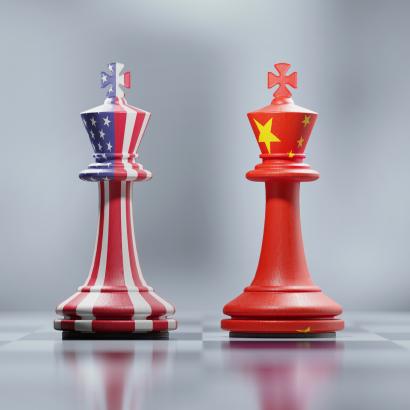
competition among great powers has returned, with the United States, Russia,
China, Europe, Japan, India, Iran, and others vying for regional predominance.
Struggles for honor and status and influence in the world have once again
become key features of the international scene. Ideologically, it is a time not
of convergence but of divergence. The competition between liberalism and
absolutism has reemerged, with the nations of the world increasingly lining up,
as in the past, along ideological lines. Finally, there is the fault line
between modernity and tradition, the violent struggle of Islamic
fundamentalists against the modern powers and the secular cultures that, in
their view, have penetrated and polluted their Islamic world.
Creating and sustaining the unipolar world
How will the United States deal with such a world? Today there is much discussion of the so-called Bush Doctrine and what may follow it. Many prefer to believe the
world is in turmoil not because it is in turmoil but because Bush made it so by
destroying the new hopeful era. And when Bush leaves, it can return once again
to the way it was. Having glimpsed the mirage once, people naturally want to
see it and believe in it again.
The first illusion, however, is that Bush really changed anything. Historians
will long debate the decision to go to war in Iraq, but what they are least
likely to conclude is that the intervention was wildly out of character for the
United States. Since the end of World War
ii at least, American presidents of both parties have pursued a fairly consistent
approach to the world. They have regarded the United States as the
“indispensable nation”2 and the “locomotive at the head of mankind.”3 They have amassed power and influence and deployed them in ever-widening arcs
around the globe on behalf of interests, ideals, and ambitions, both tangible
and intangible. Since
1945 Americans have insisted on acquiring and maintaining military supremacy, a “preponderance of power” in the world rather than a balance of power with other nations. They have
operated on the ideological conviction that liberal democracy is the only
legitimate form of government and that other forms of government are not only
illegitimate but transitory. They have declared their readiness to
“support free peoples who are resisting attempted subjugation” by forces of oppression, to “pay any price, bear any burden” to defend freedom, to seek “democratic enlargement” in the world, and to work for the “end of tyranny.”
4 They have been impatient with the status quo. They have seen America as a
catalyst for change in human affairs, and they have employed the strategies and
tactics of
“maximalism,” seeking revolutionary rather than gradual solutions to problems. Therefore,
they have often been at odds with the more cautious approaches of their allies.
5
When people talk about a Bush Doctrine, they generally refer to three sets of
principles
— the idea of preemptive or preventive military action; the promotion of
democracy and
“regime change”; and a diplomacy tending toward “unilateralism,” a willingness to act without the sanction of international bodies such as the
United Nations Security Council or the unanimous approval of its allies.
6 It is worth asking not only whether past administrations acted differently but
also which of these any future administration, regardless of party, would
promise to abjure in its conduct of foreign policy. As scholars from Melvyn P.
Leffler to John Lewis Gaddis have shown, the idea of preemptive or preventive
action is hardly a novel concept in American foreign policy.
7 And as policymakers and philosophers from Henry Kissinger to Michael Walzer
have agreed, it is impossible in the present era to renounce such actions
a priori.8 As for “regime change,” there is not a single administration in the past half-century that has not
attempted to engineer changes of regime in various parts of the world, from
Eisenhower
’s cia-inspired coups in Iran and Guatemala and his planned overthrow of Fidel Castro,
which John F. Kennedy attempted to carry out, to George Herbert Walker Bush
’s invasion of Panama to Bill Clinton’s actions in Haiti and Bosnia. And if by unilateralism we mean an unwillingness
to be constrained by the disapproval of the
un Security Council, by some of the nato allies, by the oas, or by any other international body, which presidents of the past allowed
themselves to be so constrained?
9
These qualities of American foreign policy reflect not one man or one party or
one circle of thinkers. They spring from the nation
’s historical experience and are a characteristic American response to
international circumstances. They are underpinned, on the one hand, by old
beliefs and ambitions and, on the other hand, by power. So long as Americans
elect leaders who believe it is the role of the United States to improve the
world and bring about the
“ultimate good,”10 and so long as American power in all its forms is sufficient to shape the
behavior of others, the broad direction of American foreign policy is unlikely
to change, absent some dramatic
— indeed, genuinely revolutionary — effort by a future administration.
Realist theory has assumed that other powers must inevitably band together to balance against the superpower.
These American traditions, together with historical events beyond Americans’ control, have catapulted the United States to a position of pre-eminence in the
world. Since the end of the Cold War and the emergence of this
“unipolar” world, there has been much anticipation of the end of unipolarity and the rise
of a multipolar world in which the United States is no longer the predominant
power. Not only realist theorists but others both inside and outside the United
States have long argued the theoretical and practical unsustainability, not to
mention undesirability, of a world with only one superpower. Mainstream realist
theory has assumed that other powers must inevitably band together to balance
against the superpower. Others expected the post-Cold War era to be
characterized by the primacy of geoeconomics over geopolitics and foresaw a
multipolar world with the economic giants of Europe, India, Japan, and China
rivaling the United States. Finally, in the wake of the Iraq War and with
hostility to the United States, as measured in public opinion polls, apparently
at an all-time high, there has been a widespread assumption that the American
position in the world must finally be eroding.
Yet American predominance in the main categories of power persists as a key
feature of the international system. The enormous and productive American
economy remains at the center of the international economic system. American
democratic principles are shared by over a hundred nations. The American
military is not only the largest but the only one capable of projecting force
into distant theaters. Chinese strategists, who spend a great deal of time
thinking about these things, see the world not as multipolar but as
characterized by
“one superpower, many great powers,” and this configuration seems likely to persist into the future absent either a
catastrophic blow to American power or a decision by the United States to
diminish its power and international influence voluntarily.
11
Sino-Russian hostility to American predominance has not yet produced a concerted effort at balancing.
The anticipated global balancing has for the most part not occurred. Russia and
China certainly share a common and openly expressed goal of checking American
hegemony. They have created at least one institution, the Shanghai Cooperation
Organization, aimed at resisting American influence in Central Asia, and China
is the only power in the world, other than the United States, engaged in a
long-term military buildup. But Sino-Russian hostility to American predominance
has not yet produced a concerted and cooperative effort at balancing. China
’s buildup is driven at least as much by its own long-term ambitions as by a
desire to balance the United States. Russia has been using its vast reserves of
oil and natural gas as a lever to compensate for the lack of military power,
but it either cannot or does not want to increase its military capability
sufficiently to begin counterbalancing the United States. Overall, Russian
military power remains in decline. In addition, the two powers do not trust one
another. They are traditional rivals, and the rise of China inspires at least
as much nervousness in Russia as it does in the United States. At the moment,
moreover, China is less abrasively confrontational with the United States. Its
dependence on the American market and foreign investment and its perception
that the United States remains a potentially formidable adversary mitigate
against an openly confrontational approach.
In any case, China and Russia cannot balance the United States without at least
some help from Europe, Japan, India, or at least some of the other advanced,
democratic nations. But those powerful players are not joining the effort.
Europe has rejected the option of making itself a counterweight to American
power. This is true even among the older members of the European Union, where
neither France, Germany, Italy, nor Spain proposes such counterbalancing,
despite a public opinion hostile to the Bush administration. Now that the
eu has expanded to include the nations of Central and Eastern Europe, who fear
threats from the east, not from the west, the prospect of a unified Europe
counterbalancing the United States is practically nil. As for Japan and India,
the clear trend in recent years has been toward closer strategic cooperation
with the United States.
If anything, the most notable balancing over the past decade has been aimed not
at the American superpower but at the two large powers: China and Russia. In
Asia and the Pacific, Japan, Australia, and even South Korea and the nations of
Southeast Asia have all engaged in
“hedging” against a rising China. This has led them to seek closer relations with
Washington, especially in the case of Japan and Australia. India has also drawn
closer to the United States and is clearly engaged in balancing against China.
Russia
’s efforts to increase its influence over what it regards as its “near abroad,” meanwhile, have produced tensions and negative reactions in the Baltics and
other parts of Eastern Europe. Because these nations are now members of the
European Union, this has also complicated
eu-Russian relations. On balance, traditional allies of the United States in East
Asia and in Europe, while their publics may be more anti-American than in the
past, nevertheless pursue policies that reflect more concern about the powerful
states in their midst than about the United States.
12 This has provided a cushion against hostile public opinion and offers a
foundation on which to strengthen American relations with these countries after
the departure of Bush.
As for Russia and China, their hostility to the United States predates the Iraq War and, indeed, the Bush administration.
The Iraq War has not had the effect expected by many. Although there are
reasonable-sounding theories as to why America
’s position should be eroding as a result of global opposition to the war and the
unpopularity of the current administration, there has been little measurable
change in the actual policies of nations, other than their reluctance to assist
the United States in Iraq. In
2003 those who claimed the U.S. global position was eroding pointed to electoral
results in some friendly countries: the election of Schr
öder in Germany, the defeat of Aznar’s party in Spain, and the election of Lula in Brazil.13 But if elections are the test, other more recent votes around the world have
put relatively pro-American leaders in power in Berlin, Paris, Tokyo, Canberra,
and Ottawa. As for Russia and China, their hostility to the United States
predates the Iraq War and, indeed, the Bush administration. Russia turned most
sharply anti-American in the late
1990s partly as a consequence of nato enlargement. Both were far more upset and angered by the American intervention
in Kosovo than by the invasion of Iraq. Both began complaining about American
hegemonism and unilateralism and calling for a multipolar order during the
Clinton years. Chinese rhetoric has been, if anything, more tempered during the
Bush years, in part because the Chinese have seen September
11 and American preoccupation with terrorism as a welcome distraction from America’s other preoccupation, the “China threat.”
The world’s failure to balance against the superpower is the more striking because the
United States, notwithstanding its difficult interventions in Iraq and
Afghanistan, continues to expand its power and military reach and shows no sign
of slowing this expansion even after the
2008 elections. The American defense budget has surpassed $500 billion per year, not including supplemental spending totaling over $100 billion on Iraq and Afghanistan. This level of spending is sustainable,
moreover, both economically and politically.
14 As the American military budget rises, so does the number of overseas American
military bases. Since September
11, 2001, the United States has built or expanded bases in Afghanistan, Kyrgyzstan,
Pakistan, Tajikistan, and Uzbekistan in Central Asia; in Bulgaria, Georgia,
Hungary, Poland, and Romania in Europe; and in the Philippines, Djibouti, Oman,
and Qatar. Two decades ago, hostility to the American military presence began
forcing the United States out of the Philippines and seemed to be undermining
support for American bases in Japan. Today, the Philippines is rethinking that
decision, and the furor in Japan has subsided. In places like South Korea and
Germany, it is American plans to reduce the U.S. military presence that stir
controversy, not what one would expect if there was a widespread fear or hatred
of overweening American power. Overall, there is no shortage of other countries
willing to host U.S. forces, a good indication that much of the world continues
to tolerate and even lend support to
American geopolitical primacy if only as a protection against more worrying
foes.
15
Predominance is not the same thing as omnipotence. Just because the United
States has more power than everyone else does not mean it can impose its will
on everyone else. American predominance in the early years after the Second
World War did not prevent the North Korean invasion of the South, a communist
victory in China, the Soviet acquisition of the hydrogen bomb, or the
consolidation of the Soviet empire in Eastern Europe
— all far greater strategic setbacks than anything the United States has yet
suffered or is likely to suffer in Iraq and Afghanistan. Nor does predominance
mean the United States will succeed in all its endeavors, any more than it did
six decades ago.
By the same token, foreign policy failures do not necessarily undermine
predominance. Some have suggested that failure in Iraq would mean the end of
predominance and unipolarity. But a superpower can lose a war
— in Vietnam or in Iraq — without ceasing to be a superpower if the fundamental international conditions
continue to support its predominance. So long as the United States remains at
the center of the international economy and the predominant military power, so
long as the American public continues to support American predominance as it
has consistently for six decades, and so long as potential challengers inspire
more fear than sympathy among their neighbors, the structure of the
international system should remain as the Chinese describe it: one superpower
and many great powers.
This is a good thing, and it should continue to be a primary goal of American
foreign policy to perpetuate this relatively benign international configuration
of power. The unipolar order with the United States as the predominant power is
unavoidably riddled with flaws and contradictions. It inspires fears and
jealousies. The United States is not immune to error, like all other nations,
and because of its size and importance in the international system those errors
are magnified and take on greater significance than the errors of less powerful
nations. Compared to the ideal Kantian international order, in which all the
world
’s powers would be peace-loving equals, conducting themselves wisely, prudently,
and in strict obeisance to international law, the unipolar system is both
dangerous and unjust. Compared to any plausible alternative in the real world,
however, it is relatively stable and less likely to produce a major war between
great powers. It is also comparatively benevolent, from a liberal perspective,
for it is more conducive to the principles of economic and political liberalism
that Americans and many others value.
American predominance does not stand in the way of progress toward a better
world, therefore. It stands in the way of regression toward a more dangerous
world. The choice is not between an American-dominated order and a world that
looks like the European Union. The future international order will be shaped by
those who have the power to shape it. The leaders of a post-American world will
not meet in Brussels but in Beijing, Moscow, and Washington.
The return of great powers and great games
If the world is marked by the persistence of unipolarity, it is nevertheless also being
shaped by the reemergence of competitive national ambitions of the kind that
have shaped human affairs from time immemorial. During the Cold War, this
historical tendency of great powers to jostle with one another for status and
influence as well as for wealth and power was largely suppressed by the two
superpowers and their rigid bipolar order. Since the end of the Cold War, the
United States has not been powerful enough, and probably could never be
powerful enough, to suppress by itself the normal ambitions of nations. This
does not mean the world has returned to multipolarity, since none of the large
powers is in range of competing with the superpower for global influence.
Nevertheless, several large powers are now competing for regional predominance,
both with the United States and with each other.
National ambition drives China’s foreign policy today, and although it is tempered by prudence and the desire
to appear as unthreatening as possible to the rest of the world, the Chinese
are powerfully motivated to return their nation to what they regard as its
traditional position as the preeminent power in East Asia. They do not share a
European, postmodern view that power is pass
é; hence their now two-decades-long military buildup and modernization. Like the
Americans, they believe power, including military power, is a good thing to
have and that it is better to have more of it than less. Perhaps more
significant is the Chinese perception, also shared by Americans, that status
and honor, and not just wealth and security, are important for a nation.
The Chinese do not share the view that power is passé; hence their now twodecades- long military buildup.
Japan, meanwhile, which in the past could have been counted as an aspiring
postmodern power
— with its pacifist constitution and low defense spending — now appears embarked on a more traditional national course. Partly this is in
reaction to the rising power of China and concerns about North Korea
’s nuclear weapons. But it is also driven by Japan’s own national ambition to be a leader in East Asia or at least not to play
second fiddle or
“little brother” to China. China and Japan are now in a competitive quest with each trying to
augment its own status and power and to prevent the other
’s rise to predominance, and this competition has a military and strategic as
well as an economic and political component. Their competition is such that a
nation like South Korea, with a long unhappy history as a pawn between the two
powers, is once again worrying both about a
“greater China” and about the return of Japanese nationalism. As Aaron Friedberg commented, the
East Asian future looks more like Europe
’s past than its present. But it also looks like Asia’s past.
Russian foreign policy, too, looks more like something from the nineteenth
century. It is being driven by a typical, and typically Russian, blend of
national resentment and ambition. A postmodern Russia simply seeking
integration into the new European order, the Russia of Andrei Kozyrev, would
not be troubled by the eastward enlargement of the
eu and nato, would not insist on predominant influence over its “near abroad,” and would not use its natural resources as means of gaining geopolitical
leverage and enhancing Russia
’s international status in an attempt to regain the lost glories of the Soviet
empire and Peter the Great. But Russia, like China and Japan, is moved by more
traditional great-power considerations, including the pursuit of those valuable
if intangible national interests: honor and respect. Although Russian leaders
complain about threats to their security from
nato and the United States, the Russian sense of insecurity has more to do with
resentment and national identity than with plausible external military threats.
16 Russia’s complaint today is not with this or that weapons system. It is the entire
post-Cold War settlement of the
1990s that Russia resents and wants to revise. But that does not make insecurity
less a factor in Russia
’s relations with the world; indeed, it makes finding compromise with the
Russians all the more difficult.
One could add others to this list of great powers with traditional rather than
postmodern aspirations. India
’s regional ambitions are more muted, or are focused most intently on Pakistan,
but it is clearly engaged in competition with China for dominance in the Indian
Ocean and sees itself, correctly, as an emerging great power on the world
scene. In the Middle East there is Iran, which mingles religious fervor with a
historical sense of superiority and leadership in its region.
17 Its nuclear program is as much about the desire for regional hegemony as about
defending Iranian territory from attack by the United States.
Even the European Union, in its way, expresses a pan-European national ambition
to play a significant role in the world, and it has become the vehicle for
channeling German, French, and British ambitions in what Europeans regard as a
safe supranational direction. Europeans seek honor and respect, too, but of a
postmodern variety. The honor they seek is to occupy the moral high ground in
the world, to exercise moral authority, to wield political and economic
influence as an antidote to militarism, to be the keeper of the global
conscience, and to be recognized and admired by others for playing this role.
Islam is not a nation, but many Muslims express a kind of religious nationalism,
and the leaders of radical Islam, including al Qaeda, do seek to establish a
theocratic nation or confederation of nations that would encompass a wide swath
of the Middle East and beyond. Like national movements elsewhere, Islamists
have a yearning for respect, including self-respect, and a desire for honor.
Their national identity has been molded in defiance against stronger and often
oppressive outside powers, and also by memories of ancient superiority over
those same powers. China had its
“century of humiliation.” Islamists have more than a century of humiliation to look back on, a
humiliation of which Israel has become the living symbol, which is partly why
even Muslims who are neither radical nor fundamentalist proffer their sympathy
and even their support to violent extremists who can turn the tables on the
dominant liberal West, and particularly on a dominant America which implanted
and still feeds the Israeli cancer in their midst.
Islamists have more than a century of humiliation to look back on. Israel has become its living symbol.
Finally, there is the United States itself. As a matter of national policy
stretching back across numerous administrations, Democratic and Republican,
liberal and conservative, Americans have insisted on preserving regional
predominance in East Asia; the Middle East; the Western Hemisphere; until
recently, Europe; and now, increasingly, Central Asia. This was its goal after
the Second World War, and since the end of the Cold War, beginning with the
first Bush administration and continuing through the Clinton years, the United
States did not retract but expanded its influence eastward across Europe and
into the Middle East, Central Asia, and the Caucasus. Even as it maintains its
position as the predominant global power, it is also engaged in hegemonic
competitions in these regions with China in East and Central Asia, with Iran in
the Middle East and Central Asia, and with Russia in Eastern Europe, Central
Asia, and the Caucasus. The United States, too, is more of a traditional than a
postmodern power, and though Americans are loath to acknowledge it, they
generally prefer their global place as
“No.
1” and are equally loath to relinquish it. Once having entered a region, whether
for practical or idealistic reasons, they are remarkably slow to withdraw from
it until they believe they have substantially transformed it in their own
image. They profess indifference to the world and claim they just want to be
left alone even as they seek daily to shape the behavior of billions of people
around the globe.
The jostling for status and influence among these ambitious nations and would-be
nations is a second defining feature of the new post-Cold War international
system. Nationalism in all its forms is back, if it ever went away, and so is
international competition for power, influence, honor, and status. American
predominance prevents these rivalries from intensifying
— its regional as well as its global predominance. Were the United States to
diminish its influence in the regions where it is currently the strongest
power, the other nations would settle disputes as great and lesser powers have
done in the past: sometimes through diplomacy and accommodation but often
through confrontation and wars of varying scope, intensity, and
destructiveness. One novel aspect of such a multipolar world is that most of
these powers would possess nuclear weapons. That could make wars between them
less likely, or it could simply make them more catastrophic.
It is easy but also dangerous to underestimate the role the United States plays
in providing a measure of stability in the world even as it also disrupts
stability. For instance, the United States is the dominant naval power
everywhere, such that other nations cannot compete with it even in their home
waters. They either happily or grudgingly allow the United States Navy to be
the guarantor of international waterways and trade routes, of international
access to markets and raw materials such as oil. Even when the United States
engages in a war, it is able to play its role as guardian of the waterways. In
a more genuinely multipolar world, however, it would not. Nations would compete
for naval dominance at least in their own regions and possibly beyond. Conflict
between nations would involve struggles on the oceans as well as on land. Armed
embargos, of the kind used in World War
i and other major conflicts, would disrupt trade flows in a way that is now
impossible.
Such order as
exists in the
world rests
not only on
the goodwill
of peoples
but also on
American
power.
Such order as exists in the world rests not merely on the goodwill of peoples
but on a foundation provided by American power. Even the European Union, that
great geopolitical miracle, owes its founding to American power, for without it
the European nations after World War
ii would never have felt secure enough to reintegrate Germany. Most Europeans
recoil at the thought, but even today Europe
’s stability depends on the guarantee, however distant and one hopes unnecessary,
that the United States could step in to check any dangerous development on the
continent. In a genuinely multipolar world, that would not be possible without
renewing the danger of world war.
People who believe greater equality among nations would be preferable to the
present American predominance often succumb to a basic logical fallacy. They
believe the order the world enjoys today exists independently of American
power. They imagine that in a world where American power was diminished, the
aspects of international order that they like would remain in place. But that
’s not the way it works. International order does not rest on ideas and
institutions. It is shaped by configurations of power. The international order
we know today reflects the distribution of power in the world since World War
ii, and especially since the end of the Cold War. A different configuration of
power, a multipolar world in which the poles were Russia, China, the United
States, India, and Europe, would produce its own kind of order, with different
rules and norms reflecting the interests of the powerful states that would have
a hand in shaping it. Would that international order be an improvement? Perhaps
for Beijing and Moscow it would. But it is doubtful that it would suit the
tastes of enlightenment liberals in the United States and Europe.
The current order, of course, is not only far from perfect but also offers no
guarantee against major conflict among the world
’s great powers. Even under the umbrella of unipolarity, regional conflicts
involving the large powers may erupt. War could erupt between China and Taiwan
and draw in both the United States and Japan. War could erupt between Russia
and Georgia, forcing the United States and its European allies to decide
whether to intervene or suffer the consequences of a Russian victory. Conflict
between India and Pakistan remains possible, as does conflict between Iran and
Israel or other Middle Eastern states. These, too, could draw in other great
powers, including the United States.
Such conflicts may be unavoidable no matter what policies the United States
pursues. But they are more likely to erupt if the United States weakens or
withdraws from its positions of regional dominance. This is especially true in
East Asia, where most nations agree that a reliable American power has a
stabilizing and pacific effect on the region. That is certainly the view of
most of China
’s neighbors. But even China, which seeks gradually to supplant the United States
as the dominant power in the region, faces the dilemma that an American
withdrawal could unleash an ambitious, independent, nationalist Japan.
Conflicts are
more likely to
erupt if the
United States
withdraws from
its positions
of regional
dominance.
In Europe, too, the departure of the United States from the scene — even if it remained the world’s most powerful nation — could be destabilizing. It could tempt Russia to an even more overbearing and
potentially forceful approach to unruly nations on its periphery. Although some
realist theorists seem to imagine that the disappearance of the Soviet Union
put an end to the possibility of confrontation between Russia and the West, and
therefore
to the need for a permanent American role in Europe, history suggests that
conflicts in Europe involving Russia are possible even without Soviet
communism. If the United States withdrew from Europe
— if it adopted what some call a strategy of “offshore balancing” — this could in time increase the likelihood of conflict involving Russia and its
near neighbors, which could in turn draw the United States back in under
unfavorable circumstances.
It is also optimistic to imagine that a retrenchment of the American position in
the Middle East and the assumption of a more passive,
“offshore” role would lead to greater stability there. The vital interest the United
States has in access to oil and the role it plays in keeping access open to
other nations in Europe and Asia make it unlikely that American leaders could
or would stand back and hope for the best while the powers in the region battle
it out. Nor would a more
“even-handed” policy toward Israel, which some see as the magic key to unlocking peace,
stability, and comity in the Middle East, obviate the need to come to Israel
’s aid if its security became threatened. That commitment, paired with the
American commitment to protect strategic oil supplies for most of the world,
practically ensures a heavy American military presence in the region, both on
the seas and on the ground.
The subtraction of American power from any region would not end conflict but
would simply change the equation. In the Middle East, competition for influence
among powers both inside and outside the region has raged for at least two
centuries. The rise of Islamic fundamentalism doesn
’t change this. It only adds a new and more threatening dimension to the
competition, which neither a sudden end to the conflict between Israel and the
Palestinians nor an immediate American withdrawal from Iraq would change. The
alternative to American predominance in the region is not balance and peace. It
is further competition. The region and the states within it remain relatively
weak. A diminution of American influence would not be followed by a diminution
of other external influences. One could expect deeper involvement by both China
and Russia, if only to secure their interests.
18 And one could also expect the more powerful states of the region, particularly
Iran, to expand and fill the vacuum. It is doubtful that any American
administration would voluntarily take actions that could shift the balance of
power in the Middle East further toward Russia, China, or Iran. The world hasn
’t changed that much. An American withdrawal from Iraq will not return things to “normal” or to a new kind of stability in the region. It will produce a new instability,
one likely to draw the United States back in again.
The alternative to American regional predominance in the Middle East and
elsewhere is not a new regional stability. In an era of burgeoning nationalism,
the future is likely to be one of intensified competition among nations and
nationalist movements. Difficult as it may be to extend American predominance
into the future, no one should imagine that a reduction of American power or a
retraction of American influence and global involvement will provide an easier
path.
Liberalism and autocracy
C
omplicating the equation and adding to the stakes is that the return to the international competition of
ambitious nations has been accompanied by a return to global ideological
competition. More precisely, the two-centuries-old struggle between political
liberalism and autocracy has reemerged as a third defining characteristic of
the present era.
The Cold War may have caused us to forget that the more enduring ideological
conflict since the Enlightenment has not been between capitalism and communism
but between liberalism and autocracy. That was the issue that divided the
United States from much of Europe in the late eighteenth and early nineteenth
centuries, and it divided Europe itself through much of the nineteenth century
and into the twentieth. The assumption that the death of communism would bring
an end to disagreements about the proper form of government and society seemed
more plausible in the
1990s, when both Russia and China were thought to be moving toward political as well
as economic liberalism. Such a development would have produced a remarkable
ideological convergence among all the great powers of the world and heralded a
genuinely new era in human development.
But those expectations have proved misplaced. China has not liberalized but has
shored up its autocratic government. Russia has turned away from imperfect
liberalism decisively toward autocracy. Of the world
’s great powers today, therefore, two of the largest, with over a billion and a
half people, have governments that are committed to autocratic rule and seem to
have the ability to sustain themselves in power for the foreseeable future with
apparent popular approval.
Beijing and
Moscow believe
autocracy is
better than
democracy and
essential to
prevent chaos
and collapse.
Many assume that Russian and Chinese leaders do not believe in anything, and
therefore they cannot be said to represent an ideology, but that is mistaken.
The rulers of China and Russia do have a set of beliefs that guide them in both
domestic and foreign policy. They believe autocracy is better for their nations
than democracy. They believe it offers order and stability and the possibility
of prosperity. They believe that for their large, fractious nations, a strong
government is essential to prevent chaos and collapse. They believe democracy
is not the answer and that they are serving the best interests of their peoples
by holding and wielding power the way they do. This is not a novel or, from a
historical perspective, even a disreputable idea. The European monarchies of
the seventeenth, eighteenth, and nineteenth centuries were thoroughly convinced
of the superiority of their form of government. They disdained democracy as the
rule of the licentious and greedy mob. Only in the past half-century has
liberalism gained widespread popularity around the world, and even today some
American thinkers exalt
“liberal autocracy” over what they, too, disdain as “illiberal democracy.” If two of the world’s largest powers share a common commitment to autocratic government, autocracy
is not dead as an ideology. The autocratic tradition has a long and
distinguished past, and it is not as obvious as it once seemed that it has no
future.
The foreign policies of such states necessarily reflect the nature and interests
of their governments. In the age of monarchy, foreign policy served the
interests of the monarchy. In the age of religious conflict, it served the
interests of the church. In the modern era, democracies have pursued foreign policies
to
make the world safe for democracy. And autocracies pursue foreign policies aimed
at making the world safe, if not for all autocracies, at least for their own
continued rule. Today the competition between them, along with the struggle of
radical Islamists to make the world safe for their vision of Islamic theocracy,
has become a defining feature of the international scene.
The differences between the two camps appear on many issues of lesser strategic
importance
— China’s willingness to provide economic and political support to certain African
dictatorships that liberal governments in Europe and the United States find
odious, for instance. But they are also shaping international relations at a
more fundamental level. Contrary to expectations at the end of the Cold War,
the question of
“regime” or “polity” is once again becoming a main subject of international relations.
To ask one
dictatorship to
aid in the
undermining
of another
dictatorship
is asking a
great deal.
The world looks very different from Moscow and Beijing than it does from
Washington, London, Berlin, and Paris. In Europe and the United States, the
liberal world cheered on the
“color revolutions” in Ukraine, Georgia, and Kyrgyzstan and saw in them the natural unfolding of
humanity
’s proper political evolution. In Russia and China, these events were viewed as
Western-funded,
cia-inspired coups that furthered the geopolitical hegemony of America and its
(subservient) European allies. The two autocratic powers responded similarly to
nato’s intervention in Kosovo in 1999, and not only because China’s embassy was bombed by an American warplane and Russia’s slavic orthodox allies in Serbia were on the receiving end of the nato onslaught. What the liberal “West” considered a moral act, a “humanitarian” intervention, leaders and analysts in Moscow and Beijing saw as unlawful and
self-interested aggression. Indeed, since they do not share the liberal West
’s liberalism, how could they have seen it any other way?
What is more, the allied intervention in Kosovo was unlawful, at least according to centuries of international law and the un Charter. It was undertaken without authorization by the un Security Council and against a sovereign nation that had committed no act of
aggression beyond its borders. Americans and Europeans went to war in service
of what they regarded as a
“higher law” of liberal morality. For those who do not share this liberal morality, however,
such acts are merely lawless, destructive of the traditional safeguards of
national sovereignty.
Of course, it is precisely toward a less rigid conception of national
sovereignty that the liberal world of Europe and the United States would like
to go. It is their conception of progress and a beneficial evolution of
international legal principles. Ideas that are becoming common currency in
Europe and the United States
— limited sovereignty, “the responsibility to protect,” a “voluntary sovereignty waiver” — all aim to provide liberal nations the right to intervene in the affairs of
nonliberal nations. The Chinese and Russians and the leaders of other
autocracies cannot welcome this kind of progress. Nor is it surprising that
China and Russia have become the world
’s leading defenders of the Westphalian order of states, with its insistence upon
the inviolable sovereign equality of all nations.
This is more than a dispute over the niceties of international law. It concerns
the fundamental legitimacy of governments, which at the end of the day is a
matter of life and death. Autocrats can hardly be expected to aid in
legitimizing an evolution in the international system toward
“limited sovereignty” and “the responsibility to protect.” For even if the people and governments pushing this evolution do not believe
they are establishing the predicate for international interventions against
Russia and China, the leaders of those nations have no choice but to
contemplate the possibility and to try to shield themselves. China, after all,
has been a victim of international sanctions imposed by the U.S.-led liberal
world, and for killing far fewer people than the governments of Sudan or
Zimbabwe. Nor do China
’s rulers forget that if the liberal world had had its way in
1989, they would now be out of office, probably imprisoned, possibly dead.
Because autocratic governments have a vital interest in disputing liberal
principles of interventionism, they will often resist efforts by the liberal
international community to put pressure on other autocracies around the world.
Many in the United States and Europe have begun to complain about Chinese
policies that provide unfettered aid to dictatorships in Africa and Asia,
thereby undermining American and European efforts to press for reforms in
countries such as Zimbabwe and Burma. To ask one dictatorship to aid in the
undermining of another dictatorship, however, is asking a great deal. Chinese
leaders will always be extremely reluctant to impose sanctions on autocrats
when they themselves remain subject to sanctions for their own autocratic
behavior. They may bend occasionally so as to avoid too-close association with
what the West calls
“rogue regimes.” But the thrust of their foreign policy will be to support an international
order that places a high value on national sovereignty.
Neither Russia nor China has any interest in assisting liberal nations in their
crusade against autocracies around the world. Moreover, they can see their
comparative advantage over the West when it comes to gaining influence with
African, Asian, or Latin American governments that can provide access to oil
and other vital natural resources or that, in the case of Burma, are
strategically located. Moscow knows it can have more influence with governments
in Kazakhstan and Turkmenistan because, unlike the liberal West, it can
unreservedly support their regimes. And the more autocracies there are in the
world, the less isolated Beijing and Moscow will be in international forums
such as the United Nations. The more dictatorships there are, the more global
resistance they will offer against the liberal West
’s efforts to place limits on sovereignty in the interest of advancing
liberalism.
The general effect of the rise of these two large autocratic powers, therefore,
will be to increase the likelihood that autocracy will spread in some parts of
the world. This is not because Russia and China are evangelists for autocracy
or want to set off a worldwide autocratic revolution. It is not the Cold War
redux. It is more like the nineteenth century redux. Then, the absolutist
rulers of Russia and Austria shored up fellow autocracies
— in France, for instance — and used force to suppress liberal movements in Germany, Italy, Poland, and
Spain. China and Russia may not go that far, at least not yet. But Ukraine has
already been a battleground between forces supported by the liberal West and
forces supported by Russia. The great-power autocracies will inevitably offer
support and friendship to those who feel besieged by the United States and
other liberal nations. This in itself will strengthen the hand of autocracy in
the world. Autocrats and would-be autocrats will know they can again find
powerful allies and patrons, something that was not as true in the
1990s.
Through the
1980s and
1990s
dictatorships
of both right
and left fell
before the
liberal tide.
Moreover, China and (to a much lesser extent) Russia provide a model for
successful autocracy, a way to create wealth and stability without political
liberalization. This is hardly novel, of course. Hugo Chavez did not need China
to show him the possibilities of successful autocracy, least of all in Latin
America. In the
1970s, autocratic regimes such as Pinochet’s Chile, the shah’s Iran, and Suharto’s Indonesia also demonstrated that economic success could come without political
liberalization. But through the
1980s and 1990s the autocratic model seemed less attractive as dictatorships of both right and
left fell before the liberal tide. That tide has not yet turned in the other
direction, but the future may bring a return to a global competition between
different forms of government, with the world
’s great powers on opposite sides.
This has implications for international institutions and for American foreign
policy. It is no longer possible to speak of an
“international community.” The term suggests agreement on international norms of behavior, an
international morality, even an international conscience. The idea of such a
community took hold in the
1990s, at a time when the general assumption was that the movement of Russia and
China toward western liberalism was producing a global commonality of thinking
about human affairs. But by the late
1990s it was already clear that the international community lacked a foundation of
common understanding. This was exposed most blatantly in the war over Kosovo,
which divided the liberal West from both Russia and China and from many other
non-European nations. Today it is apparent on the issue of Sudan and Darfur. In
the future, incidents that expose the hollowness of the term
“international community” will likely proliferate.
As for the United Nations Security Council, after a brief awakening from the
Cold War coma, it has fallen back to its former condition of near-paralysis.
The agile diplomacy of France and the tactical caution of China have at times
obscured the fact that the Security Council on most major issues is clearly
divided between the autocracies and the democracies, with the latter
systematically pressing for sanctions and other punitive actions against Iran,
North Korea, Sudan, and other autocracies and the former just as systematically
resisting and attempting to weaken the effect of such actions. This is a rut
that is likely to deepen in the coming years. It will hinder, as it has already
hindered, international efforts to provide assistance in humanitarian crises
such as Darfur. It will also obstruct American and allied efforts to impose
pressure and punishments on nations seeking nuclear and other weapons of mass
destruction, as it has already done in the cases of Iran and North Korea.
Today there is
little sense of
common political
principle and
shared morality
among the
great powers.
The problem goes beyond the Security Council. Efforts to achieve any
international consensus in any forum are going to be more and more difficult
because of the widening gap between liberal and autocratic governments. The
current divisions between the United States and its European allies that have
garnered so much attention in recent years are going to be overtaken by more
fundamental ideological divisions, and especially by growing tensions between
the democratic transatlantic alliance and Russia.
The divisions will be all the sharper where ideological fault lines coincide
with those caused by competitive national ambitions. It may be largely
accidental that two of the world
’s more nationalistic powers are also the two leading autocracies, but this fact
will have immense geopolitical significance.
Under these circumstances, calls for a new “concert” of nations in which Russia, China, the United States, Europe, and other great
powers operate under some kind of international condominium are unlikely to
succeed. The early nineteenth-century
“Concert of Europe” operated under the umbrella of a common morality and shared principles of
government. It aimed not only at the preservation of a European peace but also,
and more importantly, at the maintenance of a monarchical and aristocratic
order against the liberal and radical challenges presented by the French and
American revolutions and their echoes elsewhere in Europe. The concert
gradually broke down under the strains of popular nationalism, fueled in part
by the rise of liberalism.
Today there is little sense of shared morality and common political principle
among the great powers. Quite the contrary: There is suspicion, growing
hostility, and the well-grounded view on the part of the autocracies that the
democracies, whatever they say, would welcome their overthrow. Any concert
among them would be built on a shaky foundation likely to collapse at the first
serious test.
American foreign policy should be attuned to these ideological distinctions and
recognize their relevance to the most important strategic questions. It is
folly to expect China to help undermine a brutal regime in Khartoum or to be
surprised if Russia rattles its saber at pro-Western democratic governments
near its borders. There will be a tendency toward solidarity among the world
’s autocracies, as well as among the world’s democracies.
For all these reasons, the United States should pursue policies designed both to
promote democracy and to strengthen cooperation among the democracies. It
should join with other democracies to erect new international institutions that
both reflect and enhance their shared principles and goals. One possibility
might be to establish a global concert or league of democratic states, perhaps
informally at first but with the aim of holding regular meetings and
consultations on the issues of the day. Such an institution could bring
together Asian nations such as Japan, Australia, and India with the European
nations
— two sets of democracies that have comparatively little to do with each other
outside the realms of trade and finance. The institution would complement, not
replace, the United Nations, the
g-8, and other global forums. But it would at the very least signal a commitment to
the democratic idea, and in time it could become a means of pooling the
resources of democratic nations to address a number of issues that cannot be
addressed at the United Nations. If successful, it could come to be an
organization capable of bestowing legitimacy on actions that liberal nations
deem necessary but autocratic nations refuse to countenance
— as nato conferred legitimacy on the conflict in Kosovo even though Russia was opposed.
The emphasis
on democracy,
liberalism,
and human
rights exposes
the weaknesses
of the autocratic
powers.
Some will claim that such an organization will only create divisions in the
world. But those divisions are already there. The question now is whether there
is any way to pursue American interests and liberal democratic ends despite
them.
Others will worry that European democracies are either unwilling or unable to
share the burden in pursuing common goals with the United States. That may be
true. But there is still reason to hope that an effort to reinvigorate
democratic solidarity may increase European willingness to take on such
burdens, especially when it coincides with the increasingly autocratic and
belligerent behavior of Russia and the continuing rise of autocratic China.
In such an international environment the United States should continue, as it
has in the past, to prefer democracy over autocracy and to use its influence to
promote the former when opportunities arise. This is more than just a matter of
moral preference, although Americans often cannot avoid expressing and acting
on that preference. But in a world where autocracies increasingly look for
allies in fellow autocracies, the democracies will want to do the same. The
United States should discourage moves toward autocracy in democratic nations,
both by punishing steps that undo democratic institutions and by providing
support to those institutions and individuals who favor democratic principles.
It should isolate autocratic governments when possible while encouraging
internal pressure for democratic reform. History suggests that external
influences, especially by the global superpower, have a positive if not
determinative influence on the political course nations take. The United States
should express support for democracy in word and deed without expecting
immediate success. It should support the development of liberal institutions
and practices, understanding that elections alone do not guarantee a steady
liberal democratic course. But neither should Americans lose sight of the
centrality of free and fair elections for both democracy and true liberalism.
Americans, said
Dean Acheson,
“are children of
freedom” and
“cannot be safe
except in an
environment of
freedom.”
The United States need not engage in a blind crusade on behalf of democracy
everywhere at all times, nor need it seek a violent confrontation with the
autocratic powers. For one thing, all the world
’s great powers share some important common interests, especially in the economic
realm. Nor can an intelligent foreign policy ever be guided solely by one set
of principles. Promoting democracy cannot and should not be the only goal of
American foreign policy, any more than can producing wealth, fighting
terrorism, preventing the spread of nuclear weapons, or any other national goal
or ambition. There will be times when promoting democracy will have to take a
back seat to other objectives. The job of statesmen is to determine when. But
democracy should be as highly valued as the others, for it is, like them, of
strategic importance. As the hard-headed Dean Acheson put it, Americans
“are children of freedom” and “cannot be safe except in an environment of freedom.”
19
The emphasis on democracy, liberalism, and human rights has strategic relevance
in part because it plays to American strengths and exposes the weaknesses of
the autocratic powers. It is easy to look at China and Russia today and believe
they are simply getting stronger and stronger. But one should not overlook
their fragility. These autocratic regimes may be stronger than they were in the
past in terms of wealth and global influence. But they do still live in a
predominantly liberal era. That means they face an unavoidable problem of
legitimacy. They are not like the autocracies of nineteenth-century Europe,
which still enjoyed a historical legitimacy derived partly from the fact that
the world had known nothing but autocracy for centuries. To be an autocrat
today is to be constantly concerned that the powerful forces of liberalism,
backed by a collection of rich, advanced nations, including the world
’s only superpower, will erode or undermine the controls necessary to stay in
power. Today
’s autocracies struggle to create a new kind of legitimacy, and it is no easy
task. The Chinese leaders race forward with their economy in fear that any
slowing will be their undoing. They fitfully stamp out signs of political
opposition partly because they live in fear of repeating the Soviet experience.
Having watched the Soviet Union succumb to the liberal West, thanks to what
they regard as Mikhail Gorbachev
’s weakness and mistakes, they are determined neither to show weakness nor to
make the same mistakes.
China’s leaders
fitfully stamp out
signs of political
opposition,
living in fear
of repeating
the Soviet
experience.
Vladimir Putin shares both their contempt for Gorbachev and their commitment to
the lessons learned from his downfall. In a nice historical irony, the Russian
leader, in order to avoid a Russian d
énouement, is trying to adopt a Chinese model of modern autocracy, using oil and
gas wealth instead of entrepreneurship to buy off the Russian elite as he
consolidates power in the name of stability and nationalism. In both countries,
the renewed international competition among ambitious nations is helpful in
this respect. It allows the governments to charge dissidents and would-be
democrats as fifth-columnists for American hegemony. In Russia
’s case, it has been easy for Putin to tarnish liberal democrats by associating
them in the popular mind with past policies of accommodation and even
subservience to the United States and the West.
Nevertheless, the Chinese are not just pretending when they claim their deep
internal problems make them hesitant to pursue a more adventurous foreign
policy. Leaders in Beijing rightly fear they are riding a tiger at home, and
they fear external support for a political opposition more than they fear
foreign invasion. Even promoting nationalism as a means of enhancing legitimacy
is a dangerous business, since in Chinese history nationalist movements have
evolved into revolutionary movements.
The Russian regime is also vulnerable to pressures from within and without, for
unlike China, Russia still maintains the trappings of democracy. It would not
be easy for a Russian leader simply to abandon all pretense and assume the role
of tsar. Elections must still be held, even if they are unfair or are merely
referendums on the selection of the leadership. This provides an opportunity
for dissidents within and liberals on the outside to preserve the possibility
of a return to democratic governance in Russia. It certainly would be a
strategic error to allow Putin and any possible successor to strengthen their
grip on power without outside pressures for reform, for the consolidation of
autocracy at home will free the Russian leadership to pursue greater
nationalist ambitions abroad. In these and other autocracies, including Iran,
promoting democracy and human rights exacerbates internal political
contradictions and can have the effect of blunting external ambitions as
leaders tend to more dangerous threats from within.
In most of the world today — in Asia, Europe, Latin America, and even Africa — the idea of supporting democracy against autocracy is not very controversial,
though there are heated debates over precisely how to do it. The issue becomes
more complicated when one turns to the Middle East, where some observers
believe the Arab people are simply not ready for democracy and where the
prospect of electoral victories by Islamist movements seems to some the worst
possible outcome. Should the United States and others promote democracy in the
Middle East too?
The struggle
between
modernization
and traditionalism
is largely a
sideshow on the
international
stage.
Part of the answer comes if one turns the question around and asks: Should the
United States support autocracy in the Middle East? That is the only other
choice, after all. There is no neutral stance on such matters. The United
States is either supporting an autocracy, through aid, recognition, amicable
diplomatic relations, and regular economic intercourse, or it is using its
manifold influence in varying degrees to push for democratic reform. The number
of American thinkers who believe that the United States should simply support
Middle Eastern autocrats and not push for change at all is small, and the
number of policymakers and politicians who support that view is even smaller.
After September
11, 2001, most observers agreed that American support for autocratic regimes in Egypt
and Saudi Arabia was the
“principal source of resentment” of the terrorists who launched the attack on the United States and that,
therefore, a policy of simply supporting autocrats in those and other Middle
Eastern countries would be a mistake.
20
The main questions, then, are really a matter of tactics and timing. But no
matter whether one prefers faster or slower, harder or softer, there will
always be the risk that pressure of any kind will produce a victory for radical
Islamists. Is that a risk worth taking? A similar question arose constantly
during the Cold War, when American liberals called on the United States to stop
supporting Third World dictators and American conservatives and
neoconservatives warned that the dictators would be replaced by pro-Soviet
communists. Sometimes this proved true. But other times such efforts produced
moderate democratic governments that were pro-American. The lesson of the
Reagan years, when pro-American and reasonably democratic governments replaced
right-wing dictatorships in El Salvador, Guatemala, the Philippines, and South
Korea, to name just a few, was that the risk was, on balance, worth taking.
It may be worth taking again in the Middle East, and not only as a strategy of
democracy promotion but as part of a larger effort to address the issue of
Islamic radicalism by accelerating and intensifying its confrontation with the
modern, globalized world.
Modernization, globalization, Islam, and their discontents
The islamists’ struggle against the powerful and often impersonal forces of modernization, capitalism,
and globalization is another significant fact of life in the world today. Much
of this fight has been peaceful, but some of it has been violent and now,
oddly, poses by far the greatest threat of a catastrophic attack on the
mainland of the United States.
It is odd because the struggle between modernization and globalization, on the
one hand, and traditionalism, on the other, is largely a sideshow on the
international stage. The future is more likely to be dominated by the struggle
among the great powers and between the great ideologies of liberalism and
autocracy than by the effort of some radical Islamists to restore an imagined
past of piety. But of course that struggle has taken on a new and frightening
dimension. Normally, when old and less technologically advanced civilizations
have confronted more advanced civilizations, their inadequate weapons have
reflected their backwardness. Today, the radical proponents of Islamic
traditionalism, though they abhor the modern world, are nevertheless not only
using the ancient methods of assassination and suicidal attacks, but also have
deployed the weapons of the modern world against it. Modernization and
globalization inflamed their rebellion and also armed them for the fight.
It is a lonely and ultimately desperate fight, for in the struggle between
tradition and modernization, tradition cannot win
— though traditional forces armed with modern technology can put up a good fight.
All the world
’s rich and powerful nations have more or less embraced the economic,
technological, and even social aspects of modernization and globalization. All
have embraced, albeit with varying degrees of complaint and resistance, the
free flow of goods, finances, and services, and the intermingling of cultures
and lifestyles that characterize the modern world. Increasingly, their people
watch the same television shows, listen to the same music, and go to the same
movies. And along with this dominant modern culture they have accepted, even as
they may also deplore, the essential characteristics of a modern morality and
aesthetics: the sexual as well as political and economic liberation of women,
the weakening of church authority and the strengthening of secularism, the
existence of what used to be called the counterculture, free expression in the
arts (if not in politics), which includes the freedom to commit blasphemy and
to lampoon symbols of faith, authority, and morality
— these and all the countless effects of liberalism and capitalism unleashed and
unchecked by the constraining hand of tradition, a powerful church, or a
moralistic and domineering government. The Chinese have learned that while it
is possible to have capitalism without political liberalization, it is much
harder to have capitalism without cultural liberalization.
Today radical Islamists are the last holdout against these powerful forces of
globalization and modernization. They seek to carve out a part of the world
where they can be left alone, shielded from what they regard as the
soul-destroying licentiousness of unchecked liberalism and capitalism. The
tragedy for them is that their goal is impossible to achieve. Neither the
United States nor the other great powers will turn over control of the Middle
East to these fundamentalist forces, if only because the region is of such
vital strategic importance to the rest of the world. The outside powers have
strong internal allies as well, including the majority of the populations of
the Middle East who have been willing and even eager to make peace with
modernity. Nor is it conceivable in this modern world that a people can wall
themselves off from modernity even if the majority wanted to. Could the great
Islamic theocracy that al Qaeda and others hope to erect ever completely block
out the sights and sounds of the rest of the world and thereby shield their
people from the temptations of modernity? The mullahs have not even succeeded
at doing that in Iran. The project is fantastic.
Neither the
United States
nor anyone
else has the
ability to give
the extreme
Islamists what
they want.
The world is thus faced with the prospect of a protracted struggle in which the
goals of the extreme Islamists can never be satisfied because neither the
United States nor anyone else has the ability to give them what they want. The
West is quite simply not capable of retreating as far as the Islamic extremists
require.
If retreat is impossible, perhaps the best course is to advance. Of the many bad
options in confronting this immensely dangerous problem, the best may be to
hasten the process of modernization in the Islamic world: more modernization,
more globalization, faster. This would require greater efforts to support and
expand capitalism and the free market in Arab countries, as many have already
recommended, as well as efforts to increase public access to the modern world
through television and the internet. Nor should it be considered a setback if
these modern communication tools are also used to organize radical extremism.
That is unavoidable so long as the radical Islamist backlash persists, which it
will for some time.
Finally, the liberal world should continue to promote political modernization
and liberalization; support human rights, including the rights of women; and
use its influence to support repeated elections that may, if nothing else,
continually shift power from the few to the many. This, too, will produce
setbacks. It will provide a channel for popular resentments to express
themselves and for radical Islamism itself to take power. But perhaps this
phase is as unavoidable as the present conflict. Perhaps the sooner it is
begun, the sooner a new phase can take its place.
21
Throughout all these efforts, whose success is by no means guaranteed and
certainly not any time soon, the United States and others will have to persist
in fighting what is, in fact, quite accurately called
“the war on terrorism.” Now and probably for the coming decades, organized terrorist groups will seek
to strike at the United States, and at modernity itself, when and where they
can. This war will not and cannot be the totality of America
’s worldwide strategy. It can be only a piece of it. But given the high stakes,
it must be prosecuted ruthlessly, effectively, and for as long as the threat
persists. This will sometimes require military interventions when, as in
Afghanistan, states either cannot or will not deny the terrorists a base. That
aspect of the
“war on terror” is certainly not going away. One need only contemplate the American popular
response should a terrorist group explode a nuclear weapon on American soil. No
president of any party or ideological coloration will be able to resist the
demands of the American people for retaliation and revenge, and not only
against the terrorists but against any nation that aided or harbored them. Nor,
one suspects, will the American people disapprove when a president takes
preemptive action to forestall such a possibility
— assuming the action is not bungled.
The war on
terrorism must
be prosecuted
ruthlessly,
effectively,
and for as
long as the
threat persists.
The United States will not have many eager partners in this fight. For although
in the struggle between modernization and tradition, the United States, Russia,
China, Europe, and the other great powers are roughly on the same side, the
things that divide them from each other
— the competing national ambitions and ideological differences — will inevitably blunt their ability or their willingness to cooperate in the
military aspects of a fight against radical Islamic terrorism. Europeans have
been and will continue to be less than enthusiastic about what they
emphatically do not call
“the war on terror.” And it will be tempting for Russian and Chinese leaders to enjoy the spectacle
of the United States bogged down in a fight with al Qaeda and other violent
Islamist groups in the Middle East, just as it is tempting to let American
power in that region be checked by a nuclear-armed Iran. Unfortunately, the
willingness of the autocrats in Moscow and Beijing to run interference for
their fellow autocrats in Pyongyang, Tehran, and Khartoum increases the chance
that the connection between terrorists and nuclear weapons will eventually be
made.
The end of grand expectations
When the cold war ended, it was possible to imagine that the world had been utterly changed: the
end of international competition, the end of geopolitics, the end of history.
When in the first decade after the Cold War people began describing the new era
of
“globalization,” the common expectation was that the phenomenon of instantaneous global
communications, the free flow of goods and services, the rapid transmission of
ideas and information, and the intermingling and blending of cultures would
further knit together a world that had already just patched up the great
ideological and geopolitical tears of the previous century.
“Globalization” was to the late twentieth century what “sweet commerce” was to the late eighteenth — an anticipated balm for a war-weary world.
In the 1990s serious thinkers predicted the end of wars and military confrontations among
great powers. European
“postmodernism” seemed to be the future: the abandonment of power politics in favor of
international institutions capable of managing the disagreements among nations.
Even today, there are those who believe the world is moving along the same path
as the European Union. John Ikenberry recently described the post-Cold War era,
the decade of the
1990s, as a liberal paradise:
nafta, apec, and the wto signaled a strengthening of the rules and institutions of the world economy. nato was expanded and the U.S.-Japan alliance was renewed. Russia became a
quasi-member of the West and China was a
“strategic partner” with Washington. Clinton’s grand strategy of building post-Cold War order around expanding markets,
democracy, and institutions was the triumphant embodiment of the liberal vision
of international order.
22
Perhaps it was these grand expectations of a new era for humankind that helped
spur the anger and outrage at American policies of the past decade. It is not
that those policies are in themselves so different, or in any way out of
character for the United States. It is that to many people in Europe and even
in the United States, they have seemed jarringly out of place in a world that
was supposed to have moved on.
As we now know, however, both nationalism and ideology were already making their
comeback in the
1990s. Russia had ceased to be and no longer desired to be a “quasi-member” of the West, and partly because of nato enlargement. China was already on its present trajectory and had already
determined that American hegemony was a threat to its ambitions. The forces of
radical Islam had already begun their jihad, globalization had already caused a
backlash around the world, and the juggernaut of democracy had already stalled
and begun to tip precariously.
After the Second World War, another moment in history when hopes for a new kind
of international order were rampant, Hans Morgenthau warned idealists against
imagining that at some point
“the final curtain would fall and the game of power politics would no longer be
played.
” But the world struggle continued then, and it continues today. Six decades ago
American leaders believed the United States had the unique ability and the
unique responsibility to use its power to prevent a slide back to the
circumstances that produced two world wars and innumerable national calamities.
Although much has changed since then, America
’s responsibility has not.
Robert Kagan is author, most recently, of Dangerous Nation: America’s Place in the World from Its Earliest Days to the Dawn of the Twentieth Century (Knopf, 2006). He is senior associate at the Carnegie Endowment for International Peace and senior transatlantic fellow at the German Marshall Fund. A version of this essay will appear in Melvyn P. Leffler and Jeffrey W. Legro, eds., To Lead the World: American Strategy After the Bush Doctrine (Oxford University Press, 2008).
1 This was the title chosen by former President George H. W. Bush and his national
security adviser, Brent Scowcroft, for their account of American foreign policy
at the end of the Cold War.
2 Second Inaugural Address of William J. Clinton (January 20, 1997).
3 Dean Acheson, quoted in Robert L. Beisner, Dean Acheson: A Life in the Cold War (Oxford University Press, 2006), 372.
4 The quotations are of course from Harry Truman, John F. Kennedy, Bill Clinton,
and George W. Bush.
5 See Stephen Sestanovich, “American Maximalism,” National Interest (Spring 2005).
6 Critics obviously don’t mean that the Bush administration literally acts alone, since even in Iraq the
United States had a number of allies. It had more partners in that war than the
administration of George H.W. Bush had in its invasion of Panama and than Bill
Clinton had in his intervention in Haiti.
“Unilateralism” apparently is a relative term and depends for its interpretation on
circumstances.
7 Melvyn P. Leffler, “9/11 and American Foreign Policy,” Diplomatic History 29:3 (June 2005); John Lewis Gaddis, Surprise, Security, and the American Experience (Harvard University Press, 2005).
8 In Walzer’s view, traditional legal arguments against preventive war look “different when the danger is posed by weapons of mass destruction, which are
developed in secret, and which might be used suddenly, without warning, with
catastrophic results.
” Not only might preventive action be “legitimate” under such circumstances, but so would “unilateral action” without a Security Council authorization. The “refusal of a U.N. majority to act forcefully” is not “a good reason for ruling out the use of force by any member state that can use
it effectively.
” Michael Walzer, “The Hard Questions: Lone Ranger,”
New Republic (April 27, 1998). Kissinger’s argument is similar. See Henry Kissinger, “Iraq Poses Most Consequential Foreign-Policy Decision for Bush,” Los Angeles Times (August 8, 2002).
9 To review the behavior of the most recent administrations: The Reagan
administration sought no international authorization for its covert war against
the Sandinistas or its arming of guerrillas in Angola and Afghanistan, and it
sought neither
un nor oas support for the invasion of Grenada. The first Bush administration invaded
Panama without
un authorization and would have gone to war with Iraq without authorization if
Russia had vetoed. The Clinton administration intervened in Haiti without
un authorization, bombed Iraq over the objection of un Security Council permanent members, and went to war in Kosovo without un authorization.
10 Remarks of Senator Barack Obama to the Chicago Council on Global Affairs (April
23, 2007).
11 Rosalie Chen, “China Perceives America: Perspectives of International Relations Experts,” Journal of Contemporary China 12:35 (May 2003).
12 This is what William Wohlforth predicted almost a decade ago. See William C.
Wohlforth,
“The Stability of a Unipolar World,” International Security 24:1 (Summer 1999).
13 See, for instance, G. John Ikenberry, “Strategic Reactions to American Preeminence: Great Power Politics in the Age of
Unipolarity,
” working group paper prepared for the National Intelligence Council (July 2003).
14 American defense spending remains historically low as a percentage of gdp, at about 4 percent. In the Reagan years, it reached nearly 8 percent. During the early years of the Cold War, it was well over 15 percent. Nor is the size of the defense budget a political issue, even among
Democrats. Both Barack Obama nd Hillary Clinton currently call for increases in
the size of U.S. ground forces, for instance
— a huge additional expense.
15 For the most thorough discussion of worldwide trends that run counter to the
prediction of balancing, see Keir A. Lieber and Gerard Alexander,
“Waiting For Balancing: Why the World Is Not Pushing Back,” International Security 30:1 (Summer 2005).
16 A recent editorial in the Economist (“Pining for the Cold War,” May 14, 2007) artfully provides the view of the world as seen from Moscow, that “Russia is a strong, sovereign and prosperous country, surrounded by enemies and
traitors who are bent on undermining its geopolitical power. Upstarts such as
Estonia and Poland are trying to spoil Russia
’s far more important relationships with proper European countries, such as
Germany or France. The freshly-baked European Union (
eu) members act on the instructions of America, a hypocritical and arrogant
dictator of the world order, which pretends to be a democracy but in fact is
closer to the Third Reich.
”
17 “Whether the U.S. likes it or not, Iran is a major regional power with great
political and spiritual influence. It is in the United States
’ interests to accept Iran’s influence as a reality, though it may be a bitter pill to swallow, and to stop
leveling accusations against the Islamic Republic based on prejudices.
” Tehran Times (May 15, 2007).
18 It would be pleasant to imagine deeper European involvement as well. But that
seems unlikely, given Europe
’s general weakness and its internal problems with Islam.
19 Beisner, Acheson, 152.
20 Samantha Power, “U.S. Democracy Promotion: Failure or Folly?” remarks to the Pell Center for International Relations and Public Policy (April
10, 2006).
21 See, for instance, Reuel Marc Gerecht, The Islamic Paradox (aei Press, 2004).
22 G. John Ikenberry, “Liberal International Theory in the Wake of 9/11 and American Unipolarity,” paper prepared for seminar on “ir Theory, Unipolarity and September 11th — Five Years On,” nupi, Oslo, Norway (February 3-4, 2006).
|
QUICK LINKS:
EMAIL ALERT
CONTACT US
TOOLS:


|