

|
|
IMMIGRATION: Discomfort in “Mexifornia”
By Victor Davis Hanson
A 2003 book warning against illegal immigration has
now found acceptance. The author explains. By Victor Davis Hanson.
In spring 2002, I wrote an essay about growing up in
the San Joaquin Valley and witnessing firsthand, especially over the past
20 years, the harmful effects of illegal immigration. Controversy over my
blunt assessment of the disaster of illegal immigration from Mexico led to
an expanded memoir, Mexifornia, published in 2003 by Encounter Press.
Mexifornia came out
during the ultimately successful campaign to recall California Governor
Gray Davis. A popular public gripe was that the embattled governor had
appeased both employers and the more radical Hispanic politicians of the
California Legislature on illegal immigration. And indeed, Davis had signed
legislation allowing driver’s licenses for illegal aliens that both
houses of state government had passed. So it was no wonder that the book
sometimes found its way into both low and high forms of the political
debate.
On the Internet, a close facsimile of a California
driver’s license circulated, with a picture of a Mexican bandit (the
gifted actor Alfonso Bedoya of The Treasure of
the Sierra Madre), together with a demeaning
height (5 feet 4 inches), weight (“too much”), and sex
(“mucho”) given. “Mexifornia” was emblazoned across
the top where “California” usually is stamped on the license.
In such a polarized climate, heated debates and
several radio interviews followed, often with the query, “Why did you
have to write this book?” The Left saw the book’s arguments and
its title—Mexifornia was originally a term of approbation used by
activists buoyed by California’s changing demography—as unduly
harsh to newcomers from Mexico. The Right saw the book as long-overdue
attention to a scandal ignored by the mainstream Republican Party.
Nearly five years on, the national climate has
radically changed, so much so that the arguments of Mexifornia—close the borders,
return to the melting pot, offer earned citizenship to most aliens of long
residence in exchange for their accepting the English language and American
culture—seem tame today, if not passé. In 2002, when I wrote
the original essay in City Journal, no one thought that Congress would vote to erect a border
wall. Today there is discontent that the signed legislation entails only
700 miles of fencing instead of spanning the entire 1,950-mile border.
Deportation was once an unimaginable response to the
problem of the 11 million here illegally. Now its practicality, rather than
its morality, appears the keener point of contention. And the concerted
effort by Chicano activists to drive from popular parlance the descriptive
term “illegal alien” in favor of the politically correct but
imprecise and often misleading “undocumented worker” has
largely failed. Similar efforts to demonize opponents of open borders as
“anti-immigrant” or “nativist” have had only a
marginal effect in stifling debate, as has the deliberate effort to blur
illegal and legal immigration. The old utopian talk of a new borderless
zone of dual cultures, spreading on both sides of a disappearing boundary,
has given way to a reexamination of NAFTA and its facilitation of greater
cross-border flows of goods, services—and illegal aliens and drugs.
So why has the controversy over illegal immigration
moved so markedly to the right?
We return always to the question of numbers. Although
it is true that no one knows exactly how many are here illegally from
Mexico and Latin America, both sides in the debate often accept as
reasonable estimates of 11 to 12 million—with an additional 500,000
to 1 million arriving each year. Given porous borders, such guesses are
outdated almost as soon as they are published. It is plausible, then, that
there may be an additional three million to four million illegal immigrants
here who were not here when the City Journal article appeared.
The result of such staggering numbers is that illegal
entrants no longer cluster in the American Southwest but frequently appear
at Home Depot parking lots in the Midwest, emergency rooms in New England,
and construction sites in the Carolinas, making illegal immigration an
American, rather than a mere Californian or Arizonan, concern.
|
The Left originally saw the book’s arguments and its title as unduly harsh to newcomers.
|
Indeed, we forget how numbers are at the crux of the
entire debate over illegal immigration. In the 1970s, perhaps a few million
resided in the United States, and their unassimilated presence went largely
unnoticed. Most Americans felt that the formidable powers of integration
and popular culture would continue to incorporate any distinctive ethnic
enclave, as they had done so successfully with the past generations that
arrived en masse from Europe, Asia, and Latin America. But when more than
10 million fled Mexico in little over a decade—the great majority
poor, without English, job skills, a high school education, and
legality—entire apartheid communities in the American Southwest began
springing up.
During the heyday of multiculturalism and political
correctness in the 1980s, the response of us, the hosts, to this novel
challenge was not to insist upon the traditional assimilation of the
newcomer but rather to accommodate the illegal alien with official
Spanish-language documents, bilingual education, and ethnic boosterism in
our media, politics, and education. These responses only encouraged more
illegals to come, on the guarantee that their material life could be better
and yet their culture unchanged in the United States. We now see the
results. Los Angeles is today the second-largest Mexican city in the world;
one out of every ten Mexican nationals resides in the United States, the
vast majority illegally.
Since Mexifornia appeared, the debate also no longer splits along
liberal/conservative, Republican/Democrat, or even ethnic fault lines.
Instead, class considerations more often divide Americans on the issue. The
majority of middle-class and poor whites, Asians, African-Americans, and
Hispanics wish to close the borders. They see few advantages to cheap
service labor, since they are not so likely to need it to mow their lawns,
watch their kids, or clean their houses. Because the less well-off eat out less often, use hotels infrequently, and don’t
periodically remodel their homes, the advantages to the economy of
inexpensive, off-the-books illegal labor
again are not so apparent.
|
|
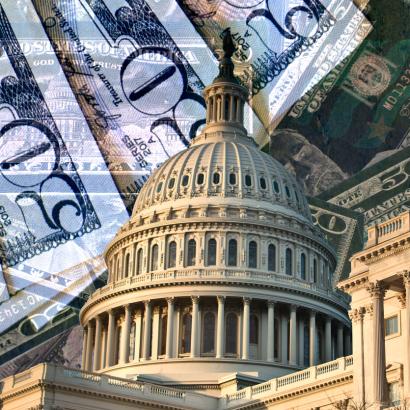
Illustration by Taylor Jones for the Hoover Digest.
|
But the downside surely is apparent. Truck drivers,
carpenters, janitors, and gardeners—unlike lawyers, doctors, actors,
writers, and professors—correctly feel that their jobs are
threatened, or at least their wages lowered, by cheaper rival workers from
Oaxaca or Jalisco. And Americans who live in communities where thousands of
illegal immigrants have arrived en masse are more likely to lack the money
to move when Spanish-speaking students flood the schools and gangs
proliferate. Poorer Americans of all ethnic backgrounds take for granted
that poverty provides no exemption from mastering English, so they wonder
why the same is not true for incoming Mexican nationals.
Our now-spurned laws were originally intended to
ensure an (admittedly thin) veneer of civilization over innate
chaos—roads full of drivers who have passed a minimum test to ensure
that they are not a threat to others; single-family residence zoning to
ensure adequate sewer, garbage, and water services for all; periodic county
inspections to ensure that untethered dogs are licensed and free of disease
and that housing is wired and plumbed properly to prevent mayhem; and a
consensus on school taxes to ensure enough teachers and classrooms for
sudden spikes in student populations.
|
The old utopian talk of a new borderless zone of dual cultures, spreading on both sides of a disappearing boundary, has faded. Now, we are
re-examining NAFTA and its facilitation of cross-border flows of goods, services—and illegal aliens and drugs.
|
The slow progress in rural California since the 1950s
of my youth—in which the county inspected our farm’s rural
dwellings, eliminated the once-ubiquitous rural outhouse, shut down
substandard housing, and fined violators in hopes of providing a uniform
humane standard of residence for all rural residents—has been
abandoned in just a few years of laissez-faire policy toward illegal
immigration. My own neighborhood is reverting to conditions common about
1950, but with the insult of far higher tax rates added to the injury of
nonexistent enforcement of once-comprehensive statutes.
Fairness about who is allowed into the United States
is another issue that reflects class divides—especially when almost
70 percent of all immigrants, legal and illegal, arrive from Mexico alone.
Asian-Americans, for example, are puzzled about why their relatives wait
years for official approval to enter the United States while Mexican
nationals come across the border illegally, counting on serial amnesties to
obtain citizenship.
These class divisions help explain the anomaly of the Wall Street Journal op-ed
page mandarins echoing the arguments of elite Chicano-studies professors;
both groups tend to ridicule the less-affluent Minutemen and
English-only activists. The elites do not experience firsthand the
problems associated with illegal immigration, but instead find millions of
aliens grist for their own agendas.
Indeed, every time someone crosses the border legally,
fluent in English and with a high school diploma, the La Raza industry and
the corporate farm or construction company alike are likely to lose a
constituent.
The ripples of September 11—whether seen in the
arrests of dozens of potential saboteurs in America or the terrorist
bombings in Madrid and London—remind Americans that our present
enemies can do us harm only if they can first somehow enter the United
States. It makes little sense to screen tourists, inspect cargo containers,
and check the passenger lists of incoming flights when our border with an
untrustworthy Mexico remains porous. While it may be true that the
opponents of illegal immigration have used the post–September 11 fear
of terrorism to further their own agenda of closing the border, they are
absolutely correct that at present the best way for jihadist cells to cross
into the United States is overland from the south.
Other foreign developments have also steered the
debate ever rightward. In the past decade, the United States has seen the
wages of sectarianism and ethnic chauvinism abroad: the unraveling of
Yugoslavia into Croatian, Serbian, and Albanian entities; the Hutu-Tutsi
bloodbath in Rwanda. And now almost daily we hear of Pashtun-Tajik-Uzbek
hatred among the multiplicity of warring clans in Afghanistan and the daily
mayhem among Kurds, Shiites, and Sunnis in Iraq. Why—when we are
spending blood and treasure abroad to encourage the melting pot and
national unity—would anyone wish to contribute to tribalism or foster
the roots of such ethnic separatism here in the United States?
Blue-state America once offered up the European Union
as the proper postmodern antidote to the United States. But just as we have
recoiled from the EU’s statist and undemocratic
tendencies—which have resulted in popular dissatisfaction, sluggish
economic growth, high unemployment, falling birth rates, and unsustainable
entitlement commitments—so, too, have its unassimilated Muslim
minorities served as another canary in the mine. The riots in France, the
support for jihadism among Pakistanis in London, and the demands of
Islamists in Scandinavia, Germany, and the Netherlands do not encourage
Americans to let in more poor Mexican illegal immigrants with loud agendas.
Then there were the April–May 2006
immigrants’ demonstrations in the United States, when nearly half a
million protesters took to the streets of our largest cities, from Chicago
to Los Angeles. Previously, naive Americans had believed that their
decisions about border security and immigration were in their own hands.
And while Chicano-rights organizations and employer lobbyists were often
vehement in their efforts to keep the border open, illegal aliens
themselves were mostly quiet about our internal legal debates. In contrast,
last spring Americans witnessed millions of people who not only were
unapologetic about their illegal status but were demanding that their hosts
accommodate their own political grievances, from driver’s licenses to
full amnesty.
The largest demonstrations—held on May Day, with
thousands of protesters waving Mexican flags and bearing placards depicting
the communist insurrectionist Che Guevara—only confirmed to most
Americans that illegal immigration was out of control and beginning to
become politicized along the lines of Latin American radicalism. I
chronicled in Mexifornia the anomaly of angry protesters waving the flag of the
country they vehemently did not wish to return to; the evening news now
beamed these images to millions.
Turmoil in areas of Mexico that send many illegal
aliens to the United States is especially worrisome. Recently, for example,
almost the entire state of Oaxaca was in near-open revolt over efforts to
force the resignation of Ulises Ruiz, the provincial governor. There was
widespread lawlessness, vigilantism, and at times the complete breakdown of
order. All this feeds the growing perception that illegal entrants
increasingly are arriving not merely as economic refugees but as political
dissidents who don’t hesitate to take to the streets here to demand
social justice, as they did back home.
More important still, Oaxaca’s troubles cast
doubt on the conventional wisdom that illegal immigration is a safety valve
that allows Mexico critical time to get its house in order. Some areas,
like Oaxaca, that send the most illegal immigrants to the United States
still experience the greatest social tensions—in part because of the
familial disruption and social chaos that results when men flee and
depopulated communities consequently become captive to foreign remittances.
The Mexican government’s attitude also has
persuaded Americans to close the borders.
|
The majority of middle-class and poor whites, Asians, African-Americans, and Hispanics wish to close the borders. To them, an economy built on inexpensive, off-the-books illegal labor has few advantages.
|
Worker remittances sent back to Mexico earn it
precious American dollars equal to the revenue from 500,000 barrels of
daily exported oil. Mexico cannot afford to lose its second-largest source
of hard currency and will do almost anything to ensure its continuance.
When Mexico City publishes comic books advising its citizens how best to
cross the Rio Grande, Americans take offense. Not only does Mexico brazenly
wish to undermine U.S. law to subsidize its own failures, but it also
assumes that those who flee northward are among its least educated,
departing without much ability to read beyond the comic-book level.
We are also learning not only that Mexico wants its
expatriates’ cash—and its nationals lobbying for Mexican
interests—once they are safely away from their motherland, but that
Mexico doesn’t have much concern about the welfare of its citizens in
America. The conservative estimate of $15 billion sent home comes always at
the expense of low-paid Mexicans toiling here, who must live in
impoverished circumstances if they are to send substantial portions of
their wages home to Mexico. (And it comes as well at the expense of U.S.
taxpayers, providing health-care and food subsidies in efforts to offer a
safety net to cash-strapped illegal aliens.) So it is not just that Mexico
exports its own citizens but that it does so on the expectation that they
are serfs of a sort, who, like the helots of old, surrender much of the
earnings of their toil to their distant masters.
But even more grotesque, in the past five years, the
Mexican real-estate market has boomed on the Baja California peninsula.
Once Mexico grasped that its own unspoiled coast was highly desirable for
wealthy expatriate Americans as a continuation of the prized but crowded
Santa Barbara–San Diego seaside corridor, it began to reform its
real-estate market, making the necessary changes in property and title law,
and it welcomed with open arms cash-laden subdividers looking to come
south. This is sound economics, but examine the ethical message: Mexico
City will send the United States millions of its own illiterate and poor
whom it will neither feed nor provide with even modest housing, but at the
same time it welcomes thousands of Americans with cash to build expensive
seaside second homes.
|
While opponents of illegal immigration may have used the fear of terrorism to further their own agenda, they are absolutely correct about this: the best way for jihadist cells to cross into the United States is overland from the south.
|
Of course, the ultimate solution to the illegal
immigration debacle is for Mexican society to bring itself up to the levels
of affluence found in the United States by embracing market reforms of the
sort we have seen in South Korea, Taiwan, and China. But rarely do Mexican
supporters of globalization, or their sympathetic counterparts in the
United States, see the proliferation of a Wal-Mart or Starbucks down south
in such terms. Rather, to them American consumerism and investment in
Mexico suggest only an owed reciprocity of sentiment: Why should Americans
get mad about Mexican illegals coming north when our own crass culture,
with its blaring neon signs in English, spreads southward? In such
moral-equivalence arguments, it is never mentioned that Americanization
occurs legally and brings capital, whereas Mexicanization comes about by
illegal means and is driven by poverty.
At the same time, focus has turned to the U.S.-born
children of Mexican illegal immigrants, in whom illegitimacy, school
dropout rates, and criminal activity have risen to such levels that no
longer can we dismiss Mexican immigration as an echo of the problematic but
eventually successful Italian model of a century ago. Then, large numbers
of Southern European Catholics, most poor and uneducated, arrived en masse
from Italy and Sicily, lived in ethnic enclaves, and for decades lagged
behind the majority in educational achievement, income, and avoidance of
crime—before achieving financial parity as well as full assimilation
and intermarriage.
Since 1990, the number of poor Mexican-Americans has
climbed 52 percent, a figure that skewed U.S. poverty rates. Billions of
dollars spent on our own poor will not improve our poverty statistics when
one million of the world’s poorest cross our border each year. The
number of impoverished black children has dropped 17 percent in the past 16
years, but the number of Hispanic poor has gone up 43 percent. We
don’t like to talk of illegitimacy, but here again the ripples of
illegal immigration reach the U.S.-born generation. Half of births to
Hispanics were illegitimate, 42 percent higher than the general rate of the
U.S. population. Illegitimacy is higher in general in Mexico than in the
United States, but the force multiplier of illegal status, lack of English,
and an absence of higher education means that the children of Mexican
immigrants have illegitimacy rates even higher than those found in Mexico.
Education levels reveal the same dismal
pattern—nearly half of all Hispanics are not graduating from high
school in four years. And the more Hispanic a school district becomes, the
greater the level of failure for Hispanic students. In the Los Angeles
school district, which is 73 percent Hispanic, 60 percent of the students
are not graduating. But the real tragedy is that, of those Hispanics who do
graduate, only about one in five will have completed a high school
curriculum that qualifies for college enrollment. That partly helps explain
why at many campuses of the California State University system, almost half
of the incoming class must take remedial education. Fewer than 10 percent
of those who identify themselves as Hispanic have graduated from college
with a bachelor’s degree. I found that teaching Latin to
first-generation Mexican-Americans and illegal immigrants was valuable not
so much as an introduction to the ancient world but as their first
experience with English grammar.
Meanwhile, almost one in three Mexican-American men
between the ages of 18 and 24 recently reported being arrested, one in five
has been jailed, and 15,000 illegal aliens are currently in the California
penal system.
Statistics like these have changed the debate
radically. Even as politicians and academics assured the public that
illegal immigrants came here only to work and would quickly assume an
American identity, the public’s own ad hoc and empirical observations
of vast problems with crime, illiteracy, and illegitimacy have now been
confirmed by data. Ridiculed by elites as evidence of prejudice, these
concerns, statistical studies now show, reflect hard fact.
The growing national discomfort over illegal
immigration more than four years after Mexifornia appeared is apparent not only in the rightward shift
of the debate but also in the absence of any new arguments for open
borders—while the old arguments, Americans are finally concluding,
really do erode the law, reward the cynical here and abroad, and needlessly
divide Americans along class, political, and ethnic lines.
This essay appeared in the winter 2006–07 issue
of City Journal.
Available from the Hoover Press is The Debate in the
United States over Immigration, edited by Peter Duignan and Lewis H.
Gann. To order, call 800.935.2882 or visit www.hooverpress.org.
Victor Davis Hanson is the Martin and Illie Anderson Senior Fellow at the Hoover Institution. He is a classicist and an expert on the history of war. A regular contributor to National Review Online and many other national and international publications, he has written or edited sixteen books, including theNew York Times bestseller Carnage and Culture: Landmark Battles in the Rise of Western Power. His most recent book is A War Like No Other: How the Athenians and Spartans Fought the Peloponnesian War. He was awarded a National Humanities Medal by President Bush in 2007.
|
QUICK LINKS:
FREE ISSUE
EMAIL ALERT
CONTACT US
TOOLS:


|