

|
|
FEATURES: Resurgent Russia? Rethinking Energy Inc.
By Andreas Goldthau
Five myths about the “energy superpower”
Russia is back on the international stage. After a decade of eroding political and economic
power, the domestic economy flourishes and, as state budget revenues grow, so
do egos in the Kremlin and Russia
’s global aspirations. The Russian resurrection is mainly attributed to high oil
prices, which have enabled the country to overcome the
1998 meltdown, to maintain an average rate of economic growth of 6.7 percent for the past decade, and to build a $1 trillion economy, the basis of its new strength. At the same time, Russia’s energy policy has become the subject of increasing controversy. Western
observers regard energy as the Kremlin
’s major foreign policy tool, as countries like Ukraine or Georgia have come
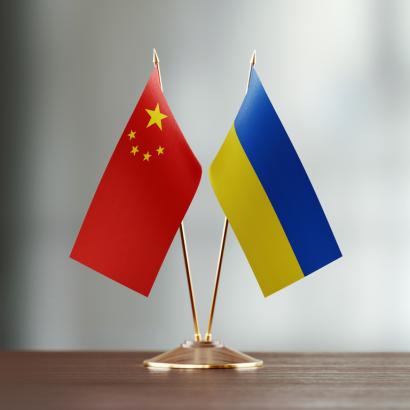
recently and painfully to learn. Fears have emerged that a looming Sino-Russian
alliance, glued together by oil and gas deals, could challenge existing power
structures
— and U.S. dominance — on the international scene. In other words, as conventional wisdom reckons, the
Western world is faced with a
“corporate Russia” which is economically fueled by oil and gas, steered by a semi-authoritarian
government with a clear geopolitical agenda, able to lubricate political
alliances by oil and gas deals, and equipped with a foreign policy arm called
Gazprom.
These common perceptions of Russia are understandable at first sight. Russia
owns 26.6 per cent of the world’s proven gas reserves, and 6.2 per cent of the world’s proven oil reserves. In 2005, the country accounted for 21.6 per cent of global gas production and for 12.1 per cent of global crude oil production.1 In that respect, Russia could in fact be perceived an “energy superpower.” However, conventional wisdom is wrong on five counts. First, Russian energy is
not primarily about geopolitics. Its rhetoric to the contrary, the Kremlin does
not dispose of an effective
“energy weapon.” Second, the rationale behind Russia’s recent “gas disputes” with its neighbors is to a large extent profit maximization, rather than
punishing renegade governments in the neighboring Commonwealth of Independent
States (
cis). Third, Moscow will not subordinate its economic interests in the name of a
geostrategic Sino-Russian alliance. Fourth, Russia will have a hard time
retaining the status of an
“energy superpower” as it risks running out of gas instead. Finally, Russia is less reliant on oil
and gas than assumed, at least as regards the drivers of its recent economic
success story. In a nutshell: Western excitement about the Russian
“Energy Inc.” appears to be caused largely by a well crafted piece of Russian
pr.
By examining the five greatest “myths” of Russian energy, this article challenges some of the key assumptions
underlying Western policy towards Russia. It reveals the limits of the
prevalent argumentative lines on Russian energy, and offers an alternative
explanation for some recent Russian policy choices. Finally, it draws some
conclusions on foreign policy implications for the U.S. and the Western world.
Myth 1: Russia has an energy weapon
The truth is:The Kremlin has only a limited ability to use Russian oil and gas as a “weapon.” The Russian market is dominated by ten vertically integrated oil companies,
which control
95 percent of Russia’s crude production and more than 80 percent of its refining capacity. While the Russian state now controls a
significantly higher share of the domestic oil industry than it did during the
1990s, state-controlled companies at present make up only around 25 percent of the country’s oil production and around 16 percent of its refining capacity, thanks to a series of takeovers of private
companies by state-owned Rosneft and Gazprom.
2 The domestic Russian oil market is fairly competitive, with prices determined by
world markets and by the taxation policies of the Russian government.
From these few facts, three simple considerations can be deduced. First, given
that the Russian state does not hold a majority in domestic oil production
despite recent takeovers, the Kremlin is able to
“steer” the oil industry for political purposes only indirectly, i.e., via tax
incentives, export regimes, pipeline access, predetermined auctions on new
fields, and the like. While these are by no means negligible instruments, they
hardly render Russian oil an effective foreign policy tool. Second, Russian oil
companies
— state- or nonstate-controlled — trade their oil on a global market. Unless a majority of Russian crude is bound
in bilateral contracts, a rather unlikely scenario in the foreseeable future,
Russian oil companies do not have great leverage over individual consumers.
Whenever Russia decides to cut oil supply to a consuming country, it will have
no major effect, as the targeted country can purchase the shortfall on the spot
market and circumvent the
“blockade” (unless
all producer countries, i.e., opec, decide collectively to block oil supply to their customers — which is unlikely to happen, especially if a non-opec member pushes for it). In case of some Central European countries like Slovakia,
where the existing pipeline infrastructure does not allow replacing Russian
crude oil in the short run, potential cut-offs can be largely absorbed by using
alternative transport routes such as railroads.
Third, and related, the Russian state may well initiate further
renationalizations of oil assets and expand state control over the oil industry
in the future. But such moves will only diminish the performance of the Russian
oil sector and reduce output growth rates, as similar experience in other
countries has shown. Yet they will not affect oil markets as such, nor are they
likely to render oil an effective foreign policy tool.
That leaves gas. True, Russia holds the world’s largest gas reserves, and it has emerged as the most important supplier
country to Western and Central Europe, where it covers up to
100 percent of imports for some countries. And, true, this dependence will become
even more pronounced in the near future, when depleted European resources need
to be compensated by higher imports
— also from Russia. Despite this apparent dependence of European gas customers,
however, there is no real case for an
“energy weapon” for two reasons, both of which lie in the nature of the gas market. First,
since exploration of gas fields and pipeline construction are extremely
expensive and time-consuming, producers and consumers engage in long-term
contracts that usually cover
20 years or more and entail destination clauses prohibiting secondary trading.
Based on these take-or-pay contracts, the producer is able to invest in a
multibillion-dollar project, as there is a constant and reliable return on
investment. The consumer enjoys a guaranteed supply for several decades, thus
reducing uncertainty and costs. Second, gas is a regional play, as it is almost
exclusively transported via pipelines.
3 Hence, if either the producer or the consumer wants to opt for exit and start
dealing with an alternative contractual partner, he has to make a high
additional investment, i.e., build a new pipeline. Given extremely high upfront
costs, it becomes very costly for either involved party to leave an established
bilateral contractual gas relation. A quick look at the dense pipeline grid
connecting Europe and Russia reveals that neither side can be interested in
dumping all the money each have invested; nor do they have a real choice.
Russia does not have the option to sell its gas to, say, China, since the
existing infrastructure is insufficient, at least in the short run. Nor can the
Europeans simply turn away from their Russian provider. In other words, both
sides are mutually dependent, from the very moment they have committed to a
contract. What follows from the structural logic of the gas market is that
there is only a limited possibility for Russia to use natural gas as a foreign
policy instrument and unilaterally cut gas supplies to a consuming country
without significantly and immediately affecting its own budget revenues. This
does not look like an attractive move for a country whose largest share of
federal budget income stems from hydrocarbon sales.
This is qualified somewhat with respect to small purchasers like Moldova or
Georgia, where a cut in gas supplies hurts the affected country much more than
the implied loss of revenues hurts Russia. This asymmetry provides Russia with
a certain amount of leverage in the short run. As the past has shown, however,
attempts to exploit this asymmetry have not caused major policy change in the
affected countries. A strong limitation for Russia to make use of the asymmetry
lies in the fact that many smaller purchasers are at the same time transit
countries. This implies that a cut in gas supplies always affects the consumers
on Western European markets
— a market Gazprom aims at serving reliably, and which it has already severely
threatened by the cutting of supplies to Ukraine.
Myth 2: Gazprom is instrumental in the Kremlin’s foreign policy agenda
The truth is:
Gazprom and the Kremlin are intertwined, but the interests of both entities do
not necessarily coincide. A case in point would be the recent gas disputes with
Russia
’s “near abroad” (the 14 former Soviet republics that had declared their independence by the time the
Soviet Union broke up at the end of
1991), which are to a large extent triggered by a regulated Russian home market,
forcing Gazprom to adopt aggressive pricing strategies with foreign markets.
As gas makes up more than half of Russia’s primary energy consumption, the domestic Russian gas market is highly
politicized.
4 Gazprom, the gas monopolist, produces about 86 percent of Russian gas and also controls the entire domestic pipeline system.
At the same time, it is obliged by federal law to ensure supplies for domestic
consumption by households and industry. Russian gas consumption, which has been
around
400 billion cubic meters (bcm) during recent years, is projected to continue to rise in all existing
forecasts. To date, more than two-thirds of Russia
’s annually produced 600 bcm
is already used in households, industry, transport, heating, and power plants.
At the same time, Russia is a highly inefficient user of energy, using
3.2 times more energy per unit of gdp than the eu-25, most of this as gas.5 The reason for this consumption pattern lies in Russia’s dual pricing system, which is designed to subsidize Russian households and
domestic manufacturers. Thus, domestic Russian gas prices are only a faction of
prices charged on foreign markets, amounting to only
17 percent of West European gas prices in 2006 — 29 percent when taking into account transit charges.6
Russia can’t cut gas supplies to a consuming country without significantly affecting its own budget
revenues.
In order to generate revenues, then, Gazprom has to tap foreign markets. Most of
the easily accessible markets, such as those in Western Europe, are highly
profitable. In fact, to date, Gazprom earns virtually all its profits from
exports to Western Europe, although this market only accounts for
25 percent of total production.7 In turn, if accessible foreign markets are not attractive for some reason,
Gazprom tries to
render them more profitable, and raises prices, if it can. This is what Russia’s near abroad has had painfully to learn in recent times. After heavily
subsidizing its former Soviet allies throughout the past
15 years, Gazprom has increased gas prices in cis countries and pushed to equalize prices net of transit fees with those it
charges its West European clients. This policy has resulted in several gas
disputes with neighbors such as Ukraine and Georgia. It has even hit Belarus,
traditionally a strong Russian ally
— a fact that presented the Kremlin with considerable problems when forced to
explain suddenly raising gas prices on the last remaining pro-Russian
government in Central Europe. In case an affected country is unable to pay the
new price, Gazprom accepts in-kind payments, including shares of national or
regional gas providers or pipeline grids
— assets it would otherwise have to buy as an integral part of its expansion
strategy.
Hence, the recent gas disputes appear to be about profits, not about politics.
Indeed, they seem much less part of a geopolitical Kremlin game than the result
of a rational strategic move by a company that has to compensate for a
loss-generating home market. In that respect, and ironically, it may be that
Vladimir Putin
’s foreign policy is increasingly driven by Gazprom’s business interests rather than vice versa. At the bottom line, it is important
to regard Gazprom and the Kremlin as two entities which, though deeply
interwoven, do not necessarily share identical interests. If both players
’ interests coincide, as they have in the case of Gazprom’s reclaims of Ukraine’s $
1.3 billion debt after the Ukrainian elections, the Kremlin might be able to use
Gazprom for political reasons. But not necessarily at any occasion it would
like to.
Myth 3: The recent Russian economic recovery is due to high energy prices
The truth is: What has driven the Russian economic recovery has mainly been a boom in
domestic consumption and investment, not energy. Russia has been growing
impressively during recent years, at annual growth rates between
6 and 10 percent. The country’s gdp hit $1 trillion in 2006, rendering Russia one of the world’s ten largest economies again. True, due to the country’s natural endowments, hydrocarbons are a major factor in the Russian economy and
in state finance. The export of raw materials, mainly oil, gas, and refined oil
products, has soared since the
1990s, accounting for about two-thirds of Russian exports overall in 2006.8 Still, hydrocarbon sales account for a major part of state revenues, just as
recent oil price increases have resulted in soaring tax revenues. The total
share of government revenues stemming from hydrocarbon sales has more than
doubled during the past four years, amounting to almost
40 percent in 2006.9
At the same time, however, oil and gas add less to overall Russian gdp and economic growth than the above figures would suggest. In fact, oil and gas
presently contribute only about
20 percent of Russian gdp.10 Moreover, the energy sector grew below the Russian average during recent years.
The gas sector performed especially poorly.
11
Moreover, the initial kick-start of Russian economic recovery did not lie in oil
prices but in the
1998 financial crisis: As a consequence of the Russian government’s default, the ruble was strongly devalued, which led to greater competitiveness
of Russian products abroad, favored domestic over foreign goods, and thus
spurred consumption of domestic Russian products.
12 In addition, the rise of oil and gas prices supported economic recovery, as did
general improvements in management and technology of private companies, a cut
in government spending, and the introduction of a new tax system in
2000. Double-digit annual increases in capital and labor productivity have further
contributed to securing a stable Russian growth path.
Finally, while energy revenues are dominant on the income side of the
governmental budget, they are far less important in financing governmental
expenditures. In fact, as experts have noted, more than half of Russian oil and
gas revenues are saved in a
“Stabilization Fund.” The latter, a lesson learned from the 1998 plunge in oil prices and its devastating effects on state finances, presently
contains financial reserves equal to around
9 percent of gdp.13 Hence, and counter to conventional wisdom, the six-year-long Russian economic
growth has mainly domestic roots.
Myth 4: Russia is an energy superpower
The truth is: Given heavy and unresolved investment challenges in the Russian oil and gas
sector, it is questionable whether Russia will keep its current position on
world markets, let alone increase its market share. True, Russian oil and gas
reserves are impressive. The country owns nearly
50 trillion cubic meters of proven gas reserves, or 26.6 per cent of the world’s total, and proven oil reserves of 75 billion barrels, 6.2 per cent of the world’s total. In 2005, Russia accounted for more than one fifth of global gas production and for 12.1 percent of global crude output. While Russian oil reserves will last “only” another 21 years at present production levels, its gas reserves will last another 80.14 Russian oil production is expected to expand from current levels of 9.5 million barrels per day (mbd) to 10 mbd in 2010 and 11mbd in 2030.15 As for gas, projections differ somewhat according to source. While the Russian
government
’s “energy strategy” defines a possible range of output of 680 to 730 billion cubic meters in 2020, other Russian sources see overall production between 770 and 901 bcm
by that year.16 Western sources project Russian gas production to run between 801 and 850bcm in 2020, and to hit even 1 trillion bcm by 2030.17
However, a striking lack of investment makes these existing projections appear
highly optimistic. The
“giant fields” of Yamburg, Urengoy, and Medvezh’ye, which currently account for more than 60 percent of total Russian production, have started to decline. Production at
Zapolyarnoye, a fourth giant field that came on stream in
2001, has recently reached its peak.18 In order to compensate for declining output from these fields and to meet
contractual commitments, Russia urgently needs to make new upstream projects
start producing. But as most new fields are smaller than the depleting ones
and, in addition, are located in the far north, costs for exploration and
production (
e&p) are about to rise significantly. The last known giant field of Shtokman,
located off-shore in the arctic Barents Sea, is projected to cost $
34 billion until it begins producing in 2013.19 e&p costs for developing fields on the arctic Yamal Peninsula and on the Ob-Taz
shelf will amount to $
25 billion, and yet another $40 billion in pipeline infrastructure to connect these fields to the existing
system.
20 On average, the Russian gas sector will have to spend $17 billion per year through 2030 in e&p projects and in the maintenance of current fields in order to meet domestic
demand and to fulfill export commitments.
21
As for the oil sector, the picture looks similar. As important fields have
peaked, development of new fields will have to cover all of Russia
’s annual oil growth in the next five years. Projected accumulated investment
needs range from Russian Ministry of Energy estimates of $
240 billion until 2020 to iea forecasts of $400 billion by 2030.22 But while the largely private Russian oil sector can be expected to respond to
market signals, the prevalent monopolistic structure of the domestic Russian
gas market is susceptible to avoiding necessary investments. At present,
Gazprom has only committed to a total of $
13 billion of capital spending per year through the next years — considerably less than projected needs — and the rest has to come from private companies.23 Yet, as Gazprom uses its control of the domestic pipeline grid to restrict
third party access and prevents independent producers from exporting gas,
private gas companies have little incentive to invest in upstream projects.
Moreover, as it is a declared part of Gazprom
’s business strategy to increase acquisitions abroad and to invest outside its
core business, considerable parts of the company
’s capital spending will not flow into gas production or pipelines. Further,
recent bids for foreign and domestic companies, such as the $
13 billion takeover of Sibneft, have imposed a heavy debt burden on the company.
Despite the fact that many of these bids have been carried out via asset swaps,
they have considerably reduced Gazprom
’s financial scope. Finally, pull-outs of Western companies from promising
Russian upstream projects and recently approved laws restricting foreign
ownership of oil and natural gas assets deprive Gazprom of foreign capital as
well as managerial and technical expertise for developing new fields. Overall,
due to heavy underinvestment, the Russian gas balance is at risk of turning
negative.
In a nutshell, unless the Russian government adopts a fundamentally different
domestic pricing strategy that prompts further investment, triggers significant
gains in domestic energy efficiency, and frees supply potentials for exports,
Russia will barely be able to maintain its perceived status as an energy
superpower. Otherwise, and paradoxically, the country with the world
’s largest energy reserves may virtually run out of gas.
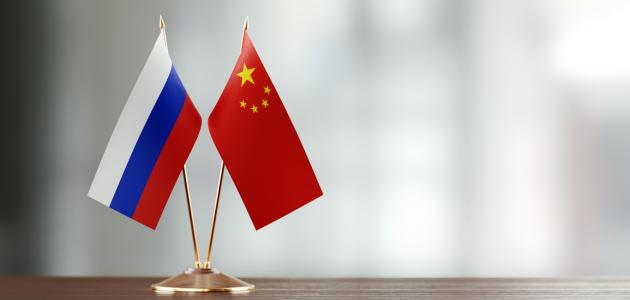
Myth 5: There is a looming Sino-Russian alliance based on oil and gas
The truth is: As Russia and China are primarily strong strategic rivals, especially with
respect to Central Asian oil and gas, there will be no long-term strategic
alliance based on energy. After decades of strained bilateral relations, and
having solved remaining border disputes over territories in Russia
’s Far East in 2005, Russia and China have improved their relations in recent years. This trend has
become obvious in several joint military exercises in
2005 and 2007, in enhanced economic cooperation, and especially in collaboration in the
Shanghai Cooperation Organization (
sco), which Moscow and Beijing have managed to render as a vehicle to limit
Washington
’s influence in their common near-abroad. This emerging Sino-Russian alliance has
led to concerns. Several observers have suggested that oil is likely to be the
glue between Russia, as a major energy producer, and China, as a rising
consumer
— enhancing the emerging cooperation and ultimately leading to a geopolitical
partnership that challenges U.S. interests and power. Yet, while at first sight
they may seem persuasive, these concerns lack substance at the second. In fact,
the countries
’ strategic interests in oil and gas are antithetical, especially with respect to
the upcoming
“Great Game” over Central Asian energy resources.
Russia’s recent and successful efforts to enhance control over Central Asian energy by
committing Turkmenistan to ship its gas to Western markets via its pipeline
grid was not only a blow to U.S. and European efforts to tap energy sources
independent from Russian influence; it was also a step toward a fiercer
Russian-Chinese competition on regional energy resources. China
’s recent oil and gas deals with Central Asian countries, in turn, run counter to
Russia
’s strategic goal of monopolizing Central Asian gas. A
30-year natural gas deal with Turkmenistan on 30bcm annually and an oil pipeline project with Kazakhstan on 1 mbd now provide China with access to the Caspian Sea’s rich oil resources. And, most important, these Chinese deals deprive Gazprom
of an indispensable fallback: Given looming investment gaps and Gazprom
’s hostility to independent domestic gas producers, additional purchases from
Central Asia are an indispensable factor in Gazprom
’s business strategy of keeping the overall Russian gas balance positive. In
fact, if Gazprom is to cover projected Russian and European demand in
2010, it not only has to meet its entire production target and change access policy
to its transport grids in order to allow for a considerable increment of output
by other Russian producers; it also has to dispose of the entire Central Asian
export potential for re-export to Europe.
24
Reflecting this emerging strategic competition, China has recently undermined
Russian attempts to make the
sco the nucleus of a regional energy organization — in which Moscow would have been the dominant partner. Further, several
high-profile energy contracts between Russia and China, including the much
debated Altai gas pipeline, have been put on hold. Moreover, after having
played China against Japan for years over the planned
1.6 mbd Eastern Oil Pipeline that would connect the Siberian Angarsk oil fields with
either the Chinese or the Japanese market, Russia has finally opted for Japan.
Finally, given Moscow
’s efforts to strengthen the state’s grip on strategic sectors, Beijing’s desire to buy into Russian upstream assets by its state-owned oil companies — a dominant strategy in the country’s push for energy supplies and its favored path to improved mutual economic
relations
— will not materialize.
At the bottom line, then, there is no looming geopolitical “axis” between Russia and China based on oil and gas. Neither Moscow nor Beijing will
be willing to subordinate their geo
economic interests in the name of a geostrategic Sino-Russian alliance. At best, their
bilateral relations will be characterized by classical, if strained, business
contracts between an energy producer and an energy consumer
— if not by a fierce competition over resources in their common near abroad.
It’s about rules, not geopolitics
In sum, russia has not become the “Energy Inc.” of Western predictions. While it has attributes of a petro-state, the country’s economic future will depend much less on energy prices than on its ability to
manage unfavorable demographics, contain still-rampant corruption, and improve
poor public management. Given the strong growth of the nonresource sectors,
Russia
’s economic future will probably be based on industry and services rather than on
oil and gas. And while its government may have a strong geopolitical agenda,
that may not be pursued with the help of a state-run gas industry. As a brief
look at figures has shown, an effective energy weapon appears to be the Kremlin
’s wishful thinking rather than reality. Western policy toward Russia, therefore,
should be based on thorough analysis of available data rather than on
conventional wisdom. Instead of adopting a reflexive geopolitical perspective
on Russian energy, Western policymakers should regard it as a commodity that,
even if politicized, should be dealt with in terms of regulations on global or
regional markets, through the means of dispute settlement mechanisms, and in
the frame of investment regimes and trade agreements.
The answer to upcoming challenges stemming from Russian oil and gas will not lie
in an
“Energy nato” or an “Energy osce,” ideas that invoke the Cold War. Instead, Western policies should aim at
establishing a framework providing reciprocal benefits for producers and
consumers. Agreements like the Energy Charter Treaty (
ect), a legally binding document on rules in investment, transit, and trade of
energy, would provide the needed planning security for (Russian) producers and
(European) consumers alike. In particular, the
ect’s dispute-settlement mechanism would prove helpful in preventing future
disagreements from turning into conflicts. Major countries, including Russia
and the U.S., have abstained from ratifying the document. Committing them to
the
ect would go a long way to enhance energy security.
Andreas Goldthau is a Transatlantic Fellow at the RAND Corporation.
1 “Statistical Review of World Energy,” British Petroleum (2006).
2 See, among others, Yulia Woodruff, “Russian Oil Industry Between State and Market,” Fundamentals of the Global Oil and Gas Industry, Petroleum Economist Publications (2006).
3 Liquefied Natural Gas (lng), commonly regarded as a panacea for European energy security, will not provide
a real alternative at short sight, mainly due to prohibitively high up-front
costs.
4 “Word Energy Outlook,” International Energy Agency (2004).
5 “Sustainable Energy in Russia,” Sector Factsheet, European Bank for Reconstruction and Development. Available at http://www.ebrd.com/pubs/factsh/themes/eerus.pdf.
6 “Russian Gas,” United Bank of Switzerland Investment Research (2006). Available at http://www.ubs.com/investmentresearch.
7Gazprom Annual Financial Report 2006 (2007).
8 “Country Analysis Briefs: Russia,” Energy Information Agency (2006). Available at: http://www.eia.doe.gov/cabs/russia.html.
9“Russian Federation, 2006,” Article iv Consultation. Staff Report, imf Country Report 06/429, 35.
10“Russian Economic Report, 13,” World Bank (2006).
11“Economic Survey: Russian Federation, 17,”oecd (2006), 25.
12 “Economic Survey: Russian Federation , 17” (2006), 24.
13 “Russian Economy: Trends and Perspectives,” Monthly Bulletin, Institute for the Economy in Transition (December 2006).
14“Statistical Review of World Energy”(2006).
15“Word Energy Outlook” (2006).
16 A. Ananenko, A. Kontorovich, V. Kulezhov, O. Yermilov, A. Kozhubaev, V.
Livshits,
“Russia’s Gas Strategy at a Glance,” Oil and Gas Vertical. Available at http://www.ngv.ru/article_en.aspx?articleid=22326#16-2006-6_5.
17 “Word Energy Outlook,” (2004); “International Energy Outlook,” Energy Information Agency(2006).
18 “Russia Energy Survey” (2002); “Russian Gas” (2006).
19“Russian Gas” (2006).
20 Ananenko et al., “Russia’s Gas Strategy.”
21The Russian Ministry of Energy forecasts investment needs of $120–200 billion between 2002 and 2020. V. Ivanov, “Energy Strategy of Russia for up to 2020: Balancing Europe with the Asia-Pacific region,” erina Report, 53 (2003); the Asia Pacific Energy Research Centre estimates total investment needs between 2004 and 2030 at $295–401 billion. “apec Energy Demand and Supply Outlook 2006,” Institute of Energy Economics, Tokyo.
22 “Energy Strategy of Russia for up to 2020”; “World Energy Outlook” (2004).
23“Word Energy Outlook” (2006).
24“Russian Gas” (2006).
|
QUICK LINKS:
EMAIL ALERT
CONTACT US
TOOLS:


|