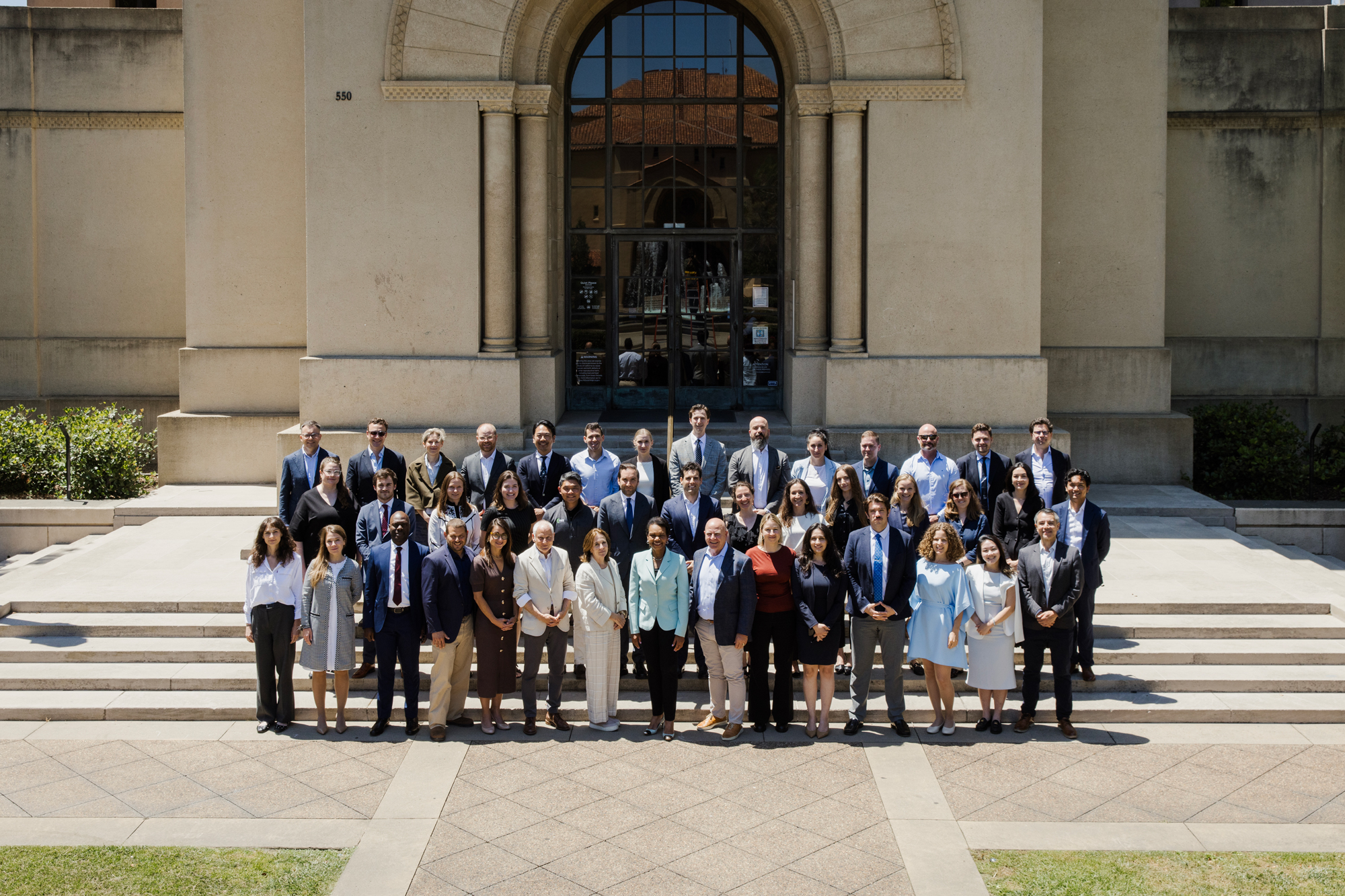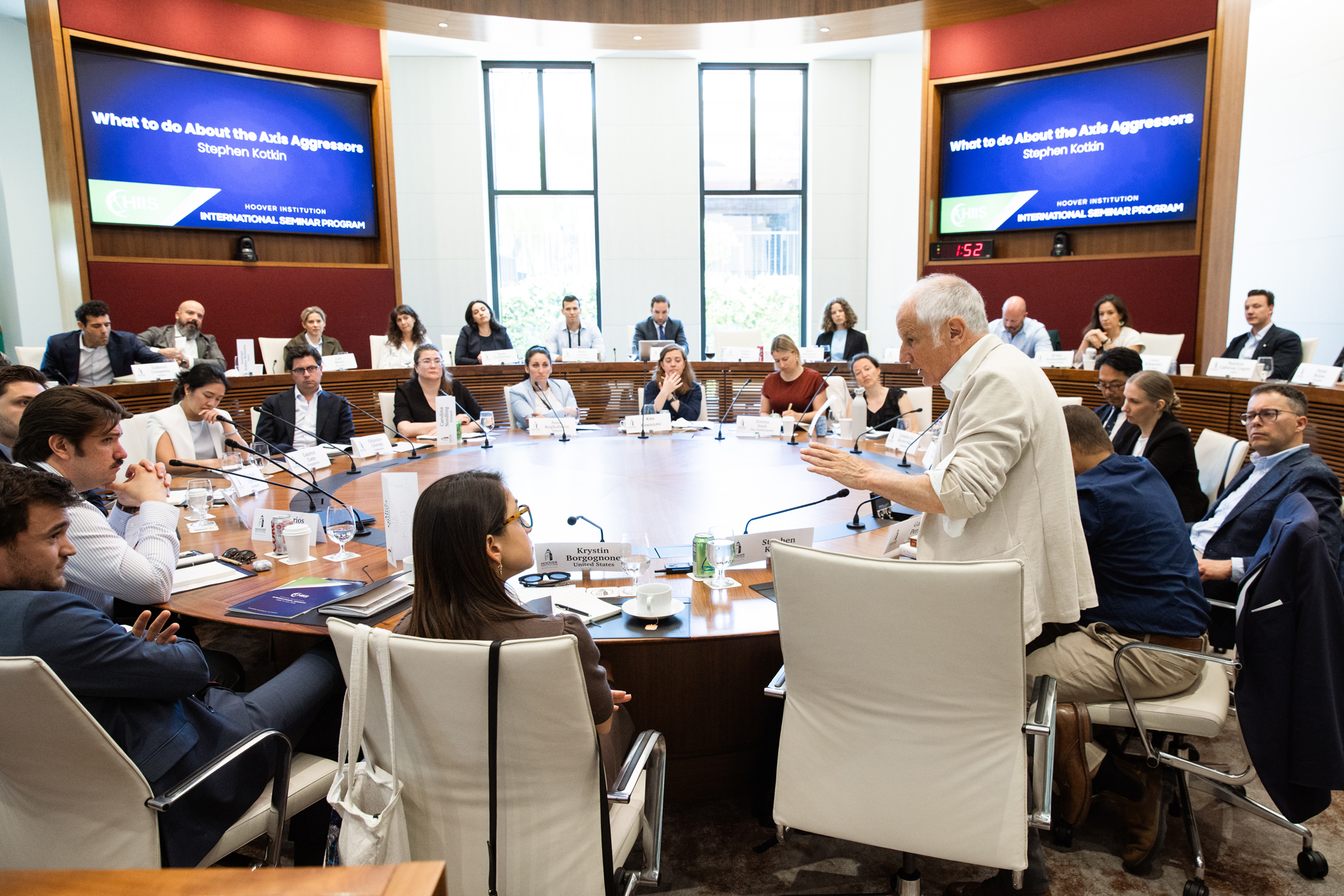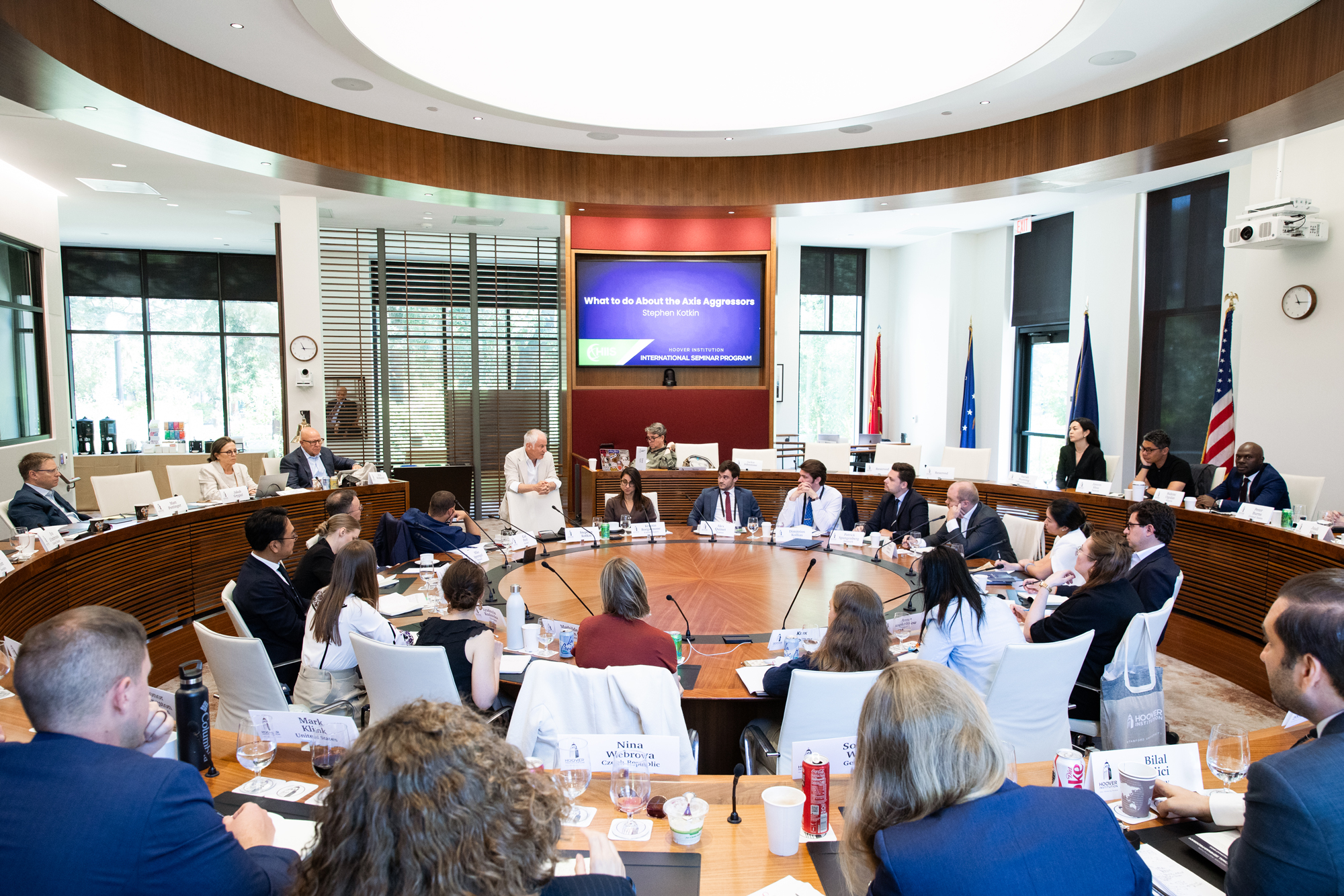
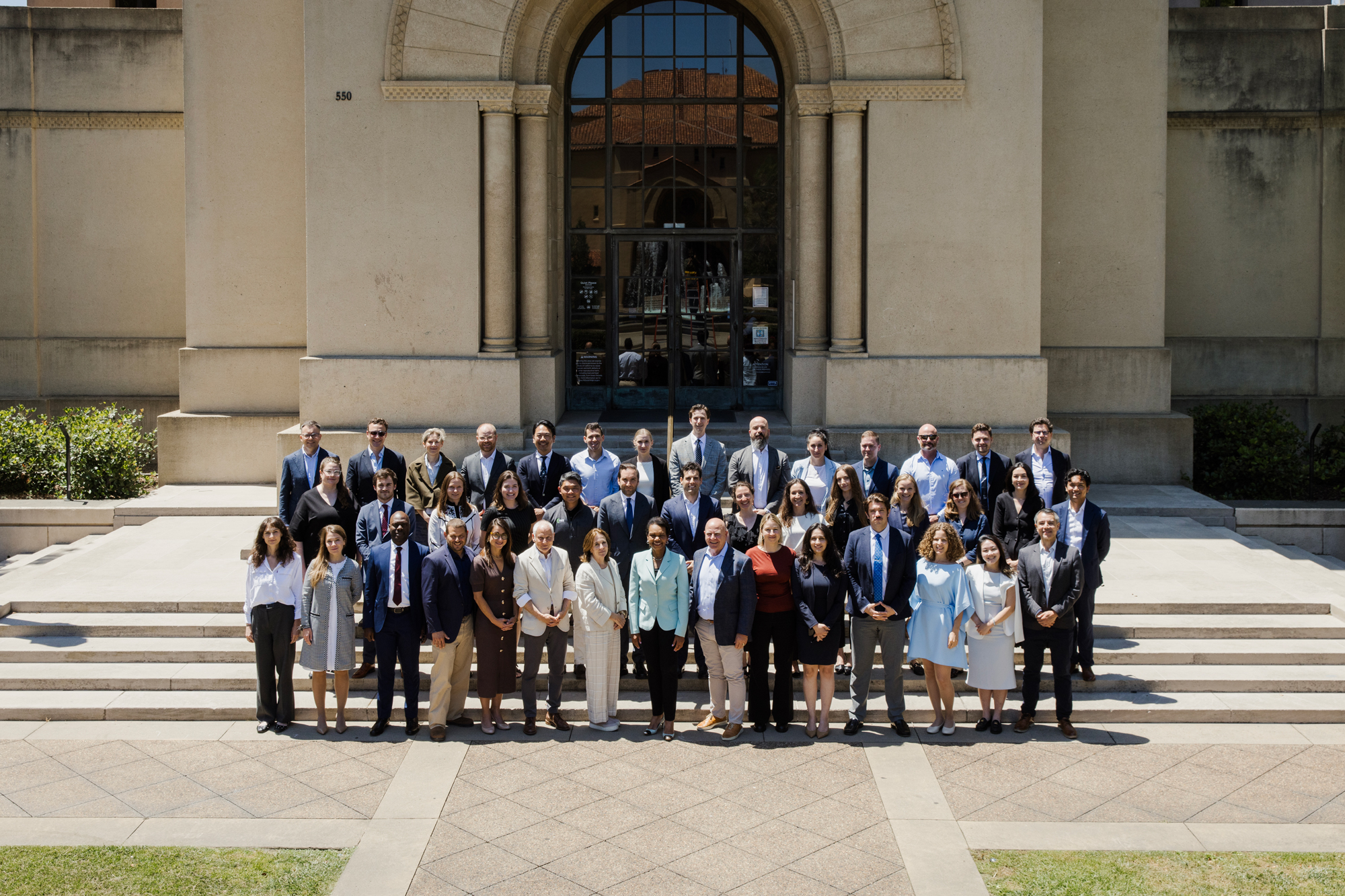
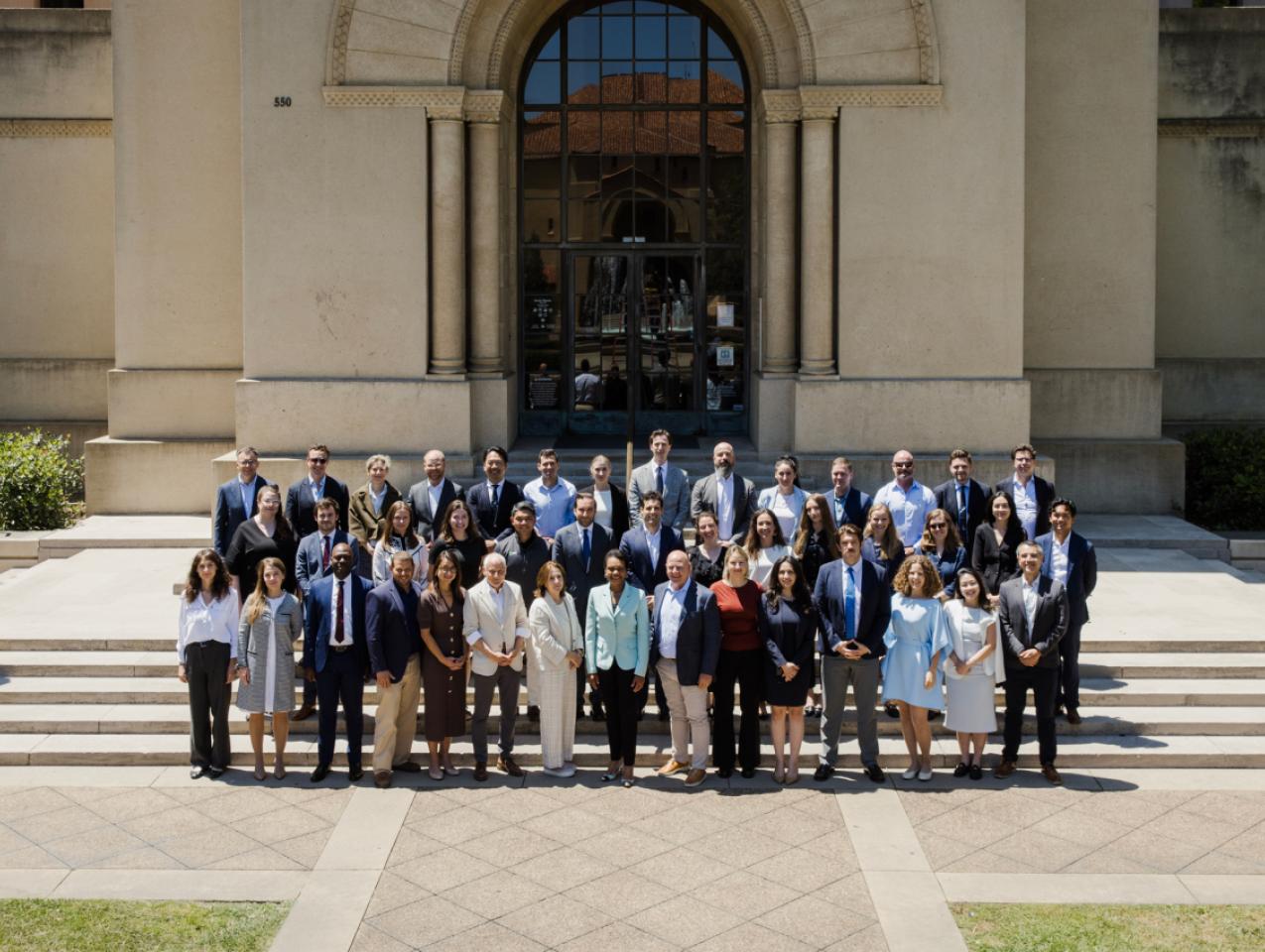
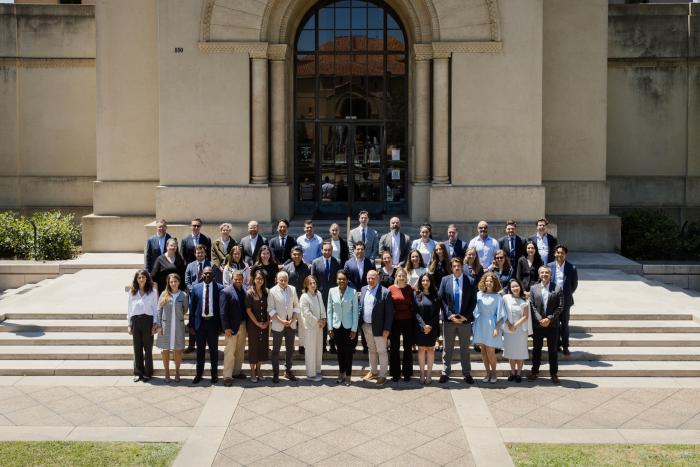
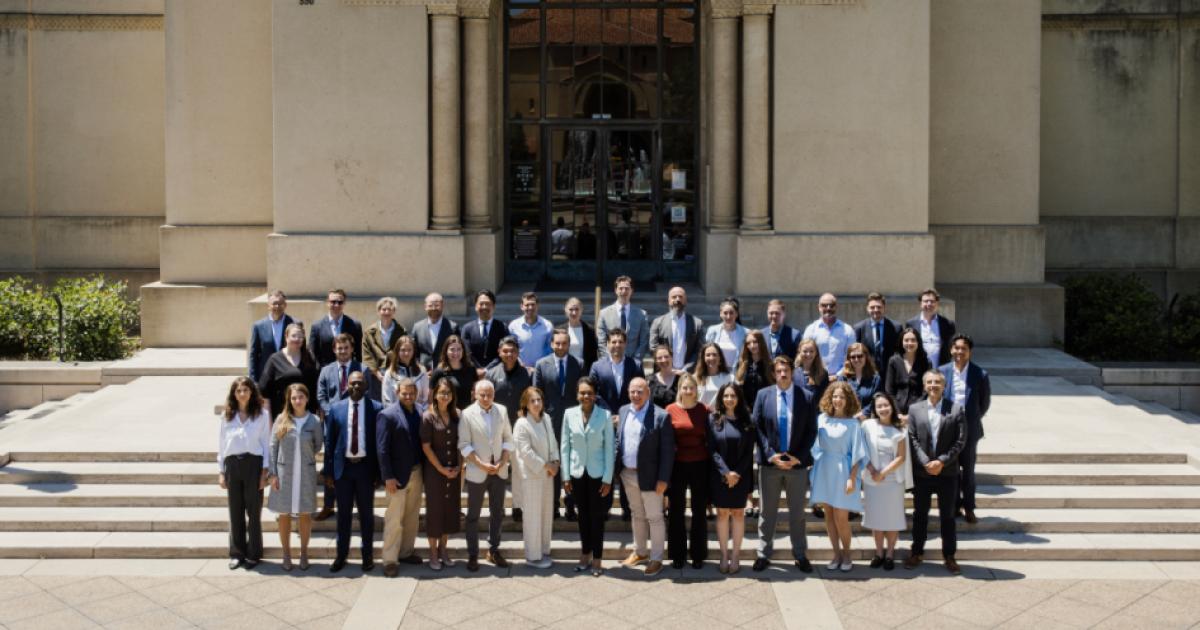
Hoover Institution (Stanford, CA)—The Hoover Institution hosted its fifth annual International Seminar from June 20 to 26 on the Stanford University campus, bringing together thirty-seven midcareer diplomats and national security professionals from like-minded nations for discussions about the political, economic, military, and technological challenges confronting free societies around the world.
Cohosted by Fouad and Michelle Ajami Senior Fellow H. R. McMaster and National Security Visiting Fellow Nadia Schadlow, the Hoover Institution International Seminar (HIIS) welcomed professionals from Germany, Finland, Ukraine, Ireland, France, Nigeria, Israel, Chile, Singapore, Kosovo, and other nations.
HIIS is modeled on the international seminar established and led by the late scholar and statesman Henry Kissinger when he was a professor at Harvard University prior to his public service as national security advisor and secretary of state in the Nixon and Ford administrations. At Harvard, Kissinger brought emerging leaders from around the world together throughout the 1950s and 1960s to deepen their understanding in the values of democracy and strengthen international cooperation.
Today, the Hoover seminar applies this concept to a new set of challenges. Participants engage Hoover scholars and other leading experts to develop a common operating picture for understanding threats and opportunities facing their nations, exchange ideas about how like-minded countries can work together, and form relationships and build networks that extend beyond their week at Stanford.
“International relations are built on trust. And we have the unique opportunity here to start building that trust with different representatives of so many different countries, not only the United States but also Europe, Asia, and Latin America,” said Patricio Cabezas, consul general of the Consulate of Chile in San Francisco and HIIS 2026 participant.
The seminar is accepting invitations for its 2027 iteration. Learn more here.
“This special conference enables policymakers from the US, her allies, and strategic partners to establish a common understanding of the challenges and opportunities facing our respective nations,” McMaster said. “Our deliberations yielded actionable proposals for how we may cooperate to address these challenges and advance our shared interests.”
This year’s discussions reflected an international environment increasingly shaped by strategic competition, conflicts in the Middle East and Eurasia, tensions in the Indo-Pacific, disruptions in the energy markets, strains in global trade relationships, and the acceleration of groundbreaking technologies, most notably artificial intelligence.
"We are in the midst of a renegotiation of what the international order should look like,” Schadlow said. “Identifying common problems, assumptions—which may be different—and competing approaches to solving problems is critically important. It will not be easy, but it's imperative that we advance an international system that is aligned with US interests and that of our allies and partners."
Hargrove Senior Fellow Elizabeth Economy discussed Xi Jinping’s ambitions for China to transform the international system in ways that are fundamentally antithetical to US interests and that of other democracies. She explained Beijing’s effort to assert control over Taiwan and other disputed territories and to supplant the United States as the dominant power in the Indo-Pacific, while also considering the economic and demographic constraints facing China.
Steven J. Davis, Thomas W. and Susan B. Ford Senior Fellow and Hoover Institution research director, explored the relationship between economic performance and national security. Davis explained that today’s competition with the People’s Republic of China presents a set of challenges distinct from those posed by the Soviet bloc during the Cold War. He argued that the United States and its allies possess significant advantages in their long-term competition with China but warned against America discarding or squandering those advantages. Those advantages, in Davis’s view, include a superior economic system, a more favorable demographic outlook, an ability to attract and integrate immigrants—including highly talented immigrants—and strong allies with shared values.
Featured speakers also considered the conflicts reshaping the Middle East. Tad and Dianne Taube Senior Fellow Peter Berkowitz described the multiple crises confronting Israel: internal divisions between the people and elites, which is reflected in the country’s political alignments; national security challenges that didn’t begin with but were brought into stark relief during the October 7 attacks; and an ideological battle that includes an upsurge of worldwide antisemitism, especially in the West. Research Fellow Abbas Milani placed the conflict between the United States and Iran in the longer history of relations between the two countries, emphasizing the distinction between the regime’s hostility toward the United States and the Iranian people’s markedly different relationship with America.
Martin and Illie Anderson Senior Fellow Victor Davis Hanson drew on military history to examine contemporary conflict, arguing that while technology continually shifts the balance in advantages between offensive and defensive forces, the underlying nature of war remains rooted in the constant of human nature. On the Iran war, Hanson assessed the Trump administration’s diplomatic and military strategy, including how the threat of disruption in the Strait of Hormuz and its effects on global oil and US gasoline prices factor into its approach ahead of the US midterm elections.
Scientific and technological innovation formed another major part of the seminar. Hoover Senior Fellow Drew Endy and Christina Smolke, CEO of Antheia, a pharmaceutical manufacturing firm, examined advances in bioengineering and their implications for economic and national security. Smolke described how synthetic biology could transform the manufacture of essential medicines, making production faster and more geographically distributed while reducing dependence on concentrated overseas supply chains. Endy widened the discussion to consider the potential for biomanufacturing to produce not just medicines, materials, and fuels, but other strategically and economically important goods, including computer hardware and defense applications.
Stanford engineering faculty Friedrich Prinz and Alexander Lubkin presented to participants on quantum technology, an emerging field at the technological frontier. Beginning with the foundations of quantum mechanics, they explored developments in quantum computing, networking, and sensing, including technologies that could eventually enable extremely precise navigation without reliance on the Global Positioning System, dramatically expand computing capabilities, and strengthen information security.
Other sessions addressed artificial intelligence, robotics, trade, environmental policy, and the future of fusion energy generation.
Learn more about HIIS here.