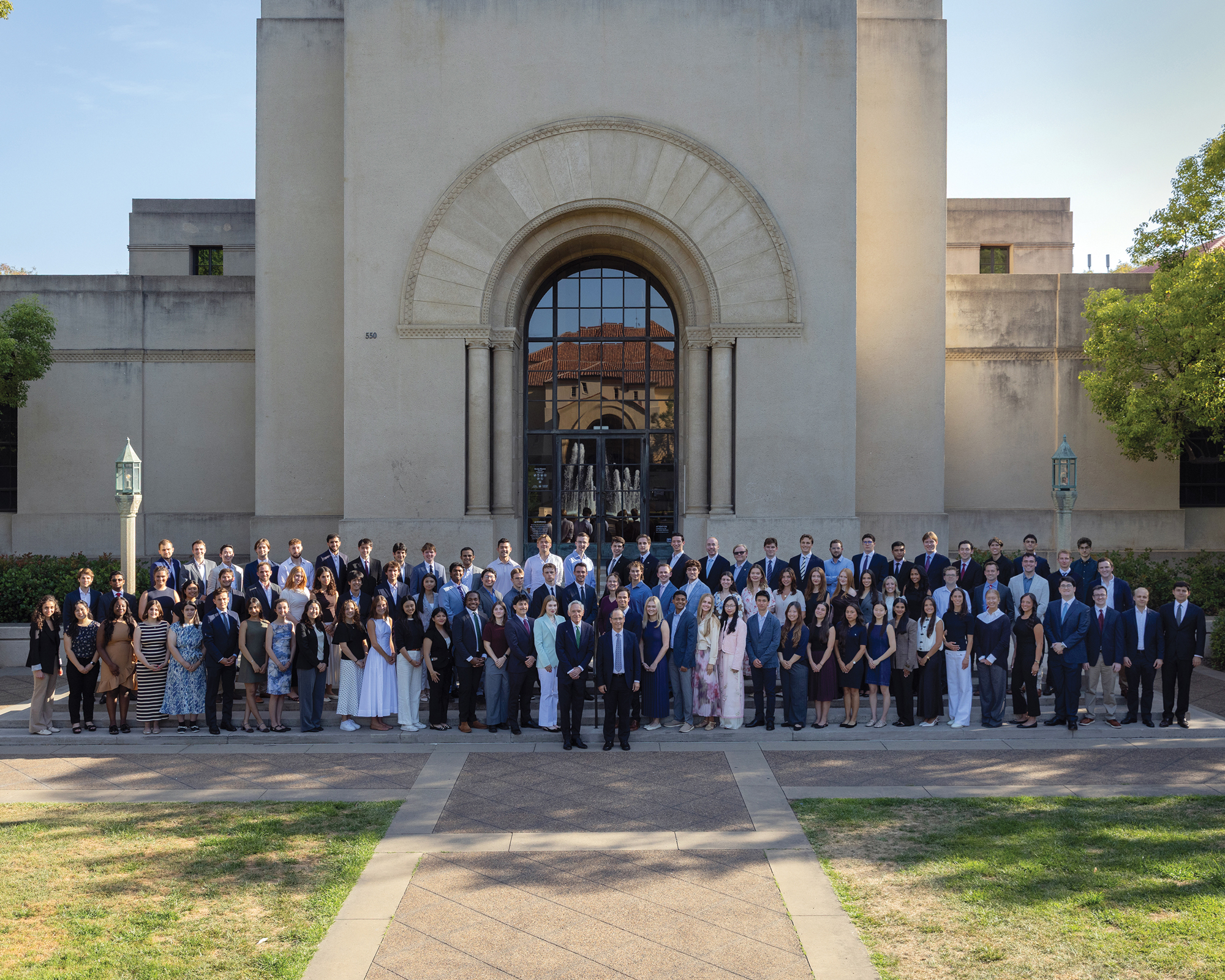
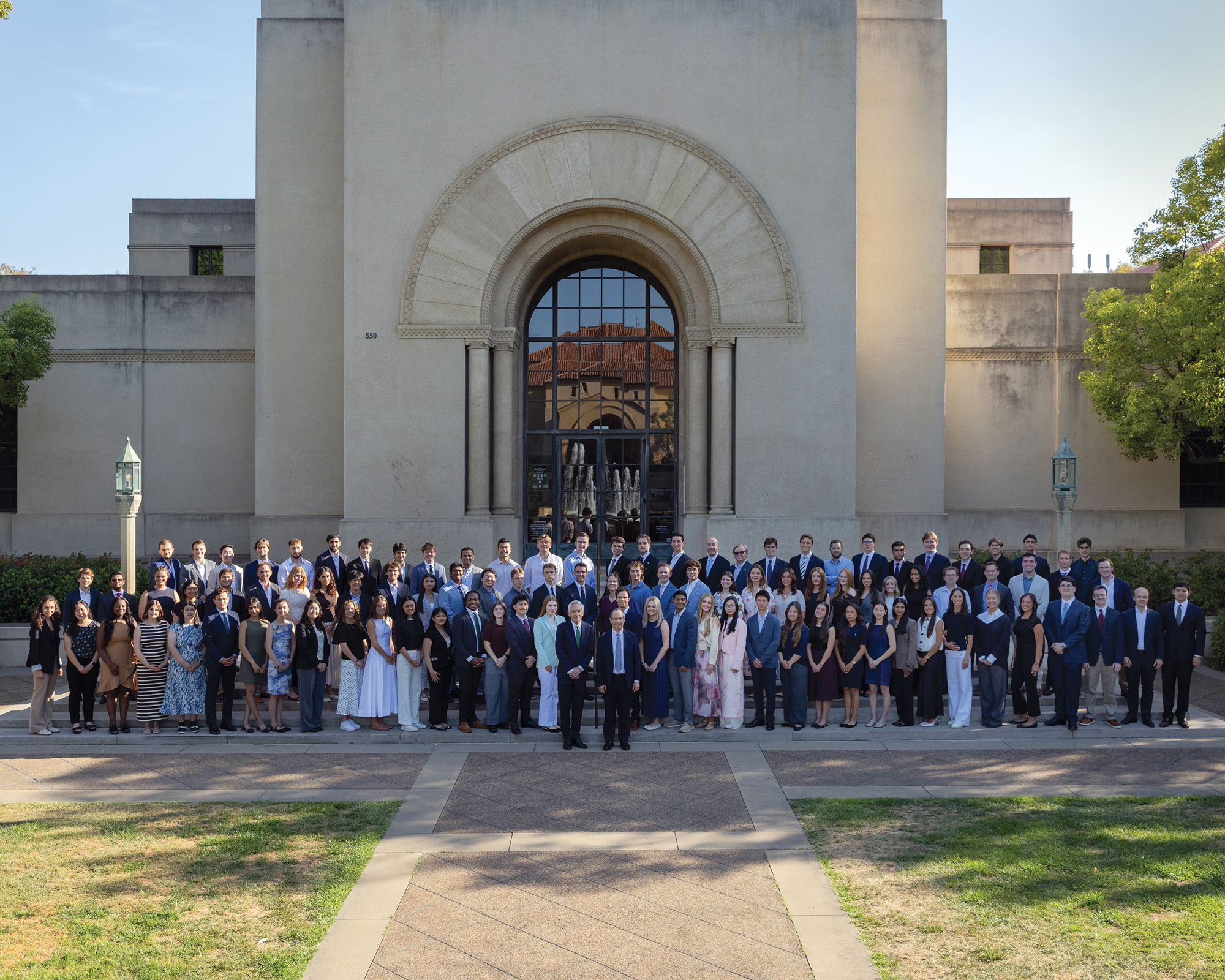
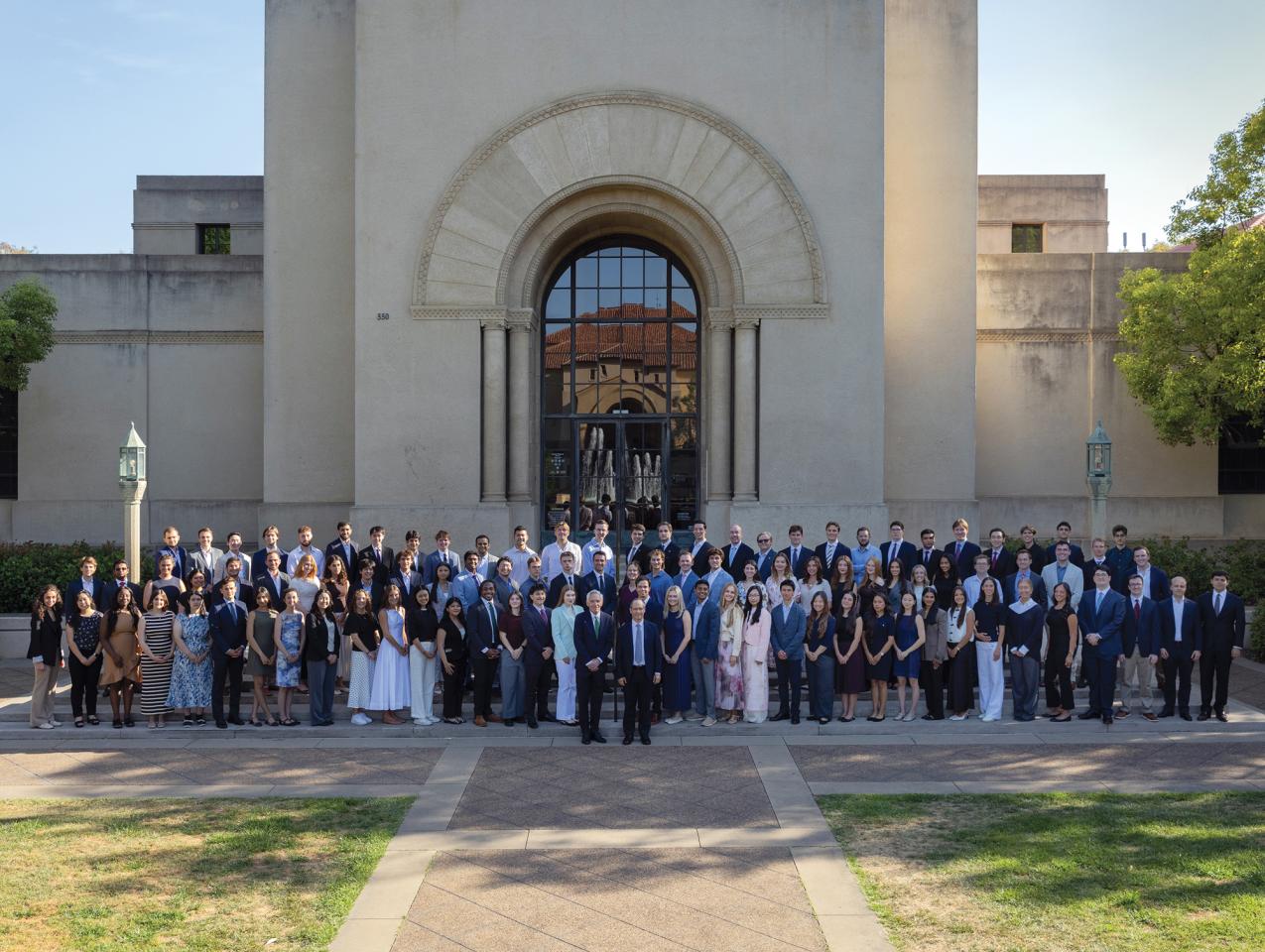
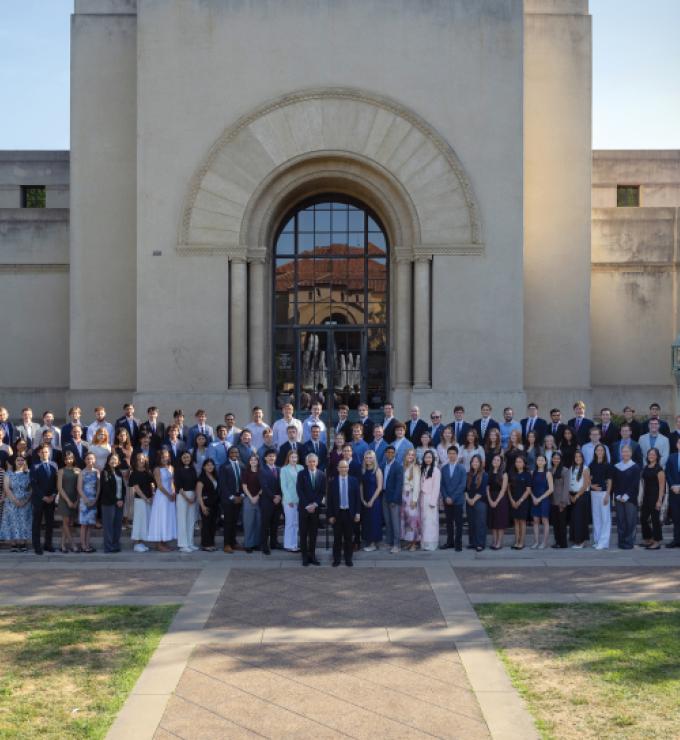
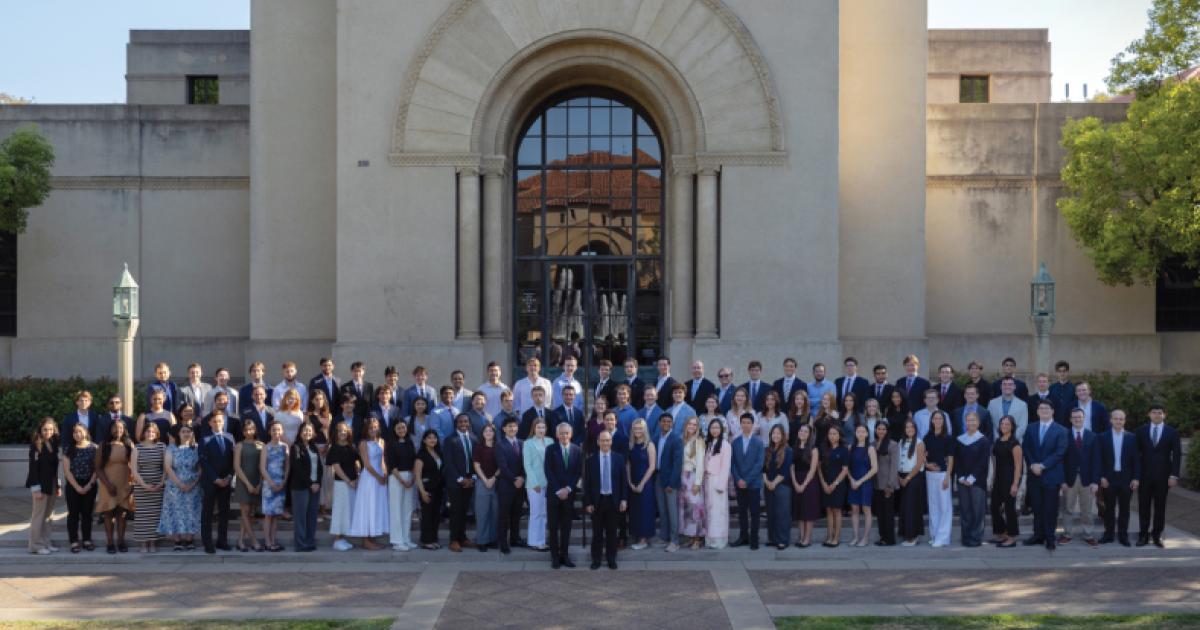
Hoover Institution (Stanford, CA)— After 10 years, nearly 1,000 students have now engaged up close with the field-leading scholars of the Hoover Institution through its Summer Policy Boot Camp (HISPBC).
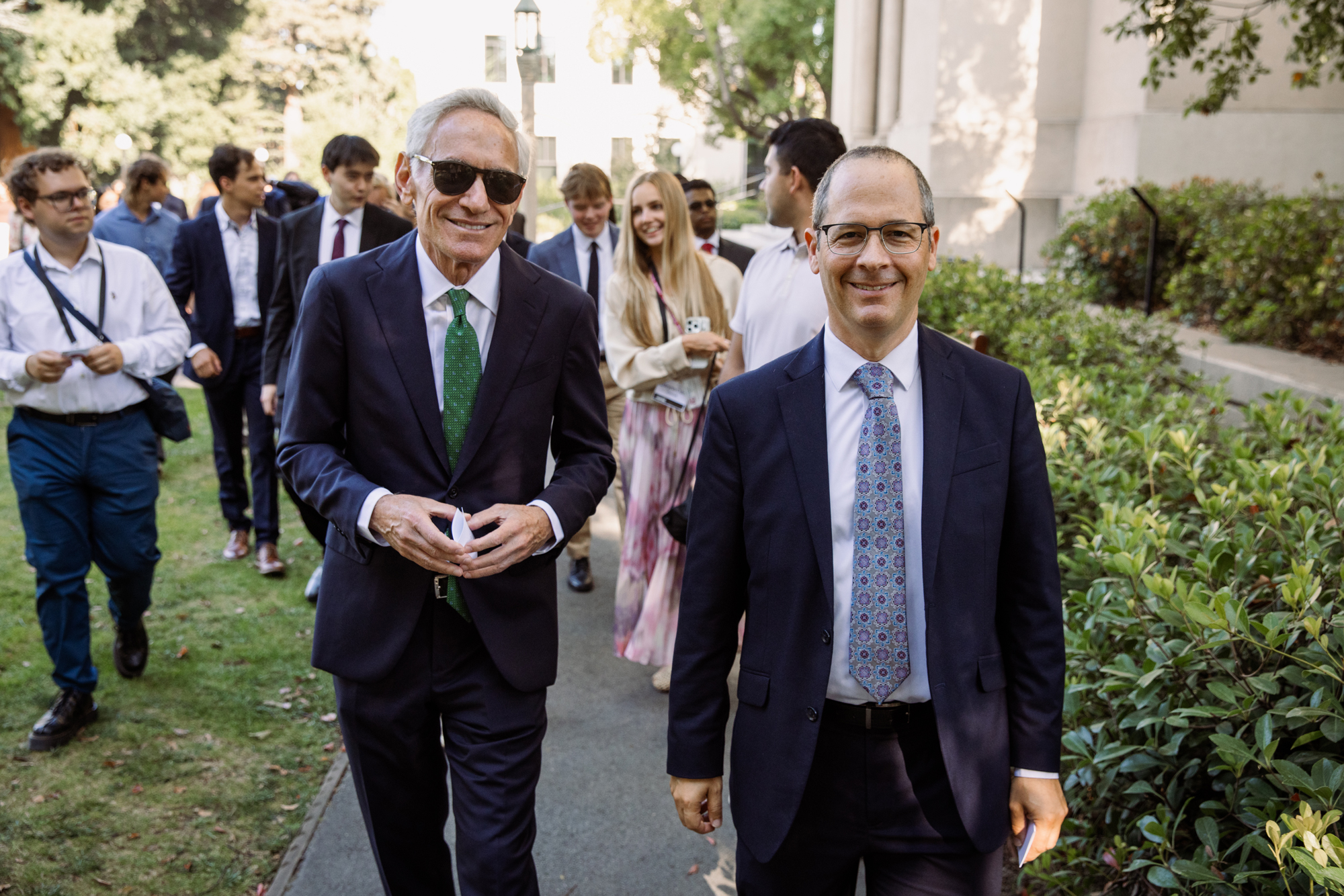
HISPBC, directed by senior fellows Scott W. Atlas and Joshua D. Rauh, gives undergraduate students and early career professionals an immersive, close look at US and international policy, teaching students to think critically and evaluate public policy through a dispassionate, evaluative lens.
Participants in the program get a unique preparation for their future irrespective of career choice, whether that be in public service, business, technology, or the academy. Having this foundational knowledge is overall important in being a citizen leader.
During a panel marking the 10th anniversary of HISPBC, Christopher Phillips, who completed the program in 2023 and rejoined the program as a teaching assistant, said the breadth of knowledge and expertise on offer at the program broadened his own horizons.
“I found it to be a world-class lineup of faculty and fellows. I learned so much at every single talk that I didn’t know before,” he said. “There were things I hadn’t even ventured into at all.”
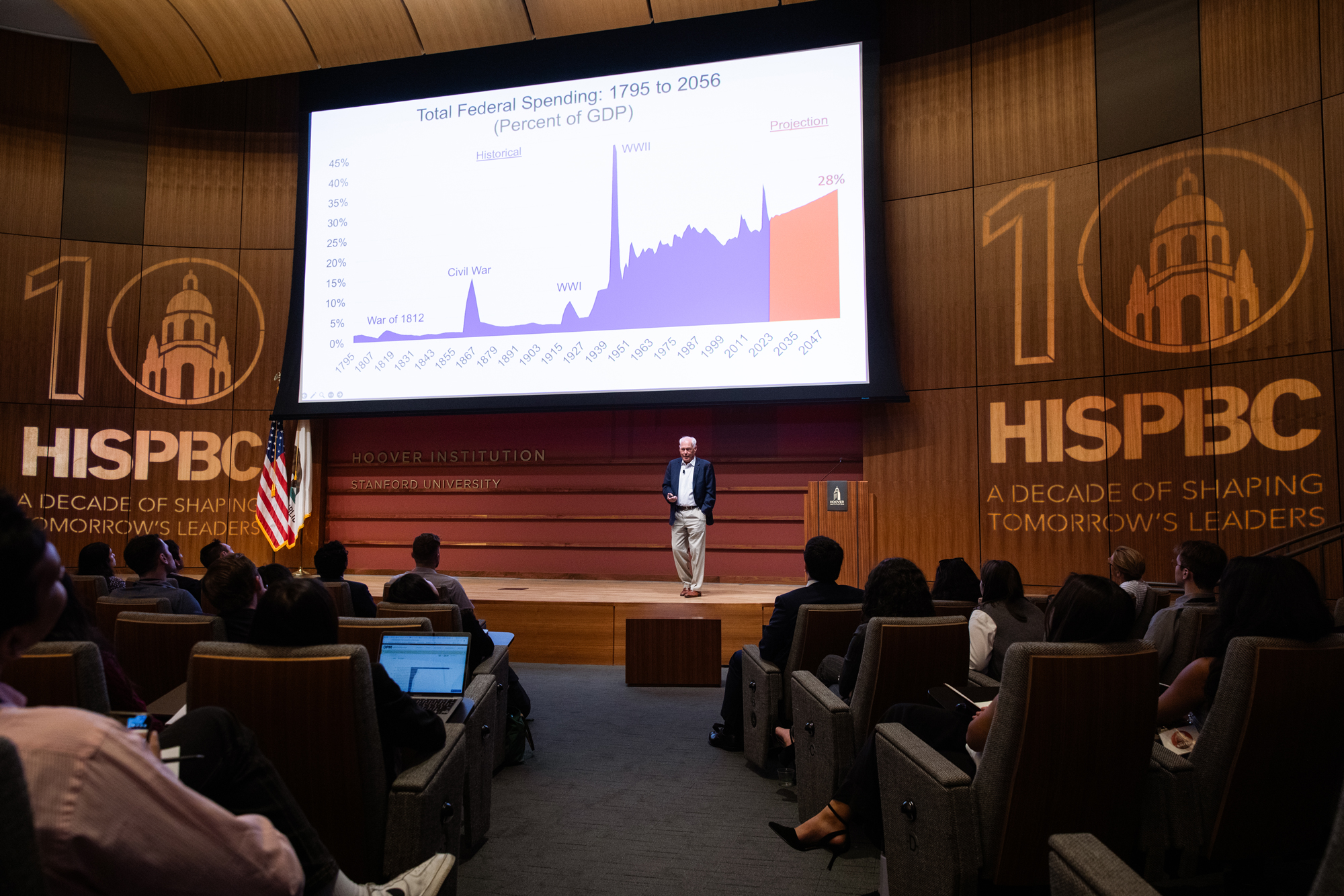
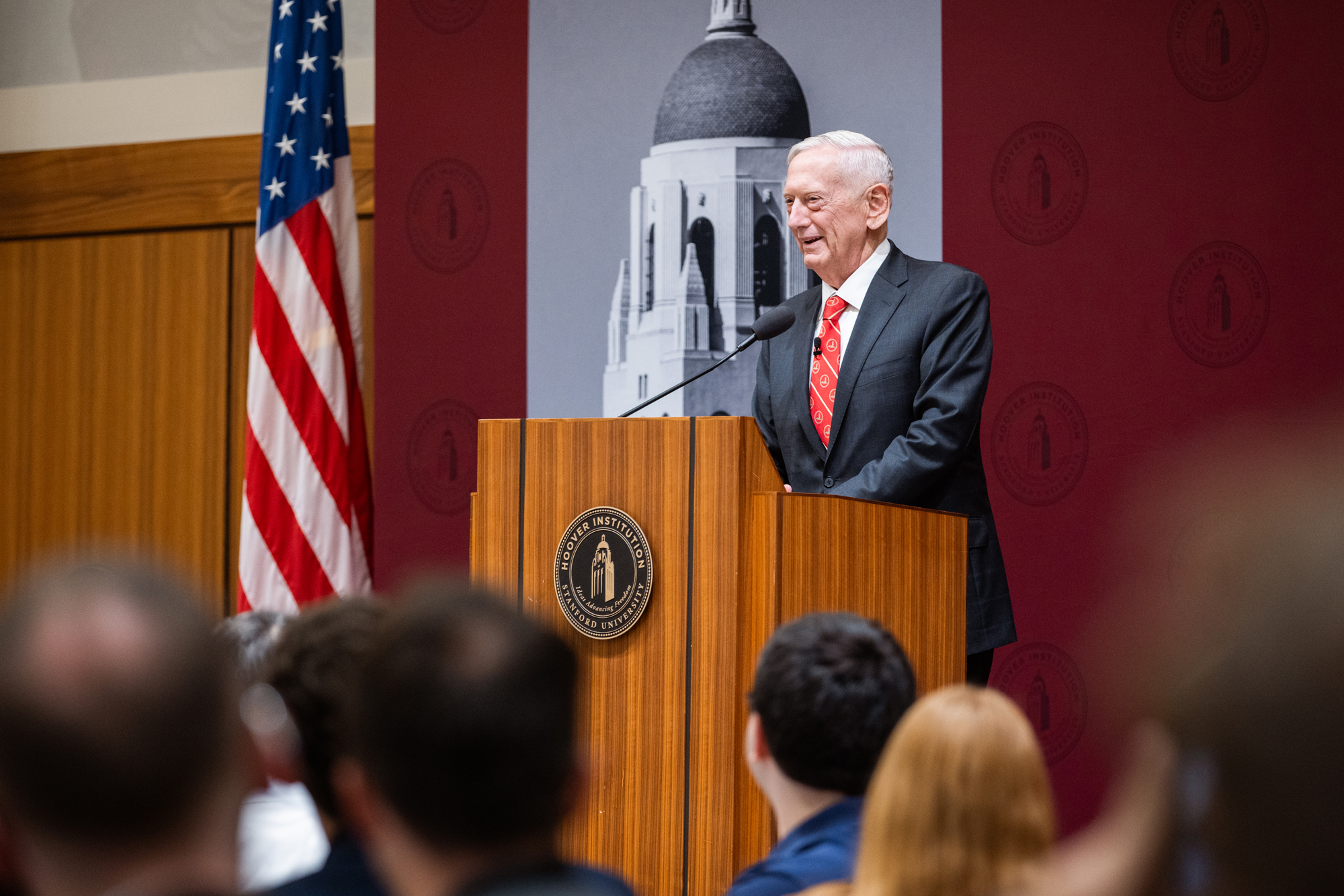
This year featured presentations from Gen. Jim Mattis, Steven J. Davis, Dominic Parker, Stephen Haber, and Stephen Kotkin, to name a few.
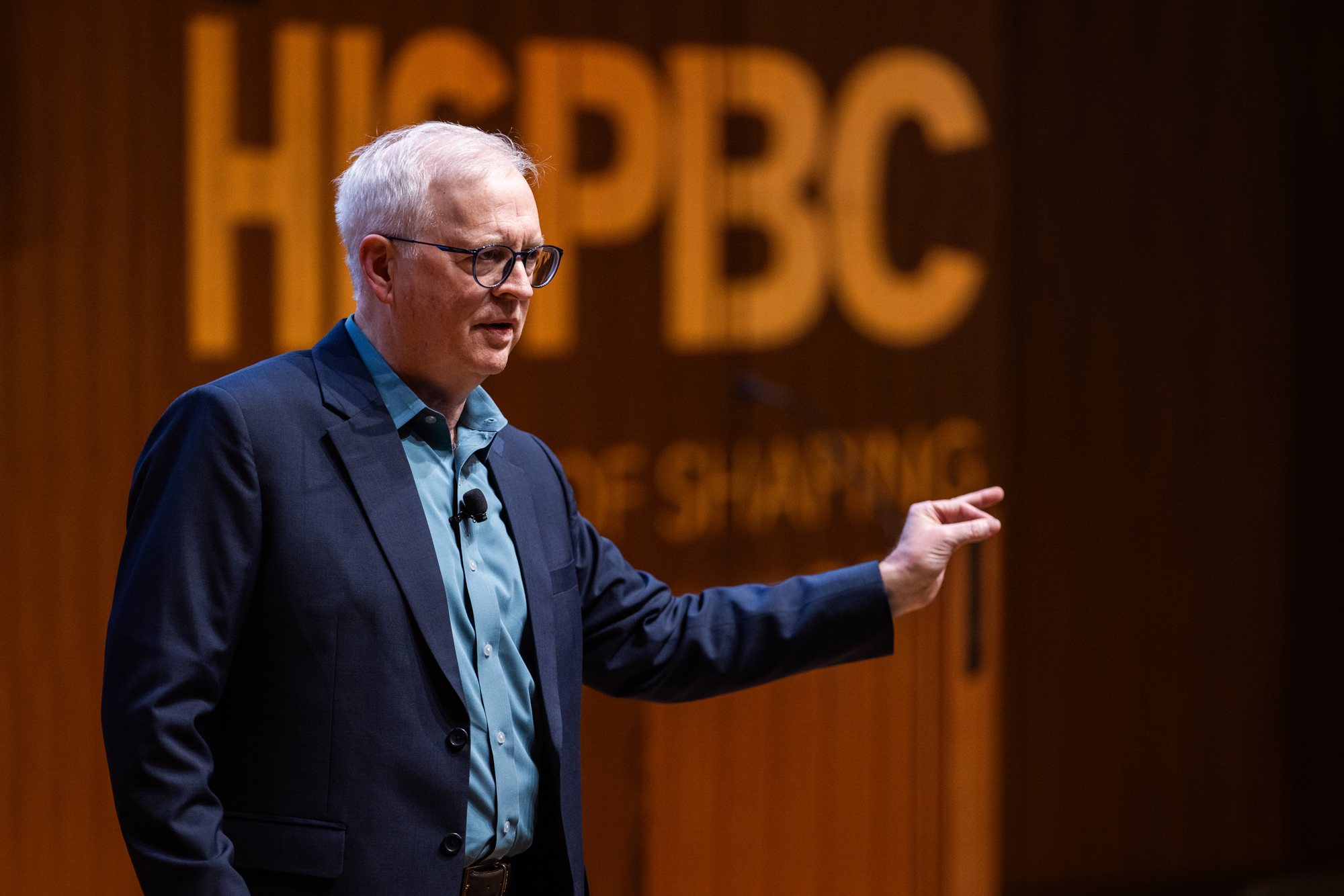
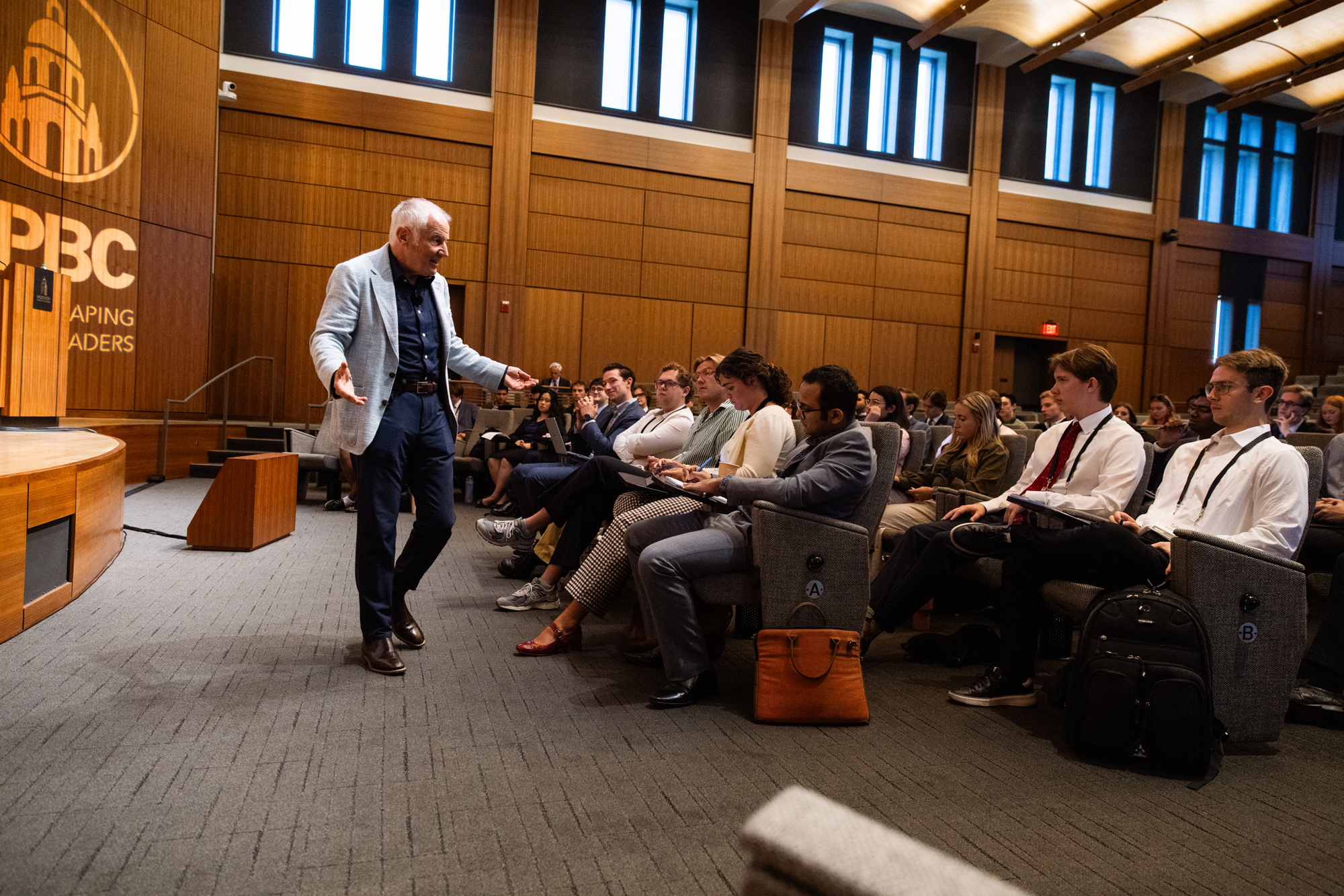
This year, speakers at HISPBC included Davis, who discussed the labor market impacts of the trend of working from home and also the rise of generative AI.
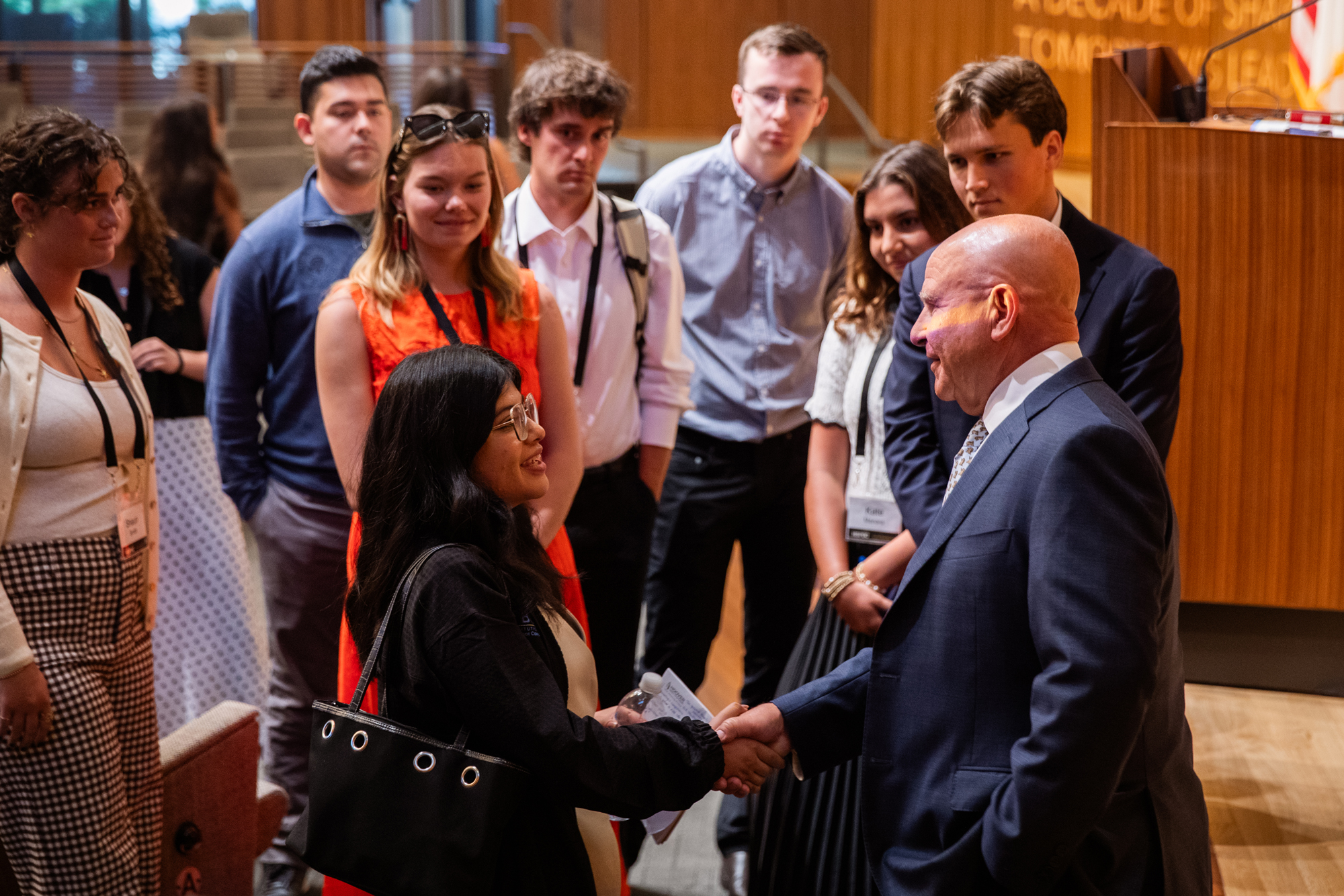
It also featured Senior Fellow Paola Sapienza discussing evidence of the positive impact of immigrants to the US economy. Senior Fellow H.R. McMaster spoke to the students about the greatest threats to American security today, and Senior Fellow Michael McConnell discussed the interactions between the executive branch and the courts during the second Trump administration and their constitutional implications.
Looking back, three alumni said the value of the boot camp came from how it helped them build professional relationships and networks, as well as enabled them to thoughtfully consider opposing points of view.
Phillips said he can look up people on social media and connect with them like no time has passed.
“I would encourage [students] to just be active, be optimistic, and be eager to reconnect with people, see what they’re up to, because who knows—maybe they have a job opportunity for you or even a line of thinking that they’re exploring that you hadn’t thought about prior to that,” he said.
He added those connections can become valuable for friendship, career advice, or networking.
Each year, the students selected to participate in HISPBC hear from a wide cross section of the Hoover fellowship, speaking about topics including monetary and fiscal policy, environmental sustainability, foreign policy, education, the impact of AI, and how history affects our understanding of current events.
Rohan Khanna, who participated in HISPBC in 2018 and is now a vice president at a blockchain company, echoed that sentiment, telling attendees of the 2026 rotation that they should connect with as many of their fellow participants as possible, because those relationships will flourish and benefit everyone as time passes.
“And the people in this room you’ve gone through this experience with . . . maximize your chances of luck in life by having these conversations with as many people as possible in this room or program by tomorrow.”
Atlas said one of the suggestions the program makes to its participants is that they could benefit from some time spent in public service.
“The low-hanging fruit for public service is to spend some time in Washington, DC,” he said.
“You would not anticipate how much you’ll learn by hanging around [there].”
Air Force Capt. Mike Cartier, who completed HISPBC last year, said that he had a memorable interaction with another European participant in the program, who took issue with the strong posture some speakers had when it comes to defending America and its allies. Cartier and the other participant were able to share their views, and Cartier said he came away with a new understanding of why exchanging those views was important.
“I can’t say that [they] are fully in line with my political views, nor would I want to enforce her in line with my views. But I think that being open to communication, not trying to come at it combatively and authoritatively, is probably a far more effective way of leadership than just trying to throw your name around,” he said.
Hoover Institution Director Condoleezza Rice said the need for a new generation of dedicated, inquisitive, values-driven young leaders is becoming more acute by the year.
“It’s been 10 years since we started on this journey, on this boot camp, on this method of training and teaching so that you are prepared to go out and take your place among those who bring vision and leadership and values to a world that is desperately in need of it,” Rice said.
She recounted her own experience with an international network arising when she was secretary of state. A problem had arisen that involved Latin America, and after looking at a Rolodex, Rice realized she had gone to graduate school with Chile’s foreign minister.
“Those personal contacts matter, and we hope that your opportunity to be here and the opportunity that has been afforded to those over the past 10 years, to be in the same learning environment, to share concerns and challenges, will pay off in years to come.”
Atlas thanked this year’s crop of participants for attending and told them members of the fellowship are always very keen to secure a slot to lecture its participants every year.
“This is considered by most of the people at Hoover to be the best thing at Hoover,” he said, adding there are often more fellows willing to talk than slots to accommodate them. “It’s a great example of something that has impact.”
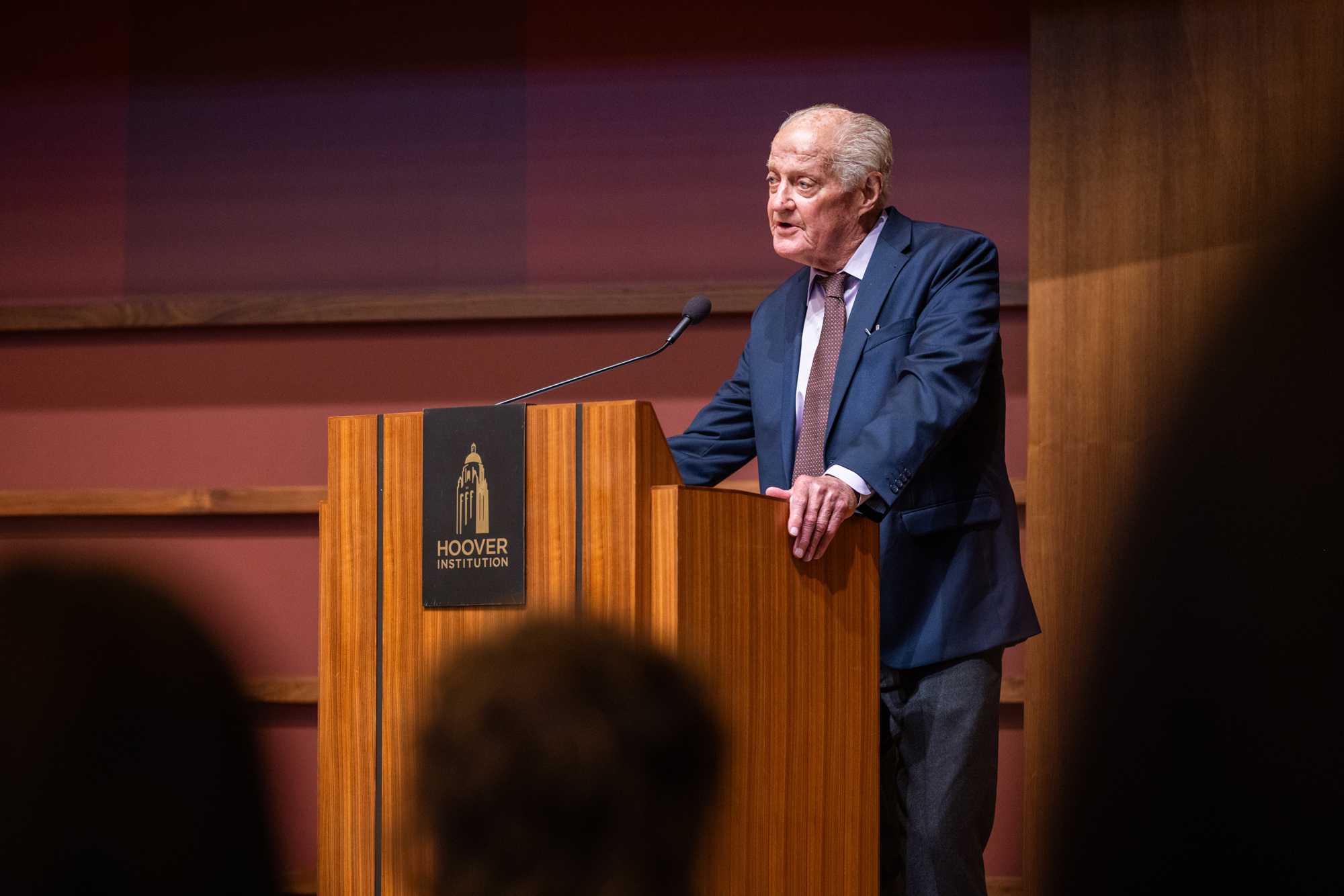
Former Hoover Chairman W. Kurt Hauser, who alongside his family contributes to make the HISPBC possible, told attendees the idea for the boot camp came when he pondered how the immense intellectual heft of Hoover could be better shared with young people.
“How do we bring this huge resource we have at Hoover to younger generations?” Hauser recalled asking Atlas more than 10 years ago.
Out of that conversation, the HISPBC was born.
“Scott got together with Josh, and here we are in our 10th year of bringing this program and all those resources to all of you.” Hauser said.
Leading a gathering of more than 100 students can sometimes present unexpected challenges.
Rauh recalled one year that the gathering would occur during a complete solar eclipse in the Palo Alto area.
“I had to scramble, with the help of our staff, to make sure we had enough protective sunglasses for everyone,” he said.
HISPBC was also the first event to be held in the David and Joan Traitel Building, which was inaugurated shortly before the first gathering, in summer 2017.
Upon completion of the week of lectures and discussion, students each year are invited to complete a policy proposal essay that argues for a specific solution to a policy problem, due after the completion of boot camp.
Leading entries are honored with the Director’s Award, which comes with a $500 cash prize and an invitation to an upcoming Hoover Institution Board of Overseers meeting.
Subjects tackled by some past winners can be found here.
Read more about the program here. Applications to attend the 2027 boot camp are now open.