




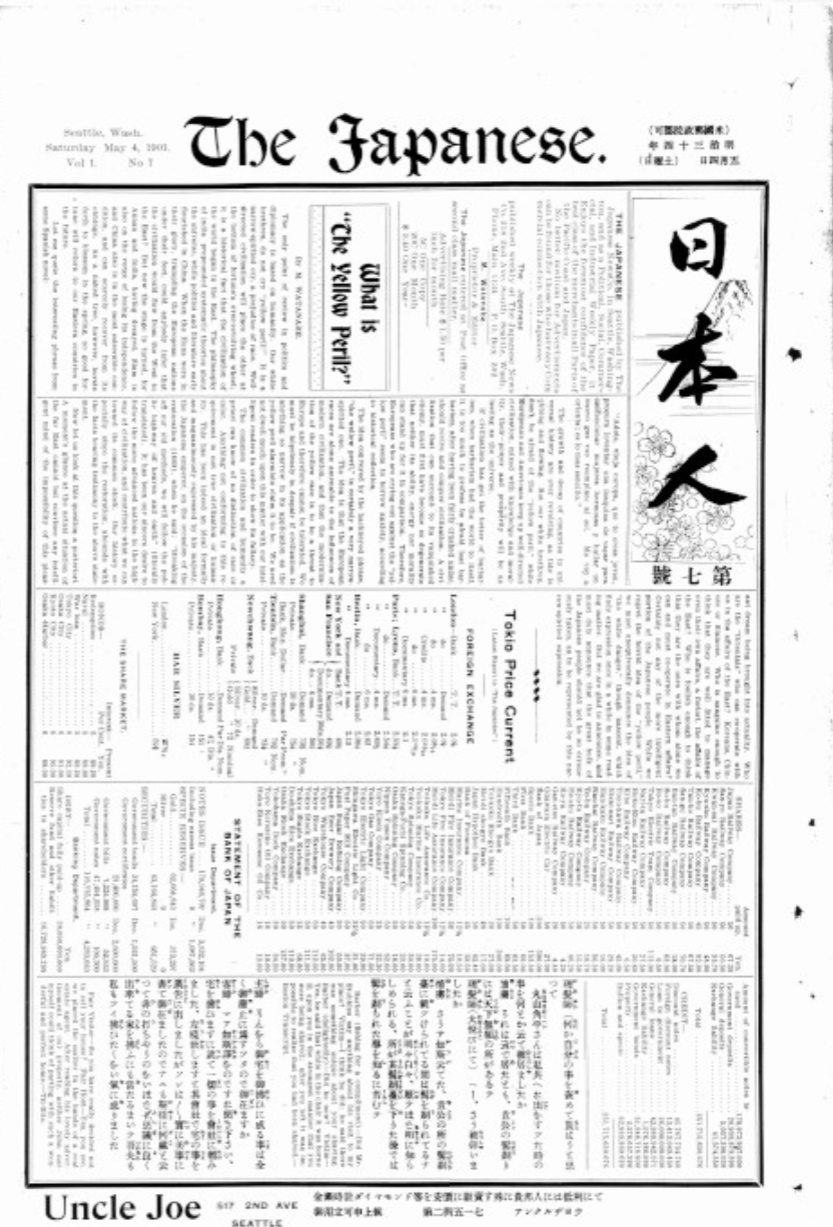





In 1908, tensions between the United States and Japan were running high. Japanese immigration had become a concern on the West Coast, and some openly discussed the possibility of war. That same year, Germany's Kaiser Wilhelm II made a bold prediction: a catastrophic race war between white and Asian countries was coming.
Yet Americans largely ignored the Kaiser's warning, even as they struggled with their own fears about Asian immigration. Why?
This talk explores that question. It will examine how anti-Asian prejudice in America developed differently than in Europe, despite shared anxieties, and how "Yellow Peril" fears rose, peaked, and eventually transformed in the United States from the late 1800s through 1952, when Cold War anxieties merged racial and communist fears into a new "Red Peril."
Attendees will gain insights into immigration history, U.S.-Asian relations, and how societies create fears about foreign threats.
RSVP to join online.
ABOUT THE SPEAKER
Brian Masaru Hayashi is a professor in the History Department, Kent State University. His current research project, tentatively entitled, The Yellow Peril Answer, examines the rise and transformation of this antiAsian racialist thought from its beginnings in the late nineteenth century until its seeming demise in 1952 when Japanese and Korean immigrants were granted naturalization rights by law. Hayashi’s interest in the topic is an outgrowth of findings from his book, Asian American Spies (Oxford University Press, 2021). His book Democratizing the Enemy (Princeton University Press, 2004) won the Robert Athearn Award. He was also awarded the Kenneth Scott Latourette Award for his first book, For the Sake of Our Japanese Brethren (Stanford University Press, 1995). He has won numerous research grants in the United States and Japan and has taught at Yale University and Kyoto University.
For any inquiries, please contact the Japanese Diaspora Collection curator, Kaoru (Kay) Ueda, at kueda@stanford.edu or JAMS at jamsintlws@gmail.com.