




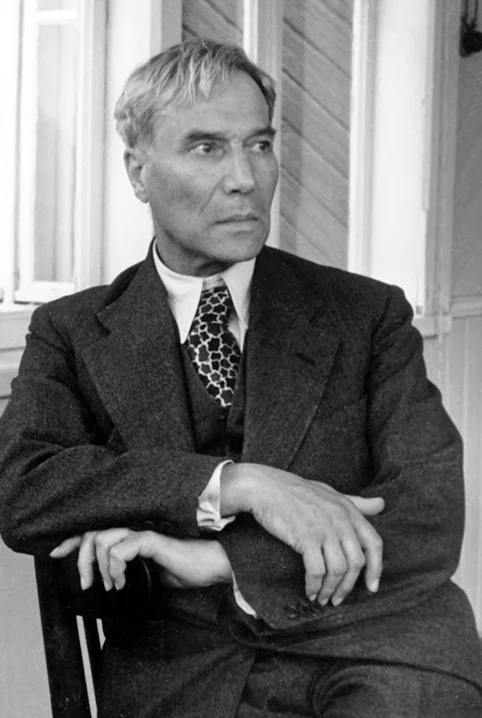
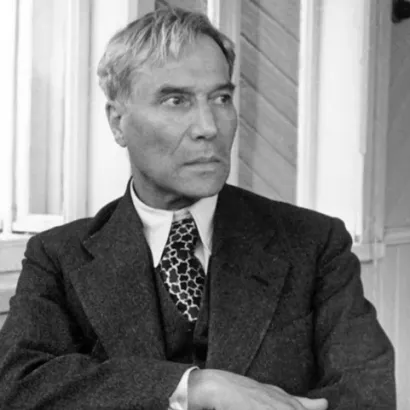
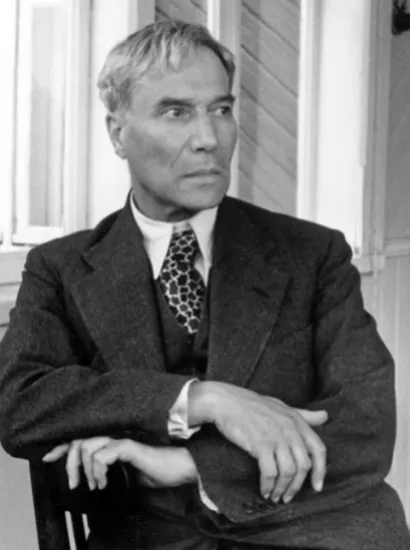
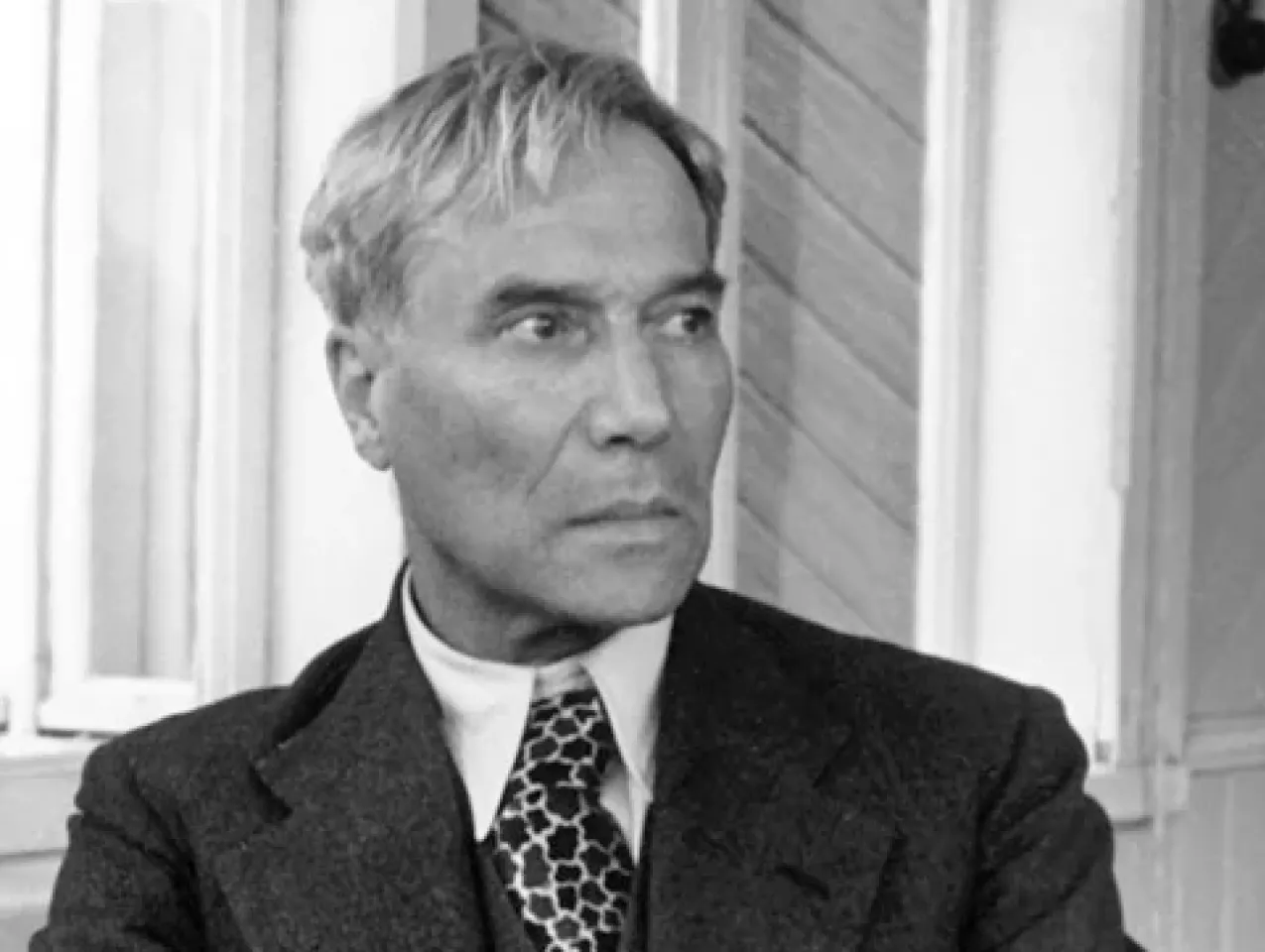
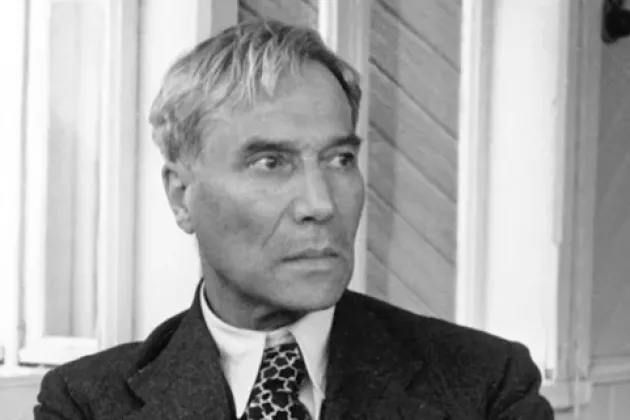
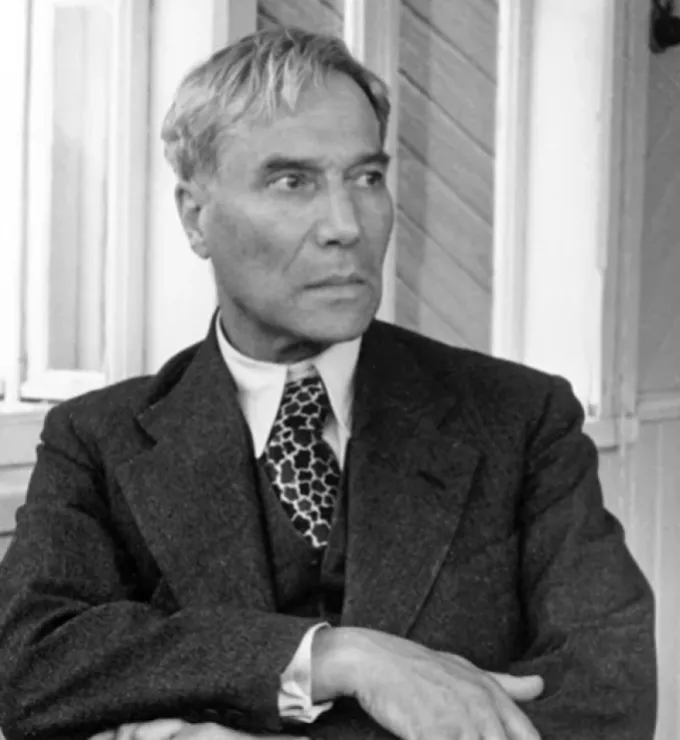
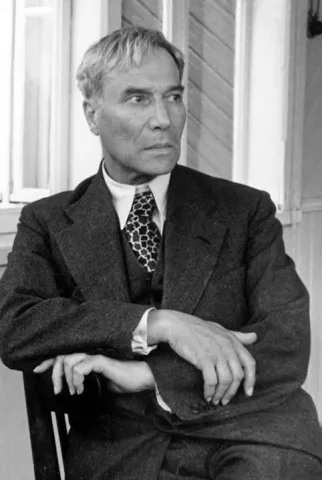
Boris Pasternak in Peredelkino village, 1956. Photographer Aleksandr Less. Pasternak family digital archives, Hoover Institution Library and Archives.
From September 28 through October 2, Stanford will host the international conference “Poetry and Politics in the Twentieth Century: Boris Pasternak, His Family, and His Novel Doctor Zhivago,” the largest ever dedicated to this Nobel Prize–winning twentieth-century Russian writer. Scholars from the United States, Russia, Great Britain, France, Italy, Sweden, Estonia, and Israel will present some fifty papers during the five-day conference. Members of the Pasternak family, visiting from Moscow and England, will join students and specialists in Russian literature in evaluating Pasternak’s life and legacy.
An exhibition of Doctor Zhivago rare first editions from Hoover and Stanford as well as the private collection of Paolo Mancosu will be displayed in the Hoover Tower during the conference. Together with a catalog, written by Paolo Mancosu and published by Hoover Institution Press, titled Smugglers, Rebels, Pirates: Itineraries in the Publishing History of Doctor Zhivago, the display shows the significant shifts in Cold War–era political and cultural life begun by the novel.
During the past several decades the Hoover Institution Library & Archives, together with Stanford University Libraries, have amassed the largest collection of Pasternak family papers and printed materials in the world. In addition to the important and rich collections of Berkeley professor Gleb Struve (who laid the foundation of Pasternak studies) and of the US book collector Irwin Toby Holtzman, Hoover has recently acquired the documents of the Italian journalist Sergio d’Angelo, who in the summer of 1956 took the typescript of Doctor Zhivago to the Italian publisher Giangiacomo Feltrinelli, as well as the last portion of the extensive Oxford archive of the Pasternak family papers. The Pasternak Family Archive in Hoover Institution, made up of the personal papers of the poet’s two sisters, Josephine (1900–1993) and Lydia (1902–89), contains numerous documents pertaining to the life and artistic activities of their parents: Leonid Pasternak, a prominent Russian-Jewish artist, and Rozalia, a noted pianist. The chronology of the missives is unusually large: dating from the end of the nineteenth to the end of the twentieth centuries. Hoover also possesses a large collection of digitized copies of materials from Pasternak personal archives in Moscow that were made available thanks to the poet’s son Evgeny Borisovich Pasternak (1923–2012) and his family. All those materials make Hoover and Stanford the principal international center of Pasternak scholarship and provide new possibilities for the advanced study of twentieth-century Russian and Soviet culture within a wider European context.
For more information about the upcoming Pasternak conference and events, please contact Denys Roberts (denysr@stanford.edu).