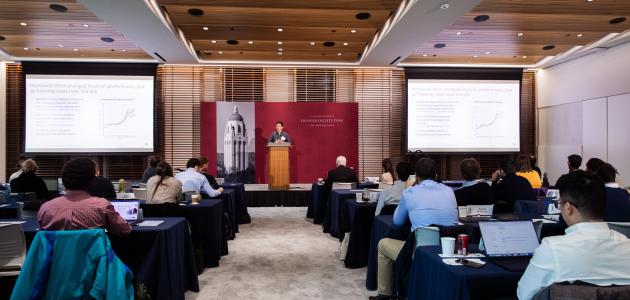



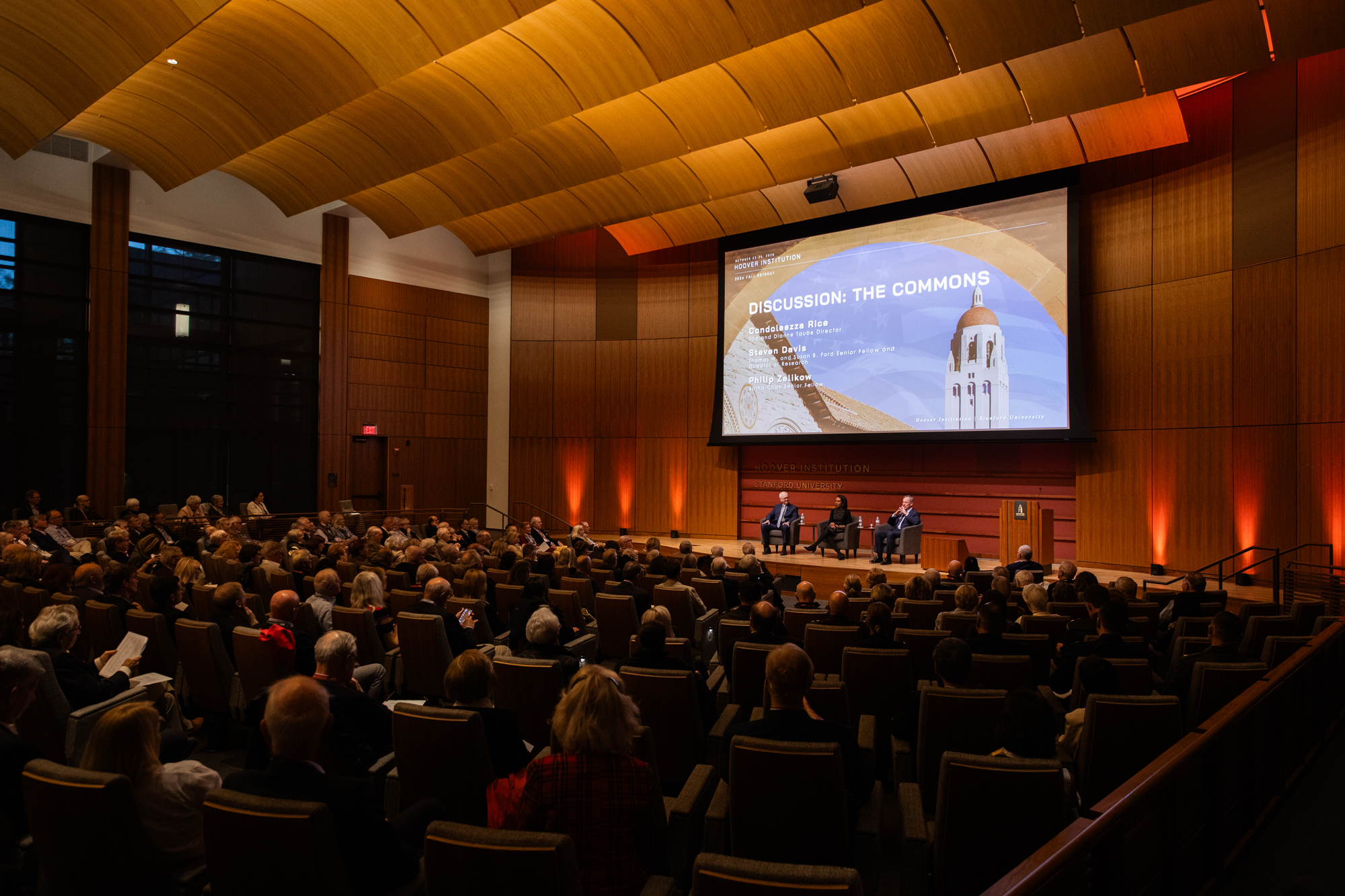
Hoover Institution (Stanford, CA)— The Hoover Institution hosted its annual fall retreat on October 22–23, welcoming supporters for two days of events that touched on challenges facing the US at home and abroad, the midterm elections, and what’s next in AI.
Hoover welcomed its leading supporters at a pivotal moment, as the fellowship advances new scholarship and policy solutions to help secure a prosperous and stable future for America amid a period of profound change.
The Commons
The gathering kicked off with Director Condoleezza Rice, Senior Fellow and Research Director Steven J. Davis, and Senior Fellow Philip Zelikow, who along with Stephen Kotkin, lead Hoover’s new Initiative on the Economic and Security Commons.
Together, they spoke about how the Commons Initiative seeks to address three cascading issues in global politics and economics. First, it will seek to offer an alternative global arrangement to the current liberal international order, underpinned by the military and economic might of the United States, that has largely guided and managed world affairs since the end of World War II. Second, the initiative will work to see how America can continue to support its vital alliances in a time when domestic fiscal concerns are growing. And third, the new initiative will seek a return of the promise of the American Dream, at a time when economic shifts and rapid technological changes threaten the promise of a good life for the average American worker.
There are more than 30 teams, including scholars from inside Hoover, the broader Stanford community, and beyond, seeking to address what Zelikow called “the cross-cutting questions” that need to be answered to guide the US forward.
The questions are:
- How can American leaders demonstrate how democracy still works for everyone?
- How can we shore up the foundations of the American Dream, offering opportunity for everyone?
- How can we adapt American power to a different world?
Economic Fault Lines
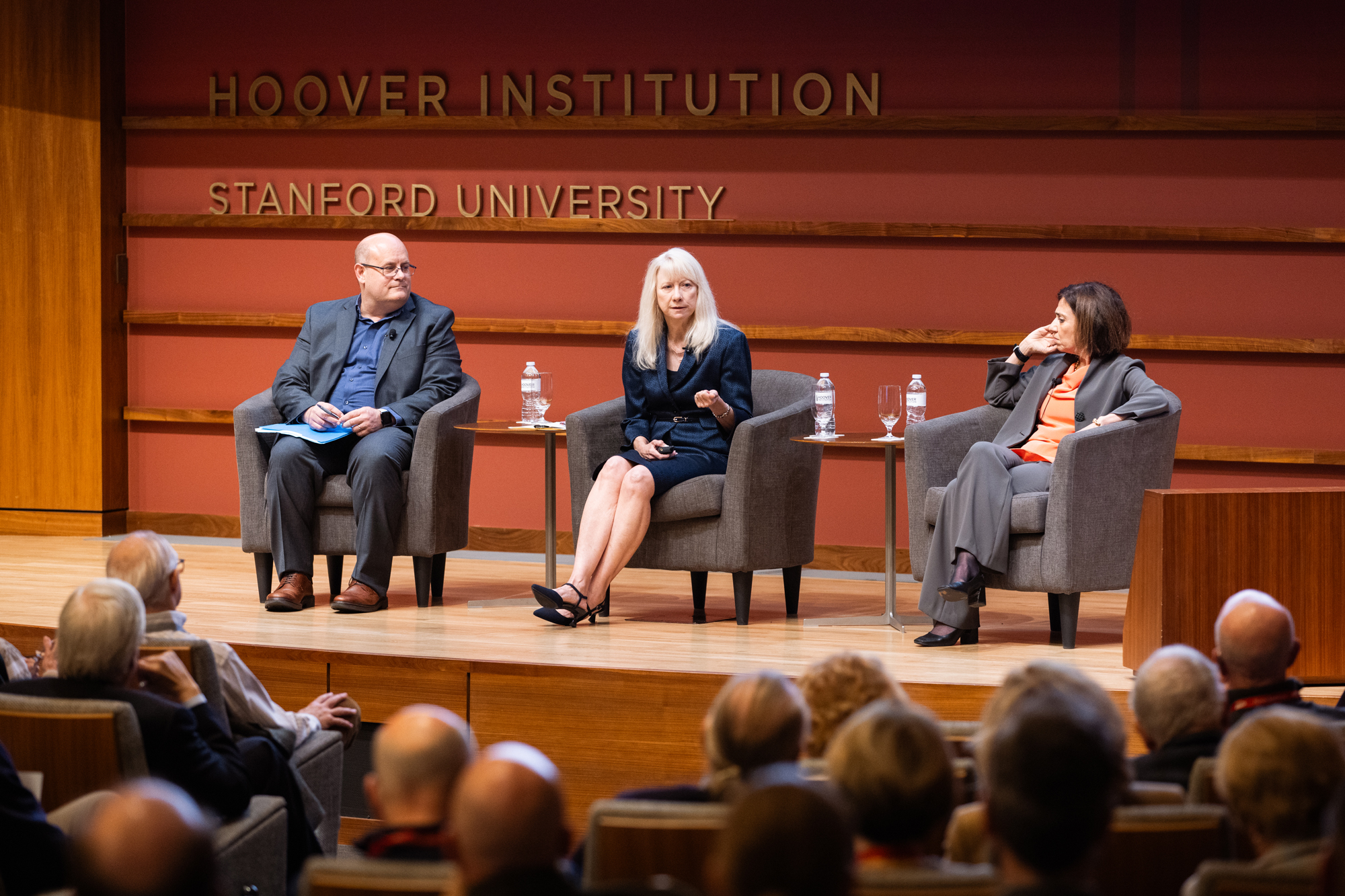
In the next session, senior fellows Eric Bettinger, Valerie Ramey, and Paola Sapienza spoke about the headwinds facing the K-12 education system, how inflation and debt are threatening ordinary Americans’ perceptions of an otherwise healthy domestic economy, and how changes to the US immigration system are closing off firms’ access to global talent.
Tribute to Robert Hall

In honor of Senior Fellow Emeritus Robert E. Hall’s 2026 Nobel Prize win, Director Rice and Ramey welcomed his son, Andrew B. Hall, to the stage to speak about what it was like to grow up in the Hall household, as his father worked to produce some of the most influential economic scholarship of the late 20th century.
“One of the best things about him is he’s not a meddler,” Andrew Hall said of his father. “He trusts the people around him to make the best decisions. It’s a deeply held philosophy of his.”
Robert Hall won the Nobel for his contributions to the “microeconomic foundations of macroeconomic stabilization,” alongside economist Michael Woodford of Columbia University.
250 Years and 25 Years On: American Power in Historical Perspective
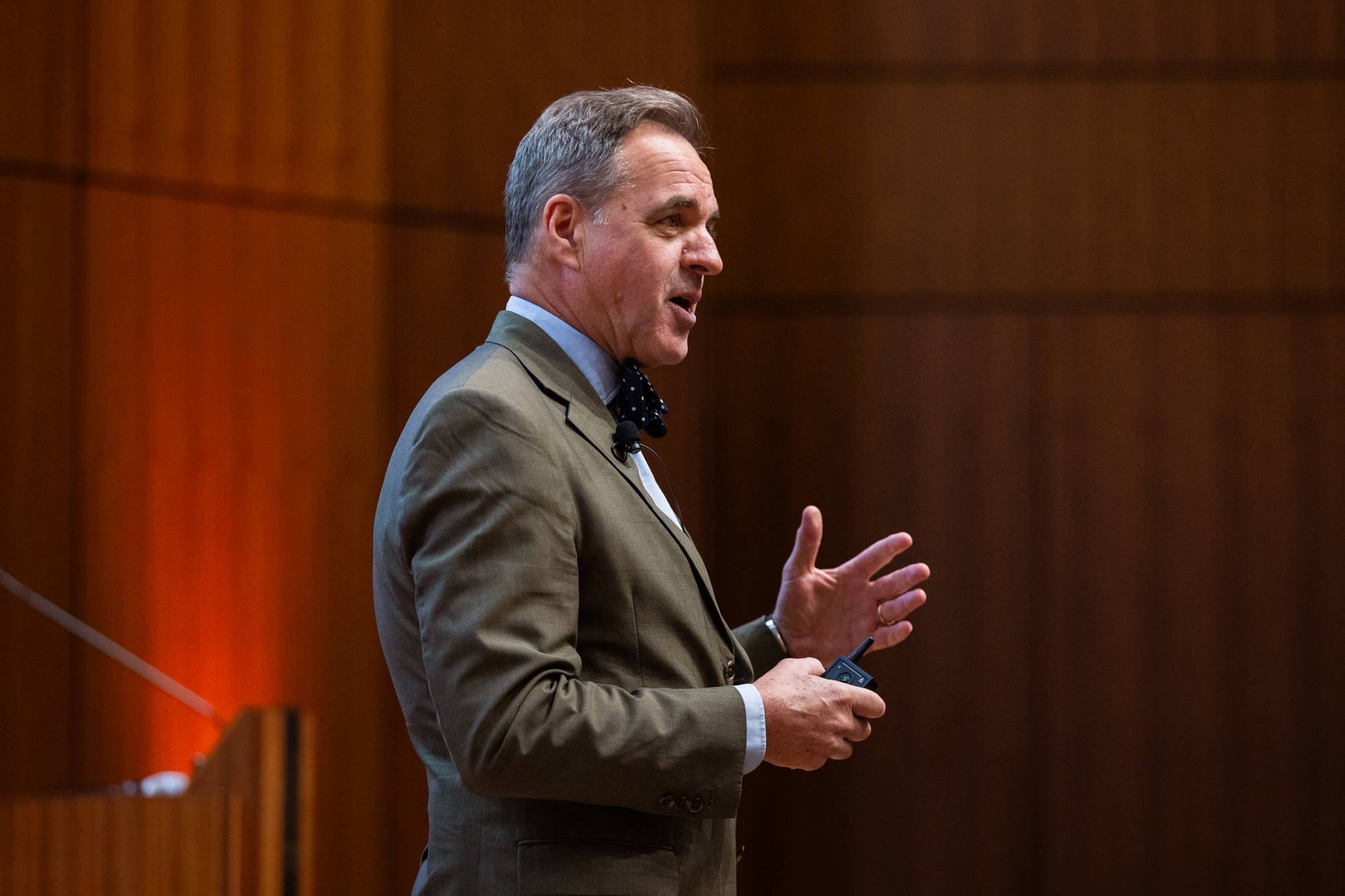
For his talk, Senior Fellow Niall Ferguson spoke about what he called the “confusion” surrounding the Trump administration’s foreign policy and how it parallels earlier eras in US history.
Ferguson argued that President Donald Trump cannot be compared to some sort of emperor or to a contemporary of Napoleon carving up the globe into spheres of influence. Instead, Ferguson said, Trump is better compared to William McKinley or Theodore Roosevelt and was greatly influenced by Richard Nixon.
Nixon imposed near-universal tariffs on America’s trading partners, offered an olive branch to Mao, then considered a brutal dictator, and led America through a global energy shock. Any of that sound familiar?
Israel, Iran, War, and Beyond
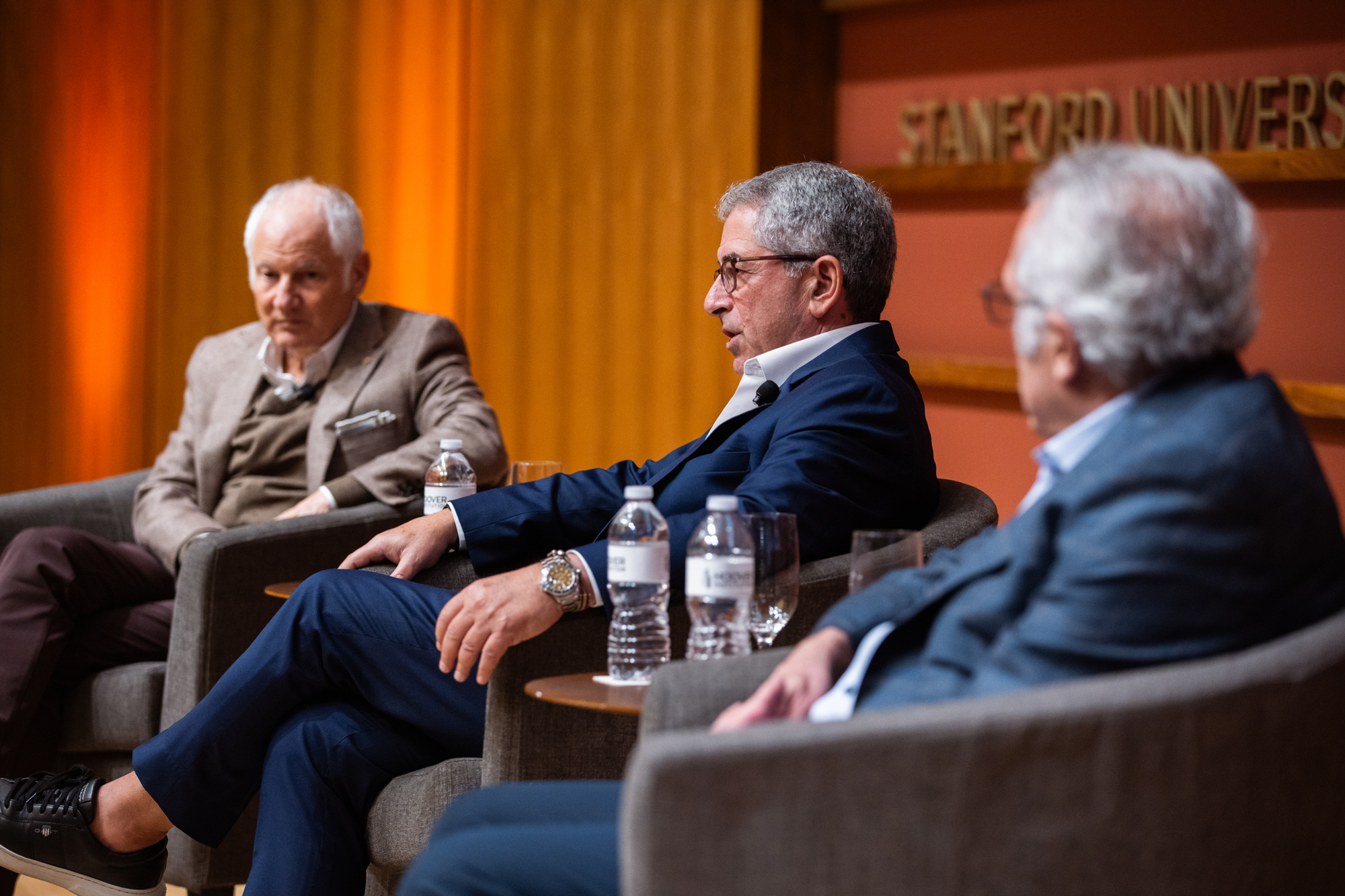
To discuss the conflict with Iran, the state of Israel, and the wider Middle East, fellows Stephen Kotkin, Zohar Palti, and Abbas Milani came onstage. Palti said the electorate in Israel is divided 50-50 and increasingly polarized, and that the frustration with incumbent Prime Minister Benjamin Netanyahu is rising.
Meanwhile, in Iran, Milani explained how the Iranian leadership now believes that threatening global security and economic prosperity is its only path to survival.
The Markus Wolf Collection
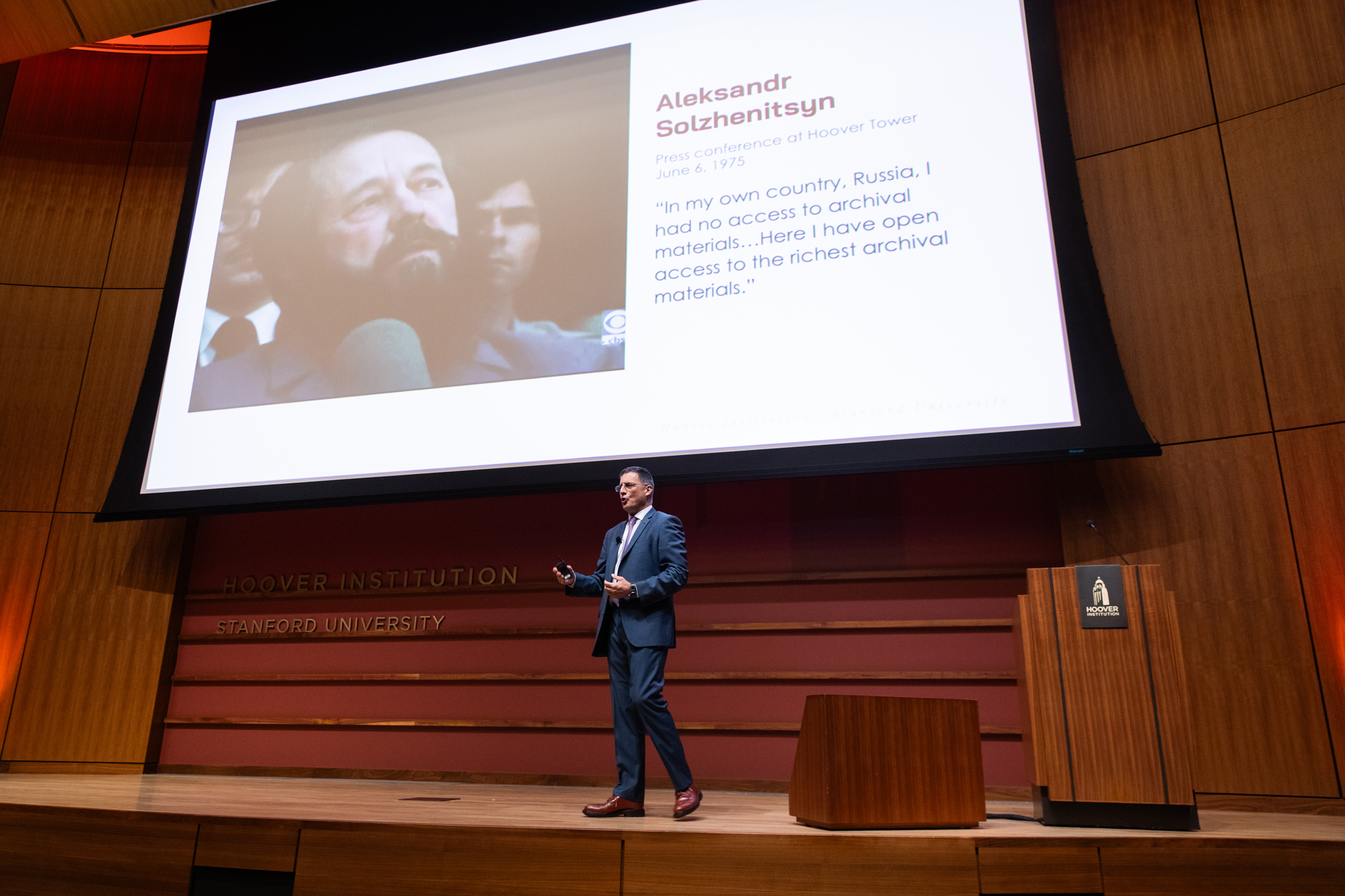
Hoover Institution Library & Archives Director Eric Wakin gave attendees a walk-through of what the Library & Archives does: seeking out documents and artifacts about 20th-century history from every corner of the globe.
Wakin then spoke about the recent arrival of the Markus Wolf Collection. Wolf, also known as “the man without a face,” was an East German spymaster. The collection now at Hoover includes official records, personal papers, interviews, correspondence, writings, and photographs, as well as 23 years of diary entries, items he personally removed from the East German state archives, and false identity documents he used to disguise himself.
Meeting the National Security Affairs Fellows
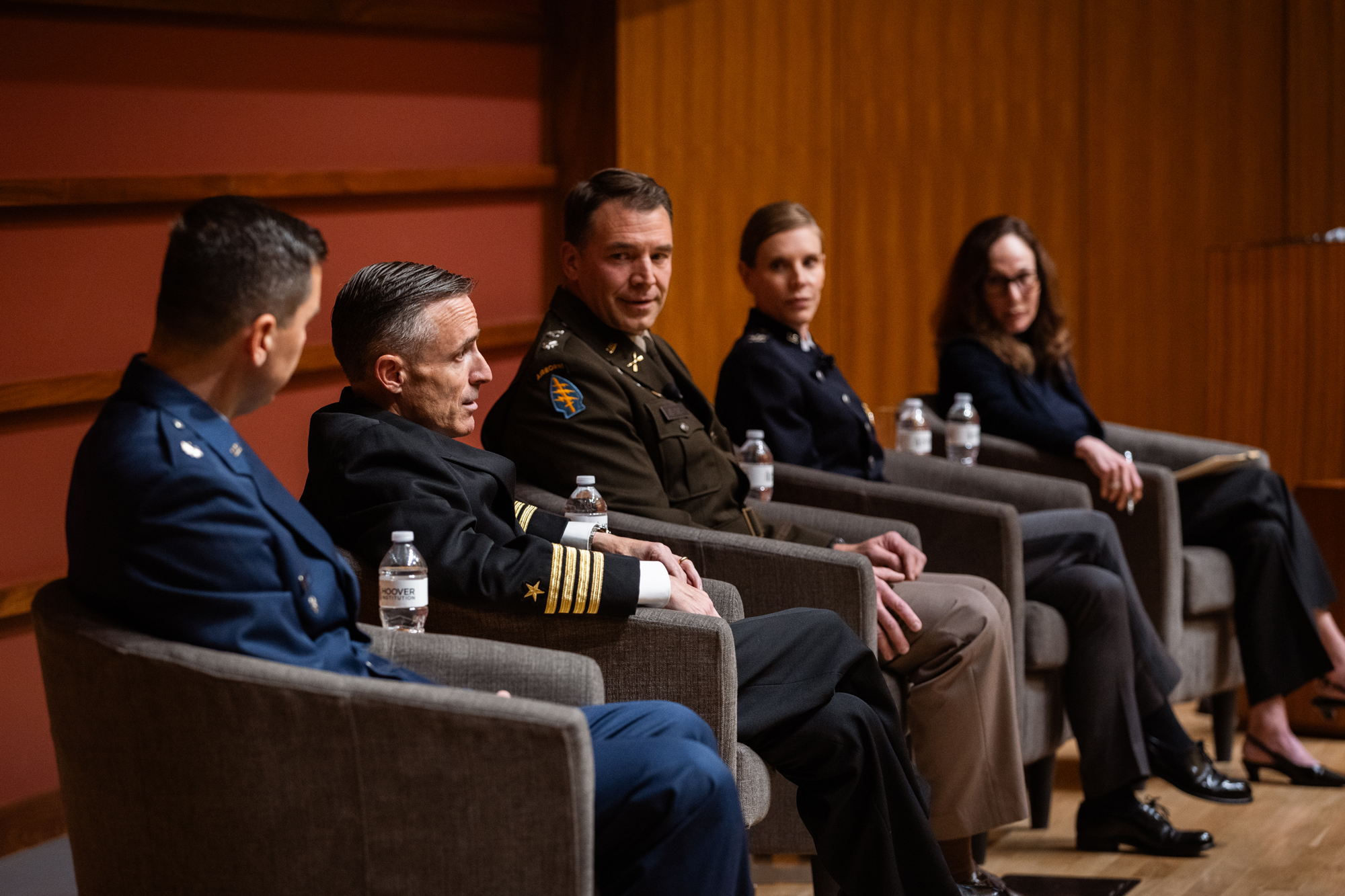
To introduce the 2026–27 cohort of Hoover’s National Security Affairs Fellows, Senior Fellow Amy Zegart welcomed four of the 10 onstage. The four spoke about changes in warfare, the shift in Pentagon doctrine from the war on terrorism to great-power competition, and the US Space Force’s acknowledgment, for the first time, that it maintains offensive weapons in space.
The Three-Body Problem: Nuclear Deterrence for a New Era
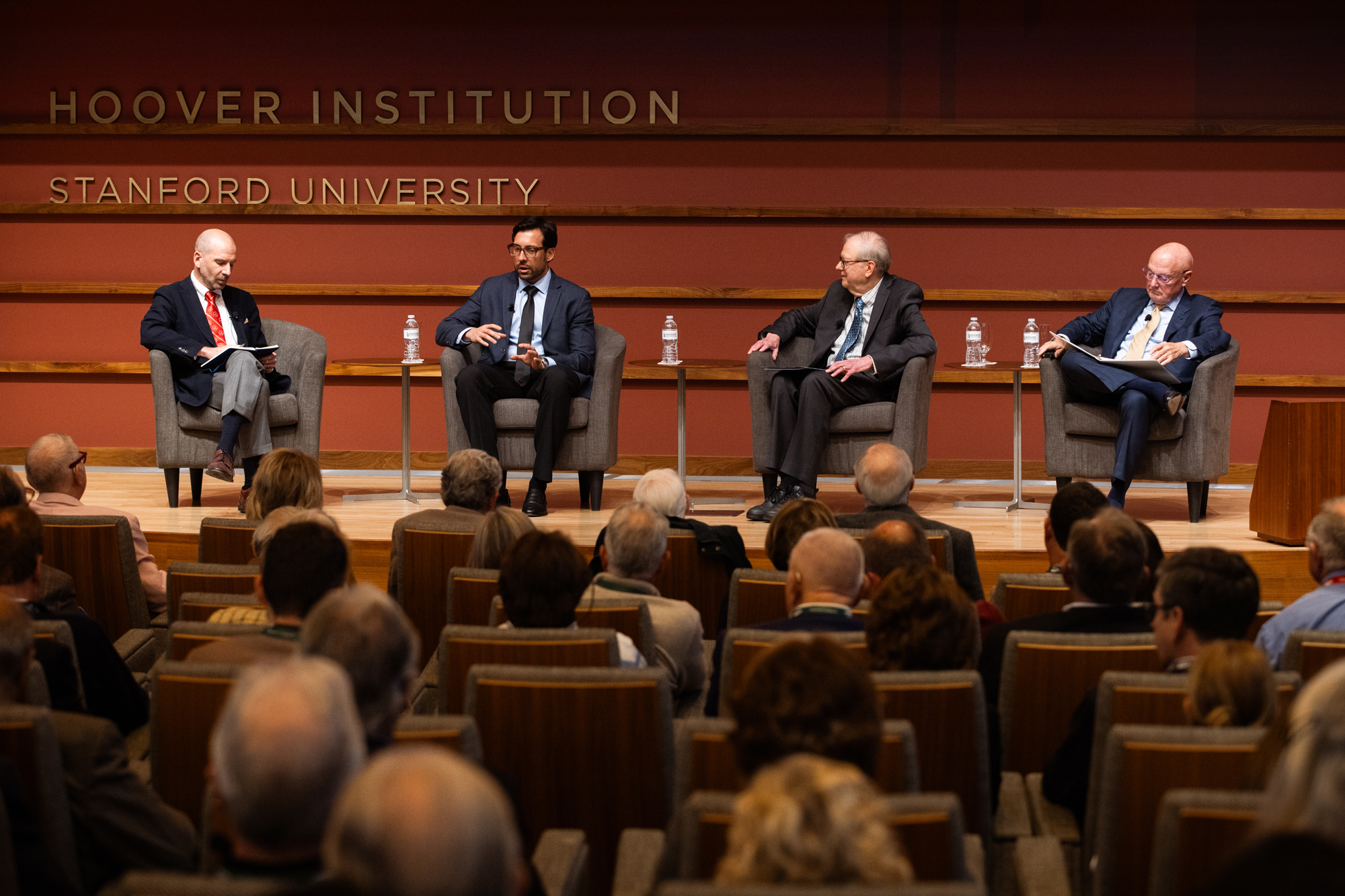
To discuss the ever-present risk of nuclear confrontation, fellows David Fedor, Artem Trotsyuk, James Timbie, and Admiral James O. Ellis Jr. spoke to attendees about the new challenge posed by the rising arsenal and capabilities of China’s nuclear forces, the arrival of Russia’s new weapons including nuclear torpedoes and hypersonic missiles, and the expiration of several key nuclear arms control treaties.
They estimated China’s arsenal will grow from about 620 warheads today to 1,500 by 2035. In comparison, the US and Russia have about 5,000 warheads each. The growth in China’s nuclear capabilities brings about a “three-body problem,” where strategic nuclear stability balanced between Russia, the US and China can no longer be as easily assured.
The China Challenge
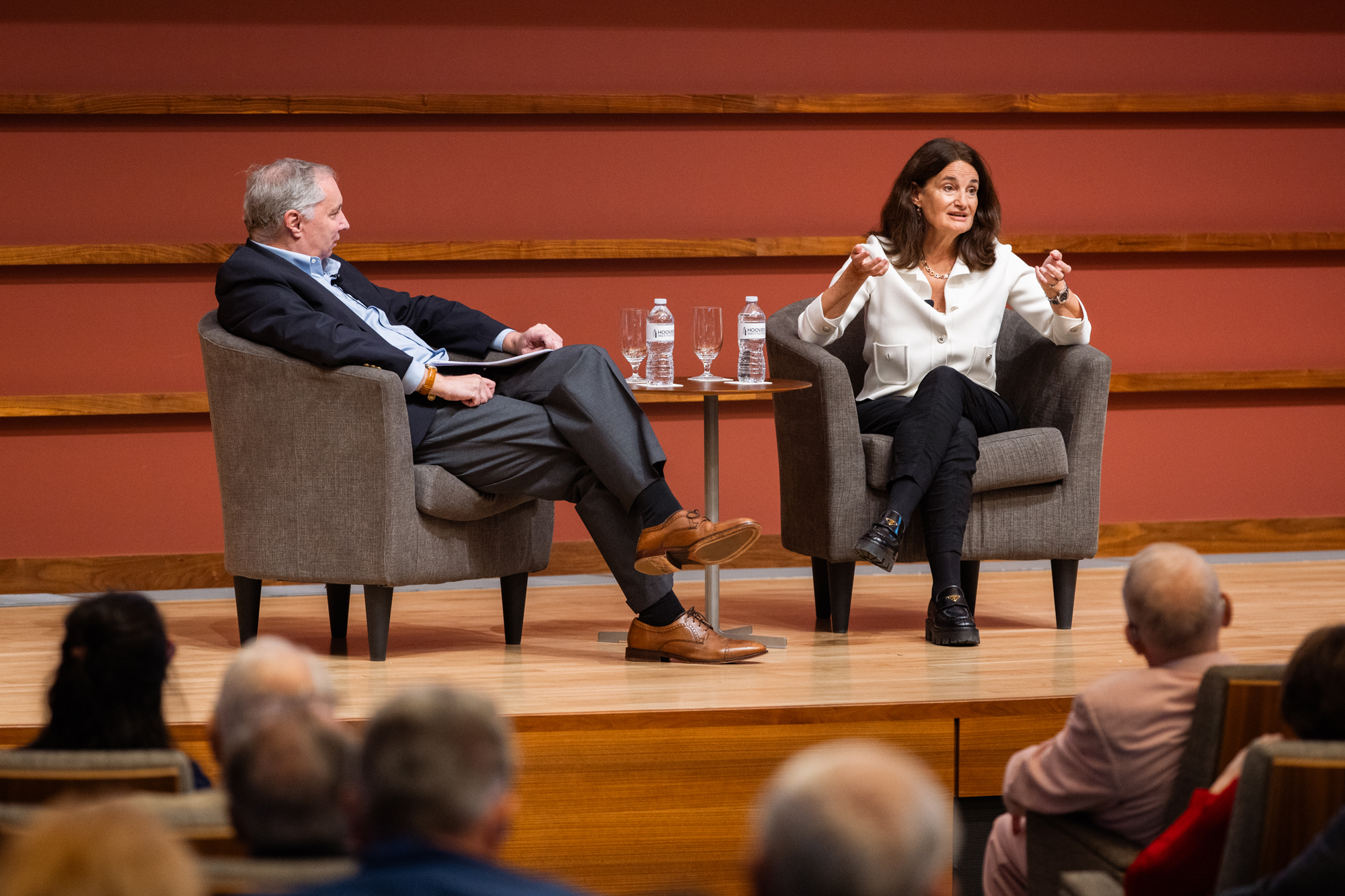
Focused on recent developments in China, fellows Bill Whalen, Elizabeth Economy, and Matt Pottinger discussed upcoming meetings between President Donald Trump and Chinese President Xi Jinping, including the Asia-Pacific Economic Cooperation summit in Shenzhen, China, and the G20 gathering in Florida in December.
Pottinger outlined recent trade and finance restrictions imposed on China by US officials, while Economy spoke about the new communications channels opening up between China and the US, including a dedicated military-to-military line, a dialogue on the future of AI, and new investment and trade boards.
Building on these new overtures, Economy spoke about the new path pursued by the Trump administration with its “nonideological” foreign policy, meaning US officials are no longer chiding their Chinese counterparts about issues such as human rights abuses.
Pottinger and Economy agreed that the US-China relationship is changing in meaningful ways, but added that the Chinese effort to “supplant” the US as a global provider of public goods and a force for stability in the world is not earning China many plaudits from other nations around the globe.
The Midterm Elections
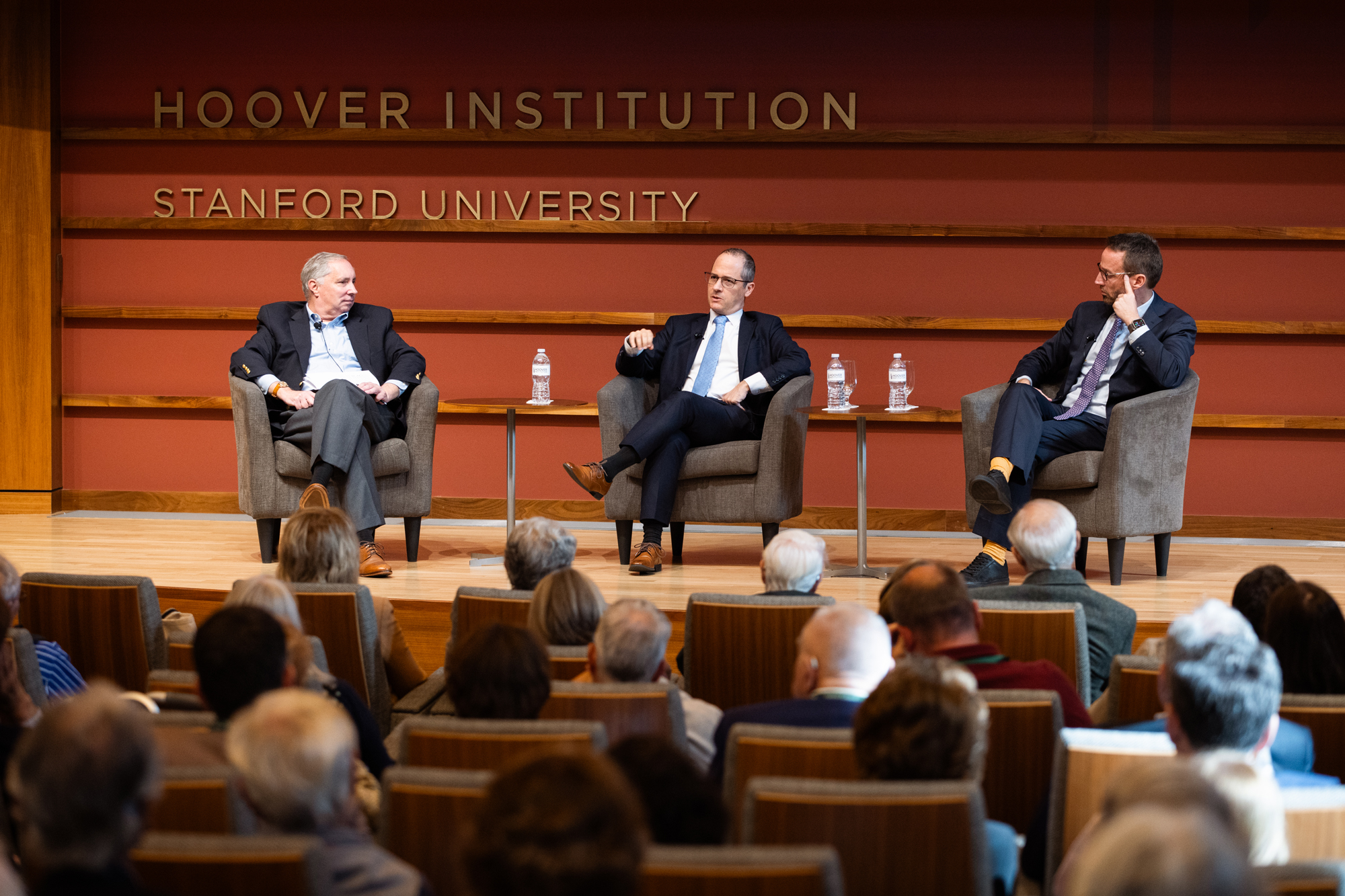
Hoover Chief Marketing and Communications Officer Dan Bingham kicked off the discussion of the midterm elections with Hoover’s new newsletter and online platform, California Decides. This platform will explore all things California policy, politics, and economics and will incorporate video and podcast content, as well as the Proposition Lab, where Hoover scholars dissected and explained many of the major ballot measures on offer in 2026.
After that, Hoover fellows Bill Whalen, Joshua D. Rauh, and Patrick A. McLaughlin discussed the 14 ballot measures up for consideration in California, the risk of a national wealth tax, and Rauh’s sustained effort alongside his team to point out the major economic impact of the ultimately unsuccessful California Billionaire Tax Act, also known as Proposition 40.
The group also spoke about the ways regulatory burdens dissuade investment, slow economic growth, and get in the way of innovation.
Keynote with Demis Hassabis
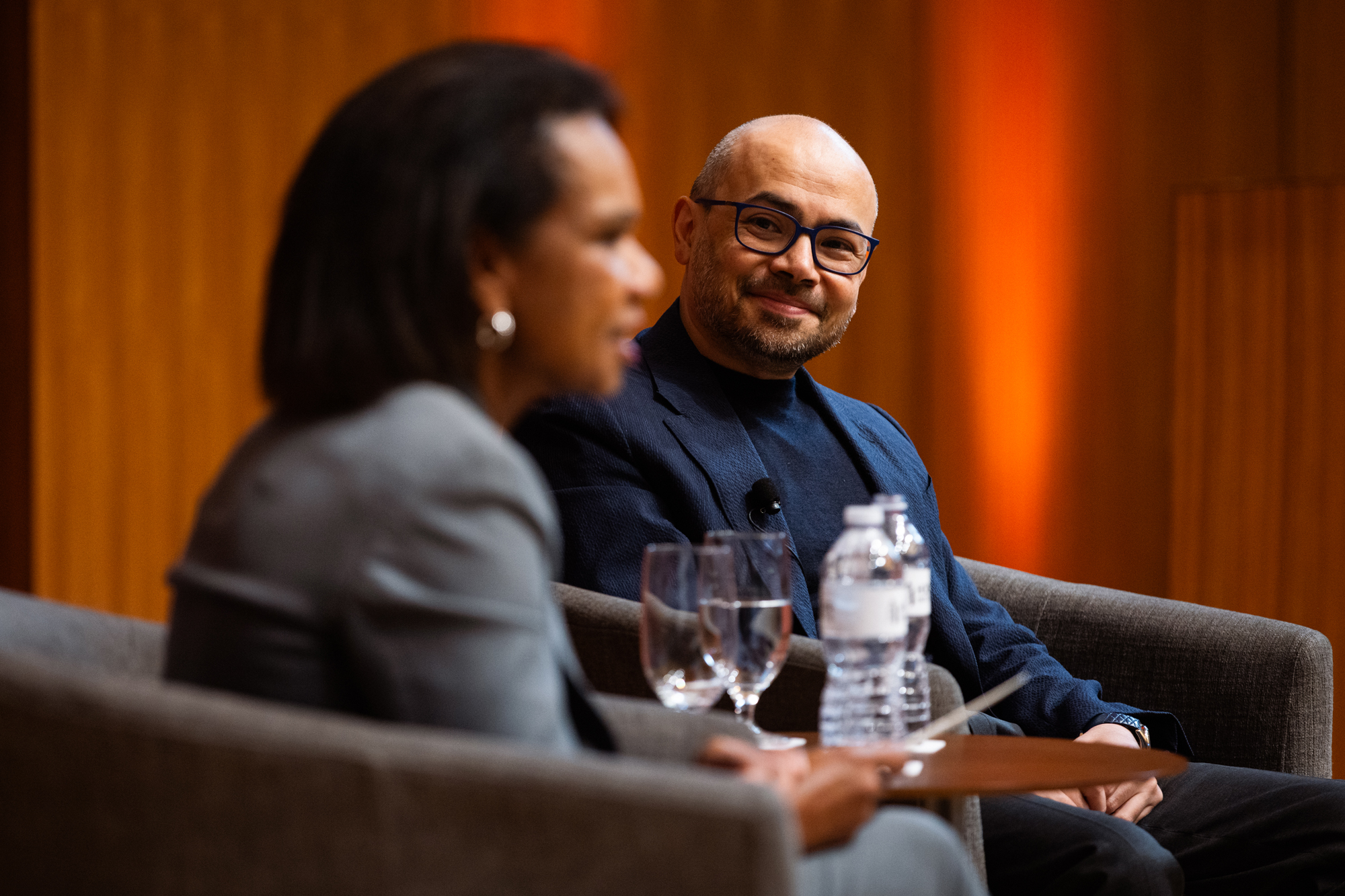
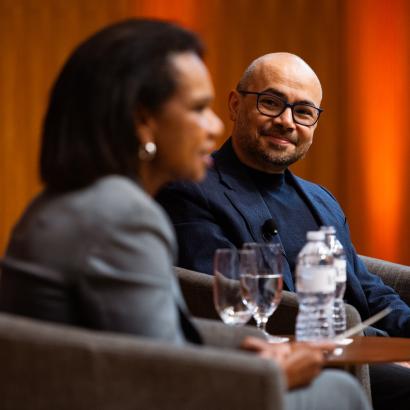
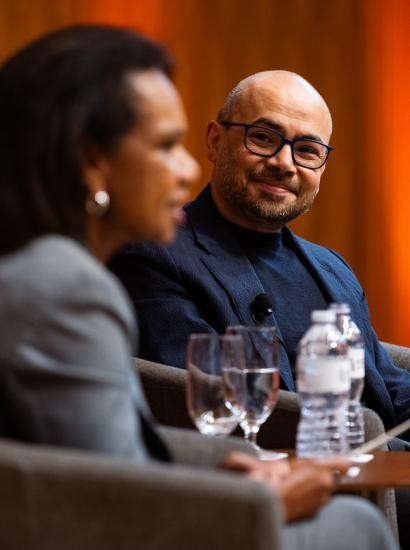
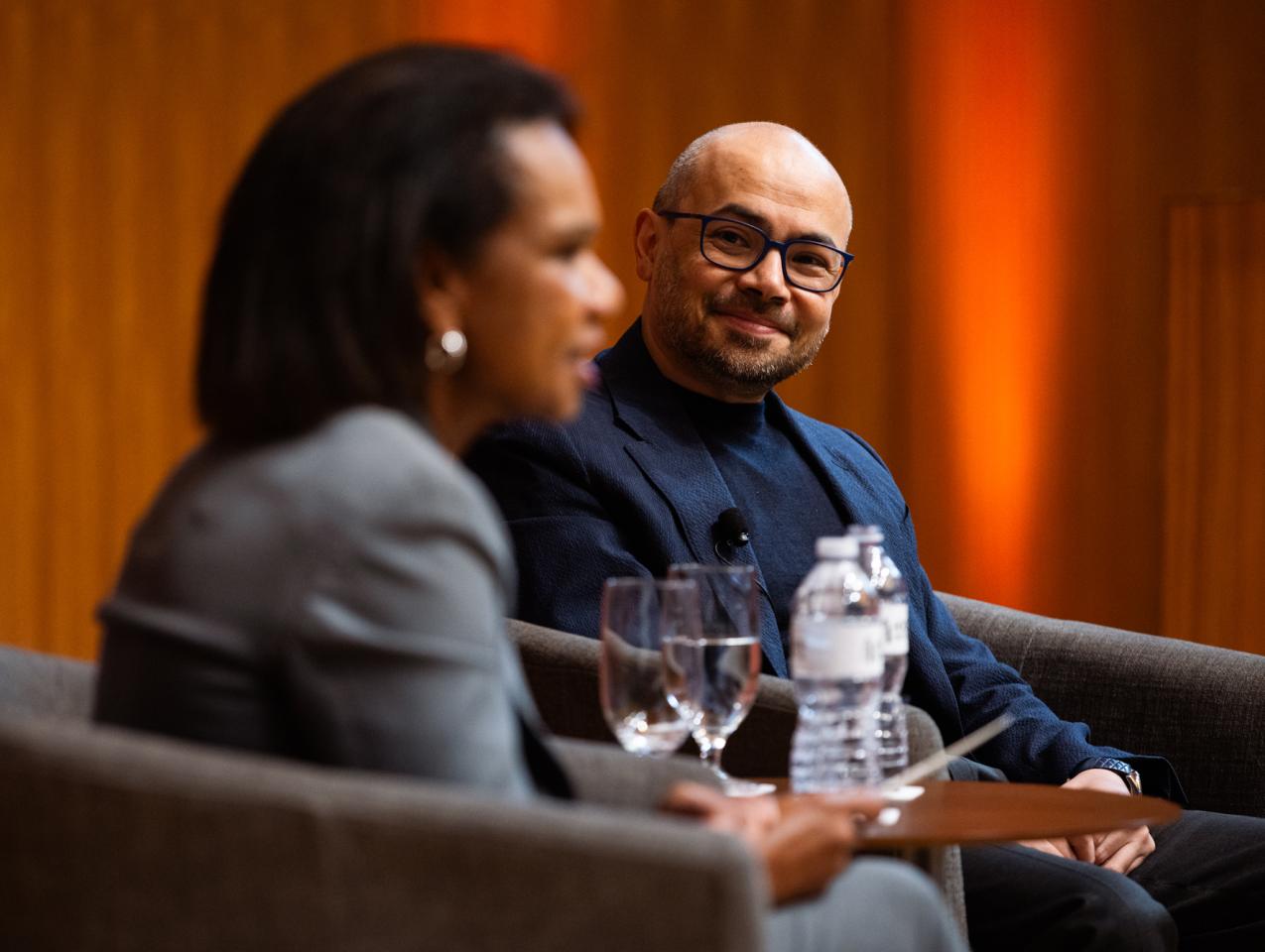
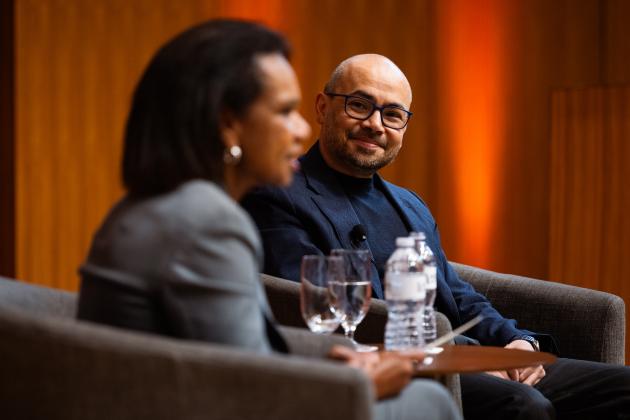
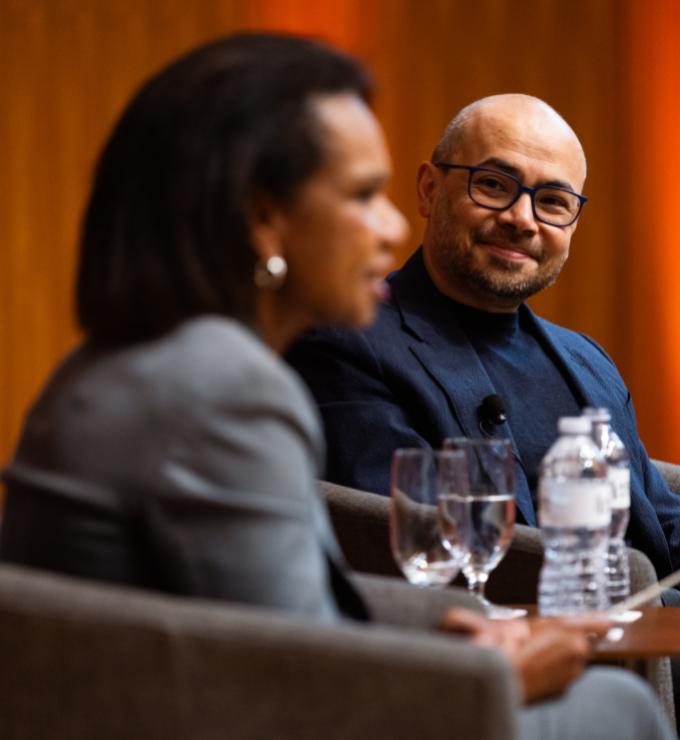
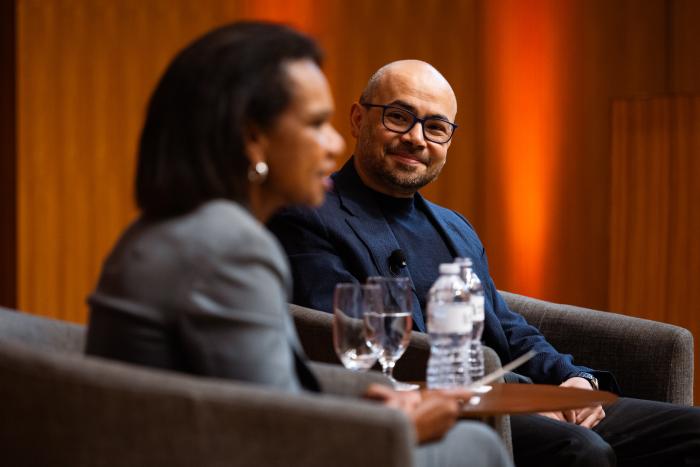
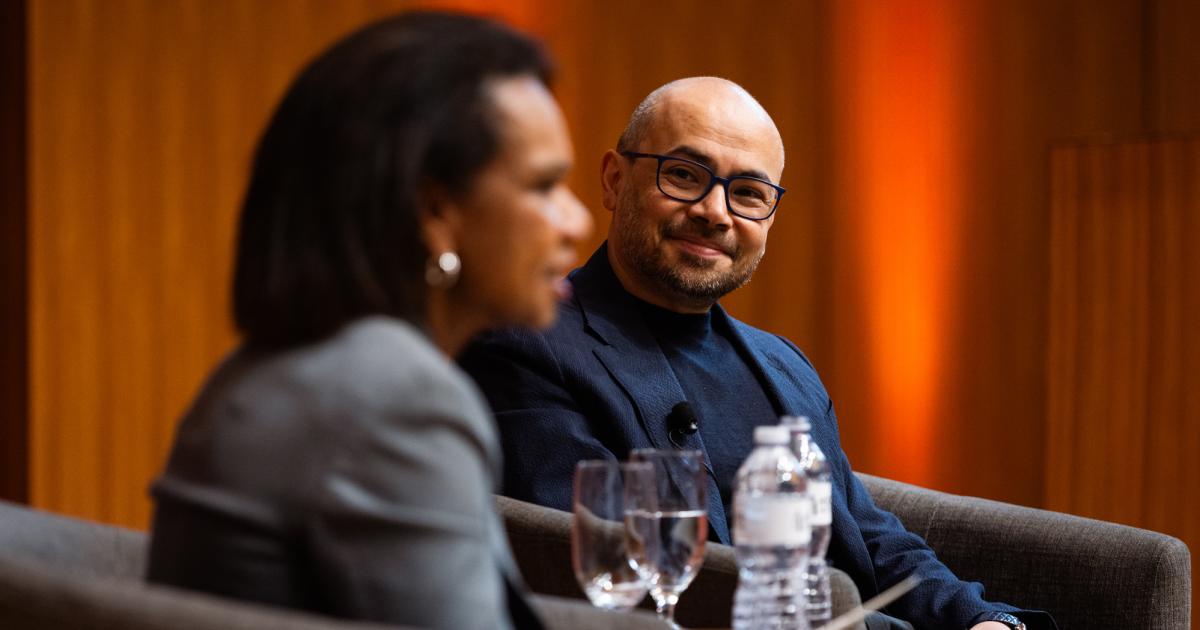
Google DeepMind cofounder and chair Demis Hassabis joined Rice onstage to discuss the rise of AI, with a focus on its application in healthcare.
A Nobel laureate in chemistry, Hassabis said his work to develop 3D renderings of all known proteins compressed the time it took to visualize a single protein from five years of a PhD student’s work to nearly instantaneous. Furthermore, Hassabis said the system he developed to map proteins is available to all the world’s researchers for free.
Looking ahead, Hassabis said he is now building predictive AI models for every part of the lengthy process that goes into developing and testing a new medicine.
He said shortening this process will radically accelerate the way drug firms can develop and test new treatments for illness.