




Hoover Institution (Stanford, CA) — The Hoover Institution Library & Archives is the West's premier platform for Russian and Soviet studies. Its collections are constantly expanding, not only in contemporary events and recent history but also in the early twentieth century — back to the beginnings of Hoover's collecting mission.
Privately held materials from prerevolutionary Russian history are rare. It is therefore a privilege to see them join similar materials housed at the Library and Archives, where they are properly preserved and made available to researchers, sometimes over a century after their creation.
The Russo-Dutch Red Cross Field Hospital, established during the Russo-Japanese War (1904–5), appears to have been variously located throughout the conflict. Photographic prints in the album depict locations in Manchuria, as well as Chita and Dubovskoe District in Primorskii Krai in the Russian Far East.
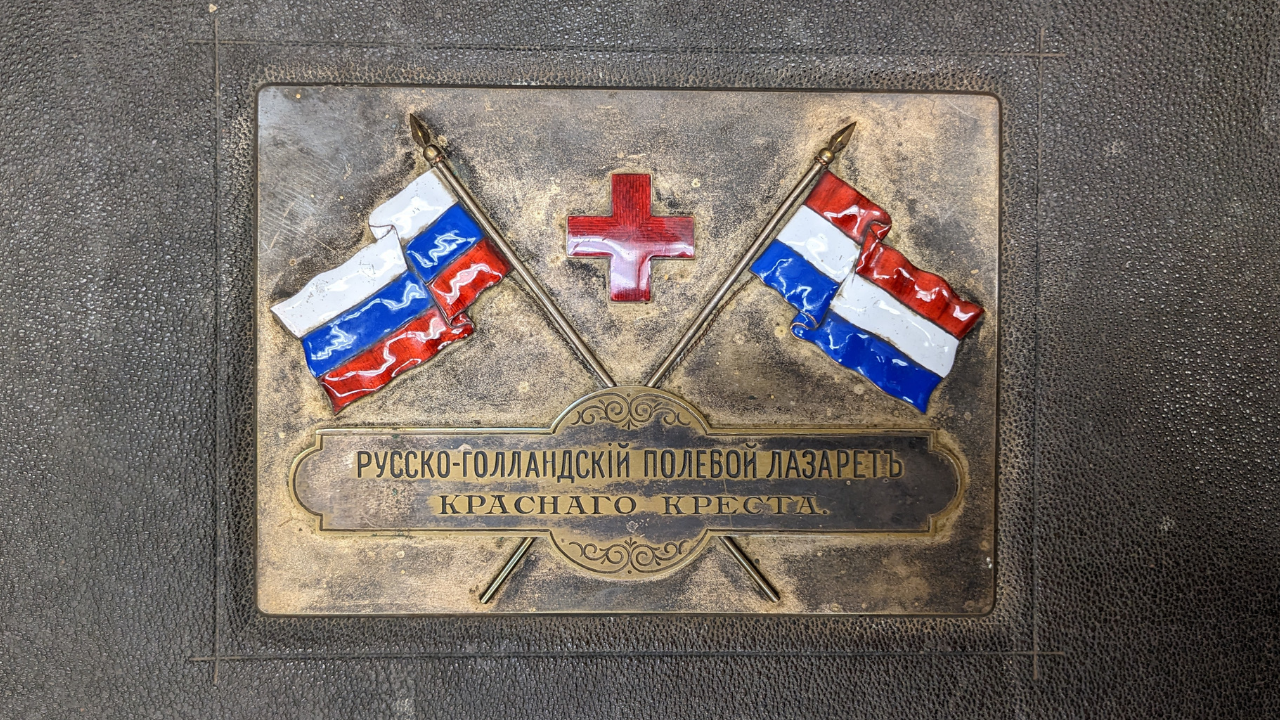
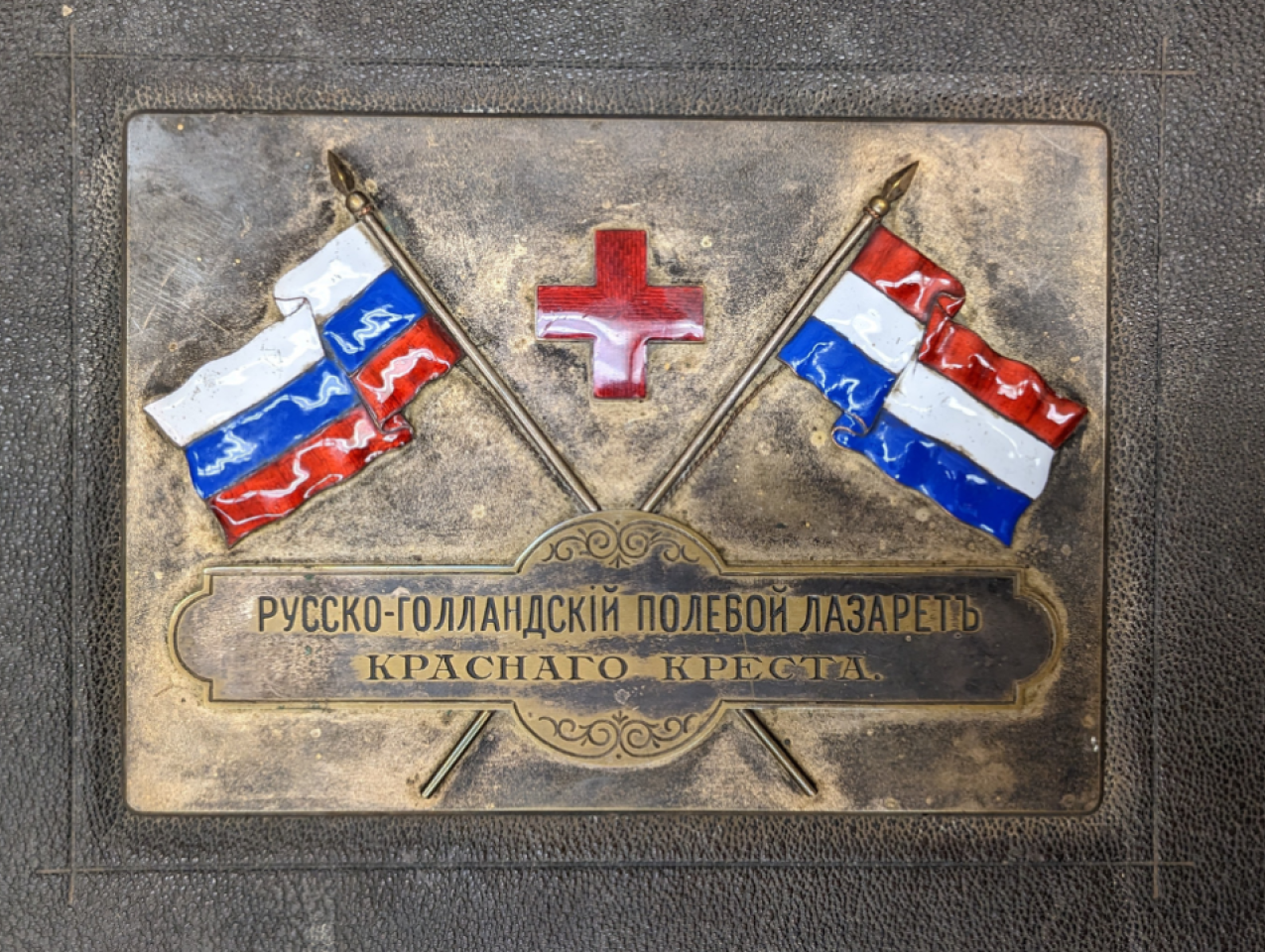
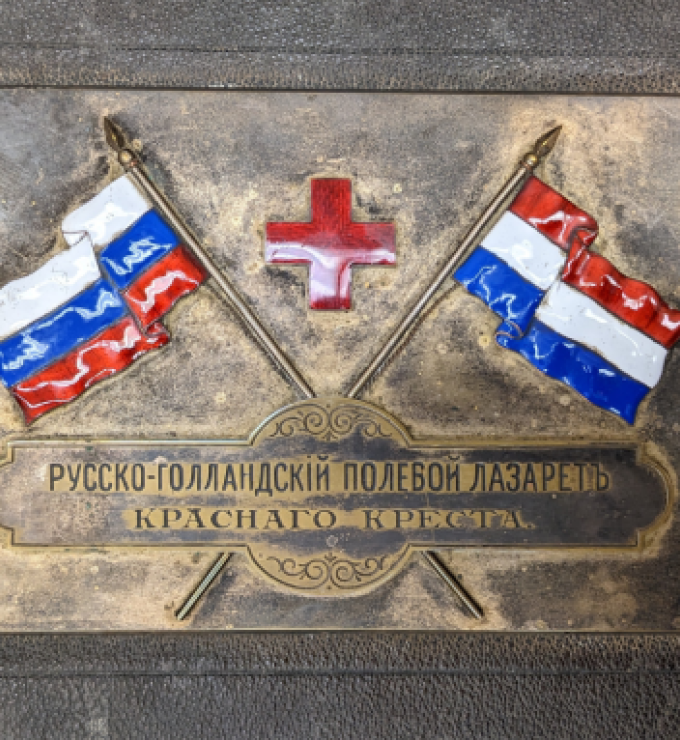
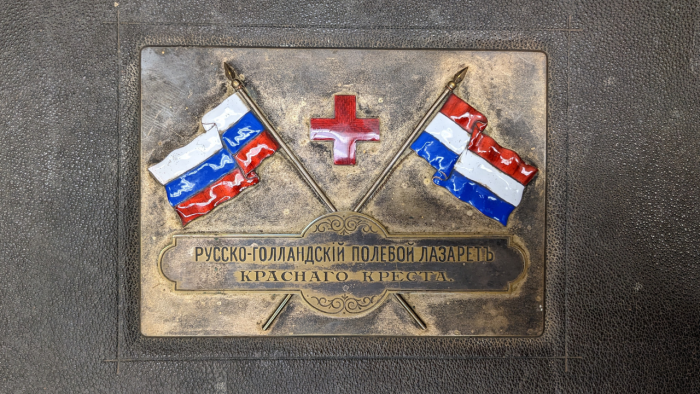
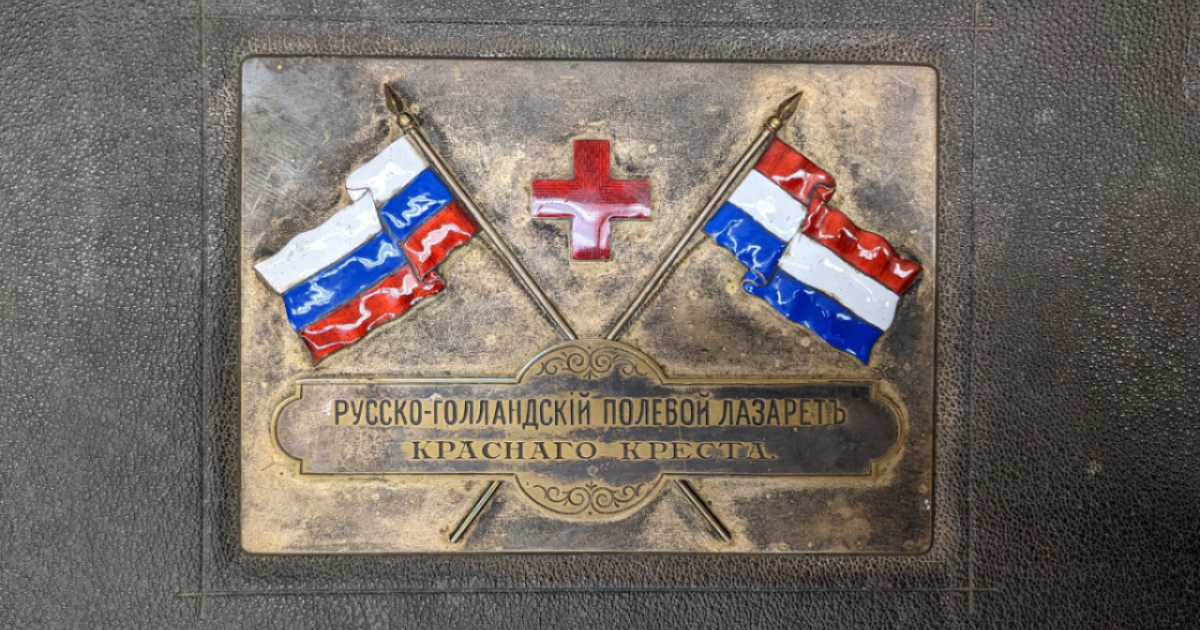
The album documents the work of the Russo-Dutch Red Cross mobile field hospital in helping wounded soldiers and contains 167 gelatin silver print photographs mounted onto twenty-one leaves made of heavy cardstock. It was made in Saint Petersburg by A. A. Schnell; its beautifully preserved brown leather boards show its title in Russian, along with a sturdy metal plate showing the Red Cross emblem and both the Russian and Dutch flags in full color (pictured above).
Schnell was a master bookbinder entrusted to work for the Imperial Russian Court. Renowned for his craftsmanship, he specialized in fine artistic bindings, mosaic works, and albums of extraordinary quality. The album is therefore valuable not only for the information the photographs convey but as a work of art in its own right.
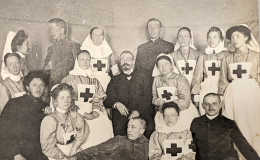
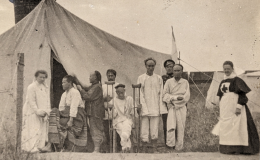
Images show soldiers in their trenches, sentries at their posts, and various individuals fraternizing with locals. A Red Cross hospital tent filled with injured and recovering patients is shown in one of the photographs. Other images show horse-drawn carriages for collecting wounded soldiers. The final photographs in the album depict a cemetery for those soldiers who never recovered from their wounds or illness.
This album complements other collections dealing with the Russo-Japanese War, such as the papers of Lieutenant Colonel Pavel Bazarov and the memoirs of Evgenii Nikol'skii and Mikhail Korol'kov. On the other side, Jefferson Jones's collection is rich in images of the Japanese army during the war.
The album may be found in the Russian Pictorial collection.